Department of Medical Biotechnologies, University of Siena, 53100 Siena, Italy.
Viruses. 2022 Jun 11;14(6):1273. doi: 10.3390/v14061273.
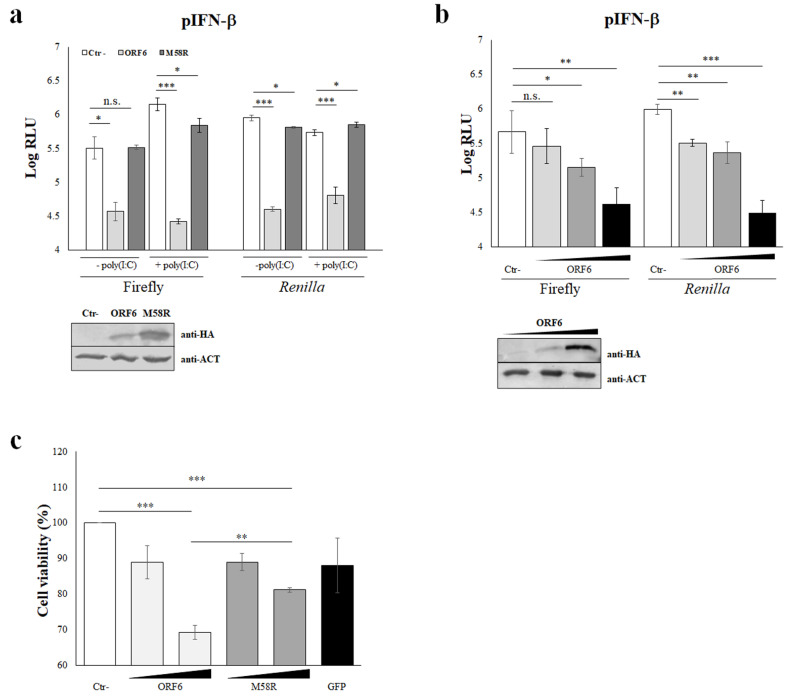
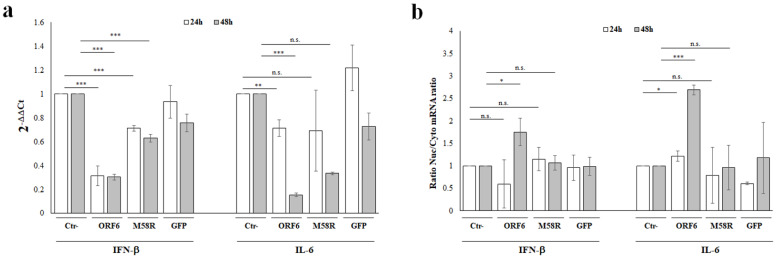
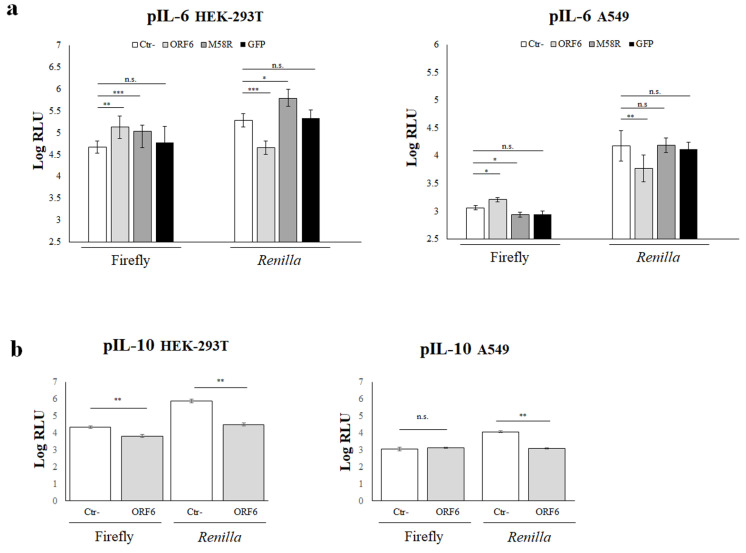
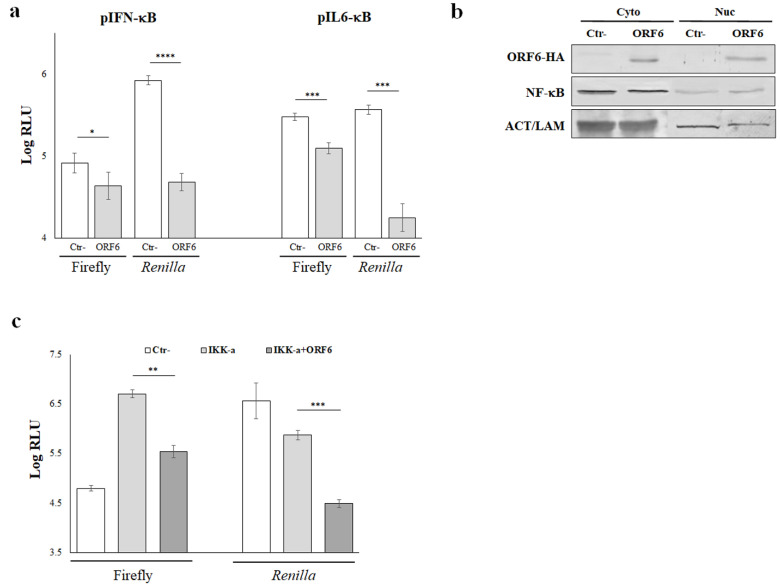
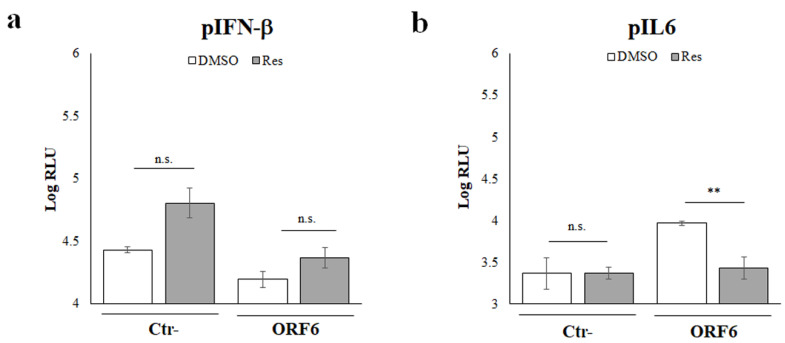
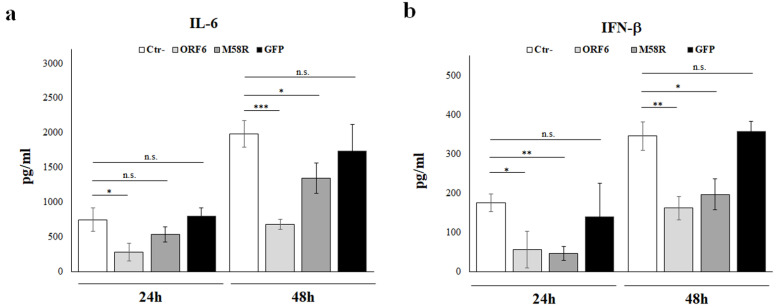
A weak production of INF-β along with an exacerbated release of pro-inflammatory cytokines have been reported during infection by the novel SARS-CoV-2 virus. SARS-CoV-2 encodes several proteins that are able to counteract the host immune system, which is believed to be one of the most important features contributing to the viral pathogenesis and development of a severe clinical outcomes. Previous reports demonstrated that the SARS-CoV-2 ORF6 protein strongly suppresses INF-β production by hindering the RIG-I, MDA-5, and MAVS signaling cascade. In the present study, we better characterized the mechanism by which the SARS-CoV-2 ORF6 counteracts IFN-β and interleukin-6 (IL-6), which plays a crucial role in the inflammation process associated with the viral infection. In the present study, we demonstrated that the SARS-CoV-2 ORF6 protein has evolved an alternative mechanism to guarantee host IFN-β and IL-6 suppression, in addition to the transcriptional control exerted on the genes. Indeed, a block in movement through the nucleopore of newly synthetized messenger RNA encoding the immune-modulatory cytokines IFN-β and IL-6 are reported here. The ORF6 accessory protein of SARS-CoV-2 displays a multifunctional activity and may represent one of the most important virulence factors. Where conventional antagonistic strategies of immune evasion-such as the suppression of specific transcription factors (e.g., IRF-3, STAT-1/2)-would not be sufficient, the SARS-CoV-2 ORF6 protein is the trump card for the virus, also blocking the movement of IFN-β and IL-6 mRNAs from nucleus to cytoplasm. Conversely, we showed that nuclear translocation of the NF-κB transcription factor is not affected by the ORF6 protein, although inhibition of its cytoplasmic activation occurred. Therefore, the ORF6 protein exerts a 360-degree inhibition of the antiviral response by blocking as many critical points as possible.
新型严重急性呼吸综合征冠状病毒 2(SARS-CoV-2)感染时,发现干扰素-β(INF-β)的产生减弱,促炎细胞因子的释放加剧。SARS-CoV-2 编码几种能够对抗宿主免疫系统的蛋白,这被认为是导致病毒发病机制和严重临床结局发展的最重要特征之一。先前的报告表明,SARS-CoV-2 ORF6 蛋白通过阻碍 RIG-I、MDA-5 和 MAVS 信号级联反应,强烈抑制 INF-β 的产生。在本研究中,我们更好地描述了 SARS-CoV-2 ORF6 拮抗 IFN-β 和白细胞介素 6(IL-6)的机制,这在与病毒感染相关的炎症过程中起着至关重要的作用。在本研究中,我们证明了 SARS-CoV-2 ORF6 蛋白除了对基因进行转录控制外,还进化出了一种替代机制来保证宿主 IFN-β 和 IL-6 的抑制。事实上,我们报告了新合成的编码免疫调节细胞因子 IFN-β 和 IL-6 的信使 RNA 穿过核孔的运动受阻。SARS-CoV-2 的 ORF6 辅助蛋白具有多功能活性,可能是最重要的毒力因子之一。在这种情况下,传统的免疫逃避拮抗策略(例如,抑制特定转录因子,如 IRF-3、STAT-1/2)将是不够的,SARS-CoV-2 ORF6 蛋白是病毒的王牌,也阻止了 IFN-β 和 IL-6 mRNAs 从细胞核到细胞质的运动。相反,我们表明,ORF6 蛋白不会影响 NF-κB 转录因子的核易位,尽管其细胞质激活受到抑制。因此,ORF6 蛋白通过阻断尽可能多的关键控制点,对抗病毒反应产生 360 度的抑制。