Martins Gustavo Andrade, Degen Andressa Nayara, Antunes Flavia Tasmin Techera, da Rosa Luiza Gabriela, Ferraz Alice Gomez, Wiilland Elenir, Vieira Luciene Bruno, de Souza Alessandra Hubner
Postgraduate Program in Cellular and Molecular Biology for the Health Sciences, Lutheran University of Brazil, Canoas, Rio Grande do Sul, Brazil.
Department of Pharmacology, Lutheran University of Brazil, Canoas, Rio Grande do Sul, Brazil.
J Tradit Complement Med. 2021 Nov 23;12(4):375-383. doi: 10.1016/j.jtcme.2021.11.002. eCollection 2022 Jul.
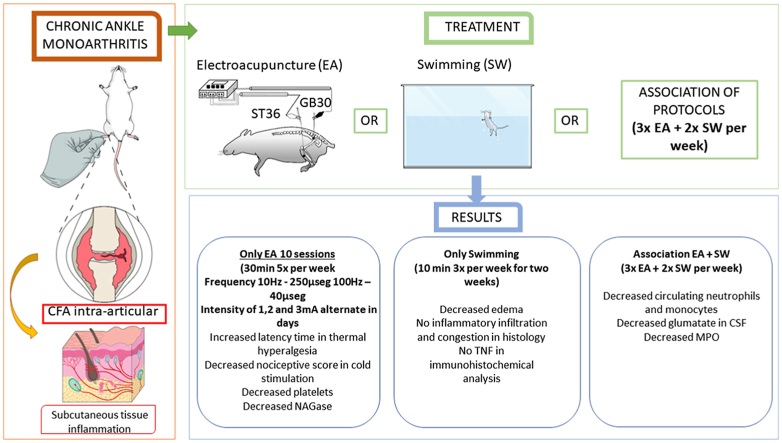
Osteoarthritis (OA) is characterized by pain and inflammation. Electroacupuncture (EA) and swimming (SW) are non-pharmacological interventions recommended for treating OA. The study evaluated the benefits of electroacupuncture (EA) and swimming (SW) association when compared with isolated protocols in an OA rodent model. Experimental.
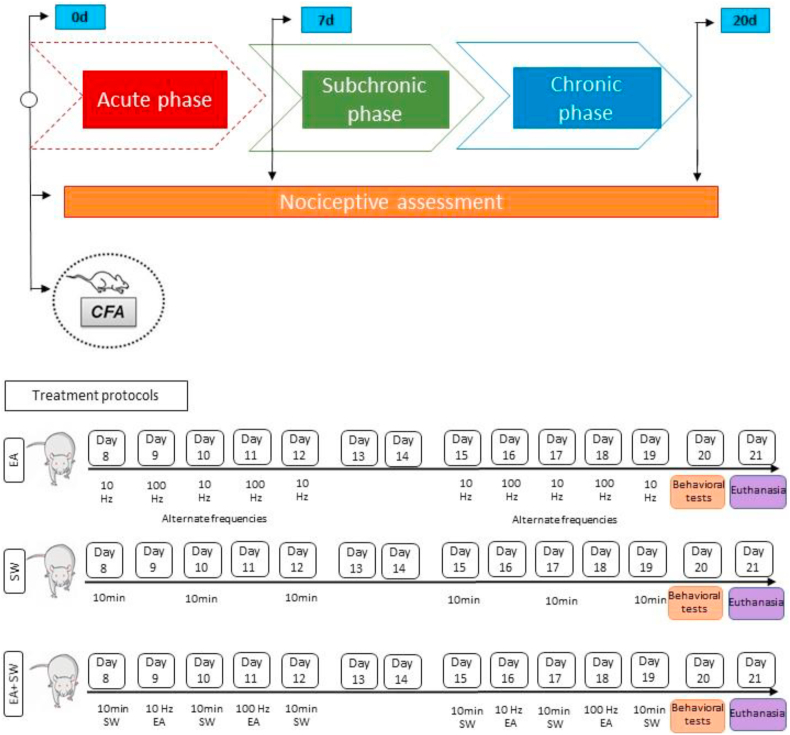
An ankle monoarthritis model was induced in rats by applying Complete Freund's Adjuvant (CFA). After seven days of induced OA, the groups were submitted to EA (ST36 and the GB 30 Acupoint), SW, or the EA + SW protocol. The nociceptive behavior was measured by the Von Frey test, the Cold Stimulation test, and the Paw Flick Immersion test. Inflammatory activity was evaluated by measuring TNF levels, myeloperoxidase, NAGase, immunological parameters and the histology from the subcutaneous tissue.
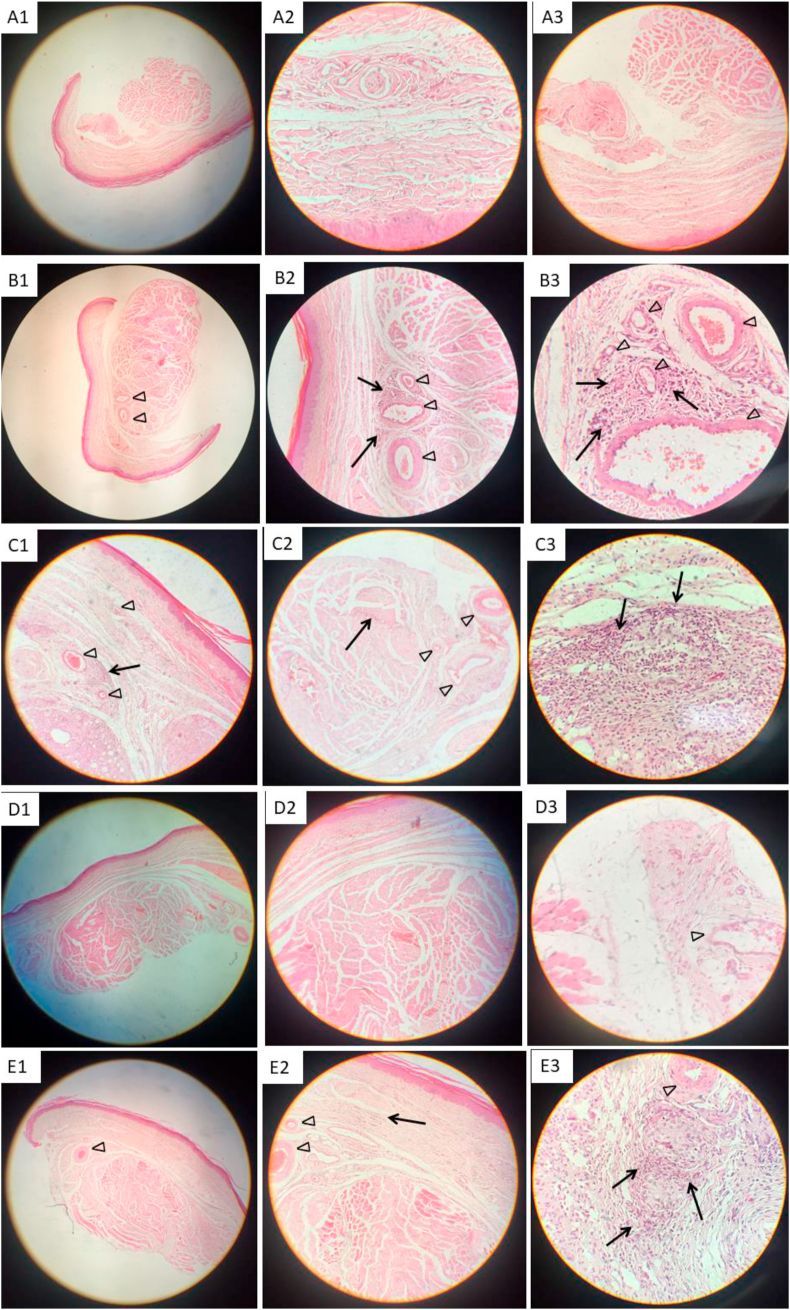
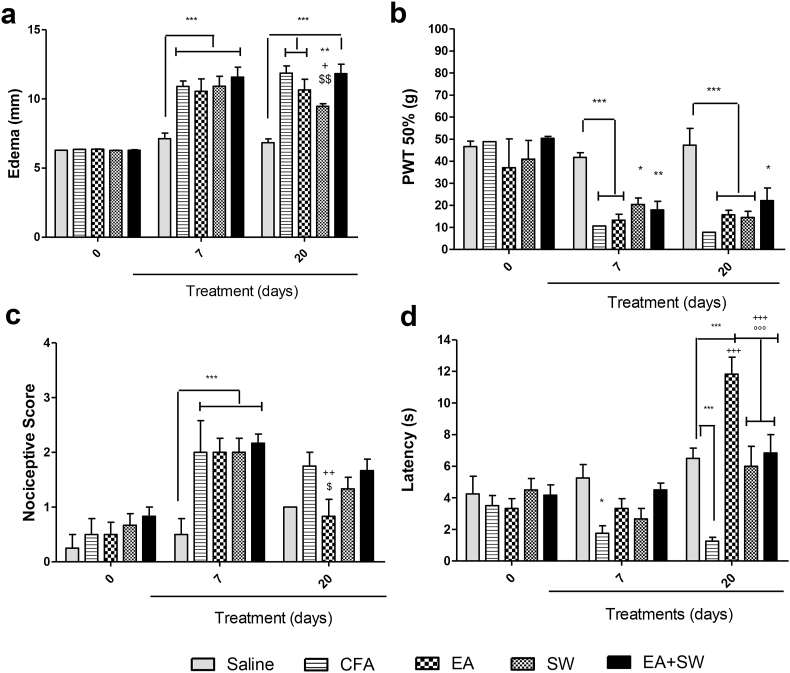
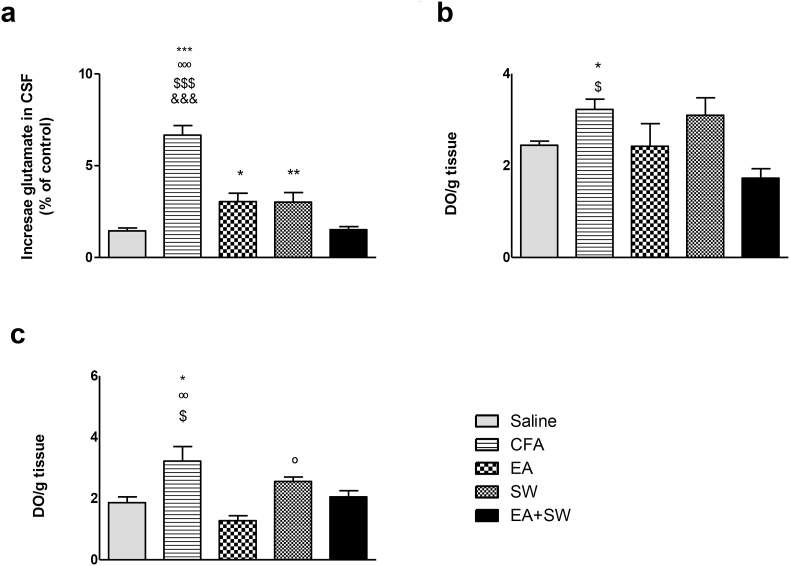
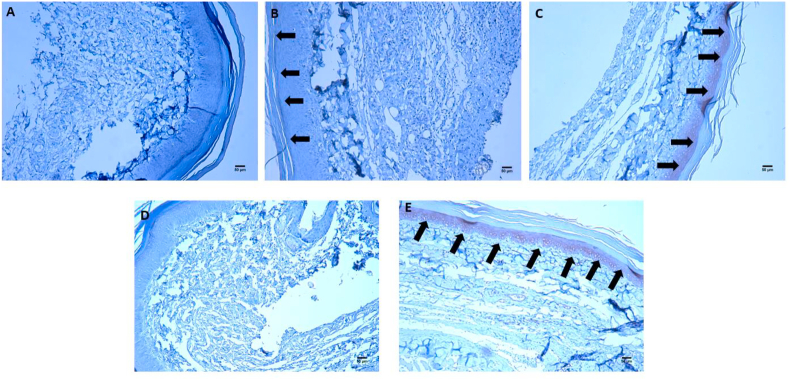
Compared to CFA group, EA decreased the nociceptive scores in the cold stimulation test (p < 0.05), and it also increased the latency time in thermal cold (p < 0.01) and heat hyperalgesia (p < 0.001). Also, EA reduced NAGase (p < 0.01). SW reduced the edema (p < 0.05) and did not increase the inflammatory infiltrates or congestion, neither in the histological measurements nor by analyzing the levels of TNF. The association of EA + SW decreased the neutrophils and the monocytes, MPO (p < 0.05), and the glutamate levels in the cerebrospinal fluid (CSF, p < 0.001).
There were statistical differences between combination therapy and monotherapy as seen by the inflammatory parameters, which could be associate to the delay of the chronification osteoarthritis retardation. However, EA + SW did not show benefits when compared to isolated protocols in nociceptive behavior.
骨关节炎(OA)的特征为疼痛和炎症。电针(EA)和游泳(SW)是推荐用于治疗OA的非药物干预措施。本研究评估了在OA啮齿动物模型中,与单独治疗方案相比,电针(EA)与游泳(SW)联合治疗的益处。实验性研究。
通过注射完全弗氏佐剂(CFA)诱导大鼠踝关节单关节炎模型。诱导OA七天后,将各组大鼠分别进行电针治疗(针刺足三里穴和环跳穴)、游泳治疗或电针+游泳联合治疗。通过von Frey试验、冷刺激试验和爪部轻弹浸入试验测量伤害性感受行为。通过测量肿瘤坏死因子(TNF)水平、髓过氧化物酶、N-乙酰-β-D-氨基葡萄糖苷酶(NAGase)、免疫参数以及皮下组织的组织学来评估炎症活性。
与CFA组相比,电针治疗降低了冷刺激试验中的伤害性感受评分(p<0.05),并增加了冷刺激潜伏期(p<0.01)和热痛觉过敏潜伏期(p<0.001)。此外,电针治疗降低了NAGase水平(p<0.01)。游泳治疗减轻了水肿(p<0.05),并且在组织学测量以及分析TNF水平时,均未增加炎症浸润或充血。电针+游泳联合治疗降低了中性粒细胞和单核细胞数量、髓过氧化物酶水平(p<0.05)以及脑脊液中的谷氨酸水平(CSF,p<0.001)。
联合治疗与单一治疗在炎症参数方面存在统计学差异,这可能与骨关节炎慢性化延迟有关。然而,与单独治疗方案相比,电针+游泳联合治疗在伤害性感受行为方面未显示出优势。