Sano Naoto, Lounifi Imen, Cueff Gwendal, Collet Boris, Clément Gilles, Balzergue Sandrine, Huguet Stéphanie, Valot Benoît, Galland Marc, Rajjou Loïc
Université Paris-Saclay, INRAE, AgroParisTech, Institut Jean-Pierre Bourgin (IJPB), Versailles, France.
MBCC Group, Master Builders Construction Chemical, Singapore, Singapore.
Front Plant Sci. 2022 Jun 9;13:867263. doi: 10.3389/fpls.2022.867263. eCollection 2022.
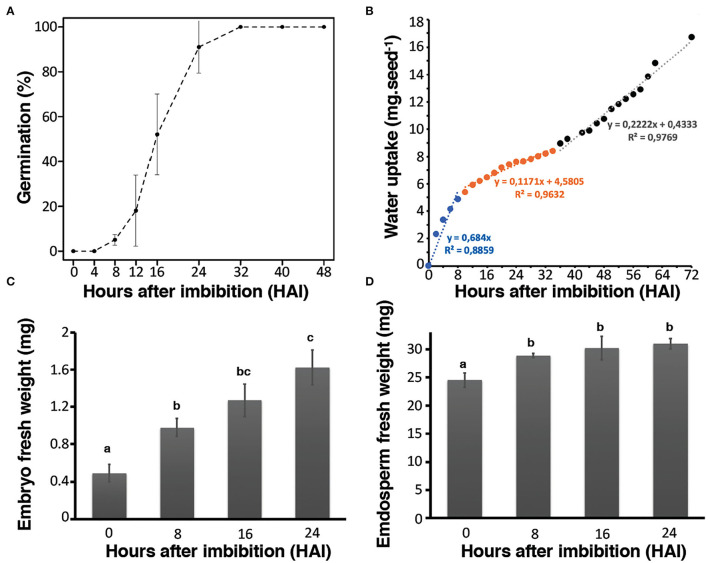
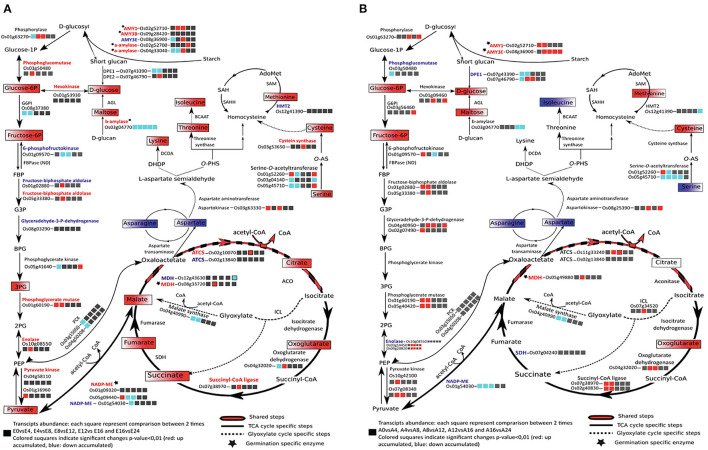
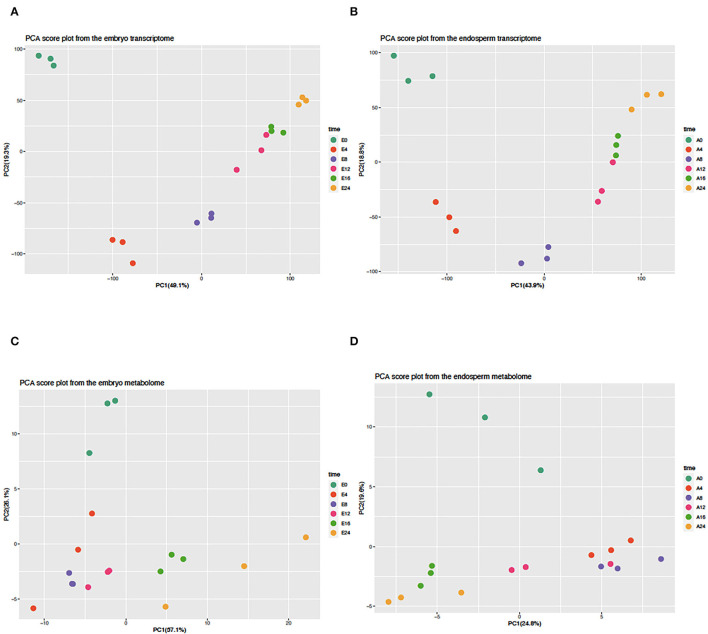
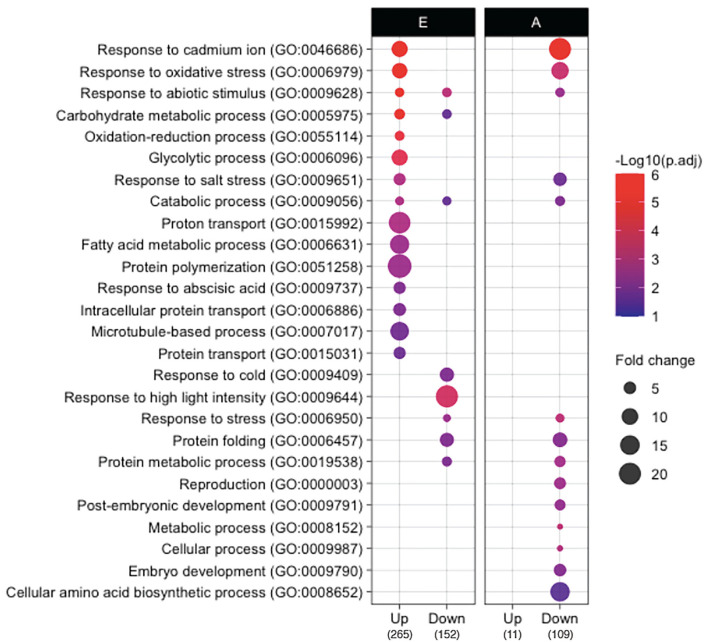
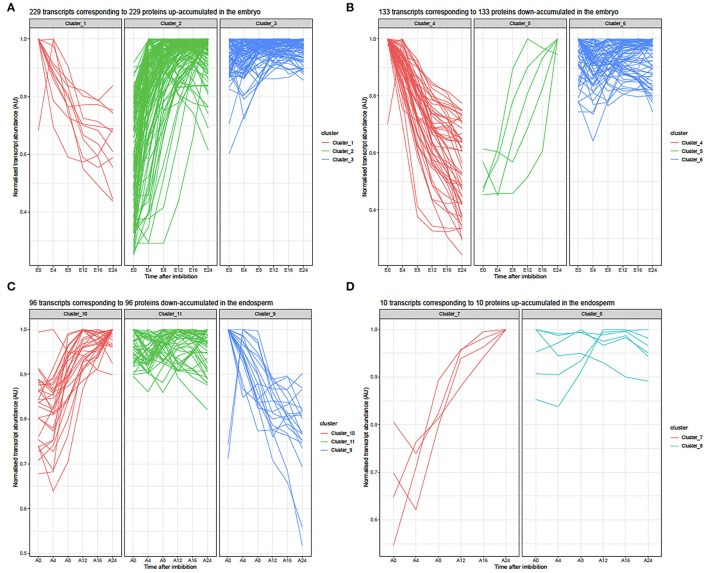
Seed germination and subsequent seedling growth affect the final yield and quality of the crop. Seed germination is defined as a series of processes that begins with water uptake by a quiescent dry seed and ends with the elongation of embryonic axis. Rice is an important cereal crop species, and during seed germination, two tissues function in a different manner; the embryo grows into a seedling as the next generation and the endosperm is responsible for nutritional supply. Toward understanding the integrated roles of each tissue at the transcriptional, translational, and metabolic production levels during germination, an exhaustive "multi-omics" analysis was performed by combining transcriptomics, label-free shotgun proteomics, and metabolomics on rice germinating embryo and endosperm, independently. Time-course analyses of the transcriptome and metabolome in germinating seeds revealed a major turning point in the early phase of germination in both embryo and endosperm, suggesting that dramatic changes begin immediately after water imbibition in the rice germination program at least at the mRNA and metabolite levels. In endosperm, protein profiles mostly showed abundant decreases corresponding to 90% of the differentially accumulated proteins. An ontological classification revealed the shift from the maturation to the germination process where over-represented classes belonged to embryonic development and cellular amino acid biosynthetic processes. In the embryo, 19% of the detected proteins are differentially accumulated during germination. Stress response, carbohydrate, fatty acid metabolism, and transport are the main functional classes representing embryo proteome change. Moreover, proteins specific to the germinated state were detected by both transcriptomic and proteomic approaches and a major change in the network operating during rice germination was uncovered. In particular, concomitant changes of hormonal metabolism-related proteins (GID1L2 and CNX1) implicated in GAs and ABA metabolism, signaling proteins, and protein turnover events emphasized the importance of such biological networks in rice seeds. Using metabolomics, we highlighted the importance of an energetic supply in rice seeds during germination. In both embryo and endosperm, starch degradation, glycolysis, and subsequent pathways related to these cascades, such as the aspartate-family pathway, are activated during germination. A relevant number of accumulated proteins and metabolites, especially in embryos, testifies the pivotal role of energetic supply in the preparation of plant growth. This article summarizes the key genetic pathways in embryo and endosperm during rice seed germination at the transcriptional, translational, and metabolite levels and thereby, emphasizes the value of combined multi-omics approaches to uncover the specific feature of tissues during germination.
种子萌发及随后的幼苗生长会影响作物的最终产量和品质。种子萌发被定义为一系列过程,始于静止干种子对水分的吸收,终于胚轴的伸长。水稻是一种重要的谷类作物,在种子萌发过程中,两种组织发挥着不同的作用;胚发育成作为下一代的幼苗,而胚乳负责营养供应。为了了解萌发过程中各组织在转录、翻译和代谢产物水平上的综合作用,我们分别对水稻萌发的胚和胚乳进行了转录组学、无标记鸟枪法蛋白质组学和代谢组学相结合的详尽“多组学”分析。对萌发种子转录组和代谢组的时间进程分析揭示了胚和胚乳在萌发早期的一个主要转折点,这表明至少在mRNA和代谢物水平上,水稻萌发程序在水分吸收后立即开始发生显著变化。在胚乳中,蛋白质谱大多呈现大量减少,相当于90%的差异积累蛋白质。本体分类揭示了从成熟到萌发过程的转变,其中过度富集的类别属于胚胎发育和细胞氨基酸生物合成过程。在胚中,19%的检测到的蛋白质在萌发过程中差异积累。应激反应、碳水化合物、脂肪酸代谢和转运是代表胚蛋白质组变化的主要功能类别。此外,通过转录组学和蛋白质组学方法均检测到了萌发状态特有的蛋白质,并揭示了水稻萌发过程中运行网络的重大变化。特别是,参与赤霉素和脱落酸代谢的激素代谢相关蛋白(GID1L2和CNX1)、信号蛋白以及蛋白质周转事件的伴随变化强调了此类生物网络在水稻种子中的重要性。利用代谢组学,我们突出了水稻种子萌发过程中能量供应的重要性。在胚和胚乳中,淀粉降解、糖酵解以及随后与这些级联反应相关的途径,如天冬氨酸家族途径,在萌发过程中均被激活。大量积累的蛋白质和代谢物,尤其是在胚中,证明了能量供应在植物生长准备过程中的关键作用。本文总结了水稻种子萌发过程中胚和胚乳在转录、翻译和代谢物水平上的关键遗传途径,从而强调了组合多组学方法在揭示萌发过程中组织特定特征方面的价值。