Department of Pathology, Taizhou First People's Hospital, Huangyan Hospital of Wenzhou Medical University, Taizhou, Zhejiang, China.
Department of Gastroenterology, Taizhou First People's Hospital, Huangyan Hospital of Wenzhou Medical University, Taizhou, Zhejiang, China.
Dis Markers. 2022 Jun 16;2022:7803642. doi: 10.1155/2022/7803642. eCollection 2022.
Gastric cancer (GC) represents a universal malignant tumor of the digestive system. Stromal and immune cells belong to two main nontumor components exerting a vital function in the tumor microenvironment.
Based on TCGA database, this study downloaded clinical information and gene profiles of GC. The ESTIMATE algorithm was adopted for evaluating the score of immune-infiltrating cells. This work employed Sangerbox to explore the differentially denoted genes (DEGs) related to stromal, immunity, and prognosis. Besides, the STRING database was involved in order to detect the association among the proteins. The MCODE module of Cytoscape software was used to screen key genes. Oncomine and GEPIA databases were used, aiming to study the differences in key genes in healthy gastric mucosa and GC. At last, we adopted TISDIB and TIMER databases for analyzing the association of guanine nucleotide binding protein subunit-4 (GNB4) between gastric cancer and tumor immune cells. qRT-PCR was applied for exploring differential GNB4 expression between GC and normal gastric mucosa and investigating the relation of GNB4 with tumor-infiltrating lymphocytes (TILs).
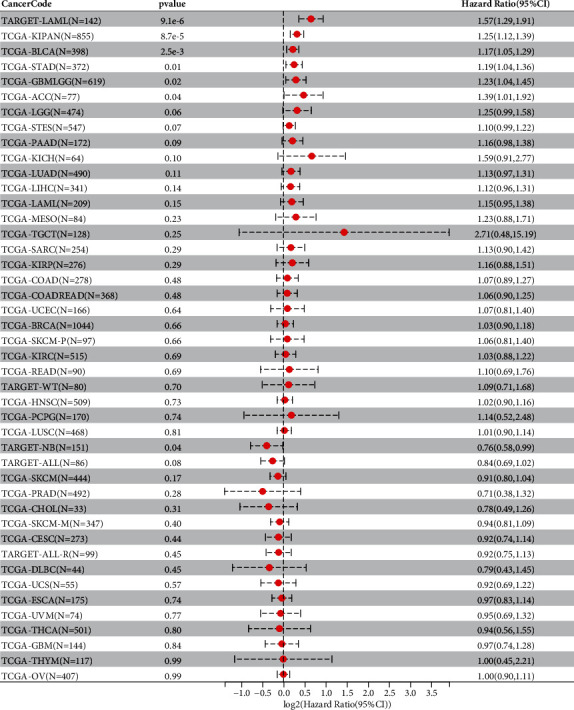
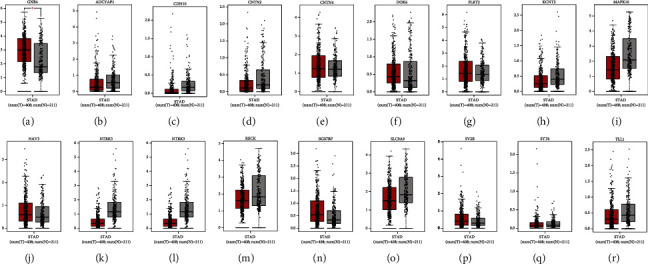
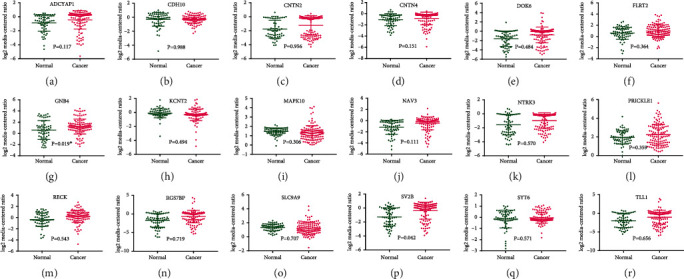
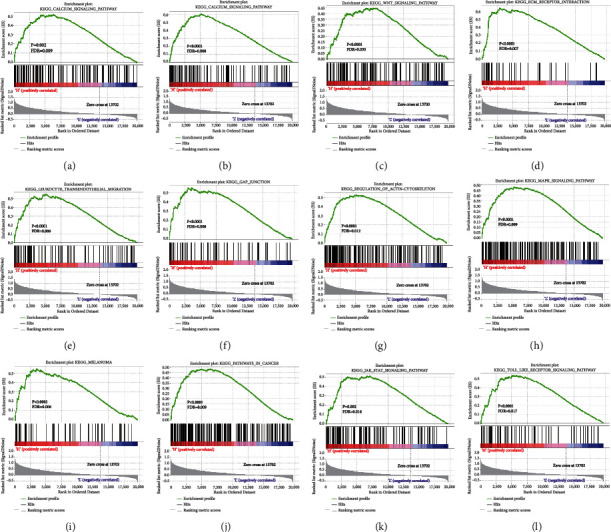
Patients undergoing a great stromal score exhibited worse prognostic outcome, and cases having a low immune score had better prognosis. Overall, altogether 656 genes were upregulated with 5 genes being downregulated, which were matrix immune-related differential genes. Furthermore, 18 genes were screened as hub genes on the basis of the univariate Cox risk model of TCGA database (82 differential genes predicted poor GC survival). Oncomine and GEPIA databases revealed that GNB4 expression in gastric cancer was obviously higher in comparison with that in normal gastric mucosa. The GSEA, TISDIB, and TIMER databases revealed that GNB4 is involved in various tumor signal pathways and immune and metabolic processes. qRT-PCR demonstrated that GNB4 expression in gastric cancer was notably higher in comparison with that in normal gastric mucosa, showing significant association with matrix TILs.
The selected key gene GNB4 is a potential biomarker to guide the immunotherapy of gastric cancer.
胃癌(GC)是一种普遍存在的消化系统恶性肿瘤。基质和免疫细胞属于肿瘤微环境中发挥重要功能的两个主要非肿瘤成分。
基于 TCGA 数据库,本研究下载了 GC 的临床信息和基因谱。采用 ESTIMATE 算法评估免疫浸润细胞评分。本研究采用 Sangerbox 探索与基质、免疫和预后相关的差异表达基因(DEGs)。此外,还使用了 STRING 数据库来检测蛋白质之间的关联。使用 Cytoscape 软件的 MCODE 模块筛选关键基因。Oncomine 和 GEPIA 数据库用于研究关键基因在健康胃黏膜和 GC 中的差异。最后,我们采用 TISDIB 和 TIMER 数据库分析胃肿瘤与肿瘤免疫细胞之间的鸟嘌呤核苷酸结合蛋白亚基 4(GNB4)的关联。qRT-PCR 用于探索 GC 和正常胃黏膜中 GNB4 的差异表达,并研究 GNB4 与肿瘤浸润淋巴细胞(TILs)的关系。
基质评分高的患者预后较差,免疫评分低的患者预后较好。总的来说,共有 656 个基因上调,5 个基因下调,这些基因是基质免疫相关差异基因。此外,基于 TCGA 数据库的单变量 Cox 风险模型筛选出 18 个作为枢纽基因(82 个差异基因预测 GC 生存率较差)。Oncomine 和 GEPIA 数据库显示,GNB4 在胃癌中的表达明显高于正常胃黏膜。GSEA、TISDIB 和 TIMER 数据库显示,GNB4 参与了多种肿瘤信号通路以及免疫和代谢过程。qRT-PCR 表明,GNB4 在胃癌中的表达明显高于正常胃黏膜,与基质 TILs 有显著相关性。
选择的关键基因 GNB4 是指导胃癌免疫治疗的潜在生物标志物。