Zhou Yuxin, Zhen Yongqi, Wang Guan, Liu Bo
State Key Laboratory of Biotherapy and Cancer Center, West China Hospital, Sichuan University, Chengdu, China.
Front Neuroanat. 2022 Jun 9;16:910427. doi: 10.3389/fnana.2022.910427. eCollection 2022.
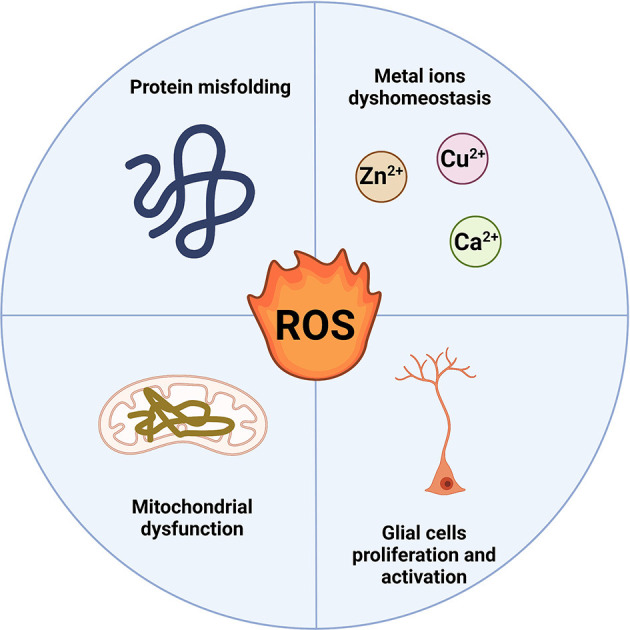
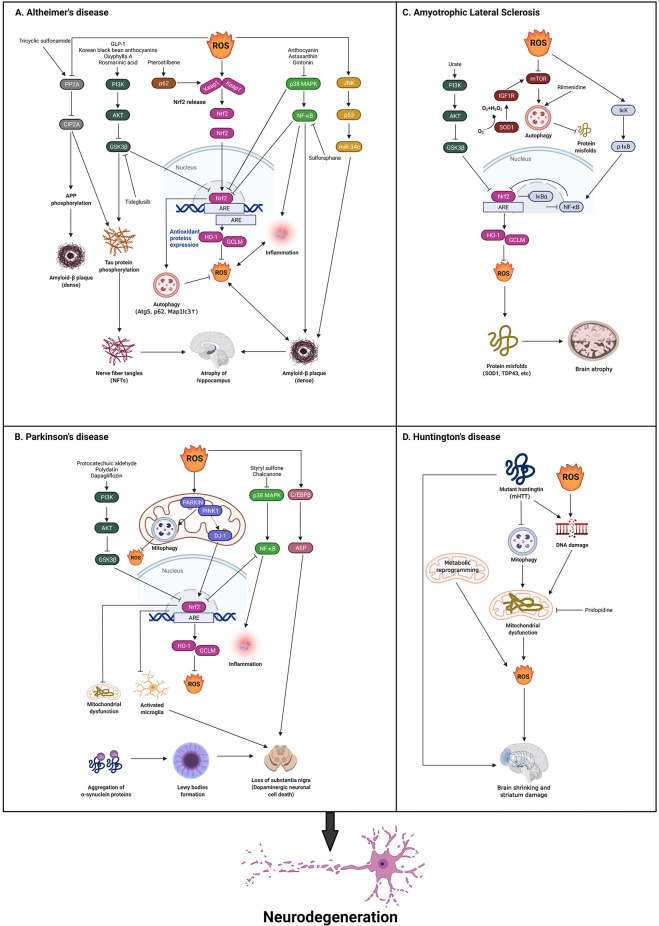
Neurodegenerative diseases (NDs) are becoming a serious public health concern as the world's population continues to age, demanding the discovery of more effective therapies. Excessive formation of reactive oxygen species (ROS) can result in oxidative stress (OS), which can be regarded as one of the common causes of neurodegenerative diseases (NDs). Thus, in this review, we focus on summarizing the consequences of ROS NDs, while taking the four prevalent NDs as examples, including Alzheimer's disease (AD), Parkinson's disease (PD), Amyotrophic lateral sclerosis (ALS), and Huntington's disease (HD), to illustrate the key signaling pathways and relevant drugs. Together, these findings may shed new light on a field in which ROS-related pathways play a key role; thereby setting the groundwork for the future therapeutic development of neurodegenerative diseases.
随着世界人口持续老龄化,神经退行性疾病(NDs)正成为一个严重的公共卫生问题,这就需要发现更有效的治疗方法。活性氧(ROS)的过度形成会导致氧化应激(OS),而氧化应激可被视为神经退行性疾病(NDs)的常见病因之一。因此,在本综述中,我们重点总结ROS与NDs的关系,同时以四种常见的NDs为例,包括阿尔茨海默病(AD)、帕金森病(PD)、肌萎缩侧索硬化症(ALS)和亨廷顿舞蹈病(HD),来说明关键信号通路及相关药物。总之,这些发现可能会为ROS相关通路起关键作用的领域带来新的启示;从而为神经退行性疾病未来的治疗发展奠定基础。