Jędrzejewski Tomasz, Sobocińska Justyna, Pawlikowska Małgorzata, Dzialuk Artur, Wrotek Sylwia
Department of Immunology, Faculty of Biological and Veterinary Sciences, Nicolaus Copernicus University, Torun, 87-100, Poland.
Department of Genetics, Faculty of Biological Sciences, Kazimierz Wielki University, Bydgoszcz, 85-090, Poland.
J Inflamm Res. 2022 Jun 20;15:3599-3611. doi: 10.2147/JIR.S364945. eCollection 2022.
Extract from the fungus (CV) is classified as an immunological response modifier. Previously, we have shown that this extract induces interleukin 6 (IL-6)-related extension of lipopolysaccharide (LPS)-induced fever. This study investigated the effect of CV extract on the production of pro-inflammatory cytokines and the expression of components of signal transduction pathways leading to the secretion of cytokines from RAW 264.7 macrophages stimulated with different doses of LPS.
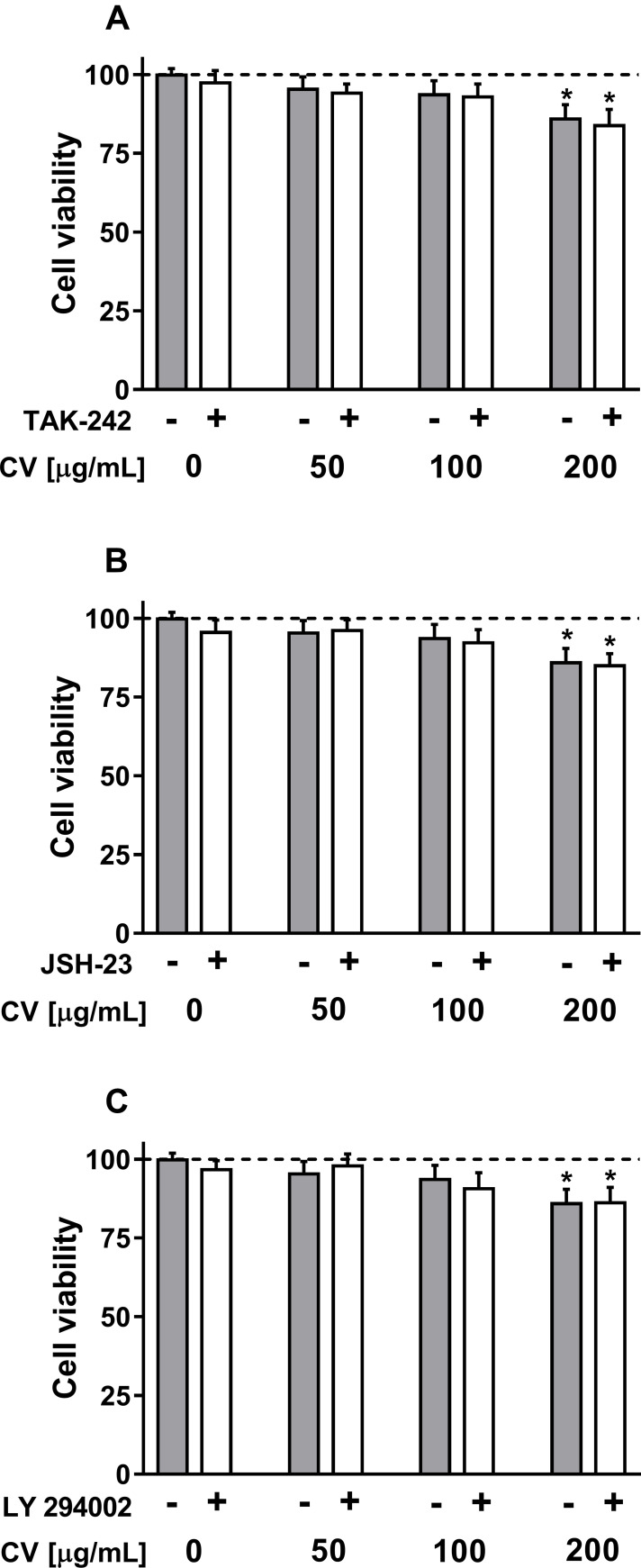
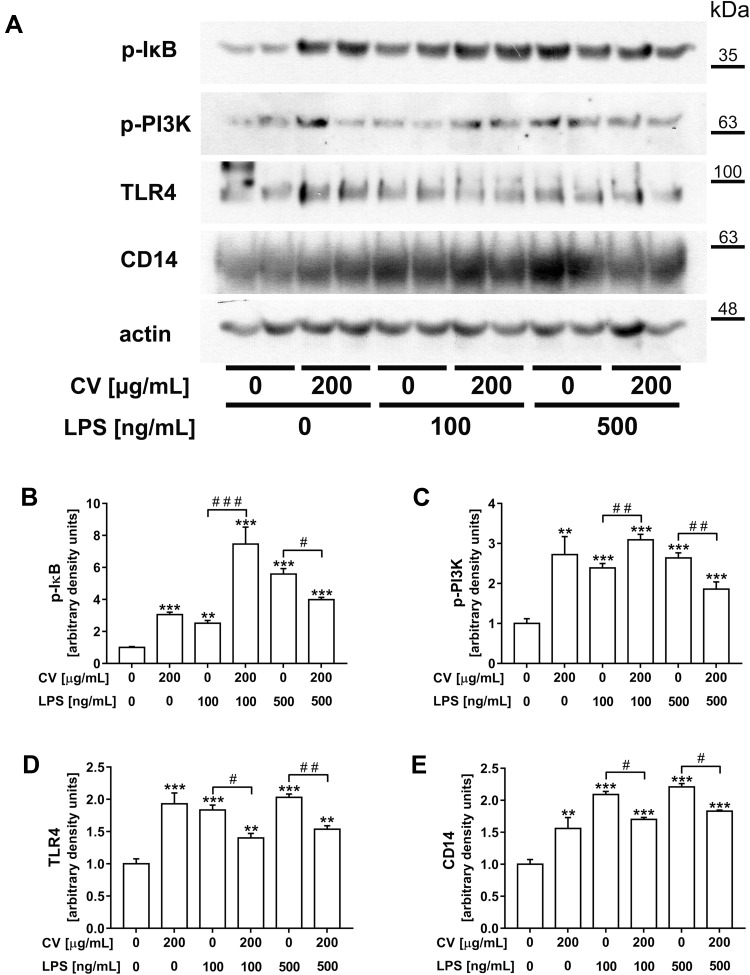
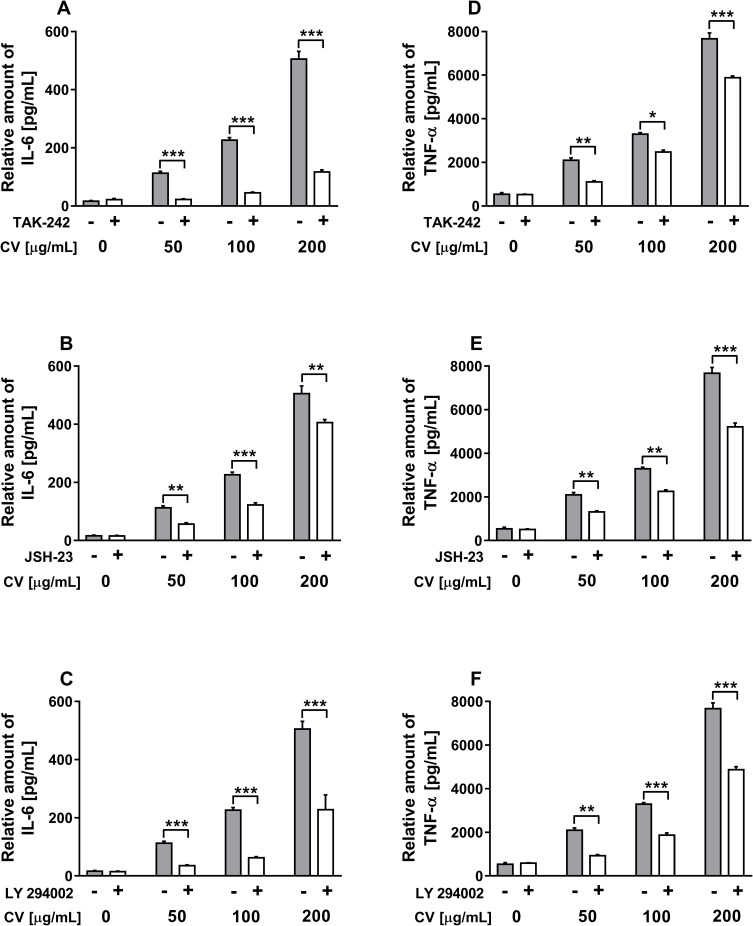
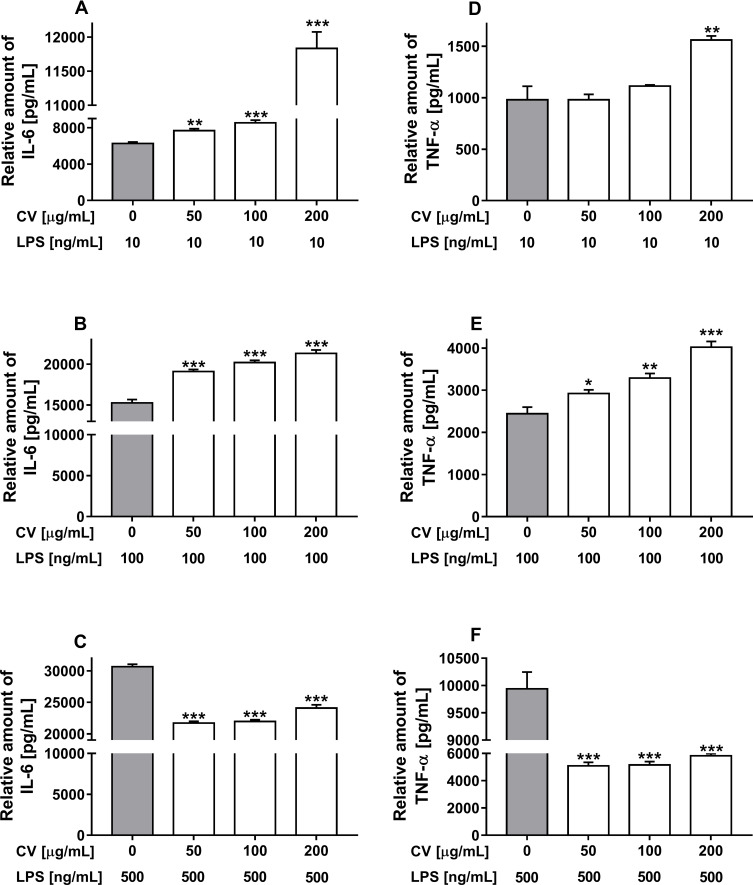
RAW 264.7 cells were stimulated with CV extract alone or co-treated with CV extract and LPS. The level of IL-6 and tumour necrosis factor α (TNF-α) in the culture media was measured using ELISA. Protein expression of Toll-like receptor (TLR) 4, phosphorylated IκB (p-IκB), CD14 glycoprotein and phospho-phosphatidylinositol 3-kinase (p-PI3K) was evaluated using Western blot. The effects of TLR4, nuclear factor κB (NF-κB) and p-PI3K on cytokine secretion were estimated using inhibitors: TAK-242, JSH-23 and LY294002.
CV extract itself stimulates the secretion of IL-6 and TNF-α and increases the expression of TLR4, p-IκB and p-PI3K. The presence of CV extract during the treatment of cells with lower concentrations of LPS (10 and 100 ng/mL) increases the cytokine production. Co-stimulation of cells with CV extract and LPS at a higher dose (500 ng/mL) decreases the secretion of cytokines. This effect is related to the changes in the expression of TLR4, CD14 glycoprotein, p-IκB and p-PI3K.
This is the first report showing that the CV extract-induced production of cytokines is mediated by the PI3K signalling pathway. This extract acts antagonistically or additively with LPS on the production of IL-6 and TNF-α, depending on the LPS concentration. Our results are helpful for illustrating the mechanisms for the immunostimulatory effect of CV extract in inflammatory processes.
从真菌中提取的提取物(CV)被归类为免疫反应调节剂。此前,我们已表明该提取物可诱导脂多糖(LPS)诱导发热的白细胞介素6(IL-6)相关延长。本研究调查了CV提取物对促炎细胞因子产生的影响以及信号转导通路成分的表达,这些通路导致不同剂量LPS刺激的RAW 264.7巨噬细胞分泌细胞因子。
RAW 264.7细胞单独用CV提取物刺激,或与CV提取物和LPS共同处理。使用酶联免疫吸附测定法(ELISA)测量培养基中IL-6和肿瘤坏死因子α(TNF-α)的水平。使用蛋白质印迹法评估Toll样受体(TLR)4、磷酸化IκB(p-IκB)、CD14糖蛋白和磷酸化磷脂酰肌醇3激酶(p-PI3K)的蛋白质表达。使用抑制剂TAK-242、JSH-23和LY294002评估TLR4、核因子κB(NF-κB)和p-PI3K对细胞因子分泌的影响。
CV提取物本身刺激IL-6和TNF-α的分泌,并增加TLR4、p-IκB和p-PI3K的表达。在较低浓度LPS(10和100 ng/mL)处理细胞期间,CV提取物的存在会增加细胞因子的产生。用较高剂量(500 ng/mL)的CV提取物和LPS共同刺激细胞会减少细胞因子的分泌。这种效应与TLR4、CD14糖蛋白、p-IκB和p-PI3K表达的变化有关。
这是第一份表明CV提取物诱导的细胞因子产生由PI3K信号通路介导的报告。根据LPS浓度,该提取物与LPS在IL-6和TNF-α的产生上起拮抗或相加作用。我们的结果有助于阐明CV提取物在炎症过程中免疫刺激作用的机制。