Hussain Syed Shah Areeb, Dhiman Ramesh C
ICMR - National Institute of Malaria Research Delhi India.
Geohealth. 2022 Jun 1;6(6):e2021GH000477. doi: 10.1029/2021GH000477. eCollection 2022 Jun.
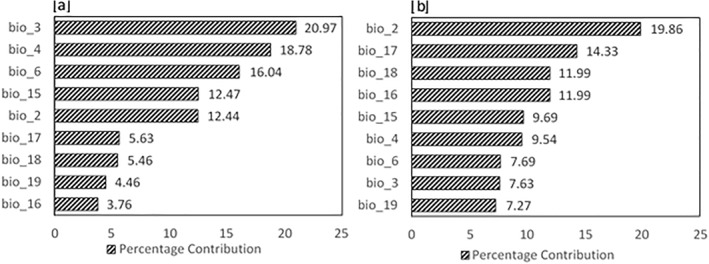
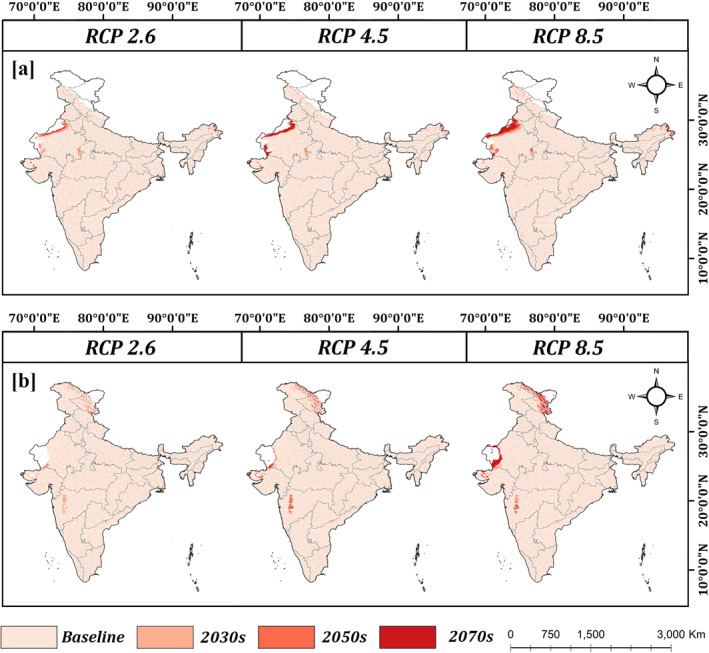
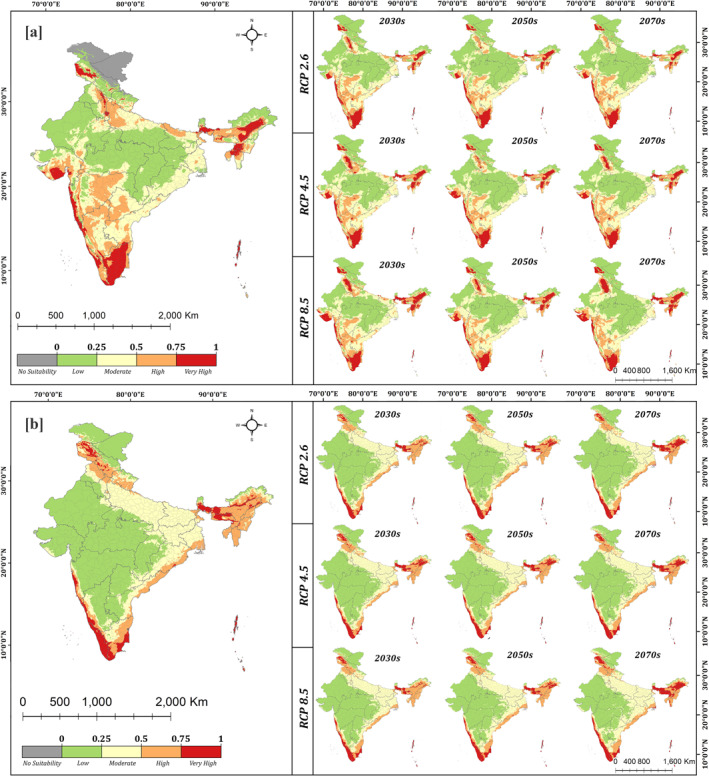
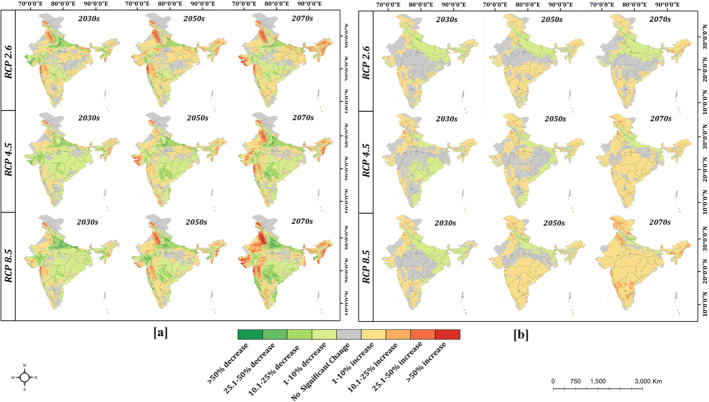
India has witnessed a five-fold increase in dengue incidence in the past decade. However, the nation-wide distribution of dengue vectors, and the impacts of climate change are not known. In this study, species distribution modeling was used to predict the baseline and future distribution of Aedine vectors in India on the basis of biologically relevant climatic indicators. Known occurrences of and were obtained from the Global Biodiversity Information Facility database and previous literature. Bio-climatic variables were used as the potential predictors of vector distribution. After eliminating collinear and low contributing predictors, the baseline and future prevalence of and was determined, under three Representative Concentration Pathway scenarios (RCP 2.6, RCP 4.5 and RCP 8.5), using the MaxEnt species distribution model. was found prevalent in most parts of the southern peninsula, the eastern coastline, north eastern states and the northern plains. In contrast, has localized distribution along the eastern and western coastlines, north eastern states and in the lower Himalayas. Under future scenarios of climate change, is projected to expand into unsuitable regions of the Thar desert, whereas is projected to expand to the upper and trans Himalaya regions of the north. Overall, the results provide a reliable assessment of vectors prevalence in most parts of the country that can be used to guide surveillance efforts, despite minor disagreements with dengue incidence in Rajasthan and the north east, possibly due to behavioral practices and sampling efforts.
在过去十年中,印度的登革热发病率增长了五倍。然而,登革热媒介在全国的分布情况以及气候变化的影响尚不清楚。在本研究中,基于生物学相关的气候指标,利用物种分布模型预测了印度伊蚊媒介的基线分布和未来分布。埃及伊蚊和白纹伊蚊的已知分布数据来自全球生物多样性信息设施数据库及以往文献。生物气候变量被用作媒介分布的潜在预测因子。在剔除共线和低贡献预测因子后,使用最大熵物种分布模型,在三种代表性浓度路径情景(RCP 2.6、RCP 4.5和RCP 8.5)下,确定了埃及伊蚊和白纹伊蚊的基线分布和未来分布情况。研究发现,埃及伊蚊在印度半岛南部、东部海岸线、东北部各邦以及北部平原的大部分地区均有分布。相比之下,白纹伊蚊则集中分布在东部和西部海岸线、东北部各邦以及喜马拉雅山脉低海拔地区。在未来气候变化情景下,预计埃及伊蚊将扩散至塔尔沙漠的不适宜区域,而白纹伊蚊预计将扩散至北部的高海拔和跨喜马拉雅地区。总体而言,尽管与拉贾斯坦邦和东北部的登革热发病率存在细微差异,可能是由于行为习惯和抽样工作所致,但研究结果为该国大部分地区的媒介分布情况提供了可靠评估,可用于指导监测工作。