Department of Physics, College of Natural and Computational Science, Dambi Dollo University, Dembi Dolo, Ethiopia.
Centre for Excellence-Indigenous Knowledge, Innovative Technology Transfer and Entrepreneurship, Dambi Dollo University, Dembi Dolo, Ethiopia.
Sci Rep. 2022 Jun 30;12(1):11021. doi: 10.1038/s41598-022-14403-7.
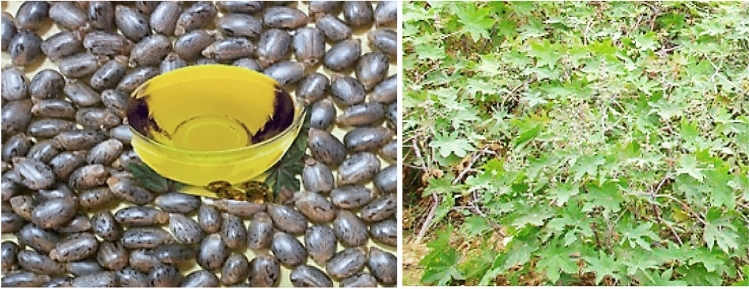
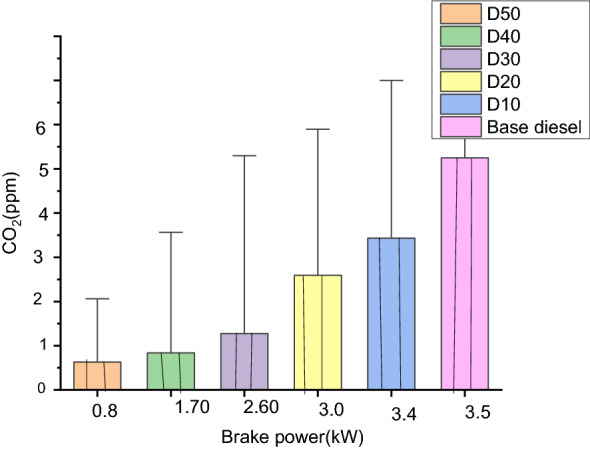
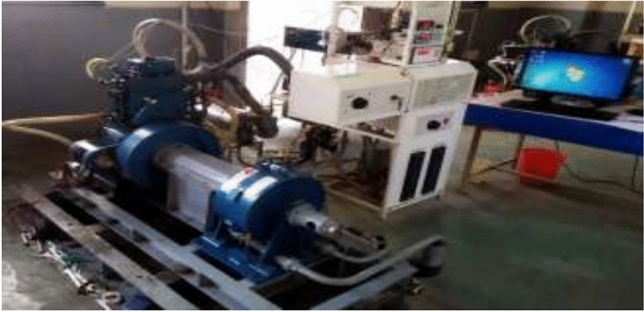
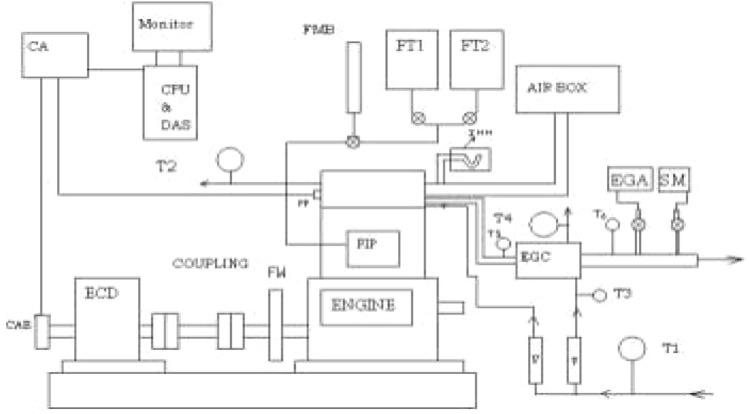
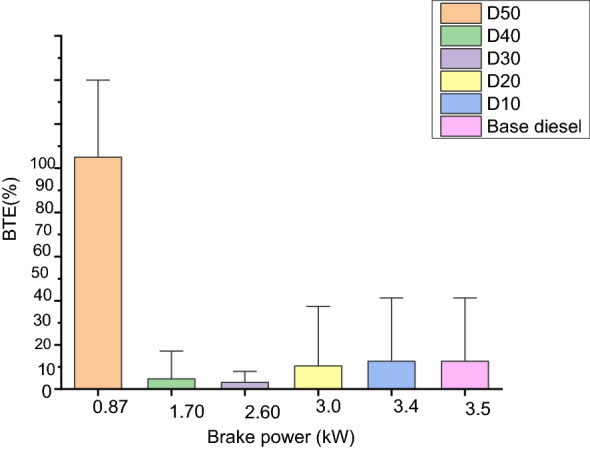
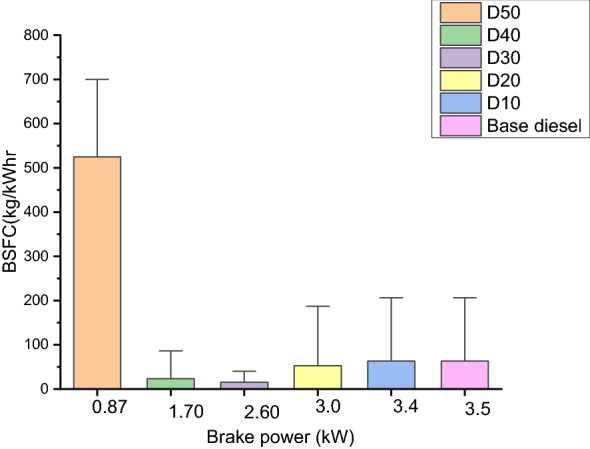
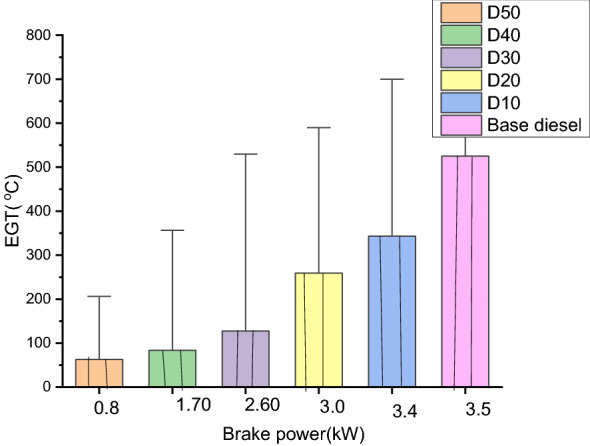
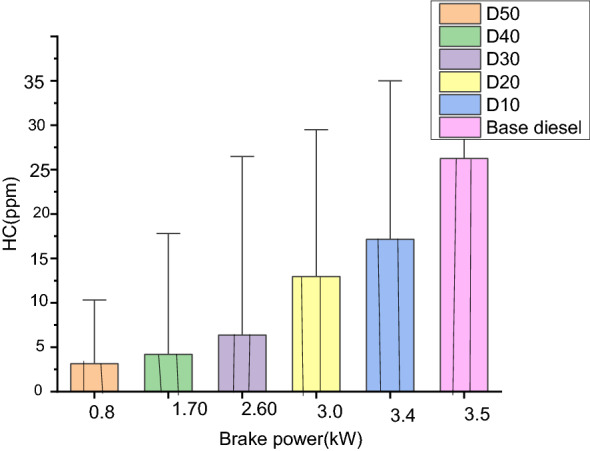
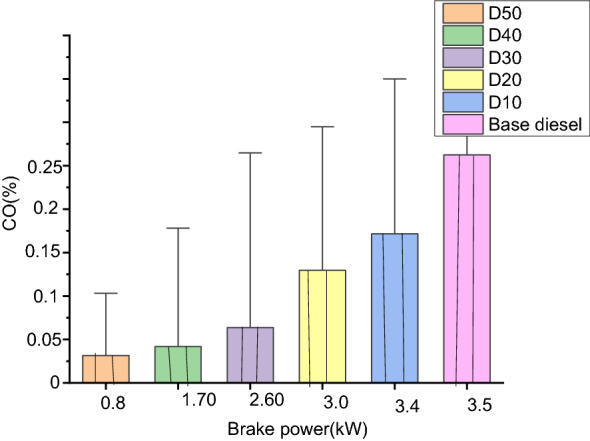
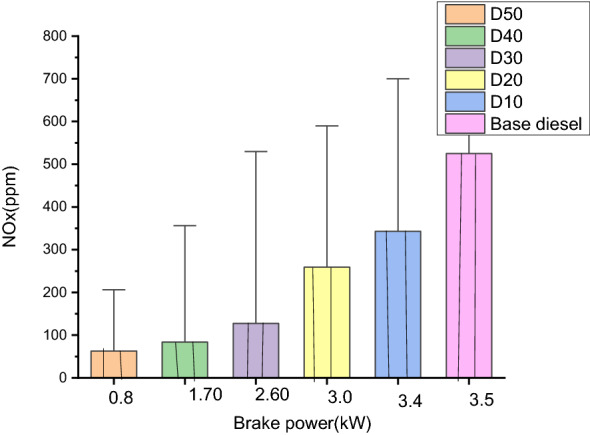
The current study assesses the prospect of using R. Communis seed oil as a substitute fuel for diesel engines. Biodiesel is prepared from the R. Communis plant seed oil by a single-step base catalytic transesterification procedure. The investigation deals with the Physico-chemical characteristics of R. Communis biodiesel and has been associated with the base diesel. It has been perceived that the characteristics of biodiesel are well-matched with the base diesel under the ASTM D6751 limits correspondingly. R. Communis biodiesel is blended in different proportions with base diesel such as D10, D20, D30, D40, D50 and D100 and is tested in a Kirloskar TV1 single-cylinder, 4 blows DI engine under altered loading conditions. Outcomes demonstrate that BTE and BSFC for D10 as well as D20 are similar to base diesel. BSFC indicates that the precise BSFC of base diesel, D10, D20, D30, D40 and D50 was 0.87, 1.70, 2.60, 3.0, 3.4, and 3.5 kg/kW-hr, respectively. The extreme BTE at full load condition for base diesel, D10, D20, D30, D40, D50 and D100 are 28.2%, 28.1%, 27.9%, 25.5%, 24.1%, and 23.6% , respectively. In the case of engine emissions, R. Communis biodiesel blends provided an average decrease in hydrocarbon (HC), Carbon-monoxide (CO) and carbon dioxide (CO2) associated with base diesel. Nevertheless, R. Communis biodiesel blends discharged high stages of nitrogen oxide (NOx) compares to base diesel. Base diesel, D10, D20, D30, D40, D50, and D100 had UBHC emissions of 45 ppm, 40 ppm, 44 ppm, 46 ppm, 41 ppm, and 43 ppm, respectively. The reduction in CO emissions for D10, D20, D30, D40, D50 and D100 are 0.13%, 0.14%, 0.17%, 0.18% and 0.21% respectively. The dissimilarity in NOx attentiveness within brake powers for D10, D20, D30, D40, and D50 and base diesel are 50-ppm, 100 ppm, 150 ppm, 250 ppm, 350 ppm, and 500 ppm, respectively. The dissimilarity of CO emanation with reverence to break powers for the base-diesel, D10, D20, D30, D40, D50, and D100 are 4.8%, 4.9%, 4.8%, 4.56%, 4.9% and 5.1%, respectively. The present research provides a way for renewable petrol blends to substitute diesel for powering diesel engines in that way dropping the reliance on fossil fuels.
当前的研究评估了使用 R.Communis 籽油作为替代柴油发动机燃料的前景。通过单步碱催化酯交换法从 R.Communis 植物种子油中制备生物柴油。这项研究涉及 R.Communis 生物柴油的物理化学特性,并与基础柴油有关。人们认为,在相应的 ASTM D6751 限制下,生物柴油的特性与基础柴油非常匹配。R.Communis 生物柴油以不同比例与基础柴油(如 D10、D20、D30、D40、D50 和 D100)混合,并在 Kirloskar TV1 单缸、4 冲程 DI 发动机中在不同的加载条件下进行测试。结果表明,D10 和 D20 的 BTE 和 BSFC 与基础柴油相似。BSFC 表明,基础柴油、D10、D20、D30、D40 和 D50 的精确 BSFC 分别为 0.87、1.70、2.60、3.0、3.4 和 3.5 kg/kW-hr。在全负荷条件下,基础柴油、D10、D20、D30、D40、D50 和 D100 的最大 BTE 分别为 28.2%、28.1%、27.9%、25.5%、24.1%和 23.6%。就发动机排放而言,与基础柴油相比,R.Communis 生物柴油混合物平均降低了烃(HC)、一氧化碳(CO)和二氧化碳(CO2)的排放。然而,与基础柴油相比,R.Communis 生物柴油混合物排放的氮氧化物(NOx)水平较高。基础柴油、D10、D20、D30、D40、D50 和 D100 的 UBHC 排放量分别为 45 ppm、40 ppm、44 ppm、46 ppm、41 ppm 和 43 ppm。D10、D20、D30、D40 和 D50 的 CO 排放量分别减少了 0.13%、0.14%、0.17%、0.18%和 0.21%。D10、D20、D30、D40 和 D50 与基础柴油在制动功率下的 NOx 关注度差异分别为 50-ppm、100-ppm、150-ppm、250-ppm、350-ppm 和 500-ppm。基础柴油、D10、D20、D30、D40、D50 和 D100 的 CO 排放与制动功率的差异分别为 4.8%、4.9%、4.8%、4.56%、4.9%和 5.1%。本研究为可再生汽油混合物替代柴油为发动机提供了一种方法,从而减少了对化石燃料的依赖。