Qin Xiong, Bi Ling, Yang Wenxiao, He Yiyun, Gu Yifeng, Yang Yong, Gong Yabin, Wang Yichao, Yan Xiaoxia, Xu Ling, Xiao Haibo, Jiao Lijing
Department of Thoracic Surgery, Shanghai Pulmonary Hospital, Tongji University, Shanghai, China.
Department of Oncology, Yueyang Hospital of Integrated Traditional Chinese and Western Medicine, Shanghai University of Traditional Chinese Medicine, Shanghai, China.
Front Microbiol. 2022 Jun 14;13:918823. doi: 10.3389/fmicb.2022.918823. eCollection 2022.
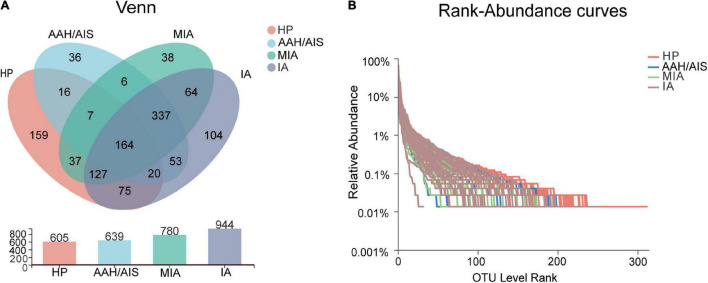
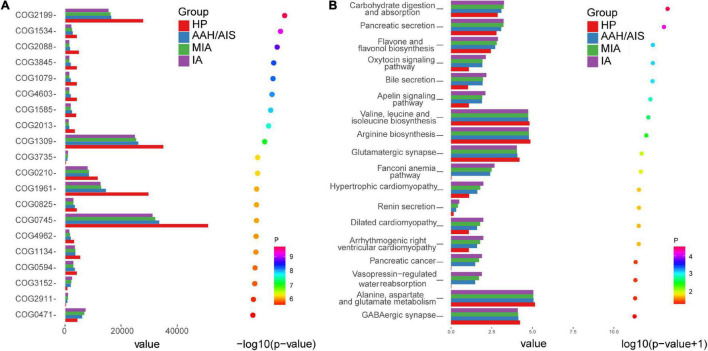
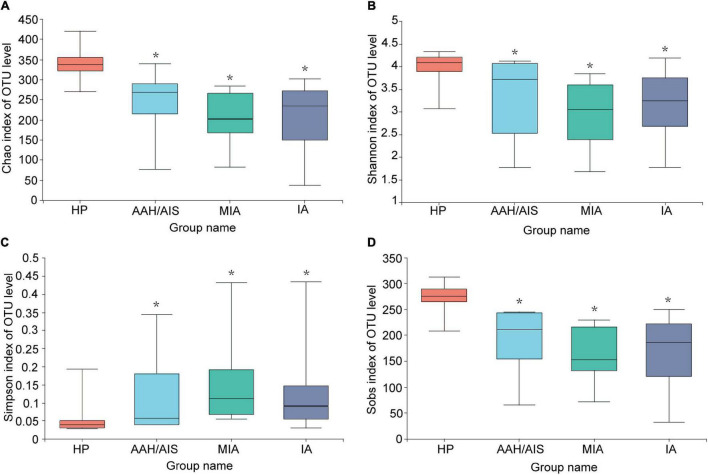
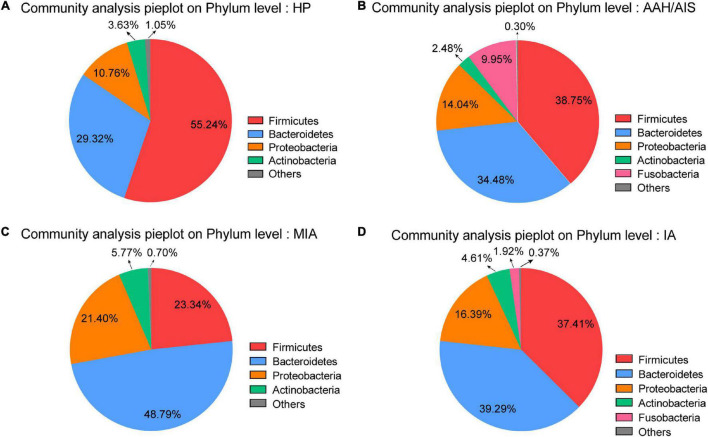
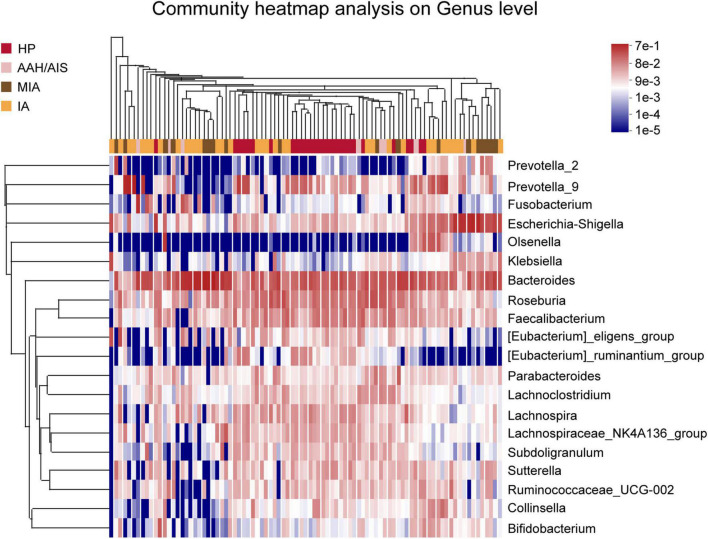
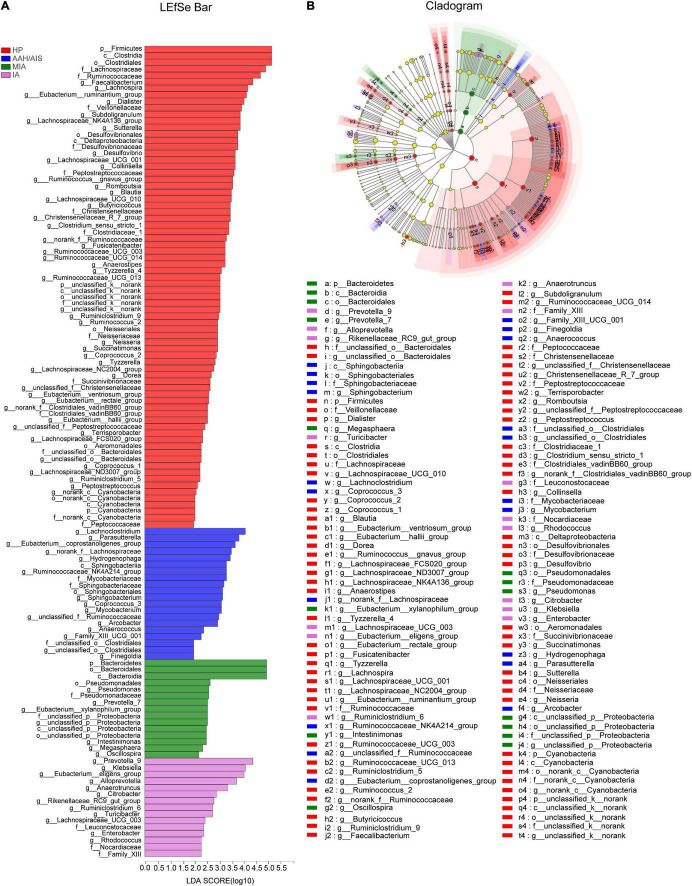
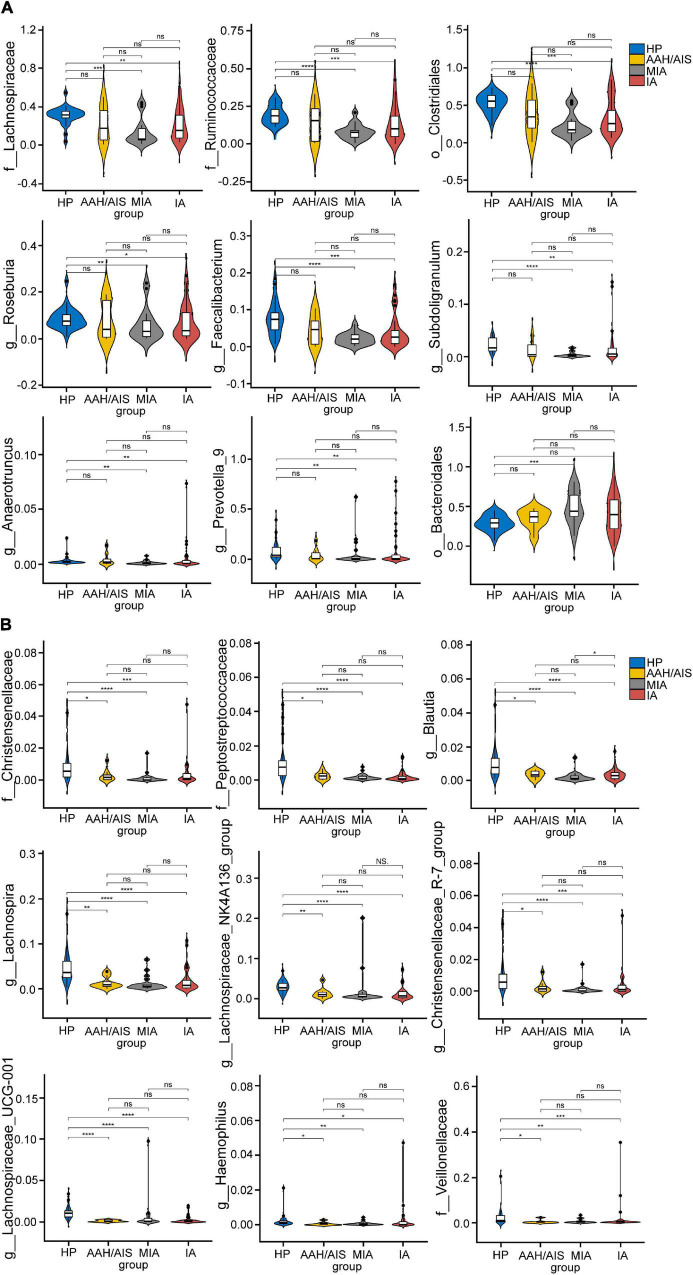
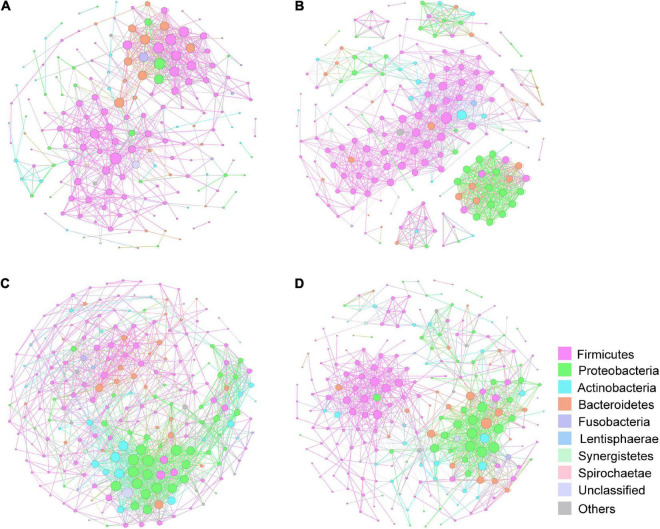
Lung cancer is a malignancy with high incidence and mortality worldwide. Previous studies have shown that the gut microbiome plays an important role in the development and progression of metabolic cancers. However, data on the characteristics of the gut microbiome with different histopathology types of lung cancer remain scant. We collected stool samples from 28 healthy people (HP) and 61 lung cancer patients. The lung cancer patients were classified into three types according to their histopathology: Atypical Adenomatous Hyperplasia/Adenocarcinoma (AAH/AIS), Minimally Invasive Adenocarcinoma (MIA), and Invasive Adenocarcinoma (IA). In addition, we employed 16S rRNA gene amplicon sequencing to analyze the characteristics of the gut microbiome in these patients. Our analysis revealed that the categorized cancer patients had unique intestinal flora characteristics, and had lower density and flora diversity compared to healthy people. Besides, the structure of the flora families and genera was more complex, and each group presented specific pathogenic microbiota. The patients in the AAH/AIS group and HP group had relatively similar flora structure compared with the IA and MIA groups. In addition, we identified several flora markers that showed significant changes with the development of lung cancer. Lung cancer gut microbiota showed a decrease in short-chain fatty acids (SCFAs) producing and anti-inflammatory bacteria compared to healthy people, while some pathogenic bacteria such as proinflammatory or tumor-promoting bacteria were more abundant in lung cancer patients. On the other hand, the Kyoto Encyclopedia of Genes and Genomes (KEGG) and Clusters of Orthologous Group (COG) annotation demonstrated suppression of some dominant metabolism-related pathways in lung cancer. These findings provide new biomarkers for the diagnosis and prognostic assessment of lung cancer and lay the basis for novel targeted therapeutic strategies for the prevention and treatment of lung cancer.
[www.ClinicalTrials.gov], identifier [NCT03244605].
肺癌是全球发病率和死亡率都很高的恶性肿瘤。先前的研究表明,肠道微生物群在代谢性癌症的发生和发展中起重要作用。然而,关于不同组织病理学类型肺癌的肠道微生物群特征的数据仍然很少。我们收集了28名健康人(HP)和61名肺癌患者的粪便样本。肺癌患者根据其组织病理学分为三种类型:非典型腺瘤样增生/原位腺癌(AAH/AIS)、微浸润腺癌(MIA)和浸润性腺癌(IA)。此外,我们采用16S rRNA基因扩增子测序来分析这些患者肠道微生物群的特征。我们的分析表明,分类后的癌症患者具有独特的肠道菌群特征,与健康人相比,其密度和菌群多样性较低。此外,菌群科和属的结构更复杂,每组都呈现出特定的致病微生物群。与IA组和MIA组相比,AAH/AIS组患者和HP组患者的菌群结构相对相似。此外,我们鉴定了几种随着肺癌发展而显示出显著变化的菌群标志物。与健康人相比,肺癌肠道微生物群中产生短链脂肪酸(SCFAs)的细菌和抗炎细菌减少,而一些致病细菌,如促炎或促肿瘤细菌在肺癌患者中更为丰富。另一方面,京都基因与基因组百科全书(KEGG)和直系同源簇(COG)注释表明肺癌中一些主要的代谢相关途径受到抑制。这些发现为肺癌的诊断和预后评估提供了新的生物标志物,并为肺癌预防和治疗的新型靶向治疗策略奠定了基础。
[www.ClinicalTrials.gov],标识符 [NCT03244605]。