Department of Ophthalmology, West China Hospital, Sichuan University, Chengdu, Sichuan, 610041, China; Save Sight Institute, Faculty of Medicine and Health, The University of Sydney, Sydney, NSW, 2000, Australia.
Save Sight Institute, Faculty of Medicine and Health, The University of Sydney, Sydney, NSW, 2000, Australia.
Redox Biol. 2022 Aug;54:102379. doi: 10.1016/j.redox.2022.102379. Epub 2022 Jun 24.
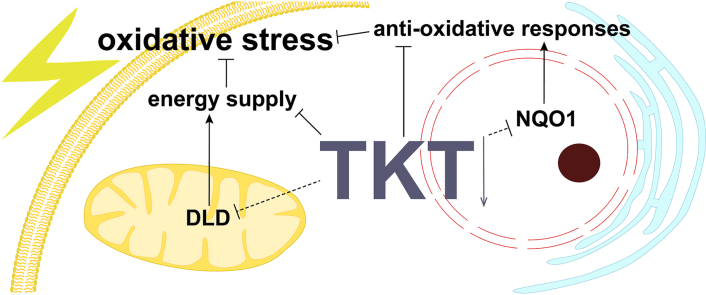
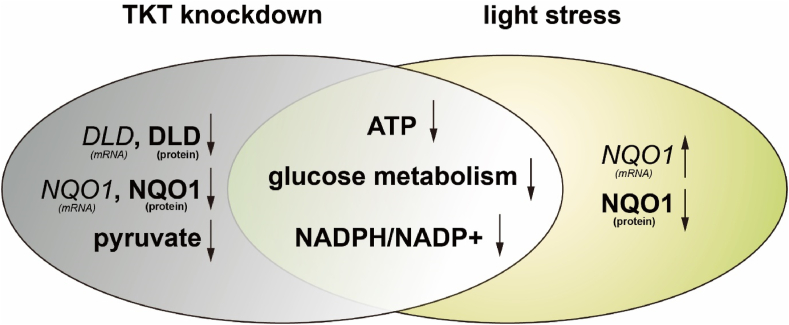
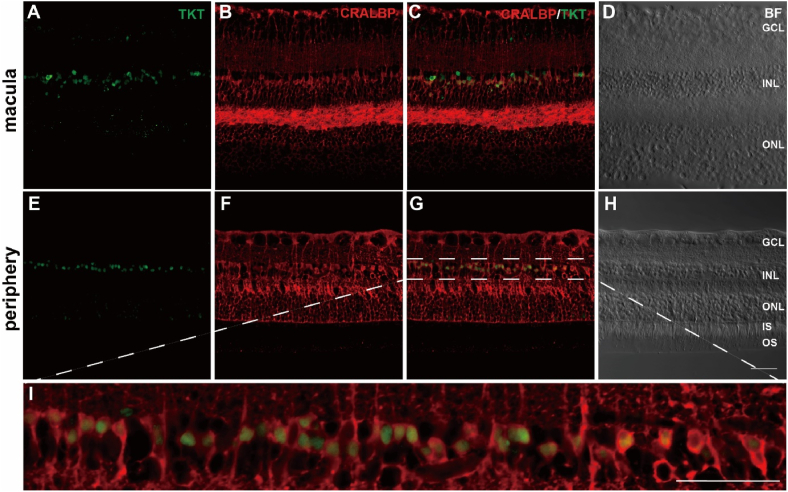
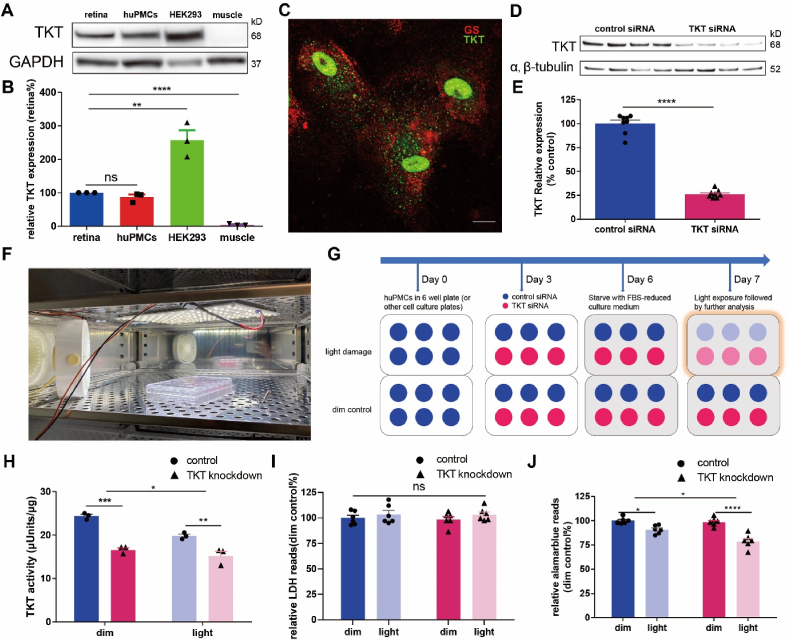
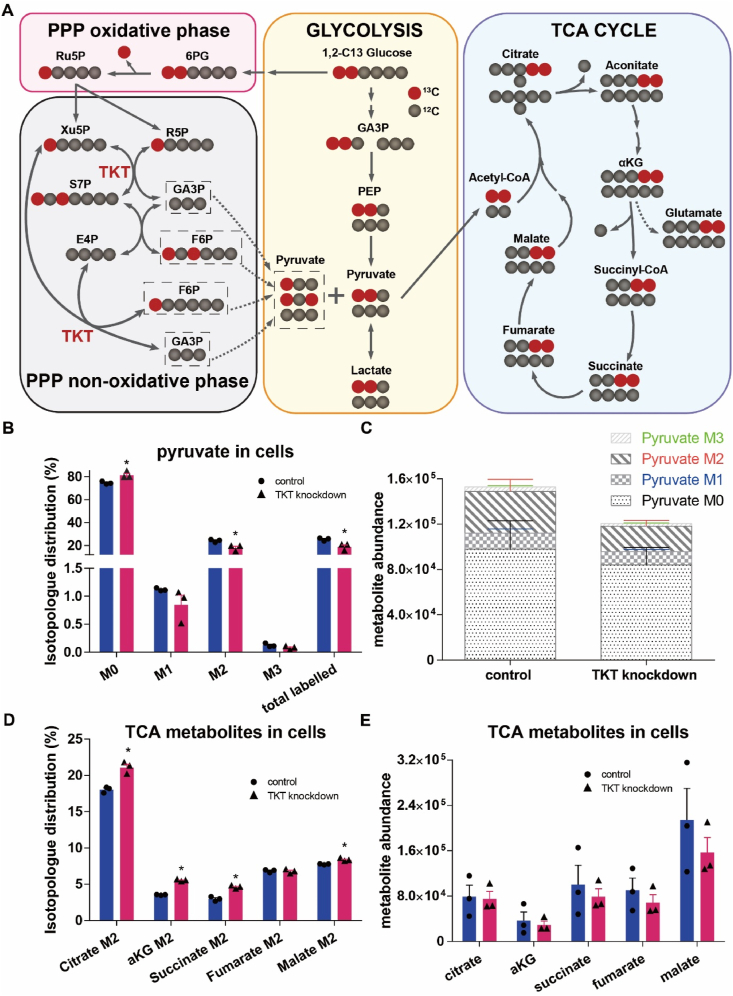
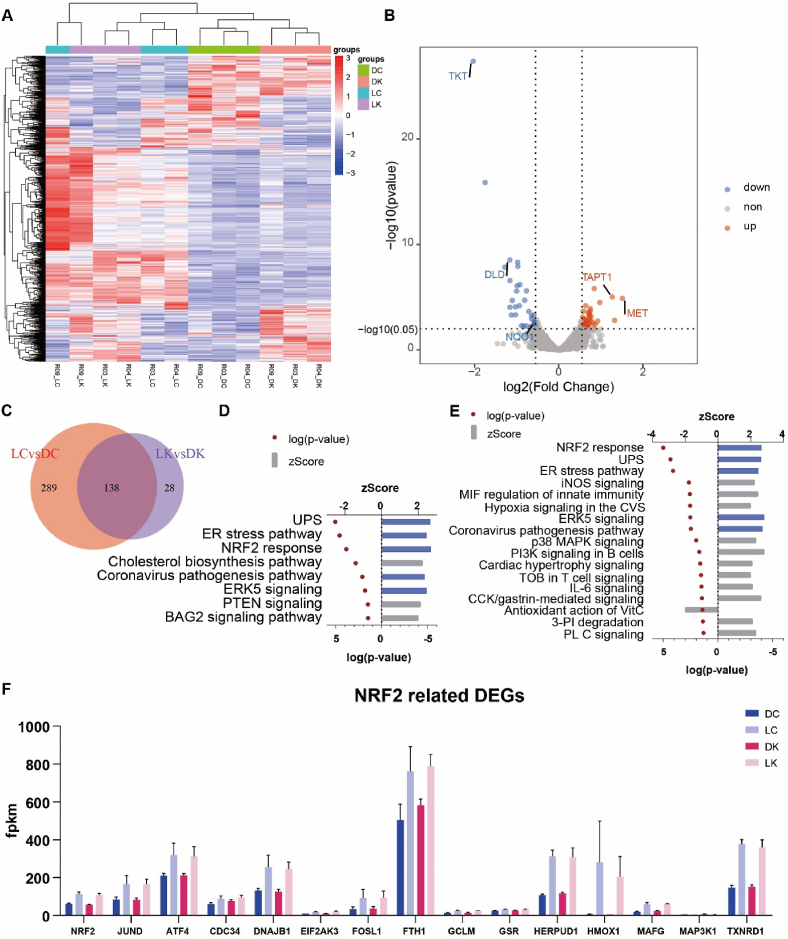
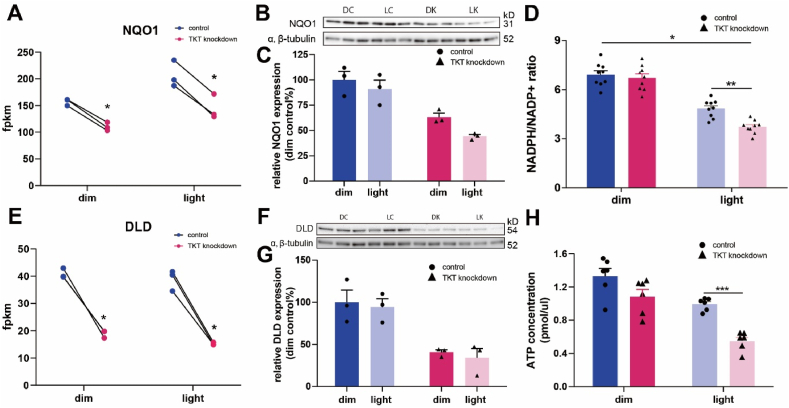
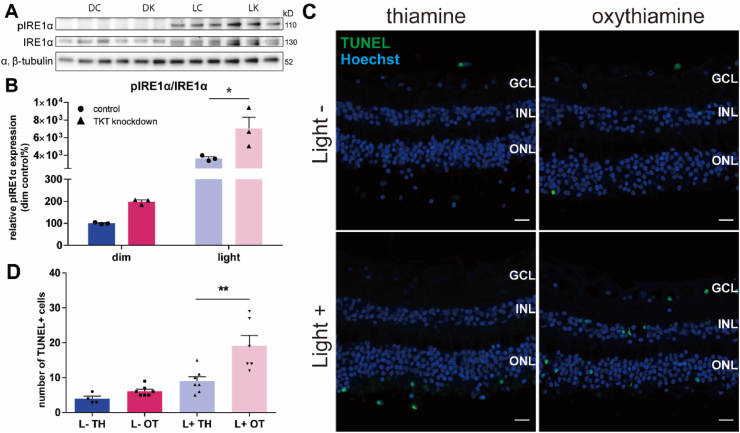
The Pentose Phosphate Pathway (PPP), a metabolic offshoot of the glycolytic pathway, provides protective metabolites and molecules essential for cell redox balance and survival. Transketolase (TKT) is the critical enzyme that controls the extent of "traffic flow" through the PPP. Here, we explored the role of TKT in maintaining the health of the human retina. We found that Müller cells were the primary retinal cell type expressing TKT in the human retina. We further explored the role of TKT in human Müller cells by knocking down its expression in primary cultured Müller cells (huPMCs), isolated from the human retina (11 human donors in total), under light-induced oxidative stress. TKT knockdown and light stress reduced TKT enzymatic activities and the overall metabolic activities of huPMCs with no detectable cell death. TKT knockdown restrained the PPP traffic flow, reduced the expression of NAD(P)H Quinone Dehydrogenase 1 (NQO1), impaired the antioxidative response of NRF2 to light stress and aggravated the endoplasmic reticulum (ER) stress. TKT knockdown also inhibited overall glucose intake, reduced expression of Dihydrolipoamide dehydrogenase (DLD) and impaired the energy supply of the huPMCs. In summary, Müller cell-mediated TKT activity plays a critical protective role in the stressed retina. Knockdown of TKT disrupted the PPP and impaired overall glucose utilisation by huPMCs and rendered huPMCs more vulnerable to light stress by impairing energy supply and antioxidative NRF2 responses.
戊糖磷酸途径(PPP)是糖酵解途径的代谢分支,提供保护代谢物和分子,对细胞氧化还原平衡和存活至关重要。转酮醇酶(TKT)是控制 PPP 中“交通流量”程度的关键酶。在这里,我们探讨了 TKT 在维持人视网膜健康中的作用。我们发现,Müller 细胞是人视网膜中主要表达 TKT 的视网膜细胞类型。我们通过在体外培养的 Müller 细胞(huPMCs)中敲低其表达,进一步探讨了 TKT 在人 Müller 细胞中的作用,huPMCs 是从人视网膜(总共 11 位供体)中分离出来的。在光诱导的氧化应激下,TKT 敲低和光应激降低了 TKT 的酶活性和 huPMCs 的整体代谢活性,而没有检测到细胞死亡。TKT 敲低抑制了 PPP 的流量,降低了 NAD(P)H 醌脱氢酶 1(NQO1)的表达,损害了 NRF2 对光应激的抗氧化反应,并加重了内质网(ER)应激。TKT 敲低还抑制了葡萄糖的总体摄取,降低了二氢硫辛酰胺脱氢酶(DLD)的表达,并损害了 huPMCs 的能量供应。总之,Müller 细胞介导的 TKT 活性在应激状态的视网膜中发挥了关键的保护作用。TKT 敲低破坏了 PPP,并损害了 huPMCs 对葡萄糖的总体利用,通过损害能量供应和抗氧化 NRF2 反应,使 huPMCs 更容易受到光应激的影响。