Department of Civil and Environmental Engineering, Michigan State University, 1449 Engineering Research Ct, East Lansing, MI 48823, United States of America.
Detroit Health Department, 100 Mack Ave, Detroit, MI 48201, United States of America.
Sci Total Environ. 2022 Oct 20;844:157040. doi: 10.1016/j.scitotenv.2022.157040. Epub 2022 Jun 29.
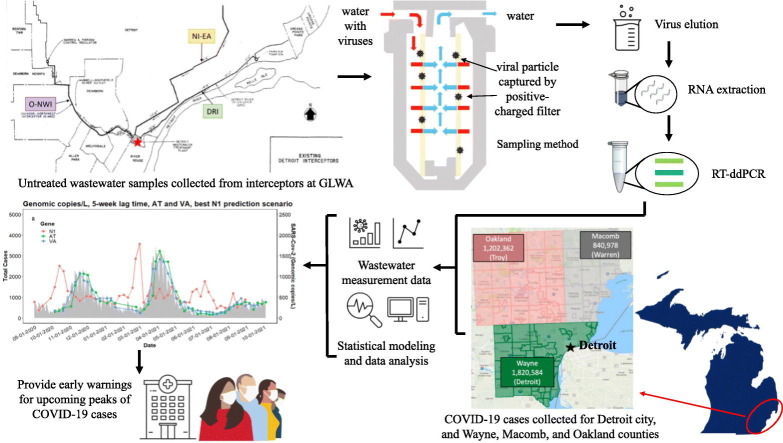
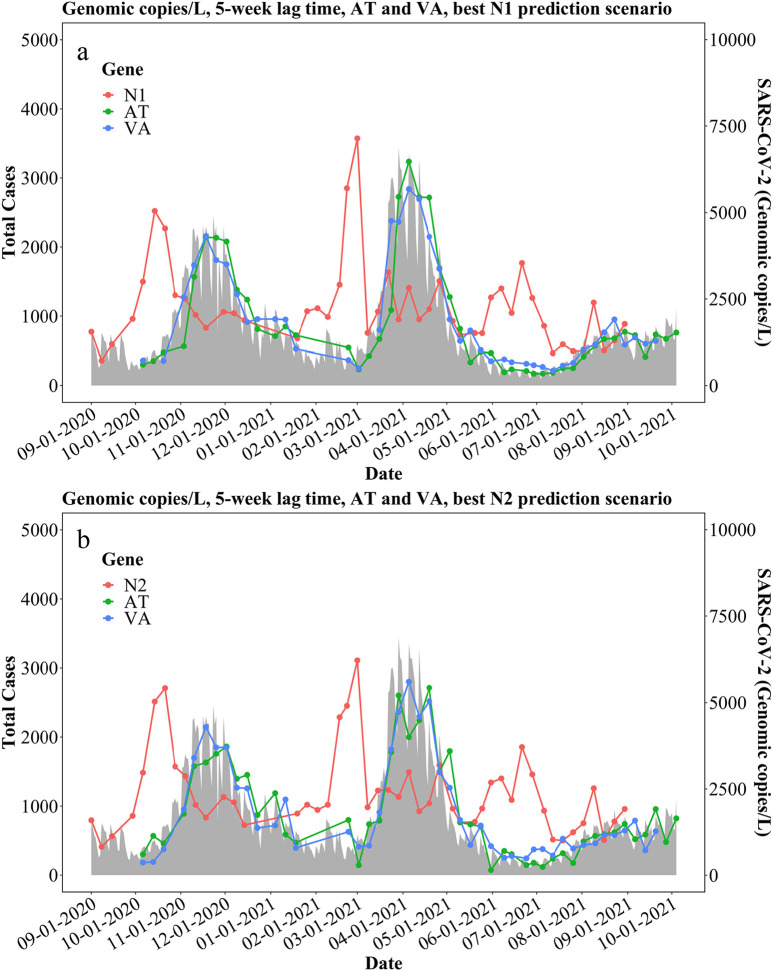
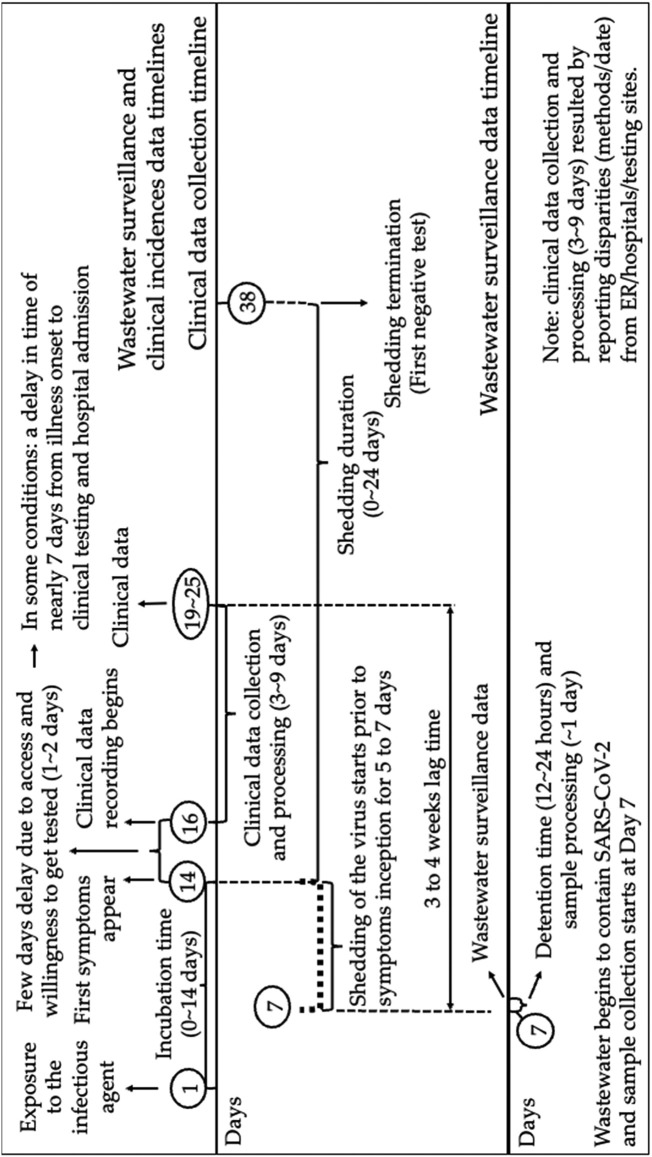
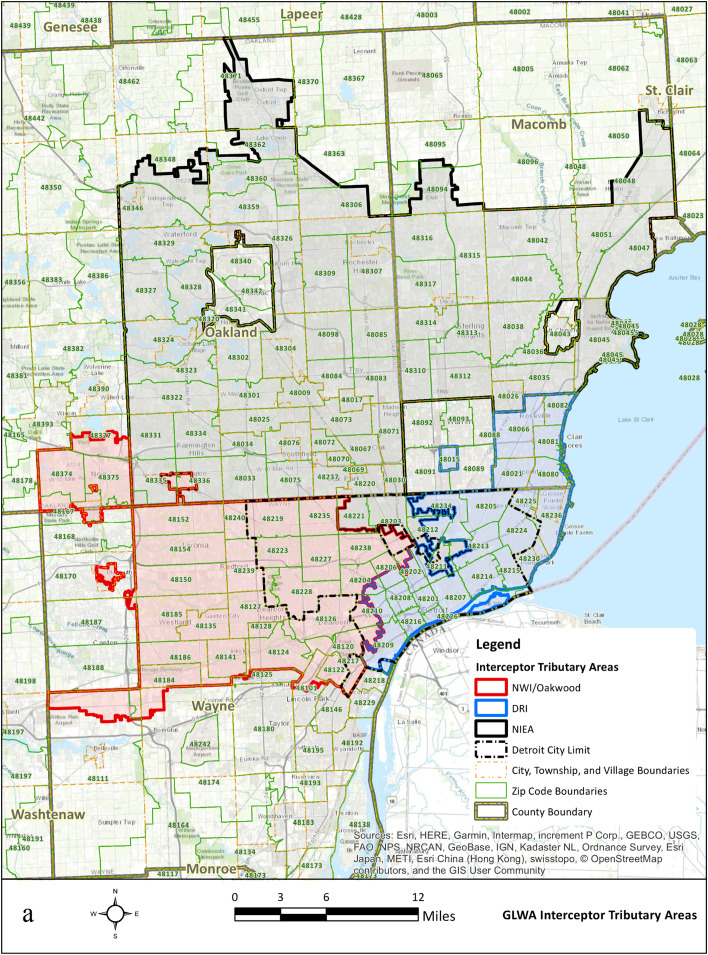
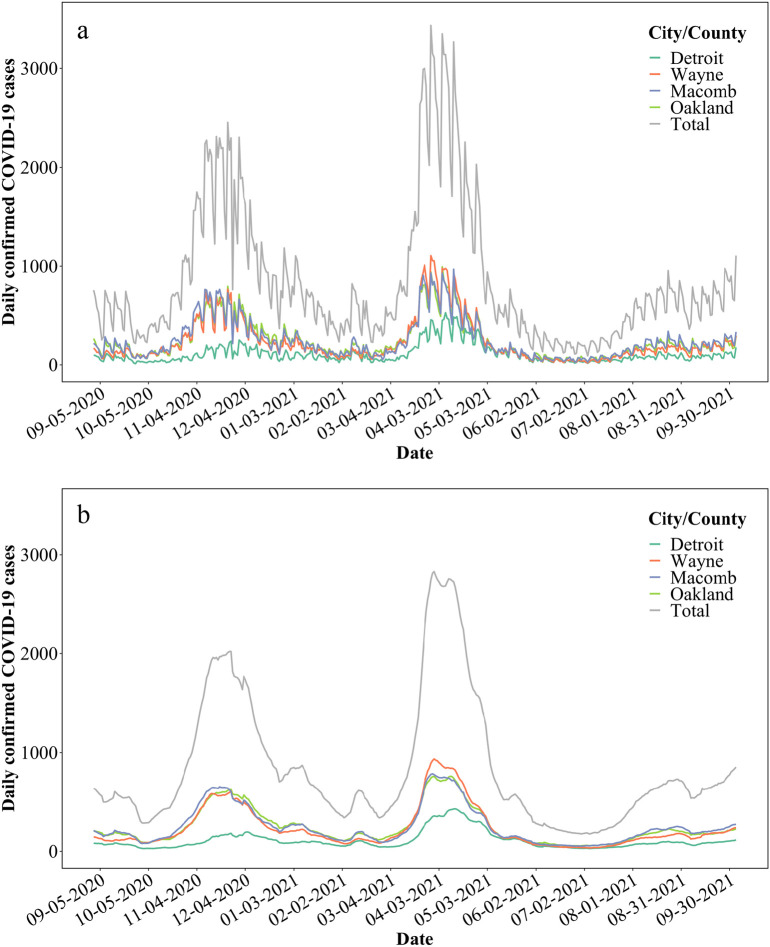
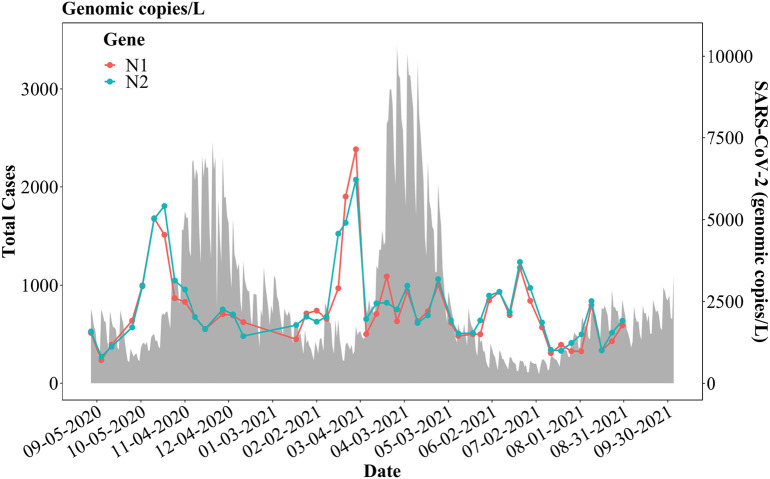
Wastewater-based epidemiology (WBE) is useful in predicting temporal fluctuations of COVID-19 incidence in communities and providing early warnings of pending outbreaks. To investigate the relationship between SARS-CoV-2 concentrations in wastewater and COVID-19 incidence in communities, a 12-month study between September 1, 2020, and August 31, 2021, prior to the Omicron surge, was conducted. 407 untreated wastewater samples were collected from the Great Lakes Water Authority (GLWA) in southeastern Michigan. N1 and N2 genes of SARS-CoV-2 were quantified using RT-ddPCR. Daily confirmed COVID-19 cases for the City of Detroit, and Wayne, Macomb, Oakland counties between September 1, 2020, and October 4, 2021, were collected from a public data source. The total concentrations of N1 and N2 genes ranged from 714.85 to 7145.98 gc/L and 820.47 to 6219.05 gc/L, respectively, which were strongly correlated with the 7-day moving average of total daily COVID-19 cases in the associated areas, after 5 weeks of the viral measurement. The results indicate a potential 5-week lag time of wastewater surveillance preceding COVID-19 incidence for the Detroit metropolitan area. Four statistical models were established to analyze the relationship between SARS-CoV-2 concentrations in wastewater and COVID-19 incidence in the study areas. Under a 5-week lag time scenario with both N1 and N2 genes, the autoregression model with seasonal patterns and vector autoregression model were more effective in predicting COVID-19 cases during the study period. To investigate the impact of flow parameters on the correlation, the original N1 and N2 gene concentrations were normalized by wastewater flow parameters. The statistical results indicated the optimum models were consistent for both normalized and non-normalized data. In addition, we discussed parameters that explain the observed lag time. Furthermore, we evaluated the impact of the omicron surge that followed, and the impact of different sampling methods on the estimation of lag time.
基于污水的流行病学(WBE)可用于预测社区中 COVID-19 发病率的时间波动,并提供即将发生的疫情爆发的预警。为了研究污水中 SARS-CoV-2 浓度与社区中 COVID-19 发病率之间的关系,在奥密克戎浪潮之前,于 2020 年 9 月 1 日至 2021 年 8 月 31 日进行了为期 12 个月的研究。从密歇根州东南部的大湖水务管理局(GLWA)采集了 407 个未经处理的污水样本。使用 RT-ddPCR 定量 SARS-CoV-2 的 N1 和 N2 基因。从公共数据源收集了 2020 年 9 月 1 日至 2021 年 10 月 4 日底特律市和韦恩、麦克马洪、奥克兰县的每日确诊 COVID-19 病例。N1 和 N2 基因的总浓度范围分别为 714.85 至 7145.98 gc/L 和 820.47 至 6219.05 gc/L,在病毒测量后 5 周内,与相关区域内总日 COVID-19 病例的 7 天移动平均值呈强相关。结果表明,底特律大都市区的污水监测可能存在 5 周的滞后时间,才能预测 COVID-19 发病率。建立了四个统计模型来分析研究区域污水中 SARS-CoV-2 浓度与 COVID-19 发病率之间的关系。在具有 N1 和 N2 基因的 5 周滞后时间情景下,具有季节性模式的自回归模型和向量自回归模型在预测研究期间的 COVID-19 病例方面更有效。为了研究流量参数对相关性的影响,通过污水流量参数对原始 N1 和 N2 基因浓度进行归一化。统计结果表明,对于归一化和非归一化数据,最优模型是一致的。此外,我们讨论了解释观察到的滞后时间的参数。此外,我们评估了随后的奥密克戎浪潮以及不同采样方法对滞后时间估计的影响。