Firouzi Safieh, Pahlavani Naseh, Navashenaq Jamshid Gholizadeh, Clayton Zachary Stephen, Beigmohammadi Mohammad Taghi, Malekahmadi Mahsa
Department of Nutrition, School of Health, Golestan University of Medical Sciences, Gorgan, Iran.
Health Sciences Research Center, Torbat Heydariyeh University of Medical Sciences, Torbat Heydariyeh, Iran.
Clin Nutr Open Sci. 2022 Aug;44:144-154. doi: 10.1016/j.nutos.2022.06.006. Epub 2022 Jun 25.
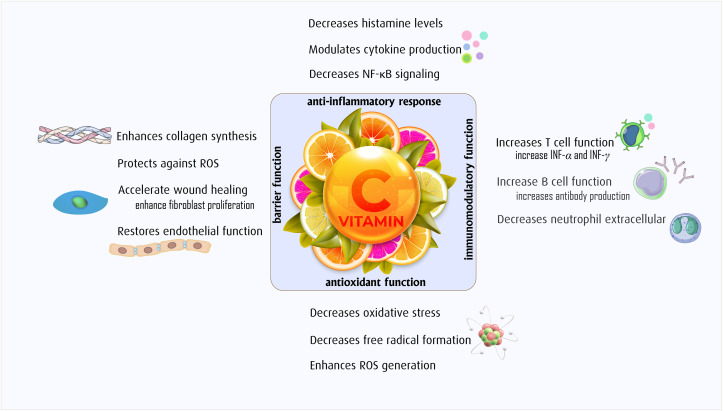
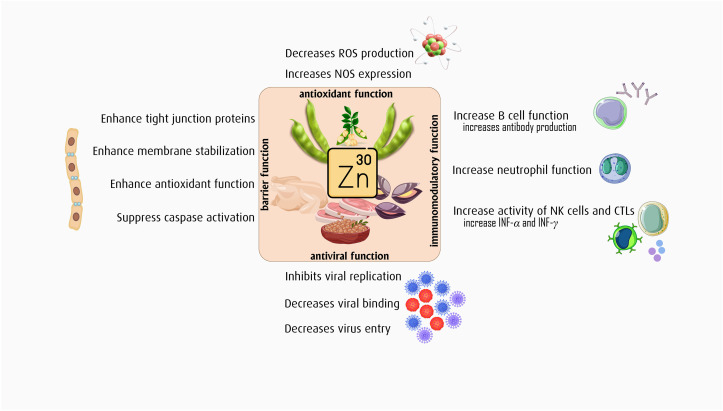
SARS-CoV-2 (Severe Acute Respiratory Syndrome-Coronavirus-2) is the most dangerous form of the coronavirus, which causes COVID-19. In patients with severe COVID-19, the immune system becomes markedly overactive. There is evidence that supplementation with select micronutrients may play a role in maintaining immune system function in this patient population. Throughout the COVID-19 pandemic, significant emphasis has been placed on the importance of supplementing critical micronutrients such as Vitamin C and Zinc (Zn) due to their immunomodulatory effects. Viral infections, like COVID-19, increase physiological demand for these micronutrients. Therefore, the purpose of this review was to provide comprehensive information regarding the potential effectiveness of Vitamin C and Zn supplementation during viral infection and specifically COVID-19. This review demonstrated a relation between Vitamin C and Zn deficiency and a reduction in the innate immune response, which can ultimately make patients with COVID-19 more vulnerable to viral infection. As such, adequate intake of Vitamin C and Zn, as an adjunctive therapeutic approach with any necessary pharmacological treatment(s), may be necessary to mitigate the adverse physiological effects of COVID-19. To truly clarify the role of Vitamin C and Zn supplementation in the management of COVID-19, we must wait for the results of ongoing randomized controlled trials. The toxicity of Vitamin C and Zn should also be considered to prevent over-supplementation. Over-supplementation of Vitamin C can lead to oxalate toxicity, while increased Zn intake can reduce immune system function. In summary, Vitamin C and Zn supplementation may be useful in mitigating COVID-19 symptomology.
严重急性呼吸综合征冠状病毒2(SARS-CoV-2)是冠状病毒中最危险的一种形式,可导致新冠肺炎。在新冠肺炎重症患者中,免疫系统会明显过度活跃。有证据表明,补充特定的微量营养素可能有助于维持这一患者群体的免疫系统功能。在整个新冠肺炎大流行期间,由于维生素C和锌(Zn)具有免疫调节作用,人们一直高度重视补充这些关键微量营养素的重要性。像新冠肺炎这样的病毒感染会增加对这些微量营养素的生理需求。因此,本综述的目的是提供关于在病毒感染尤其是新冠肺炎期间补充维生素C和锌的潜在有效性的全面信息。本综述表明,维生素C和锌缺乏与先天免疫反应降低之间存在关联,这最终可能使新冠肺炎患者更容易受到病毒感染。因此,作为任何必要药物治疗的辅助治疗方法,充足摄入维生素C和锌可能有助于减轻新冠肺炎的不良生理影响。为了真正阐明补充维生素C和锌在新冠肺炎治疗中的作用,我们必须等待正在进行的随机对照试验的结果。还应考虑维生素C和锌的毒性,以防止过量补充。过量补充维生素C会导致草酸盐中毒,而锌摄入量增加会降低免疫系统功能。总之,补充维生素C和锌可能有助于减轻新冠肺炎的症状。