Wang Yi-Zhe, Cao Cheng-Quan, Wang Dun
State Key Laboratory of Crop Stress Biology for Arid Areas, Northwest A&F University, Yangling, China.
College of Life Science, Leshan Normal University, Leshan, China.
Front Physiol. 2022 Jun 15;13:879216. doi: 10.3389/fphys.2022.879216. eCollection 2022.
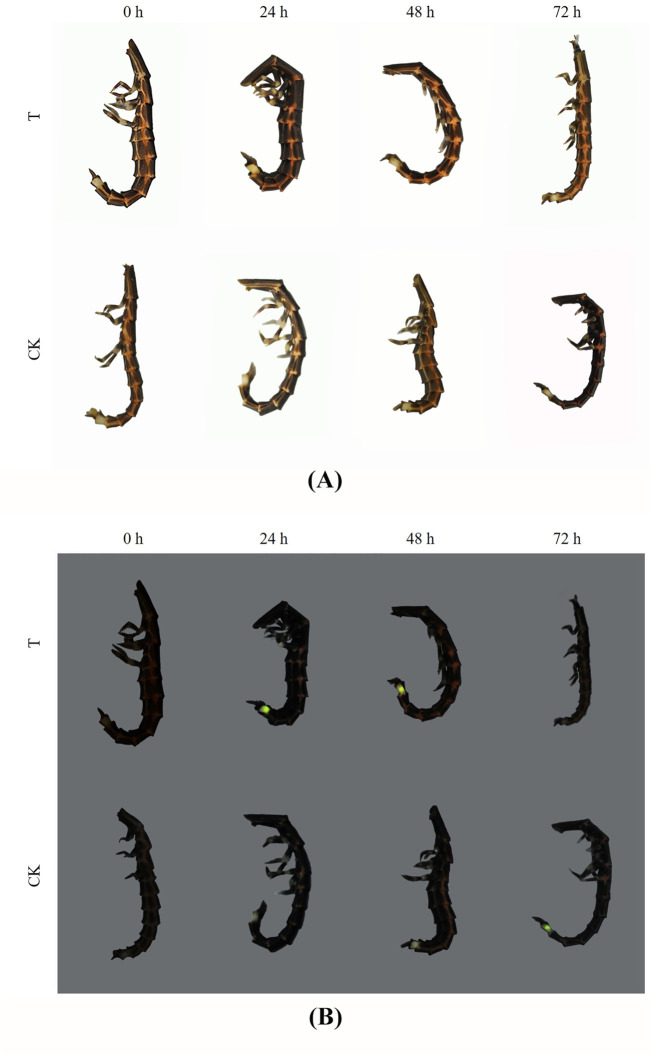
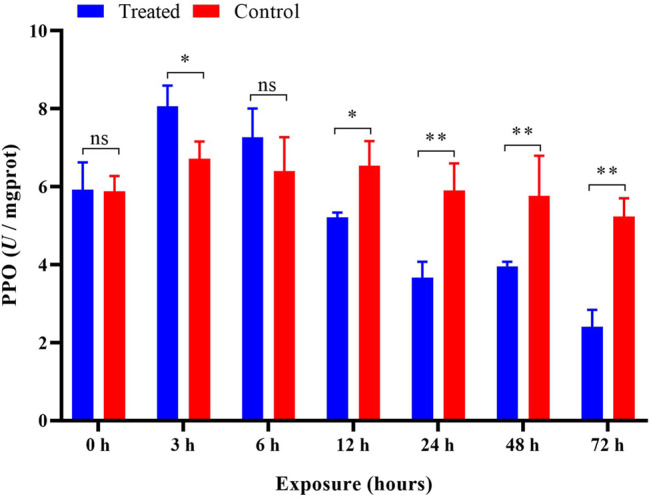
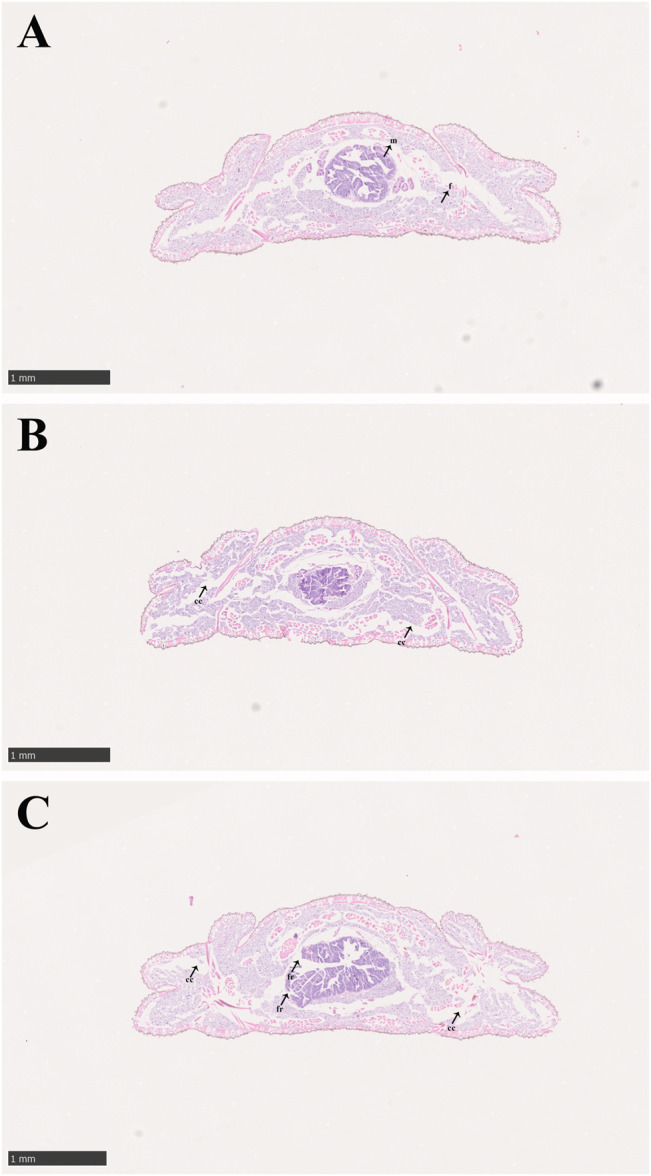
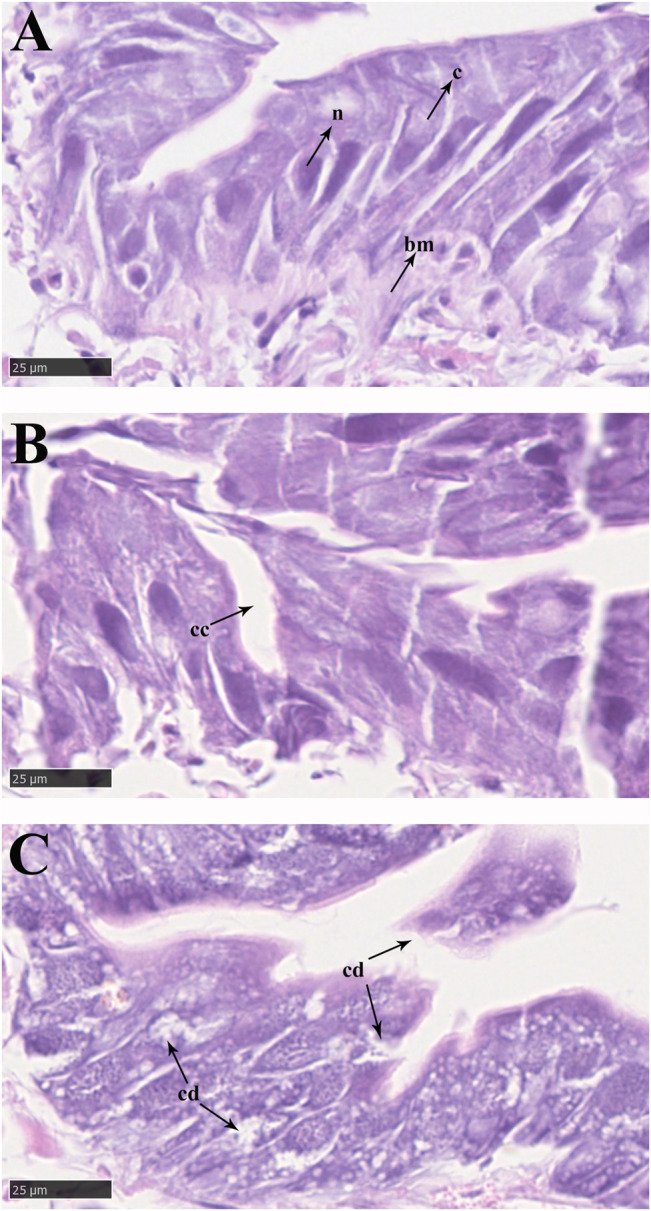
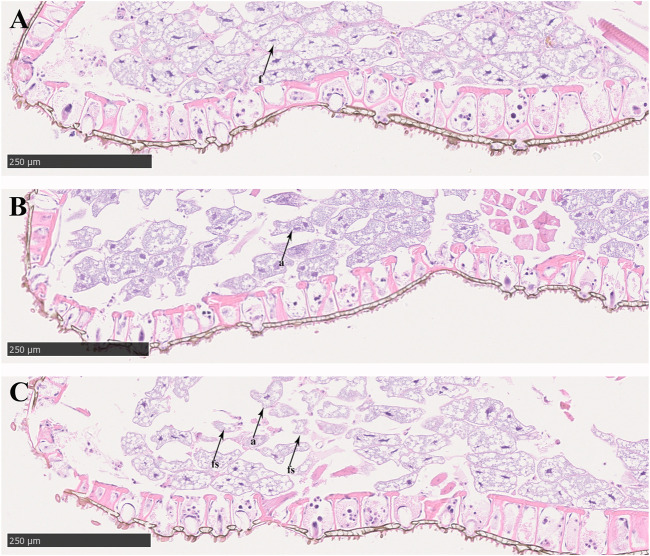
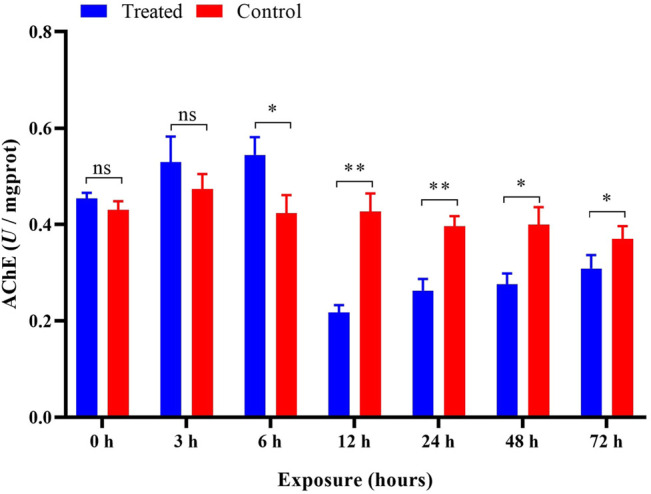
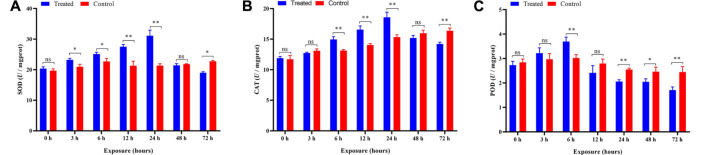
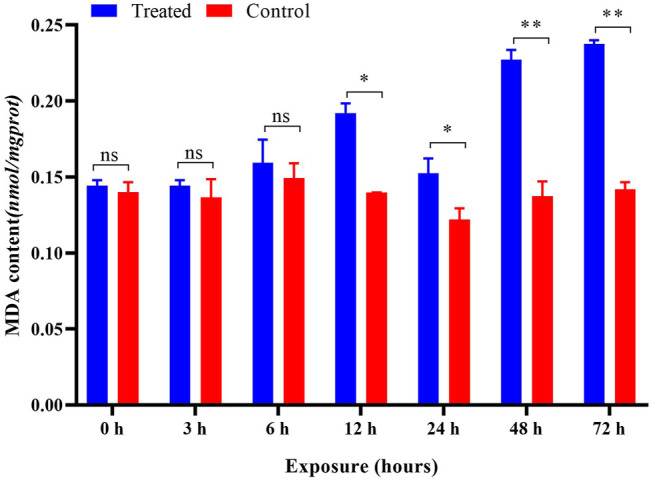
Imidacloprid, a neonicotinoid insecticide, is widely applied to control insect pests across a broad spectrum. Though the impact of residues from this chemical pesticide on non-target organisms in the field has been reported, it was not well characterized across a wide range of ecosystems, especially for some species considered as environmental indicators that live in forests. The effects of sublethal dose of imidacloprid on firefly, , were analyzed physiologically and biochemically in this study to better understand the impact of chemical pesticide application on environmental indicators such as fireflies. After imidacloprid treatment, the midgut tissues of the larva presented an abnormal morphology featured as atrophy of fat body cells, shrinking cells, and the destruction of a midgut structure. The activities of antioxidant enzymes, superoxide dismutase, catalase, and peroxidase were noticeably increased during early exposure to sublethal imidacloprid and then decreased at later stages. The malondialdehyde content significantly increased after 12 h of exposure to imidacloprid compared with the control. Similarly, the enzyme activities of polyphenol oxidase and acetylcholinesterase were increased after the imidacloprid treatment and then decreased at the later stage. In summary, a sublethal dose of imidacloprid caused destructive change in the tissue structure, and this damage was followed by an excessive reactive oxygen species that could not be eliminated by antioxidant enzymes. Our results indicated that the residues of imidacloprid might cause severe toxicity to non-target insects in the environment even far away from the agro-ecosystem where the chemicals were applied.
吡虫啉是一种新烟碱类杀虫剂,广泛应用于广谱害虫防治。尽管已有报道这种化学农药的残留对田间非靶标生物有影响,但在广泛的生态系统中,其影响尚未得到充分表征,尤其是对于一些生活在森林中的被视为环境指标的物种。本研究从生理和生化角度分析了亚致死剂量的吡虫啉对萤火虫的影响,以更好地了解化学农药施用对萤火虫等环境指标的影响。经吡虫啉处理后,幼虫的中肠组织呈现出异常形态,特征为脂肪体细胞萎缩、细胞缩小以及中肠结构破坏。在早期接触亚致死剂量的吡虫啉时,抗氧化酶超氧化物歧化酶、过氧化氢酶和过氧化物酶的活性显著增加,随后在后期下降。与对照组相比,接触吡虫啉12小时后丙二醛含量显著增加。同样,吡虫啉处理后多酚氧化酶和乙酰胆碱酯酶的酶活性增加,随后在后期下降。综上所述,亚致死剂量的吡虫啉导致组织结构发生破坏性变化,这种损伤伴随着过量的活性氧物种,而抗氧化酶无法消除这些活性氧。我们的结果表明,即使在远离施用化学药剂的农业生态系统的环境中,吡虫啉的残留也可能对非靶标昆虫造成严重毒性。