Department of Neurosurgery, Tangdu Hospital, Fourth Military Medical University, No.1 Xinsi Road, Xi'an, 710038, China.
Department of Health Statistics, Second Military Medical University, No. 800 Xiangyin Road, Shanghai, 200433, China.
BMC Med Res Methodol. 2022 Jul 4;22(1):183. doi: 10.1186/s12874-022-01664-z.
Our study aimed to identify predictors as well as develop machine learning (ML) models to predict the risk of 30-day mortality in patients with sepsis-associated encephalopathy (SAE).
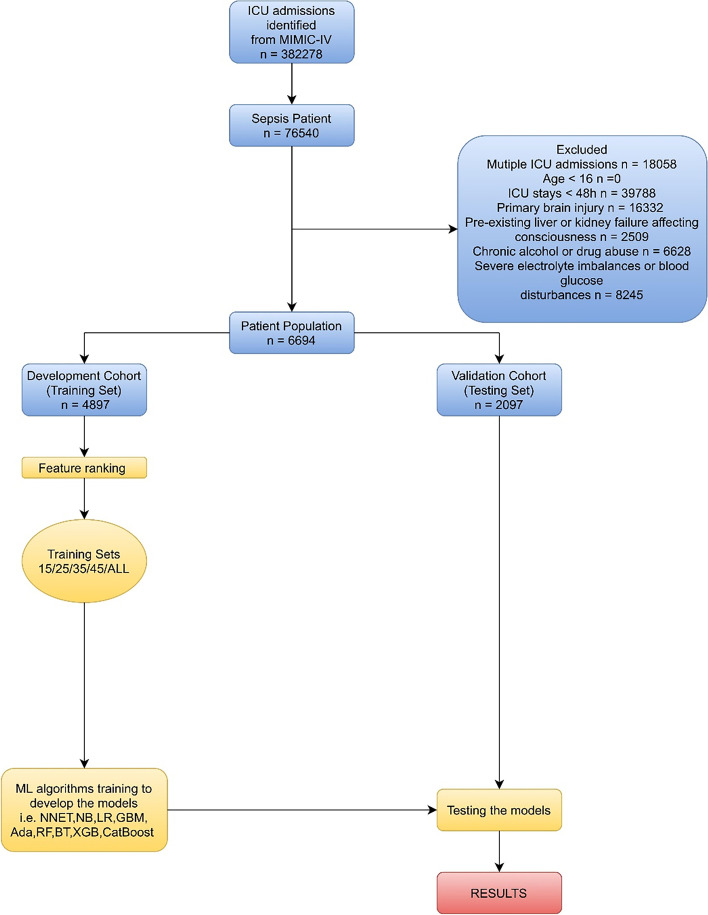
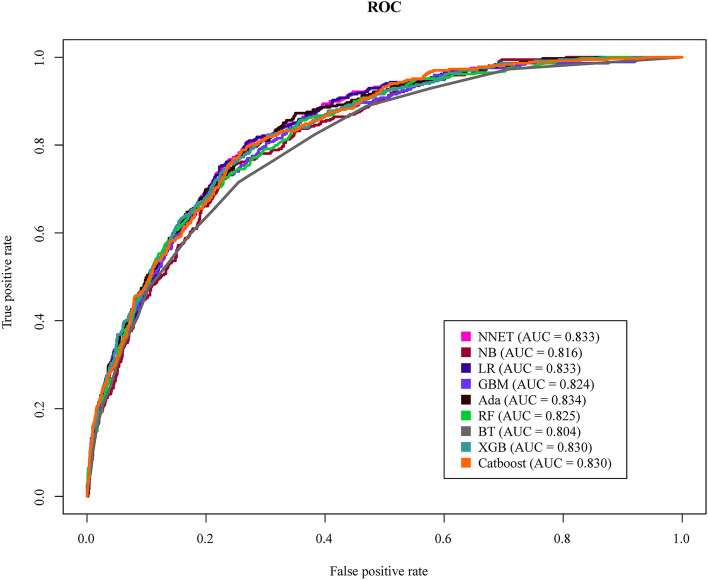
ML models were developed and validated based on a public database named Medical Information Mart for Intensive Care (MIMIC)-IV. Models were compared by the area under the curve (AUC), accuracy, sensitivity, specificity, positive and negative predictive values, and Hosmer-Lemeshow good of fit test.
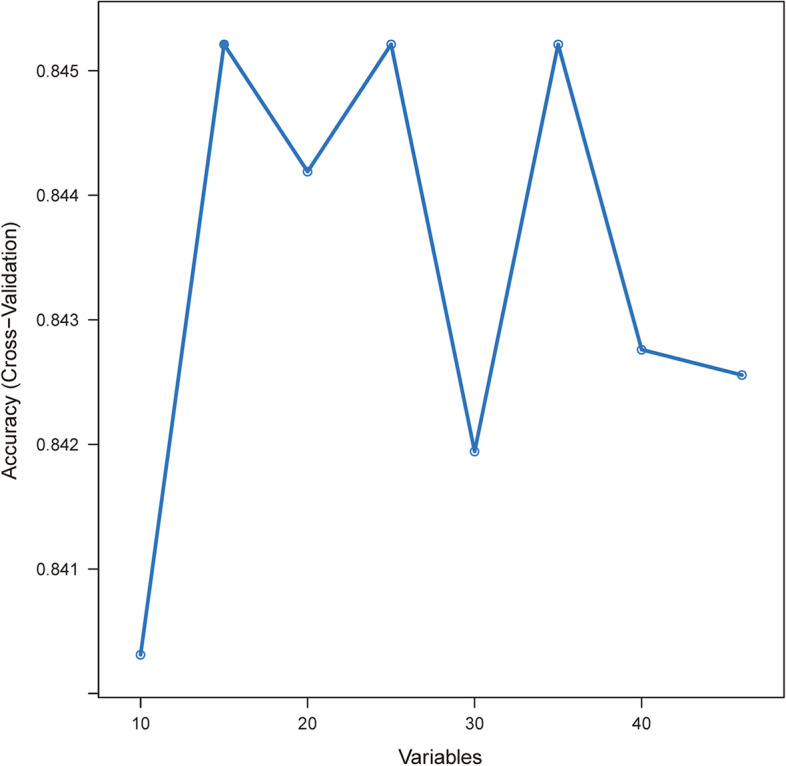
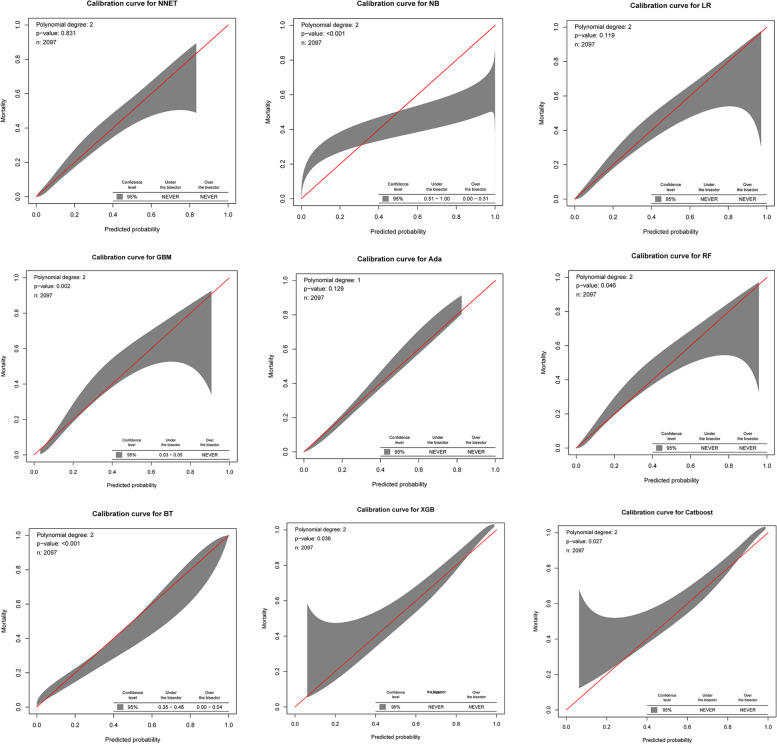
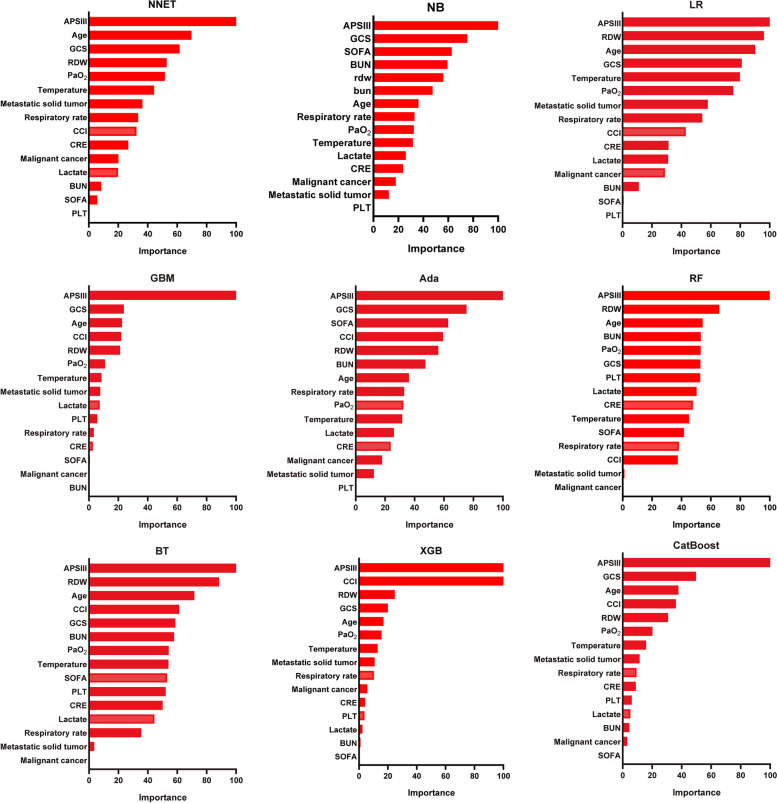
Of 6994 patients in MIMIC-IV included in the final cohort, a total of 1232 (17.62%) patients died following SAE. Recursive feature elimination (RFE) selected 15 variables, including acute physiology score III (APSIII), Glasgow coma score (GCS), sepsis related organ failure assessment (SOFA), Charlson comorbidity index (CCI), red blood cell volume distribution width (RDW), blood urea nitrogen (BUN), age, respiratory rate, PaO, temperature, lactate, creatinine (CRE), malignant cancer, metastatic solid tumor, and platelet (PLT). The validation cohort demonstrated all ML approaches had higher discriminative ability compared with the bagged trees (BT) model, although the difference was not statistically significant. Furthermore, in terms of the calibration performance, the artificial neural network (NNET), logistic regression (LR), and adapting boosting (Ada) models had a good calibration-namely, a high accuracy of prediction, with P-values of 0.831, 0.119, and 0.129, respectively.
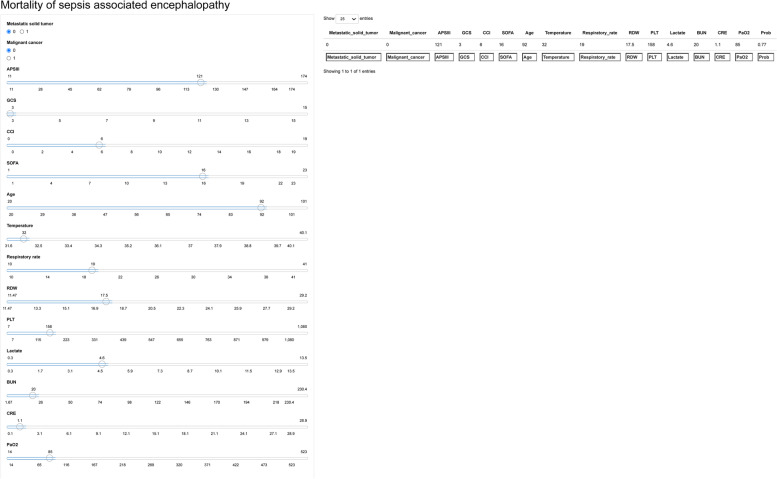
The ML models, as demonstrated by our study, can be used to evaluate the prognosis of SAE patients in the intensive care unit (ICU). Online calculator could facilitate the sharing of predictive models.
本研究旨在确定预测因子,并开发机器学习(ML)模型以预测脓毒症相关性脑病(SAE)患者 30 天死亡率的风险。
基于名为医疗信息集市重症监护(MIMIC)-IV 的公共数据库开发和验证 ML 模型。通过曲线下面积(AUC)、准确性、敏感度、特异性、阳性和阴性预测值以及 Hosmer-Lemeshow 拟合优度检验来比较模型。
在 MIMIC-IV 中纳入的最终队列的 6994 例患者中,共有 1232 例(17.62%)患者在 SAE 后死亡。递归特征消除(RFE)选择了 15 个变量,包括急性生理学评分 III(APSIII)、格拉斯哥昏迷评分(GCS)、脓毒症相关器官衰竭评估(SOFA)、Charlson 合并症指数(CCI)、红细胞体积分布宽度(RDW)、血尿素氮(BUN)、年龄、呼吸频率、PaO、温度、乳酸、肌酐(CRE)、恶性肿瘤、转移性实体瘤和血小板(PLT)。验证队列表明,与袋装树(BT)模型相比,所有 ML 方法均具有更高的区分能力,尽管差异无统计学意义。此外,在校准性能方面,人工神经网络(NNET)、逻辑回归(LR)和自适应提升(Ada)模型具有良好的校准能力,即预测准确率高,相应的 P 值分别为 0.831、0.119 和 0.129。
本研究表明,ML 模型可用于评估 ICU 中 SAE 患者的预后。在线计算器可以促进预测模型的共享。