Neuroscience Research Institute, Seoul National University College of Medicine, Seoul, 03080, Korea.
Department of Biomedical Sciences, Seoul National University College of Medicine, Seoul, 03080, Republic of Korea.
Exp Mol Med. 2022 Jun;54(6):788-800. doi: 10.1038/s12276-022-00789-x. Epub 2022 Jul 5.
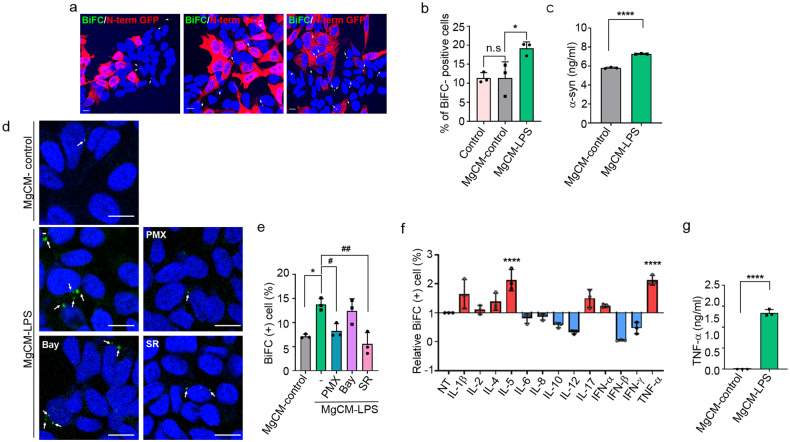
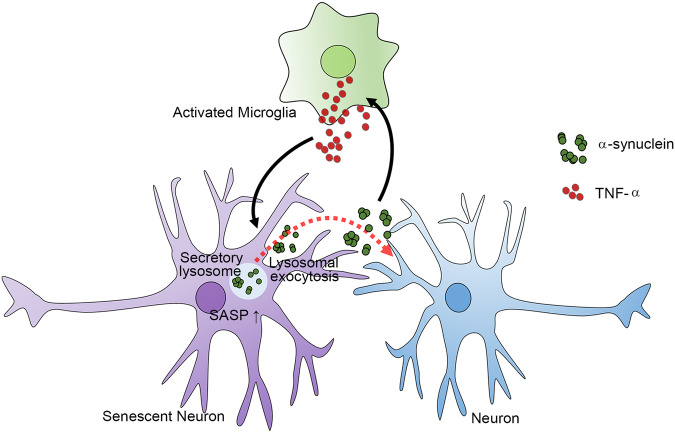
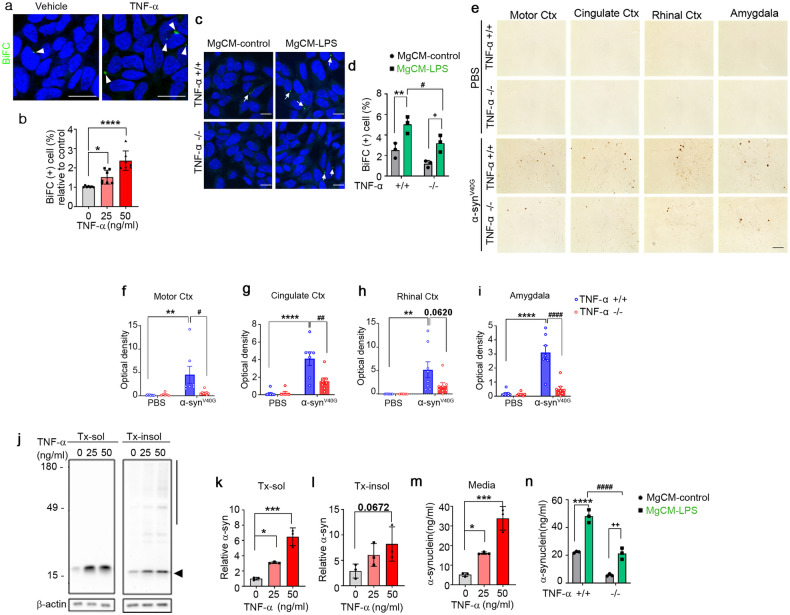
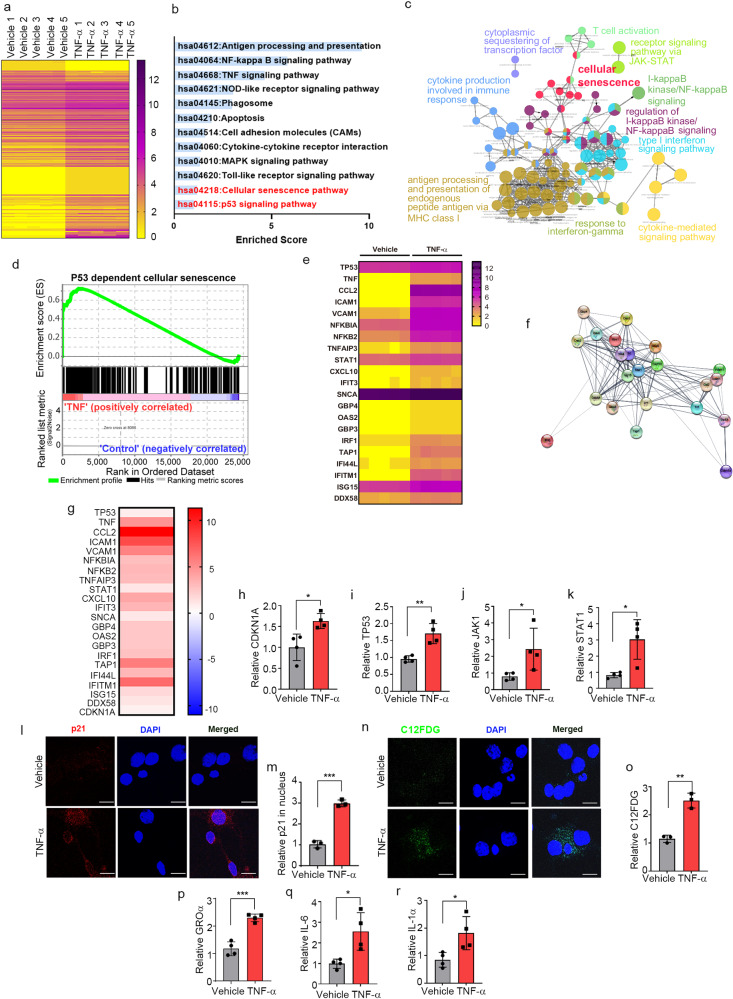
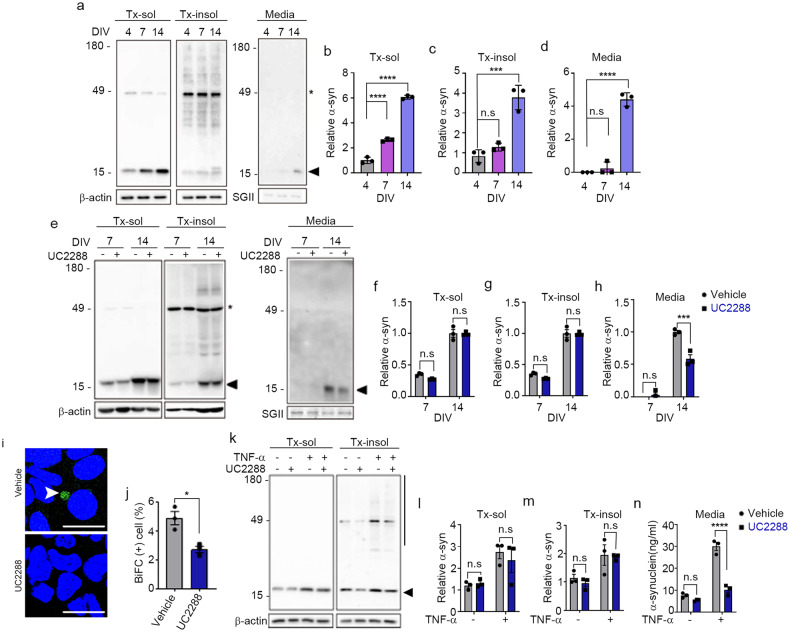
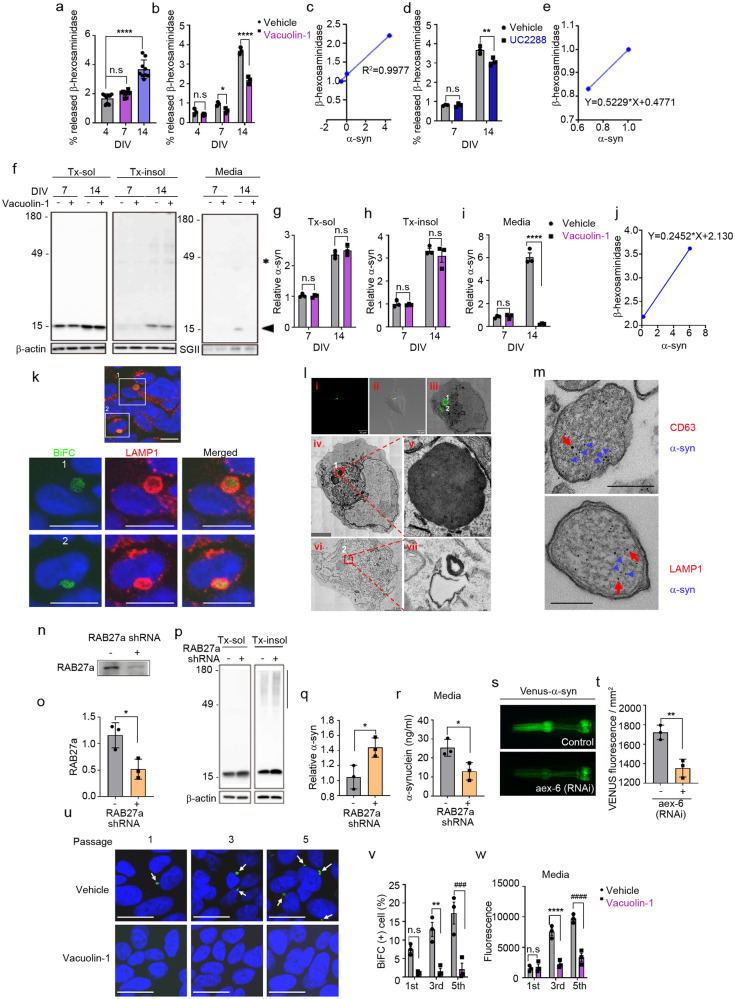
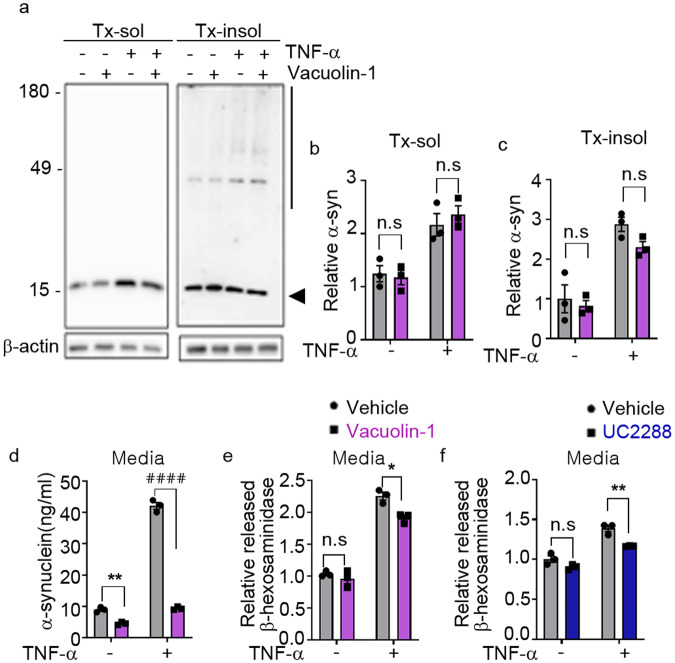
Cell-to-cell propagation of α-synuclein is thought to be the underlying mechanism of Parkinson's disease progression. Recent evidence suggests that inflammation plays an important role in the propagation of protein aggregates. However, the mechanism by which inflammation regulates the propagation of aggregates remains unknown. Here, using in vitro cultures, we found that soluble factors secreted from activated microglia promote cell-to-cell propagation of α-synuclein and further showed that among these soluble factors, TNF-α had the most robust stimulatory activity. Treatment of neurons with TNF-α triggered cellular senescence, as shown by transcriptomic analyses demonstrating induction of senescence-associated genes and immunoanalysis of senescence phenotype marker proteins. Interestingly, secretion of α-synuclein was increased in senescent neurons, reflecting acquisition of a senescence-associated secretory phenotype (SASP). Using vacuolin-1, an inhibitor of lysosomal exocytosis, and RNAi against rab27a, we demonstrated that the SASP was mediated by lysosomal exocytosis. Correlative light and electron microscopy and immunoelectron microscopy confirmed that propagating α-synuclein aggregates were present in electron-dense lysosome-like compartments. TNF-α promoted the SASP through stimulation of lysosomal exocytosis, thereby increasing the secretion of α-synuclein. Collectively, these results suggest that TNF-α is the major inflammatory factor that drives cell-to-cell propagation of α-synuclein by promoting the SASP and subsequent secretion of α-synuclein.
细胞间α-突触核蛋白的传播被认为是帕金森病进展的潜在机制。最近的证据表明,炎症在蛋白质聚集物的传播中起着重要作用。然而,炎症调节聚集物传播的机制尚不清楚。在这里,我们使用体外培养物发现,激活的小胶质细胞分泌的可溶性因子促进α-突触核蛋白的细胞间传播,并进一步表明,在这些可溶性因子中,TNF-α具有最强的刺激活性。用 TNF-α处理神经元会触发细胞衰老,转录组分析表明衰老相关基因的诱导和衰老表型标志物蛋白的免疫分析证明了这一点。有趣的是,衰老神经元中α-突触核蛋白的分泌增加,反映出获得了与衰老相关的分泌表型(SASP)。使用溶酶体胞吐抑制剂 vacuolin-1 和 rab27a 的 RNAi,我们证明了 SASP 是由溶酶体胞吐介导的。相关的光镜和电子显微镜以及免疫电子显微镜证实,传播的α-突触核蛋白聚集体存在于电子致密的溶酶体样隔室中。TNF-α 通过刺激溶酶体胞吐作用促进 SASP,从而增加α-突触核蛋白的分泌。总之,这些结果表明,TNF-α 是通过促进 SASP 及其随后的α-突触核蛋白分泌来驱动α-突触核蛋白细胞间传播的主要炎症因子。