Department of Clinical Sciences Lund, Section for Infection Medicine, Skåne University Hospital, Lund University, BMC B14, 221 84, Lund, Sweden.
Stockholm Cystic Fibrosis Centre, Karolinska University Hospital Huddinge, Department of Clinical Science, Intervention and Technology, Division of Paediatrics, Karolinska Institute, Stockholm, Sweden.
BMC Pulm Med. 2022 Jul 5;22(1):263. doi: 10.1186/s12890-022-02054-3.
Aspergillus fumigatus is the most common filamentous fungus isolated from the airways of people with cystic fibrosis (CF). The aim of this study was to investigate how chronic A. fumigatus colonization affects lung function in people with CF, to identify risk factors for colonization, and to evaluate antifungal treatment of asymptomatic Aspergillus colonization.
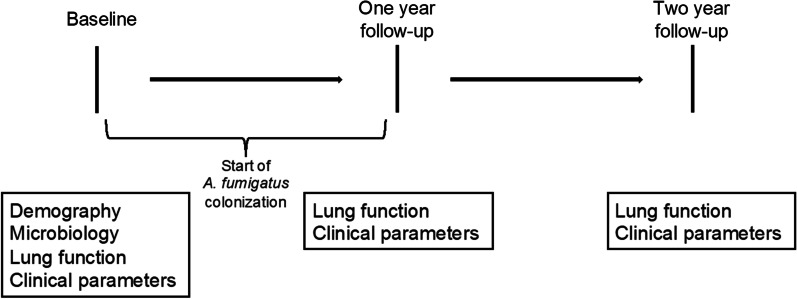
Data from 2014-2018 was collected from the Swedish CF registry and medical records. Baseline data before the start of A. fumigatus colonization was compared with the two succeeding years to evaluate how colonization and treatment affected lung function and other clinical aspects.
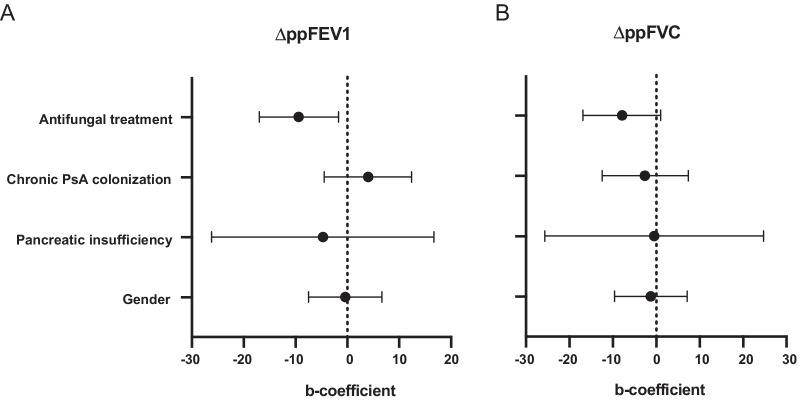
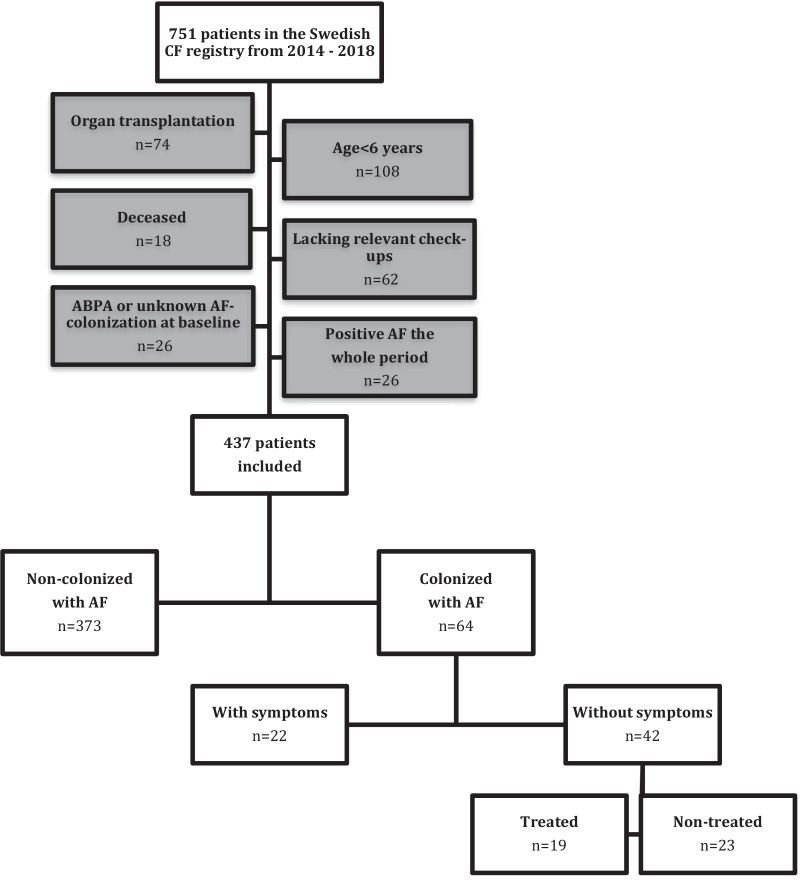
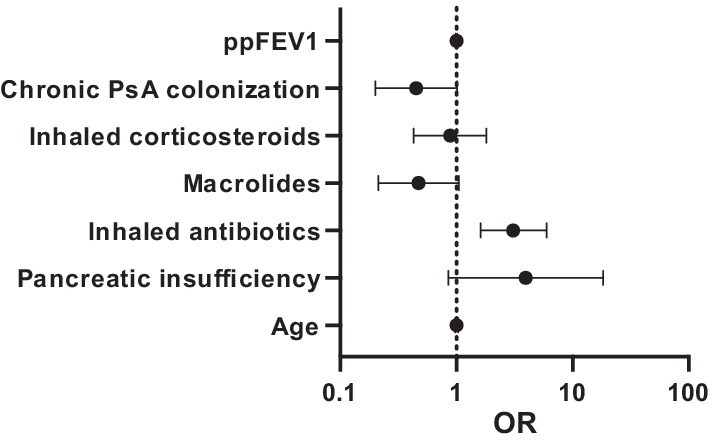
A total of 437 patients were included, of which 64 (14.6%) became colonized with A. fumigatus during the study period. Inhaled antibiotics was associated with A. fumigatus colonization (adjusted OR 3.1, 95% CI 1.6-5.9, p < 0.05). Fungal colonization was not associated with a more rapid lung function decline or increased use of IV-antibiotics compared to the non-colonized group, but patients with A. fumigatus had more hospital days, a higher increase of total IgE, and higher eosinophil counts. In the Aspergillus group, 42 patients were considered to be asymptomatic. Of these, 19 patients received antifungal treatment. Over the follow up period, the treated group had a more pronounced decrease in percent predicted Forced Expiratory Volume in one second (ppFEV1) compared to untreated patients (- 8.7 vs - 1.4 percentage points, p < 0.05).
Inhaled antibiotics was associated with A. fumigatus colonization, but no association was found between persistent A. fumigatus and subsequent lung function decline. No obvious benefits of treating asymptomatic A. fumigatus colonization were demonstrated.
烟曲霉是从囊性纤维化(CF)患者气道中分离出来的最常见的丝状真菌。本研究旨在探讨慢性烟曲霉定植如何影响 CF 患者的肺功能,确定定植的危险因素,并评估抗真菌治疗无症状曲霉定植。
从瑞典 CF 登记处和病历中收集了 2014-2018 年的数据。将开始烟曲霉定植前的基线数据与随后的两年进行比较,以评估定植和治疗如何影响肺功能和其他临床方面。
共纳入 437 例患者,其中 64 例(14.6%)在研究期间发生烟曲霉定植。吸入抗生素与烟曲霉定植相关(调整后的 OR 3.1,95%CI 1.6-5.9,p<0.05)。与未定植组相比,真菌定植与肺功能下降更快或 IV 抗生素使用增加无关,但烟曲霉组的住院天数更多,总 IgE 升高,嗜酸性粒细胞计数更高。在烟曲霉组中,42 例患者被认为是无症状的。其中,19 例患者接受了抗真菌治疗。在随访期间,治疗组的一秒用力呼气容积占预计值的百分比(ppFEV1)下降更为明显(-8.7%对-1.4%,p<0.05)。
吸入抗生素与烟曲霉定植相关,但持续性烟曲霉定植与随后的肺功能下降之间无关联。未发现治疗无症状烟曲霉定植的明显益处。