The Children's Hospital, Zhejiang University School of Medicine, Hangzhou, People's Republic of China.
Global Health Center, Cincinnati Children's Hospital Medical Center (CCHMC), Cincinnati, OH, USA.
Microbiome. 2022 Jul 7;10(1):103. doi: 10.1186/s40168-022-01300-4.
Aberrations in the preterm microbiome following antibiotic therapy have been reported in previous studies. The objective of this study was to probe potential underlying mechanisms between this observation and susceptibility to adverse prematurity-related outcomes.
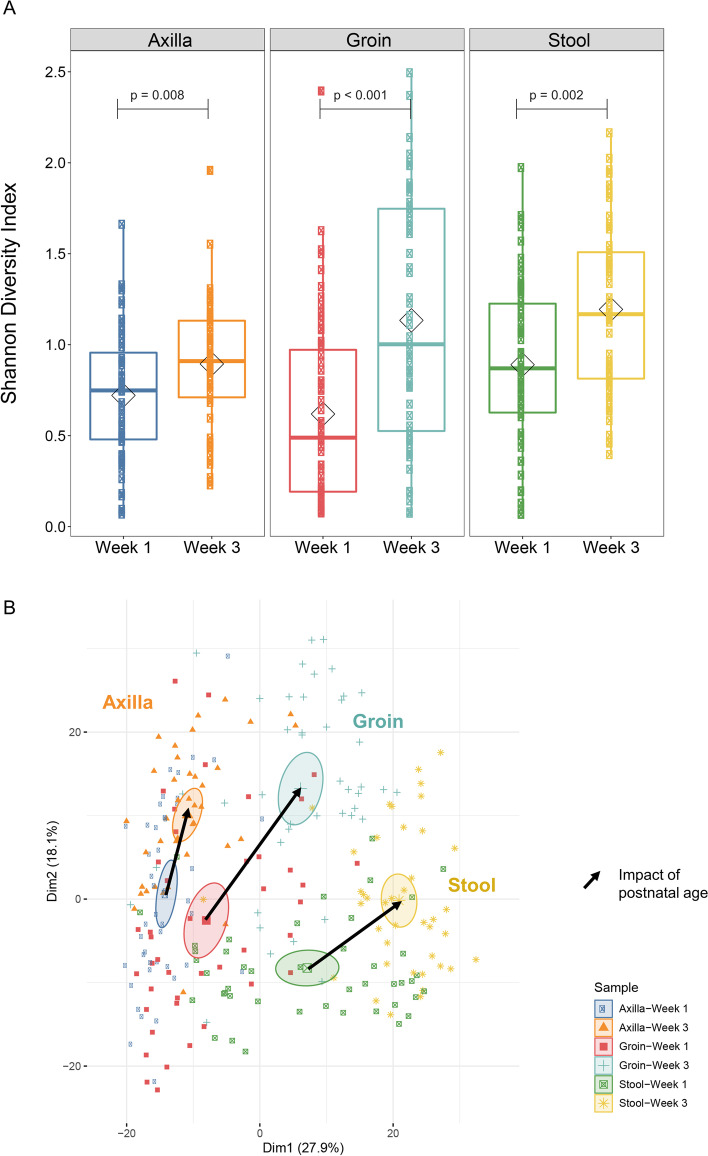
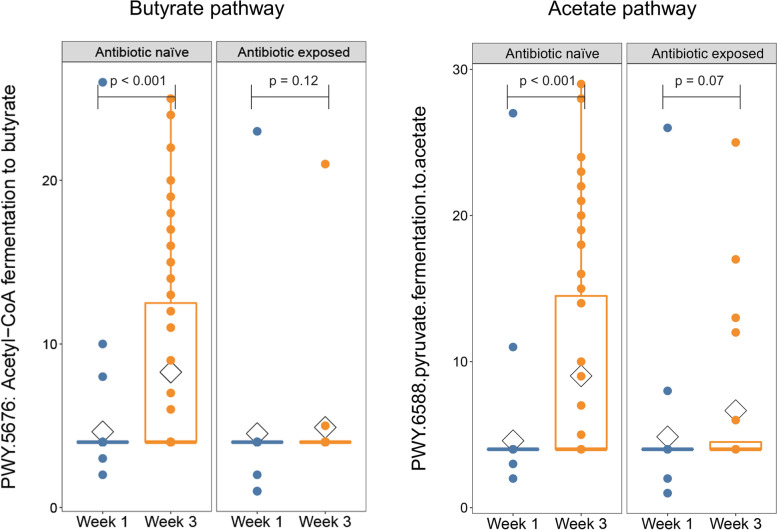
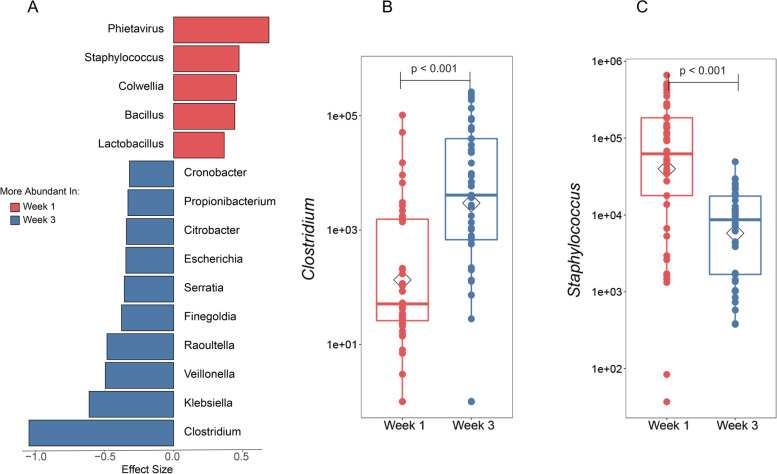
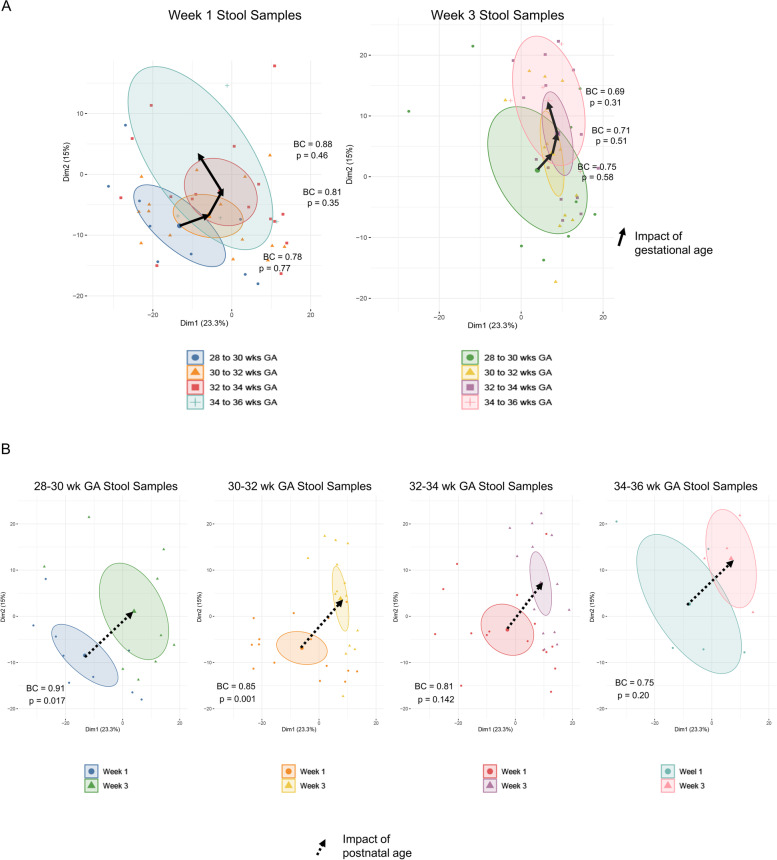
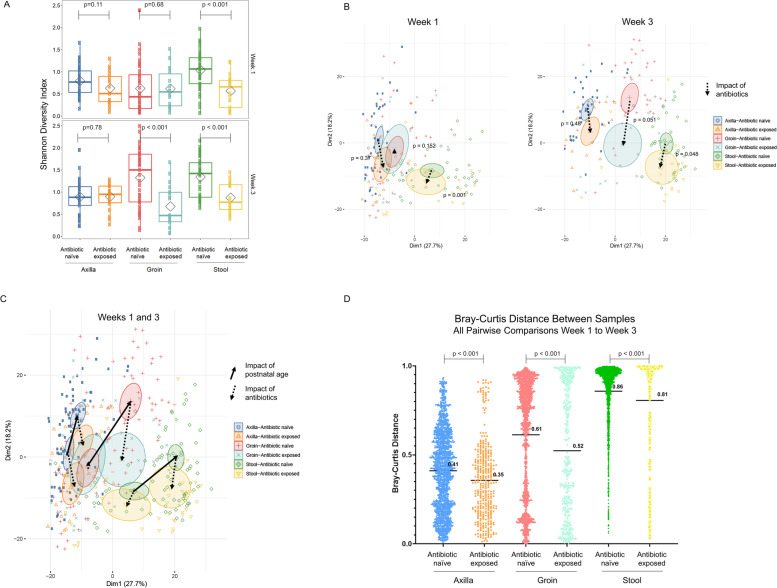
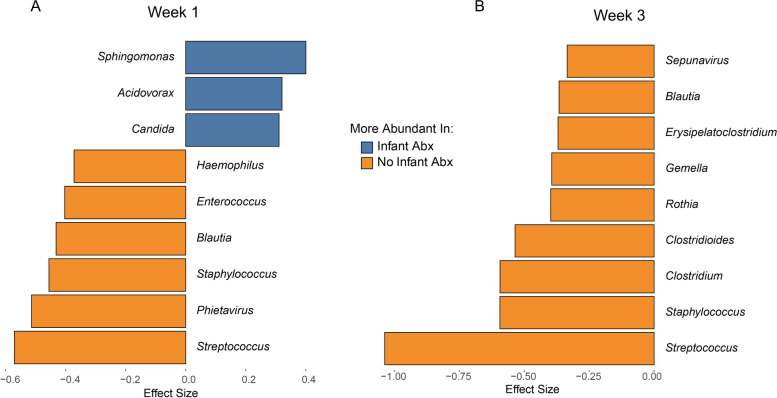
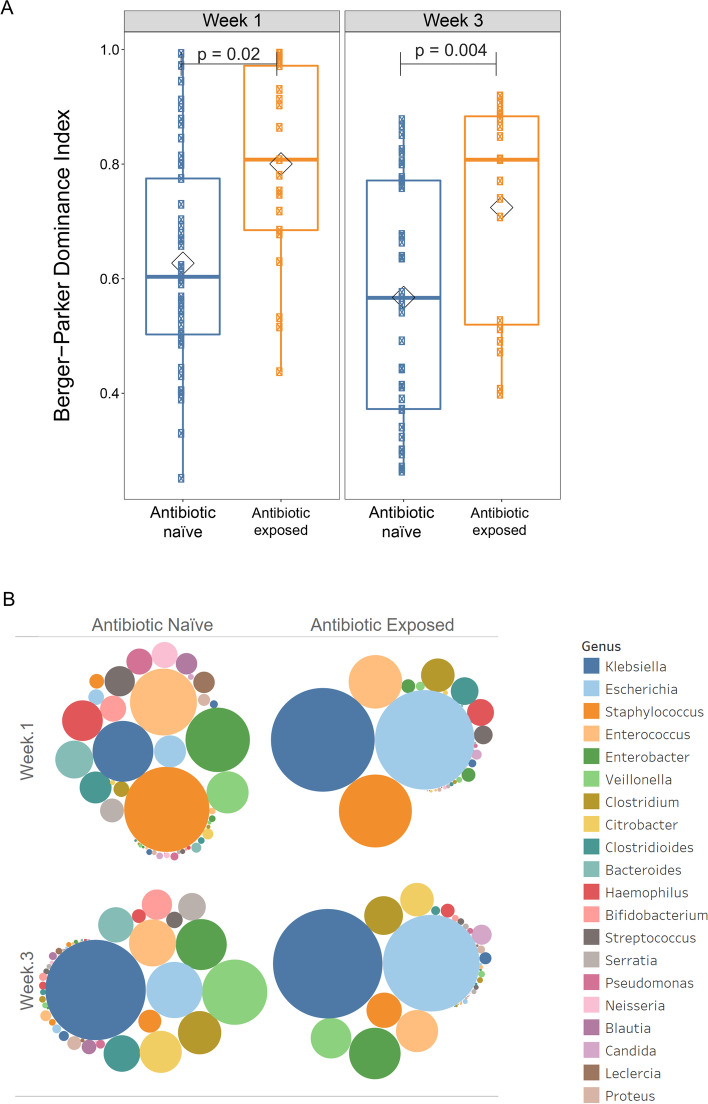
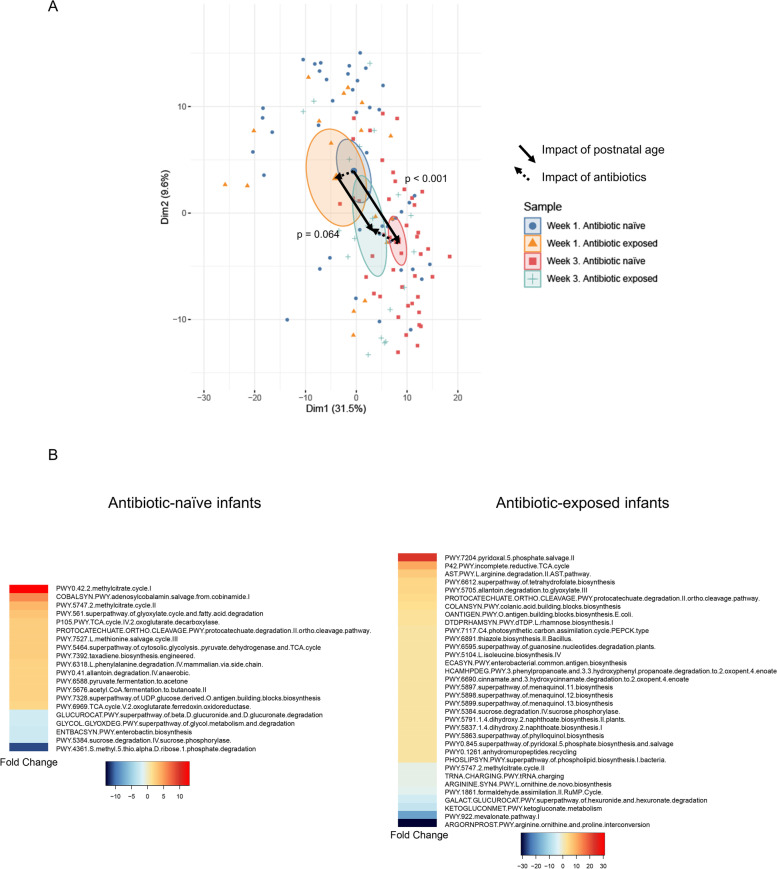
Metagenomic shotgun sequencing was performed on 133 stool and 253 skin samples collected at 1 and 3 weeks of age from 68 infants born at <36 weeks postmenstrual age and birth weight <2000 g. After accounting for gestational age and maternal antibiotics, the distribution of organisms in all samples and the corresponding metabolic pathway abundance were compared between infants exposed to postnatal antibiotics and antibiotics-naïve infants. In antibiotic-naïve infants, gestational and postnatal age imparted similar trajectories on maturation of the microbial community and associated metabolic functional capacity, with postnatal age exerting greater contribution. Antibiotic exposure was associated with reversal in maturation trajectory from the first week to the third week of age (p< 0.001). Butyrate-producing genera, including Clostridium and Blautia, were significantly more abundant in antibiotic-naïve neonates at 3 weeks postnatal age. Correspondingly, metabolic pathways required for short-chain fatty acid synthesis were significantly increased in antibiotic-naïve infants, but not in antibiotic-exposed neonates, at 3 weeks after birth.
Early brief antibiotic exposure markedly disrupts developmental trajectory of the neonatal microbiome and its corresponding functional capacity. Our findings may provide a mechanistic explanation for the known associations between antibiotic use and adverse outcomes in preterm infants. Video Abstract.
先前的研究报告称,早产儿在接受抗生素治疗后其微生物组会出现异常。本研究旨在探究这一观察结果与早产儿不良结局易感性之间的潜在机制。
对 68 名胎龄小于 36 周、出生体重小于 2000 克的婴儿在 1 周和 3 周龄时采集的 133 份粪便和 253 份皮肤样本进行了宏基因组鸟枪法测序。在考虑了胎龄和母亲使用抗生素的情况下,比较了暴露于产后抗生素和未使用抗生素的婴儿的所有样本中的生物体分布和相应的代谢途径丰度。在未使用抗生素的婴儿中,胎龄和产后年龄对微生物群落及其相关代谢功能能力的成熟具有相似的轨迹,而产后年龄的影响更大。抗生素暴露与从第一周到第三周的成熟轨迹逆转相关(p<0.001)。在 3 周龄时,产丁酸菌属,包括梭菌属和布劳特氏菌属,在未使用抗生素的新生儿中明显更为丰富。相应地,在出生后 3 周时,未使用抗生素的婴儿中用于短链脂肪酸合成的代谢途径显著增加,但在使用抗生素的婴儿中没有增加。
早期短暂的抗生素暴露显著破坏了新生儿微生物组的发育轨迹及其相应的功能能力。我们的发现可能为已知的抗生素使用与早产儿不良结局之间的关联提供了一种机制解释。