State Key Laboratory of Pathogen and Biosecurity, Beijing Institute of Microbiology and Epidemiology, 20 Dong-Da Street, Fengtai, Beijing, 100071, People's Republic of China.
Department of Research, Qilu Hospital, Cheeloo College of Medicine, Shandong University, Jinan, 250012, People's Republic of China.
Infect Dis Poverty. 2022 Jul 7;11(1):81. doi: 10.1186/s40249-022-00993-x.
Viral pathogens belonging to the order Bunyavirales pose a continuous background threat to global health, but the fact remains that they are usually neglected and their distribution is still ambiguously known. We aim to map the geographical distribution of Bunyavirales viruses and assess the environmental suitability and transmission risk of major Bunyavirales viruses in China.
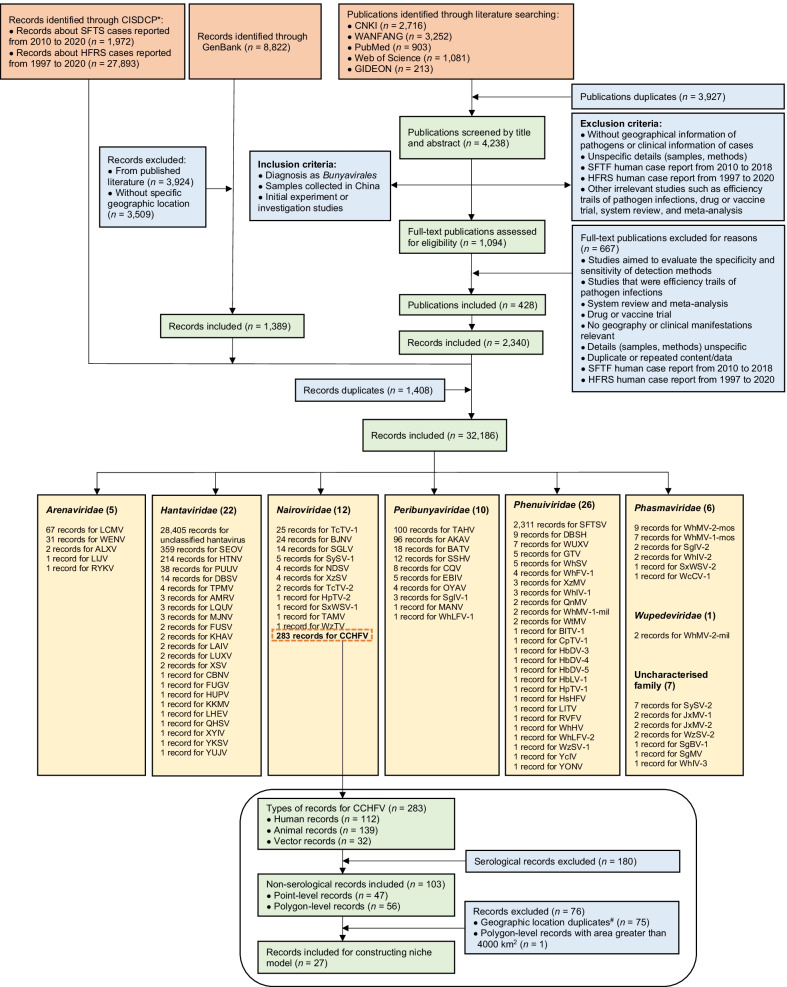
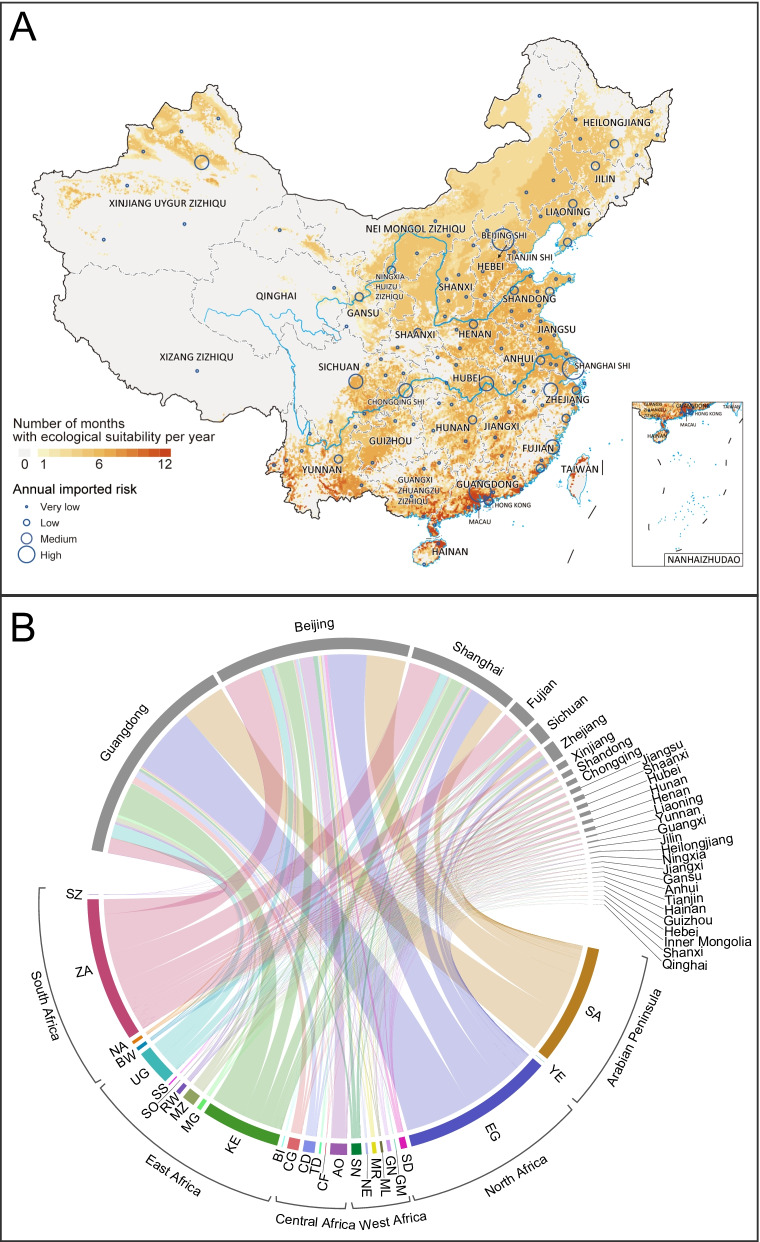
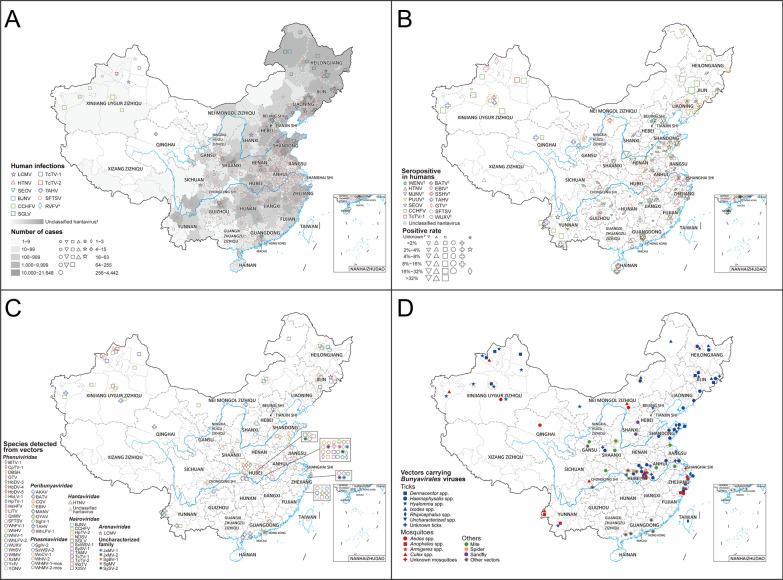
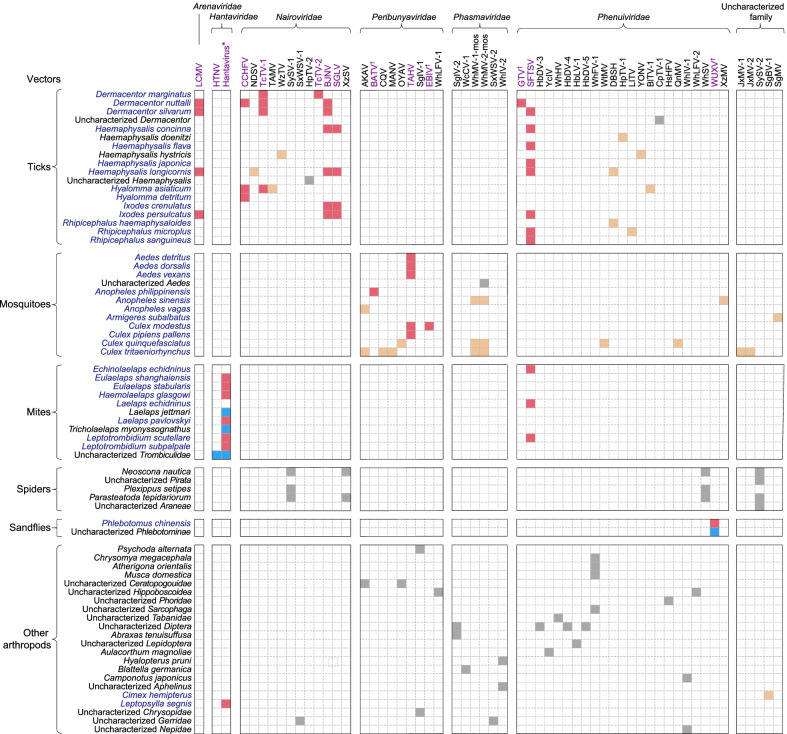
We assembled data on all Bunyavirales viruses detected in humans, animals and vectors from multiple sources, to update distribution maps of them across China. In addition, we predicted environmental suitability at the 10 km × 10 km pixel level by applying boosted regression tree models for two important Bunyavirales viruses, including Crimean-Congo hemorrhagic fever virus (CCHFV) and Rift Valley fever virus (RVFV). Based on model-projected risks and air travel volume, the imported risk of RVFV was also estimated from its endemic areas to the cities in China.
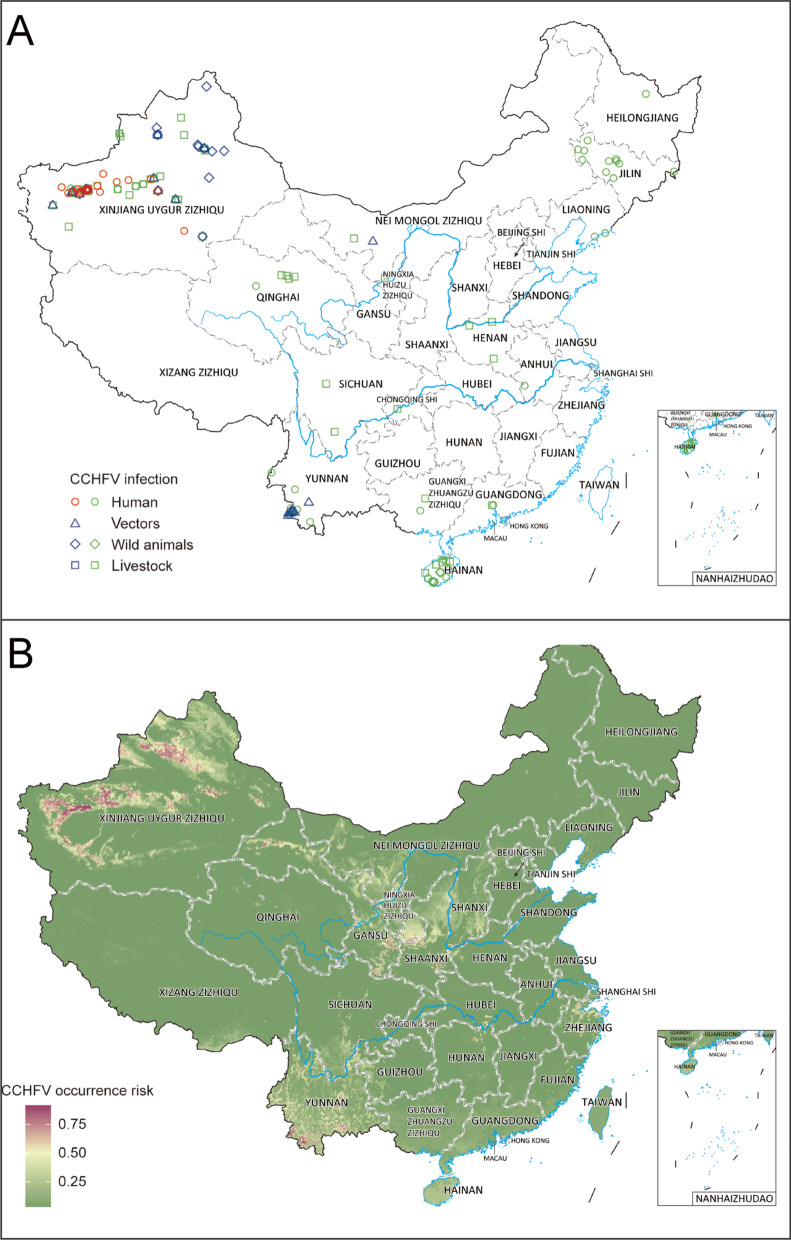
Here we mapped all 89 species of Bunyavirales viruses in China from January 1951 to June 2021. Nineteen viruses were shown to infect humans, including ten species first reported as human infections. A total of 447,848 cases infected with Bunyavirales viruses were reported, and hantaviruses, Dabie bandavirus and Crimean-Congo hemorrhagic fever virus (CCHFV) had the severest disease burden. Model-predicted maps showed that Xinjiang and southwestern Yunnan had the highest environmental suitability for CCHFV occurrence, mainly related to Hyalomma asiaticum presence, while southern China had the highest environmental suitability for Rift Valley fever virus (RVFV) transmission all year round, mainly driven by livestock density, mean precipitation in the previous month. We further identified three cities including Guangzhou, Beijing and Shanghai, with the highest imported risk of RVFV potentially from Egypt, South Africa, Saudi Arabia and Kenya.
A variety of Bunyavirales viruses are widely distributed in China, and the two major neglected Bunyavirales viruses including CCHFV and RVFV, both have the potential for outbreaks in local areas of China. Our study can help to promote the understanding of risk distribution and disease burden of Bunyavirales viruses in China, and the risk maps of CCHFV and RVFV occurrence are crucial to the targeted surveillance and control, especially in seasons and locations at high risk.
属于布尼亚病毒目的病毒病原体对全球健康构成持续的背景威胁,但事实仍然是,它们通常被忽视,其分布仍然知之甚少。我们旨在绘制布尼亚病毒的地理分布,并评估中国主要布尼亚病毒的环境适宜性和传播风险。
我们从多个来源收集了所有在人类、动物和媒介中检测到的布尼亚病毒的数据,以更新它们在中国各地的分布地图。此外,我们还应用了增强回归树模型来预测两种重要的布尼亚病毒,即克里米亚-刚果出血热病毒(CCHFV)和裂谷热病毒(RVFV)的环境适宜性,其预测范围为 10km×10km 的像素水平。基于模型预测的风险和航空旅行量,我们还从其流行地区估计了裂谷热病毒对中国城市的输入风险。
在此,我们绘制了自 1951 年 1 月至 2021 年 6 月在中国发现的 89 种布尼亚病毒。有 19 种病毒被证明感染了人类,其中包括十种首次报告的人类感染病毒。共报告了 447848 例布尼亚病毒感染病例,汉坦病毒、大别山病毒和克里米亚-刚果出血热病毒(CCHFV)的疾病负担最为严重。模型预测地图显示,新疆和云南西南部最适合 CCHFV 的发生,主要与亚洲璃眼蜱的存在有关,而中国南部全年最适合裂谷热病毒(RVFV)的传播,主要受牲畜密度、前一个月平均降水量的驱动。我们进一步确定了广州、北京和上海三个城市,它们具有来自埃及、南非、沙特阿拉伯和肯尼亚的裂谷热病毒输入风险最高。
多种布尼亚病毒在中国广泛分布,两种主要被忽视的布尼亚病毒包括 CCHFV 和 RVFV,都有可能在中国局部地区爆发。我们的研究有助于提高对中国布尼亚病毒风险分布和疾病负担的认识,CCHFV 和 RVFV 发生风险图对有针对性的监测和控制至关重要,特别是在高风险的季节和地点。