Department of Cardiology, The First Affiliated Hospital of Chongqing Medical University, Chongqing 400016, China.
Department of Hepatology and Translational Medicine, Chongqing University Fuling Hospital, Chongqing 400016, China.
Oxid Med Cell Longev. 2022 Jun 28;2022:3235250. doi: 10.1155/2022/3235250. eCollection 2022.
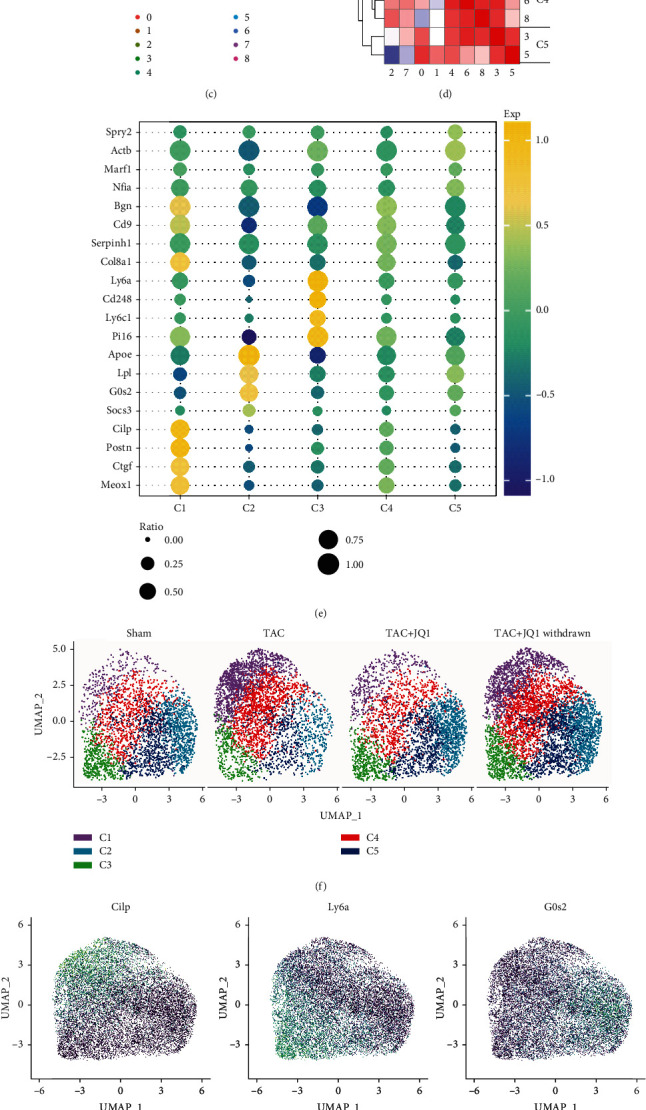
Although myocardial fibrosis is a common pathophysiological process associated with many heart diseases, the molecular mechanisms regulating the development of fibrosis have not been fully determined. Recently, single cell RNA sequencing (scRNA-seq) analysis has been used to examine cellular fate and function during cellular differentiation and has contributed to elucidating the mechanisms of various diseases. The main purpose of this study was to characterize the fate of cardiac fibroblasts (CFs) and the dynamic gene expression patterns in a model of cardiac pressure overload using scRNA-seq analysis.
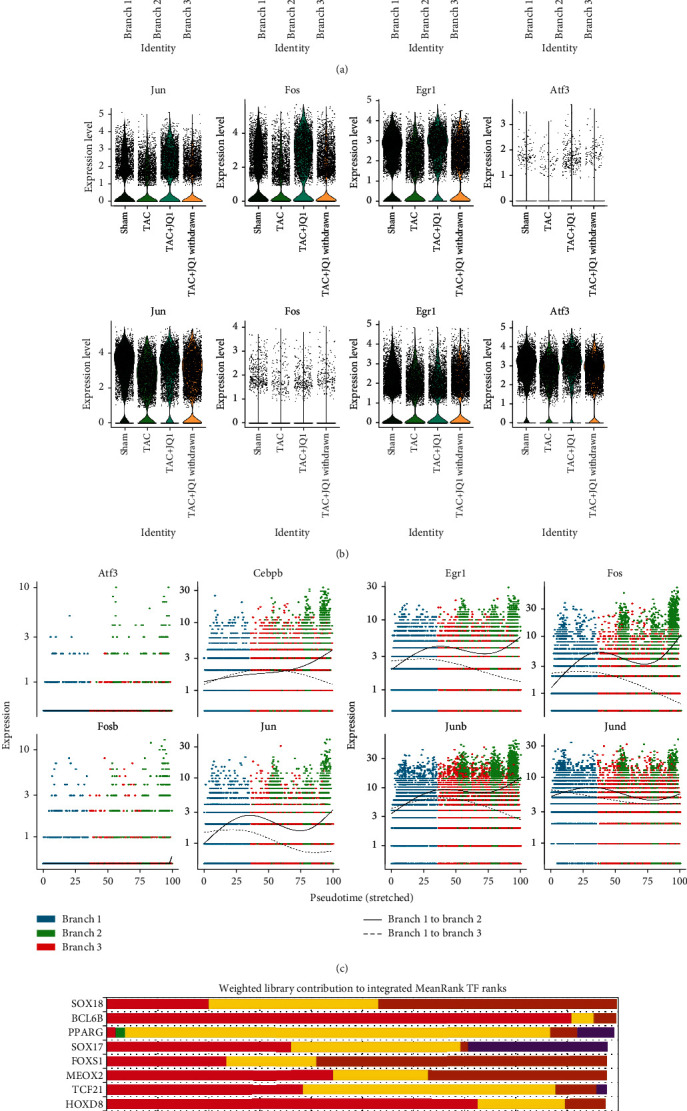
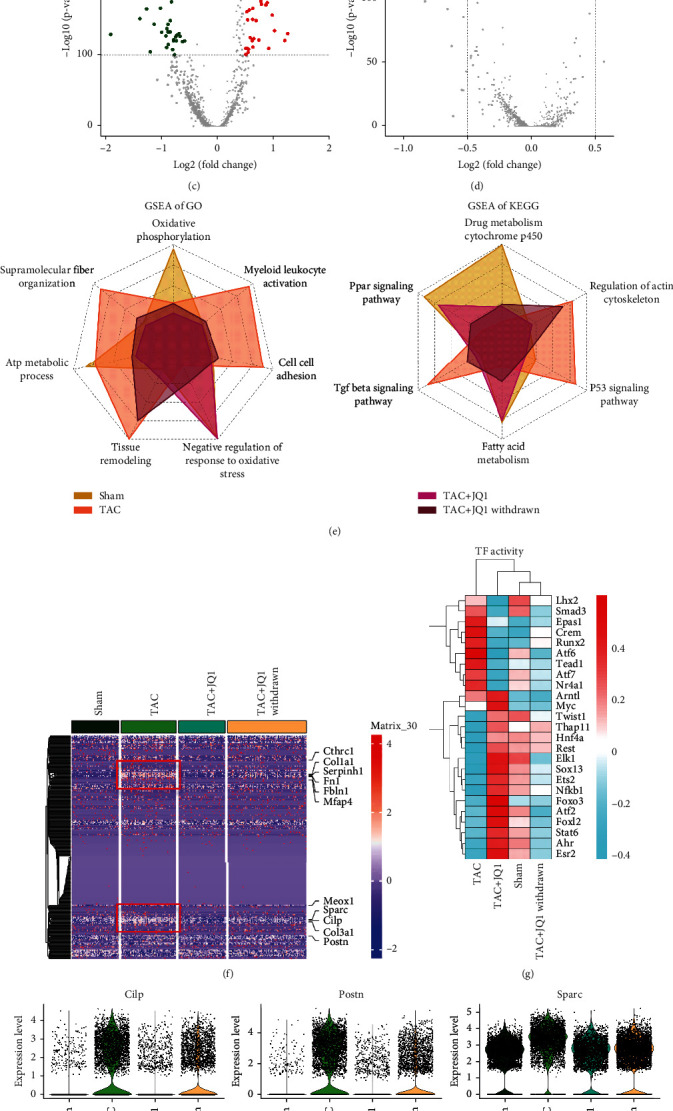
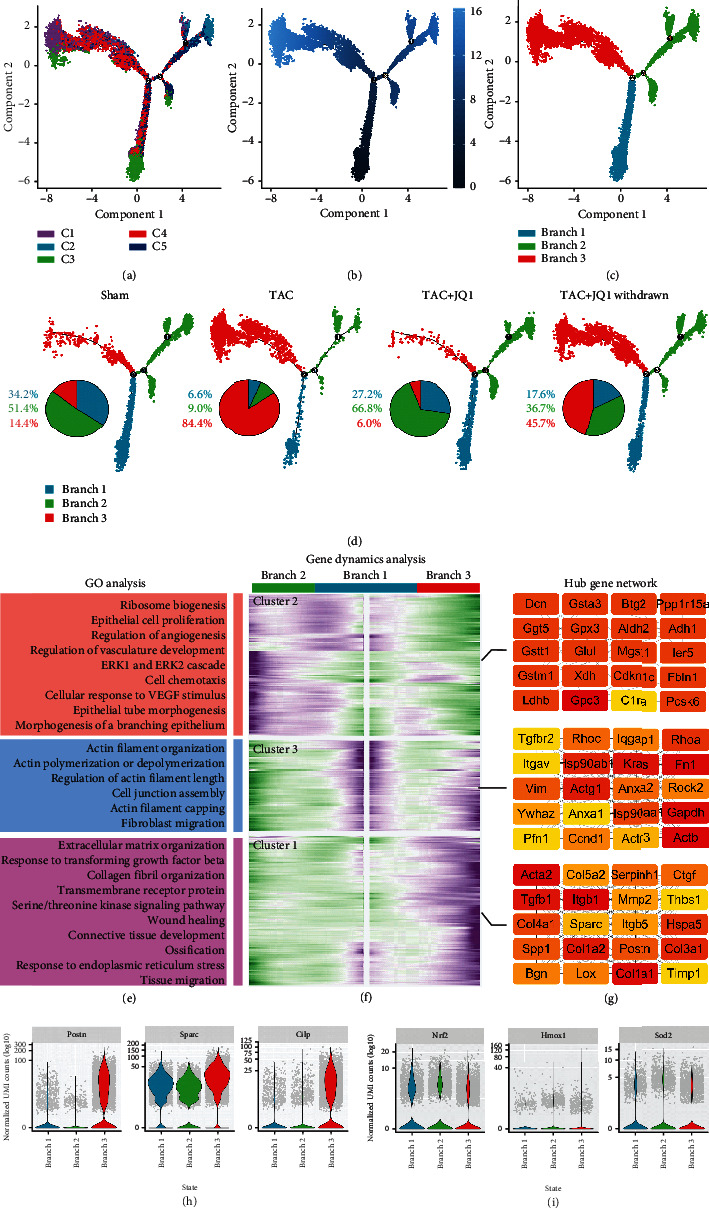
The public scRNA-seq dataset of the transverse aortic coarctation (TAC) model in mice was downloaded from the GEO database, GSE155882. First, we performed quality control, dimensionality reduction, clustering, and annotation of the data through the Seurat R package (v4.0.5). Then, we constructed the pseudotime trajectory of cell development and identified key regulatory genes using the Monocle R package (v2.22.0). Different cell fates and groups were fully characterized by Gene Set Enrichment Analysis (GSEA) analysis and Transcription factor (TF) activity analysis. Finally, we used Cytoscape (3.9.1) to extensively examine the gene regulatory network related to cell fate.
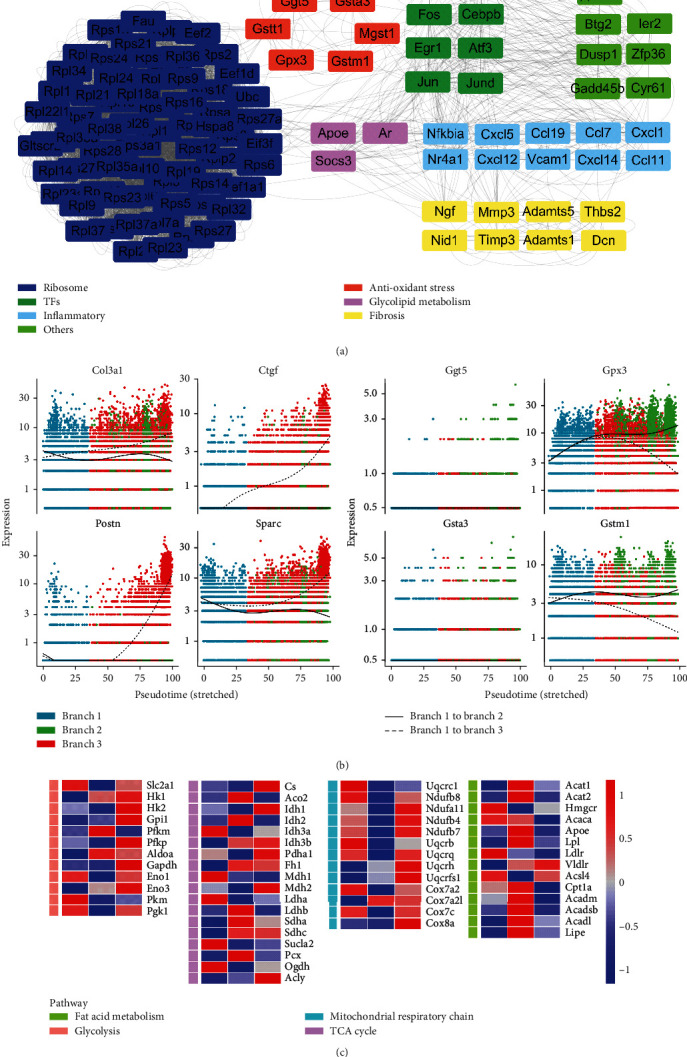
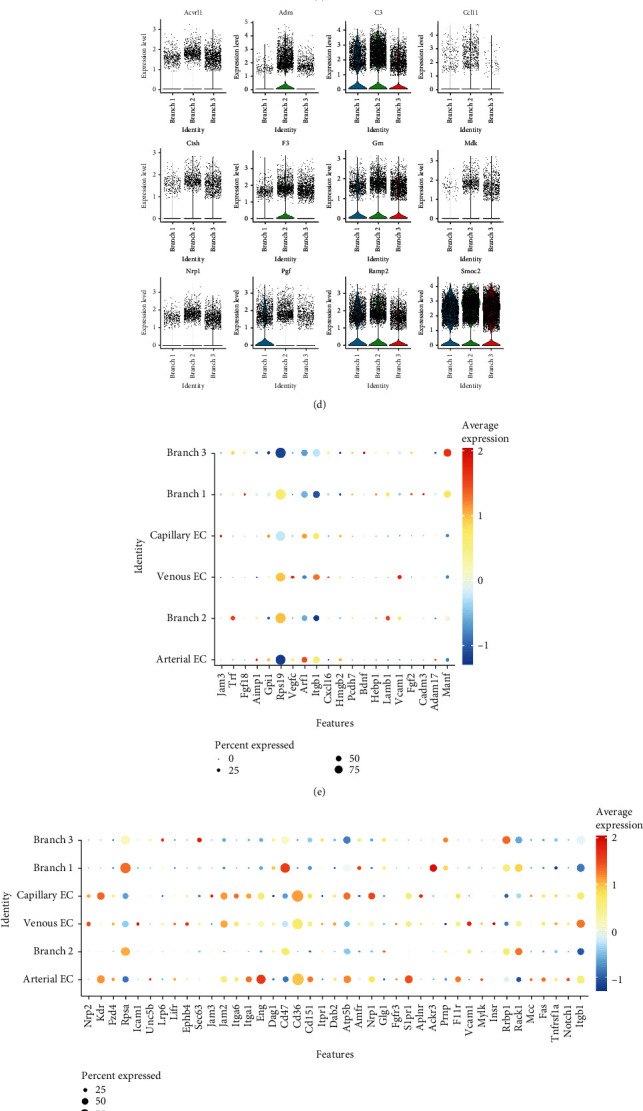
Pseudotime analysis showed that CFs differentiated into two distinct cell fates, one of which produced activated myofibroblasts, and the other which produced protective cells that were associated with reduced fibrosis levels, increased antioxidative stress responses, and the ability to promote angiogenesis. In the TAC model, activated CFs were significantly upregulated, while protective cells were downregulated. Treatment with the bromodomain inhibitor JQ1 reversed this change and improved fibrosis. Analysis of dynamic gene expression revealed that was significantly upregulated during cell differentiation into protective cells. expression was affected by JQ1 treatment. Furthermore, expression levels were negatively correlated with the different levels of fibrosis observed in the various treatment groups. Finally, we found that transcription factors , , , and were upregulated in protective cells, especially was predicted to be involved in the regulation of genes related to antioxidant stress and angiogenesis, suggesting a role in promoting differentiation into this cell phenotype.
The scRNA-seq analysis was used to characterize the dynamic changes associated with fibroblast differentiation and identified as a factor that might be involved in the regulation of myocardial fibrosis under cardiac pressure overload. These findings will help to further understanding of the mechanism of fibrosis and provide potential intervention targets.
尽管心肌纤维化是与许多心脏疾病相关的常见病理生理过程,但调节纤维化发展的分子机制尚未完全确定。最近,单细胞 RNA 测序(scRNA-seq)分析已被用于研究细胞分化过程中的细胞命运和功能,并有助于阐明各种疾病的机制。本研究的主要目的是使用 scRNA-seq 分析来描述心脏压力超负荷模型中心房成纤维细胞(CFs)的命运和动态基因表达模式。
从 GEO 数据库(GSE155882)下载 scRNA-seq 数据集,用于横主动脉缩窄(TAC)模型的小鼠。首先,我们通过 Seurat R 包(v4.0.5)进行数据质量控制、降维、聚类和注释。然后,我们使用 Monocle R 包(v2.22.0)构建细胞发育的伪时间轨迹,并鉴定关键调节基因。通过基因集富集分析(GSEA)分析和转录因子(TF)活性分析,充分描述不同的细胞命运和组群。最后,我们使用 Cytoscape(3.9.1)广泛研究与细胞命运相关的基因调控网络。
伪时间分析表明,CFs 分化为两种不同的命运,其中一种产生激活的肌成纤维细胞,另一种产生保护性细胞,与降低纤维化水平、增加抗氧化应激反应以及促进血管生成能力有关。在 TAC 模型中,激活的 CFs 显著上调,而保护性细胞下调。用溴结构域抑制剂 JQ1 处理可逆转这种变化并改善纤维化。动态基因表达分析表明,在细胞分化为保护性细胞的过程中, 显著上调。JQ1 处理影响 表达。此外, 表达水平与各治疗组观察到的不同纤维化水平呈负相关。最后,我们发现转录因子 、 、 、 在保护性细胞中上调,特别是 被预测参与调节与抗氧化应激和血管生成相关的基因,提示其在促进分化为这种细胞表型中发挥作用。
使用 scRNA-seq 分析来描述与成纤维细胞分化相关的动态变化,并鉴定 可能参与心脏压力超负荷下心肌纤维化的调节。这些发现将有助于进一步了解纤维化的机制,并提供潜在的干预靶点。