State Key Laboratory for Conservation and Utilization of Subtropical Agro-Bioresources, Guangxi University, Nanning 530005, China.
Institute of Animal and Dairy Sciences, Faculty of Animal Husbandry, University of Agriculture, Faisalabad 38040, Pakistan.
Int J Mol Sci. 2021 Nov 18;22(22):12463. doi: 10.3390/ijms222212463.
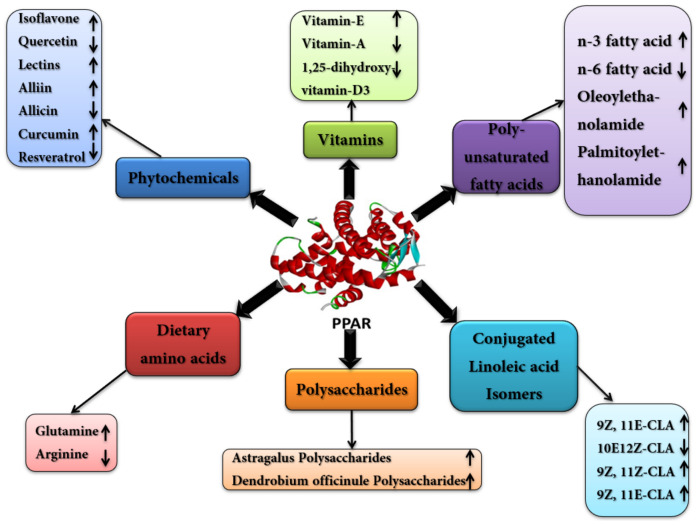
Peroxisome proliferator-activated receptors (PPARs) are the nuclear receptors that could mediate the nutrient-dependent transcriptional activation and regulate metabolic networks through energy homeostasis. However, these receptors cannot work properly under metabolic stress. PPARs and their subtypes can be modulated by nutrigenomic interventions, particularly under stress conditions to restore cellular homeostasis. Many nutrients such as polyunsaturated fatty acids, vitamins, dietary amino acids and phytochemicals have shown their ability for potential activation or inhibition of PPARs. Thus, through different mechanisms, all these nutrients can modulate PPARs and are ultimately helpful to prevent various metabolic disorders, particularly in transition dairy cows. This review aims to provide insights into the crucial role of PPARs in energy metabolism and their potential modulation through nutrigenomic interventions to improve energy homeostasis in dairy animals.
过氧化物酶体增殖物激活受体(PPARs)是核受体,可介导营养依赖性转录激活,并通过能量平衡调节代谢网络。然而,这些受体在代谢应激下不能正常工作。PPARs 及其亚型可以通过营养基因组干预来调节,特别是在应激条件下,以恢复细胞内稳态。许多营养素,如多不饱和脂肪酸、维生素、膳食氨基酸和植物化学物质,已经显示出它们对 PPARs 的潜在激活或抑制作用。因此,通过不同的机制,所有这些营养素都可以调节 PPARs,最终有助于预防各种代谢紊乱,特别是在过渡奶牛中。本综述旨在深入了解 PPARs 在能量代谢中的关键作用,以及通过营养基因组干预来调节它们的潜在作用,以改善奶牛的能量平衡。