Li Taotao, Jin Meilin, Fei Xiaojuan, Yuan Zehu, Wang Yuqin, Quan Kai, Wang Tingpu, Yang Junxiang, He Maochang, Wei Caihong
Key Laboratory of Animal Genetics and Breeding and Reproduction, Ministry of Agriculture, Institute of Animal Sciences, Chinese Academy of Agricultural Sciences, Beijing 100193, China.
Joint International Research Laboratory of Agriculture and Agri-Product Safety, Ministry of Education, Yangzhou University, Yangzhou 225009, China.
Animals (Basel). 2022 Jun 27;12(13):1650. doi: 10.3390/ani12131650.
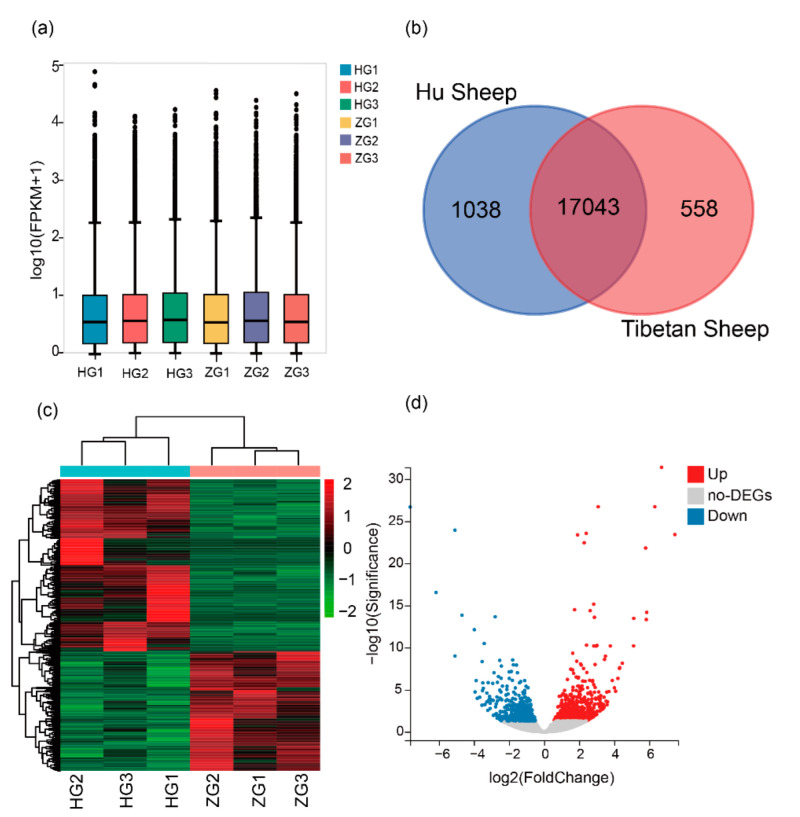
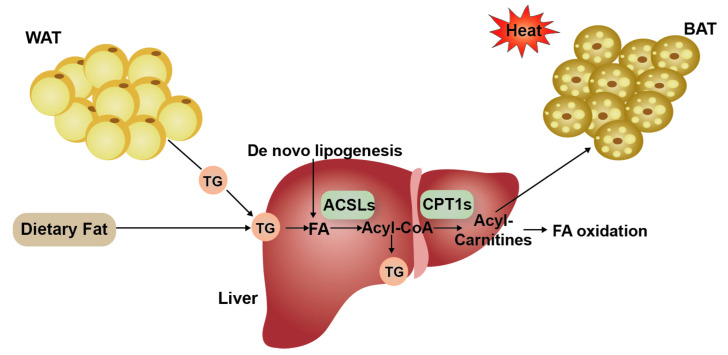
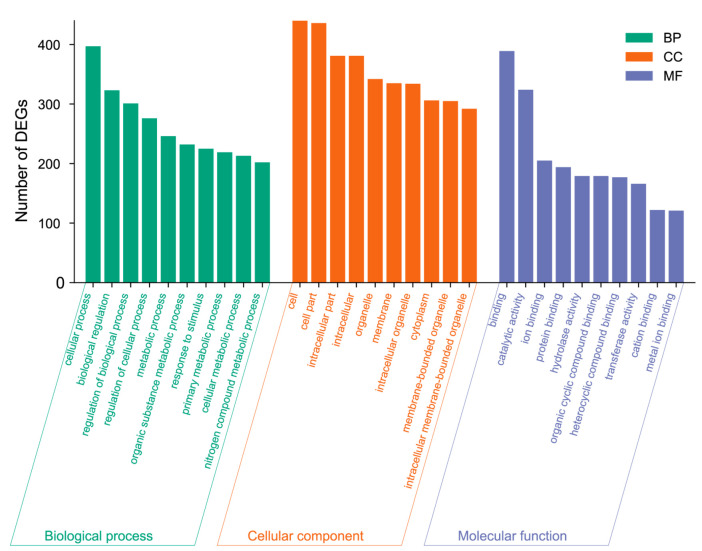
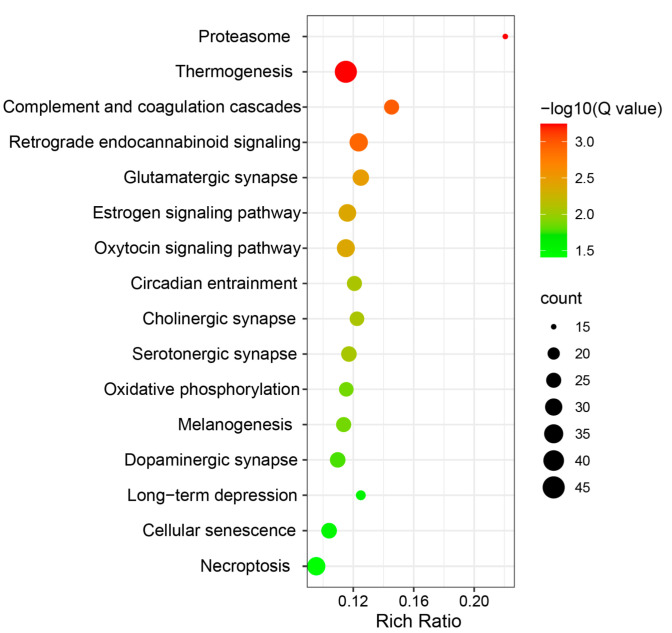
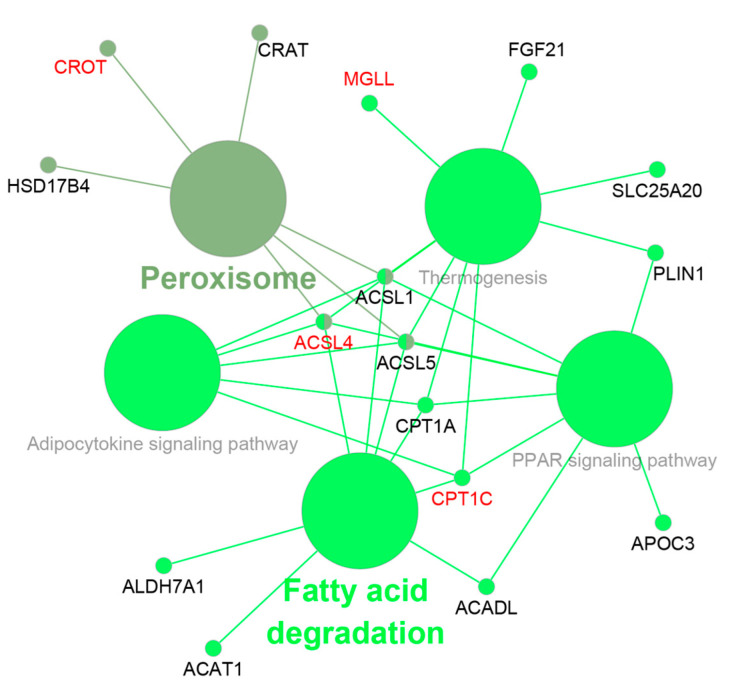
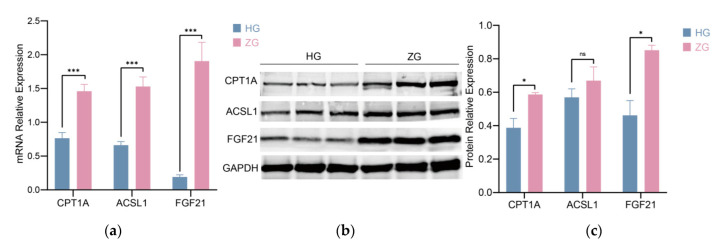
Hu sheep and Tibetan sheep are two commonly raised local sheep breeds in China, and they have different morphological characteristics, such as tail type and adaptability to extreme environments. A fat tail in sheep is the main adipose depot in sheep, whereas the liver is an important organ for fat metabolism, with the uptake, esterification, oxidation, and secretion of fatty acids (FAs). Meanwhile, adaptations to high-altitude and arid environments also affect liver metabolism. Therefore, in this study, RNA-sequencing (RNA-seq) technology was used to characterize the difference in liver fat metabolism between Hu sheep and Tibetan sheep. We identified 1179 differentially expressed genes (DEGs) (Q-value < 0.05) between the two sheep breeds, including 25 fat-metabolism-related genes. Through Kyoto Encyclopedia of Genes and Genomes (KEGG) enrichment analysis, 16 pathways were significantly enriched (Q-value < 0.05), such as the proteasome, glutamatergic synapse, and oxidative phosphorylation pathways. In particular, one of these pathways was enriched to be associated with fat metabolism, namely the thermogenesis pathway, to which fat-metabolism-related genes such as ACSL1, ACSL4, ACSL5, CPT1A, CPT1C, SLC25A20, and FGF21 were enriched. Then, the expression levels of ACSL1, CPT1A, and FGF21 were verified in mRNA and protein levels via qRT-PCR and Western blot analysis between the two sheep breeds. The results showed that the mRNA and protein expression levels of these three genes were higher in the livers of Tibetan sheep than those of Hu sheep. The above genes are mainly related to FAs oxidation, involved in regulating the oxidation of liver FAs. So, this study suggested that Tibetan sheep liver has a greater FAs oxidation level than Hu sheep liver. In addition, the significant enrichment of fat-metabolism-related genes in the thermogenesis pathway appears to be related to plateau-adaptive thermogenesis in Tibetan sheep, which may indicate that liver- and fat-metabolism-related genes have an impact on adaptive thermogenesis.
湖羊和藏羊是中国两种常见的地方绵羊品种,它们具有不同的形态特征,如尾型和对极端环境的适应性。绵羊的肥尾是其主要的脂肪储存部位,而肝脏是脂肪代谢的重要器官,负责脂肪酸(FAs)的摄取、酯化、氧化和分泌。同时,对高海拔和干旱环境的适应也会影响肝脏代谢。因此,在本研究中,采用RNA测序(RNA-seq)技术来表征湖羊和藏羊肝脏脂肪代谢的差异。我们在两个绵羊品种之间鉴定出1179个差异表达基因(DEGs)(Q值<0.05),其中包括25个与脂肪代谢相关的基因。通过京都基因与基因组百科全书(KEGG)富集分析,16条通路显著富集(Q值<0.05),如蛋白酶体、谷氨酸能突触和氧化磷酸化通路。特别是,其中一条通路富集到与脂肪代谢相关,即产热通路,ACSL1、ACSL4、ACSL5、CPT1A、CPT1C、SLC25A20和FGF21等与脂肪代谢相关的基因富集于此。然后,通过qRT-PCR和蛋白质免疫印迹分析在两个绵羊品种之间对ACSL1、CPT1A和FGF21的表达水平进行了mRNA和蛋白质水平的验证。结果表明,这三个基因在藏羊肝脏中的mRNA和蛋白质表达水平均高于湖羊。上述基因主要与脂肪酸氧化有关,参与调节肝脏脂肪酸的氧化。因此,本研究表明藏羊肝脏的脂肪酸氧化水平高于湖羊肝脏。此外,产热通路中与脂肪代谢相关基因的显著富集似乎与藏羊的高原适应性产热有关,这可能表明肝脏和脂肪代谢相关基因对适应性产热有影响。