Interdisciplinary Nanoscience Center (iNANO), Aarhus University, Gustav Wieds Vej 14, 8000 Aarhus, Denmark.
Sino-Danish Center (SDC), Eastern Yanqihu Campus, University of Chinese Academy of Sciences, 380 Huaibeizhuang, Huairou District, Beijing 101400, China.
Molecules. 2022 Jun 24;27(13):4080. doi: 10.3390/molecules27134080.
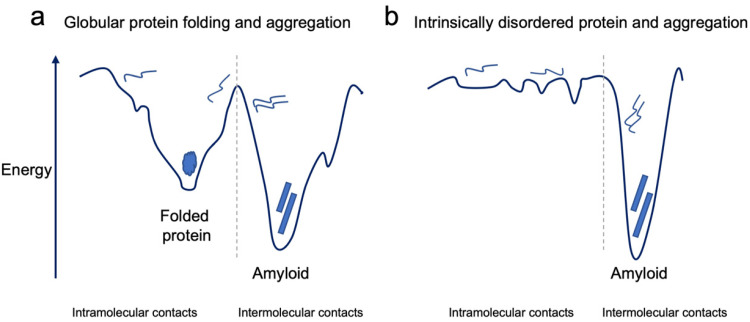
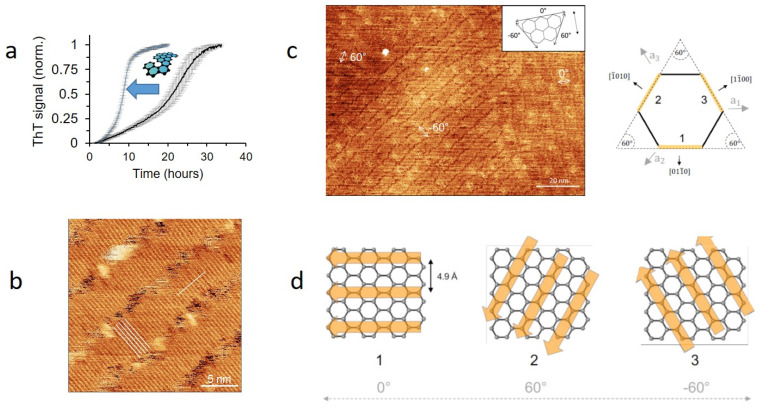
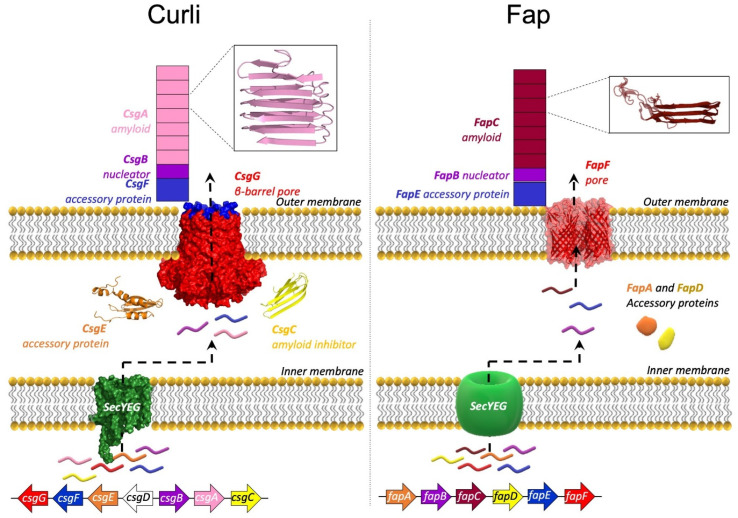
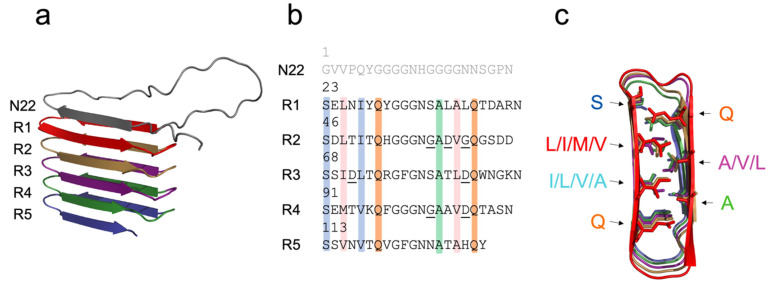
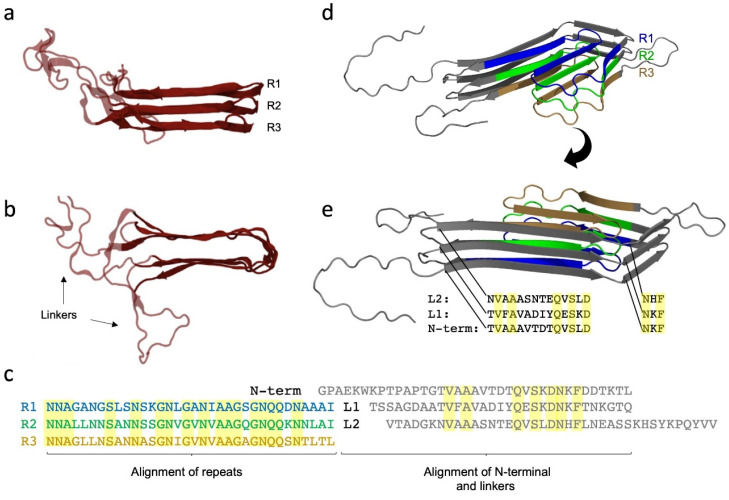
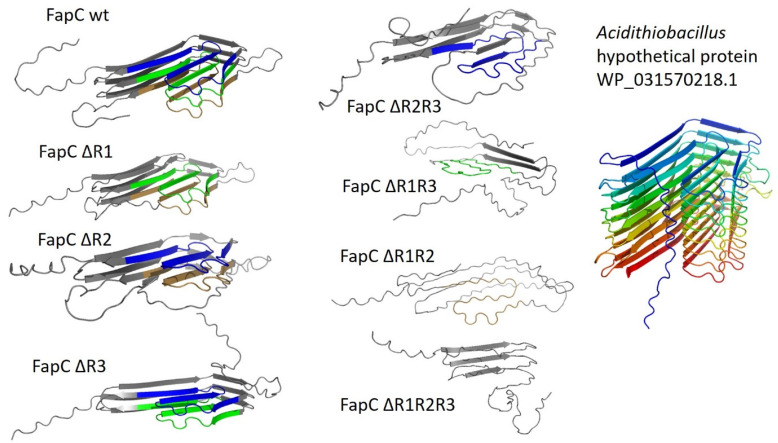
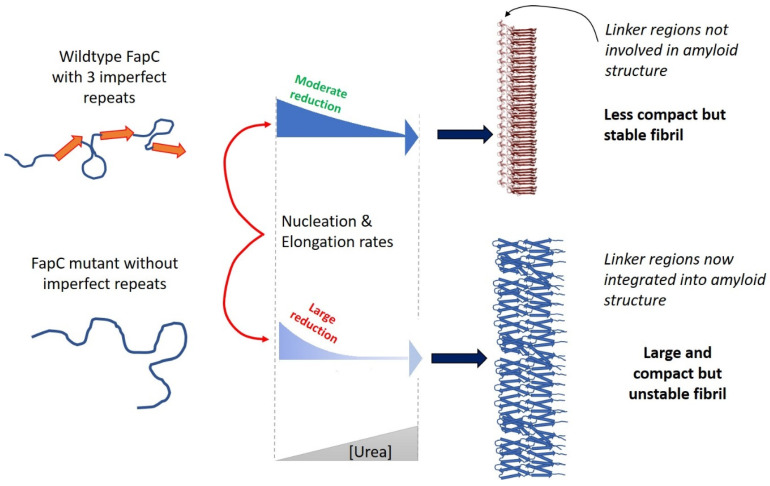
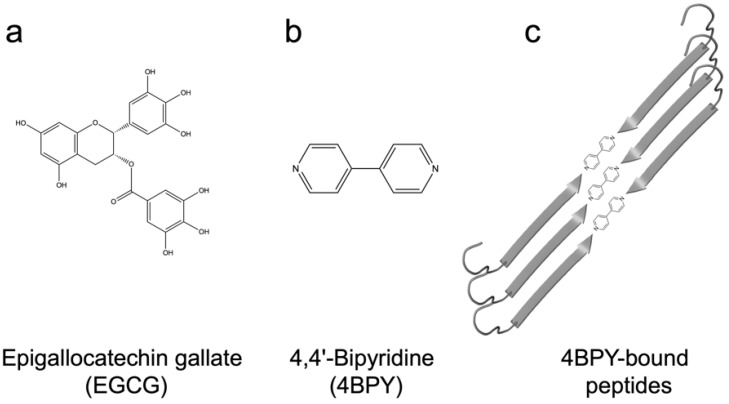
Functional amyloid is produced by many organisms but is particularly well understood in bacteria, where proteins such as CsgA () and FapC () are assembled as functional bacterial amyloid (FuBA) on the cell surface in a carefully optimized process. Besides a host of helper proteins, FuBA formation is aided by multiple imperfect repeats which stabilize amyloid and streamline the aggregation mechanism to a fast-track assembly dominated by primary nucleation. These repeats, which are found in variable numbers in Pseudomonas, are most likely the structural core of the fibrils, though we still lack experimental data to determine whether the repeats give rise to β-helix structures via stacked β-hairpins (highly likely for CsgA) or more complicated arrangements (possibly the case for FapC). The response of FuBA fibrillation to denaturants suggests that nucleation and elongation involve equal amounts of folding, but protein chaperones preferentially target nucleation for effective inhibition. Smart peptides can be designed based on these imperfect repeats and modified with various flanking sequences to divert aggregation to less stable structures, leading to a reduction in biofilm formation. Small molecules such as EGCG can also divert FuBA to less organized structures, such as partially-folded oligomeric species, with the same detrimental effect on biofilm. Finally, the strong tendency of FuBA to self-assemble can lead to the formation of very regular two-dimensional amyloid films on structured surfaces such as graphite, which strongly implies future use in biosensors or other nanobiomaterials. In summary, the properties of functional amyloid are a much-needed corrective to the unfortunate association of amyloid with neurodegenerative disease and a testimony to nature's ability to get the best out of a protein fold.
功能性淀粉样蛋白由许多生物体产生,但在细菌中尤为被深入理解,在细菌中,CsgA()和 FapC()等蛋白质在细胞表面通过精心优化的过程组装成功能性细菌淀粉样蛋白(FuBA)。除了许多辅助蛋白外,FuBA 的形成还得益于多个不完美的重复序列,这些重复序列稳定了淀粉样蛋白,并简化了聚集机制,使其快速进入由初级成核主导的组装过程。这些重复序列在假单胞菌中数量不等,很可能是纤维的结构核心,尽管我们仍然缺乏实验数据来确定这些重复序列是否通过堆叠的β发夹(对于 CsgA 极有可能)或更复杂的排列(对于 FapC 可能是这种情况)产生β-螺旋结构。FuBA 纤维化对变性剂的反应表明,成核和延伸涉及等量的折叠,但蛋白质伴侣优先针对成核进行有效抑制。可以根据这些不完美的重复序列设计智能肽,并对其进行各种侧翼序列修饰,以将聚集转移到不太稳定的结构,从而减少生物膜的形成。类似表没食子儿茶素没食子酸酯 (EGCG) 的小分子也可以将 FuBA 转向不太有序的结构,如部分折叠的寡聚体,对生物膜产生同样的不利影响。最后,FuBA 强烈的自组装倾向会导致在结构表面(如石墨)上形成非常规则的二维淀粉样蛋白膜,这强烈暗示了其在生物传感器或其他纳米生物材料中的未来用途。总之,功能性淀粉样蛋白的特性纠正了淀粉样蛋白与神经退行性疾病之间不幸的关联,证明了自然界从蛋白质折叠中获得最佳效果的能力。