• 文献检索
  • 文档翻译
  • 深度研究
  • 学术资讯
  • Suppr Zotero 插件Zotero 插件
  • 邀请有礼
  • 套餐&价格
  • 历史记录
应用&插件
Suppr Zotero 插件Zotero 插件浏览器插件Mac 客户端Windows 客户端微信小程序
定价
高级版会员购买积分包购买API积分包
服务
文献检索文档翻译深度研究API 文档MCP 服务
关于我们
关于 Suppr公司介绍联系我们用户协议隐私条款
关注我们

Suppr 超能文献

核心技术专利:CN118964589B侵权必究
粤ICP备2023148730 号-1Suppr @ 2026

文献检索

告别复杂PubMed语法,用中文像聊天一样搜索,搜遍4000万医学文献。AI智能推荐,让科研检索更轻松。

立即免费搜索

文件翻译

保留排版,准确专业,支持PDF/Word/PPT等文件格式,支持 12+语言互译。

免费翻译文档

深度研究

AI帮你快速写综述,25分钟生成高质量综述,智能提取关键信息,辅助科研写作。

立即免费体验

基于改进动态 SBPSO 的物联网增强型异常检测系统。

Enhanced Anomaly Detection System for IoT Based on Improved Dynamic SBPSO.

机构信息

Department of Computer Systems Engineering, University of Engineering and Technology, Peshawar 25120, Pakistan.

Department of Information Technology, College of Computer, Qassim University, Buraydah 51452, Saudi Arabia.

出版信息

Sensors (Basel). 2022 Jun 29;22(13):4926. doi: 10.3390/s22134926.

DOI:10.3390/s22134926
PMID:35808425
原文链接:https://pmc.ncbi.nlm.nih.gov/articles/PMC9269715/
Abstract

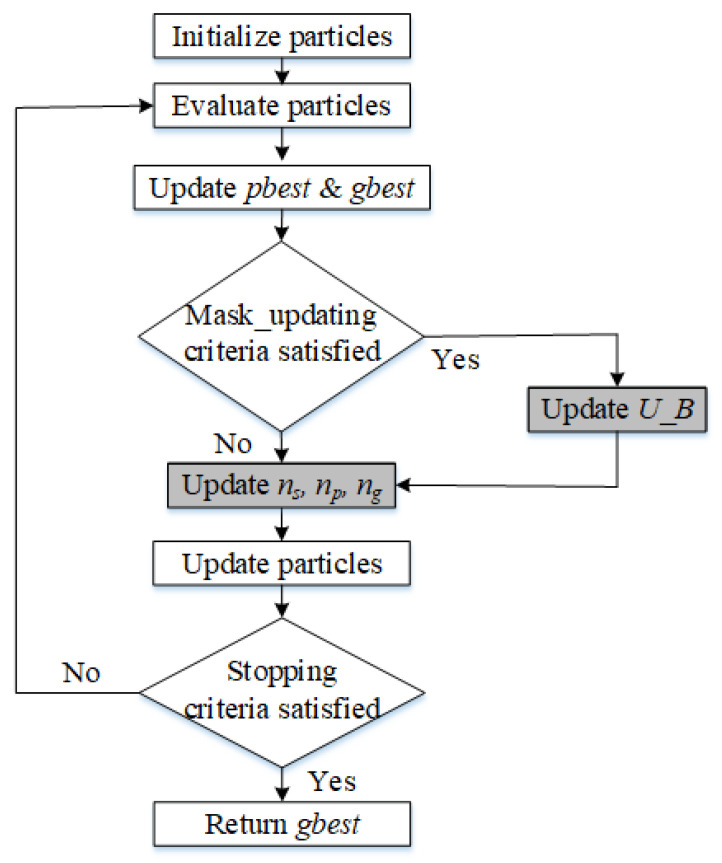
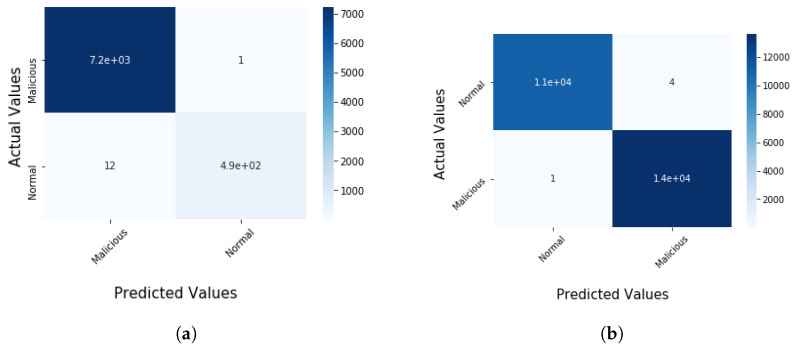
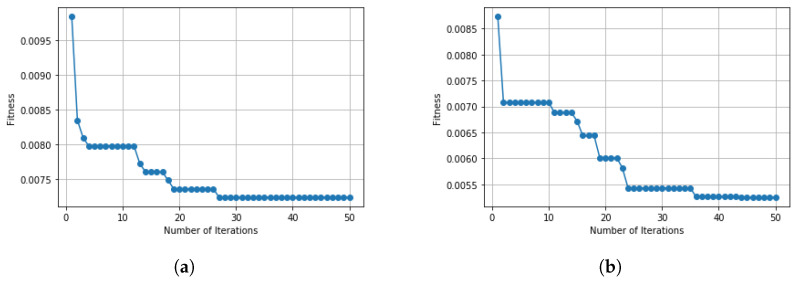
The Internet of Things (IoT) supports human endeavors by creating smart environments. Although the IoT has enabled many human comforts and enhanced business opportunities, it has also opened the door to intruders or attackers who can exploit the technology, either through attacks or by eluding it. Hence, security and privacy are the key concerns for IoT networks. To date, numerous intrusion detection systems (IDS) have been designed for IoT networks, using various optimization techniques. However, with the increase in data dimensionality, the search space has expanded dramatically, thereby posing significant challenges to optimization methods, including particle swarm optimization (PSO). In light of these challenges, this paper proposes a method called improved dynamic sticky binary particle swarm optimization (IDSBPSO) for feature selection, introducing a dynamic search space reduction strategy and a number of dynamic parameters to enhance the searchability of sticky binary particle swarm optimization (SBPSO). Through this approach, an IDS was designed to detect malicious data traffic in IoT networks. The proposed model was evaluated using two IoT network datasets: IoTID20 and UNSW-NB15. It was observed that in most cases, IDSBPSO obtained either higher or similar accuracy even with less number of features. Moreover, IDSBPSO substantially reduced computational cost and prediction time, compared with conventional PSO-based feature selection methods.

摘要

物联网(IoT)通过创建智能环境来支持人类的努力。尽管物联网为许多人类带来了便利并增加了商机,但它也为入侵者或攻击者打开了大门,他们可以通过攻击或逃避攻击来利用这项技术。因此,安全性和隐私性是物联网网络的关键关注点。迄今为止,已经使用各种优化技术为物联网网络设计了许多入侵检测系统(IDS)。然而,随着数据维度的增加,搜索空间已经大大扩展,从而对包括粒子群优化(PSO)在内的优化方法提出了重大挑战。有鉴于此,本文提出了一种称为改进动态粘性二进制粒子群优化(IDSBPSO)的特征选择方法,引入了动态搜索空间缩小策略和许多动态参数,以增强粘性二进制粒子群优化(SBPSO)的搜索能力。通过这种方法,设计了一种入侵检测系统来检测物联网网络中的恶意数据流量。使用两个物联网网络数据集:IoTID20 和 UNSW-NB15 对所提出的模型进行了评估。结果表明,在大多数情况下,IDSBPSO 即使使用较少的特征,也能获得更高或相似的准确性。此外,与基于传统 PSO 的特征选择方法相比,IDSBPSO 大大降低了计算成本和预测时间。

https://cdn.ncbi.nlm.nih.gov/pmc/blobs/832f/9269715/fb16144546cc/sensors-22-04926-g010.jpg
https://cdn.ncbi.nlm.nih.gov/pmc/blobs/832f/9269715/984aa1083bd9/sensors-22-04926-g001.jpg
https://cdn.ncbi.nlm.nih.gov/pmc/blobs/832f/9269715/ea9a4f8640db/sensors-22-04926-g002.jpg
https://cdn.ncbi.nlm.nih.gov/pmc/blobs/832f/9269715/a8a36955e373/sensors-22-04926-g003.jpg
https://cdn.ncbi.nlm.nih.gov/pmc/blobs/832f/9269715/901b37e5ffa9/sensors-22-04926-g004.jpg
https://cdn.ncbi.nlm.nih.gov/pmc/blobs/832f/9269715/2e6dfabbb89e/sensors-22-04926-g005.jpg
https://cdn.ncbi.nlm.nih.gov/pmc/blobs/832f/9269715/5c5b312786eb/sensors-22-04926-g006.jpg
https://cdn.ncbi.nlm.nih.gov/pmc/blobs/832f/9269715/515bcab8a643/sensors-22-04926-g007.jpg
https://cdn.ncbi.nlm.nih.gov/pmc/blobs/832f/9269715/be0156a22852/sensors-22-04926-g008.jpg
https://cdn.ncbi.nlm.nih.gov/pmc/blobs/832f/9269715/d4301b28ab88/sensors-22-04926-g009.jpg
https://cdn.ncbi.nlm.nih.gov/pmc/blobs/832f/9269715/fb16144546cc/sensors-22-04926-g010.jpg
https://cdn.ncbi.nlm.nih.gov/pmc/blobs/832f/9269715/984aa1083bd9/sensors-22-04926-g001.jpg
https://cdn.ncbi.nlm.nih.gov/pmc/blobs/832f/9269715/ea9a4f8640db/sensors-22-04926-g002.jpg
https://cdn.ncbi.nlm.nih.gov/pmc/blobs/832f/9269715/a8a36955e373/sensors-22-04926-g003.jpg
https://cdn.ncbi.nlm.nih.gov/pmc/blobs/832f/9269715/901b37e5ffa9/sensors-22-04926-g004.jpg
https://cdn.ncbi.nlm.nih.gov/pmc/blobs/832f/9269715/2e6dfabbb89e/sensors-22-04926-g005.jpg
https://cdn.ncbi.nlm.nih.gov/pmc/blobs/832f/9269715/5c5b312786eb/sensors-22-04926-g006.jpg
https://cdn.ncbi.nlm.nih.gov/pmc/blobs/832f/9269715/515bcab8a643/sensors-22-04926-g007.jpg
https://cdn.ncbi.nlm.nih.gov/pmc/blobs/832f/9269715/be0156a22852/sensors-22-04926-g008.jpg
https://cdn.ncbi.nlm.nih.gov/pmc/blobs/832f/9269715/d4301b28ab88/sensors-22-04926-g009.jpg
https://cdn.ncbi.nlm.nih.gov/pmc/blobs/832f/9269715/fb16144546cc/sensors-22-04926-g010.jpg

相似文献

1
Enhanced Anomaly Detection System for IoT Based on Improved Dynamic SBPSO.基于改进动态 SBPSO 的物联网增强型异常检测系统。
Sensors (Basel). 2022 Jun 29;22(13):4926. doi: 10.3390/s22134926.
2
Customised Intrusion Detection for an Industrial IoT Heterogeneous Network Based on Machine Learning Algorithms Called FTL-CID.基于机器学习算法的工业物联网异构网络的定制入侵检测,称为 FTL-CID。
Sensors (Basel). 2022 Dec 28;23(1):321. doi: 10.3390/s23010321.
3
IoT Intrusion Detection Taxonomy, Reference Architecture, and Analyses.物联网入侵检测分类法、参考架构和分析。
Sensors (Basel). 2021 Sep 26;21(19):6432. doi: 10.3390/s21196432.
4
SEHIDS: Self Evolving Host-Based Intrusion Detection System for IoT Networks.SEHIDS:面向物联网网络的自进化主机入侵检测系统。
Sensors (Basel). 2022 Aug 29;22(17):6505. doi: 10.3390/s22176505.
5
Deep Complex Gated Recurrent Networks-Based IoT Network Intrusion Detection Systems.基于深度复杂门控循环网络的物联网网络入侵检测系统
Sensors (Basel). 2024 Sep 13;24(18):5933. doi: 10.3390/s24185933.
6
Using Embedded Feature Selection and CNN for Classification on CCD-INID-V1-A New IoT Dataset.利用嵌入式特征选择和卷积神经网络对 CCD-INID-V1-新物联网数据集进行分类。
Sensors (Basel). 2021 Jul 15;21(14):4834. doi: 10.3390/s21144834.
7
Hybridized bio-inspired intrusion detection system for Internet of Things.用于物联网的混合生物启发式入侵检测系统
Front Big Data. 2023 Feb 1;6:1081466. doi: 10.3389/fdata.2023.1081466. eCollection 2023.
8
A Novel Deep Supervised Learning-Based Approach for Intrusion Detection in IoT Systems.一种基于深度监督学习的物联网系统入侵检测新方法。
Sensors (Basel). 2022 Jun 13;22(12):4459. doi: 10.3390/s22124459.
9
Anomaly Detection IDS for Detecting DoS Attacks in IoT Networks Based on Machine Learning Algorithms.基于机器学习算法的物联网网络中用于检测拒绝服务攻击的异常检测入侵检测系统
Sensors (Basel). 2024 Jan 22;24(2):713. doi: 10.3390/s24020713.
10
An Effective Feature Selection Model Using Hybrid Metaheuristic Algorithms for IoT Intrusion Detection.基于混合元启发式算法的物联网入侵检测有效特征选择模型。
Sensors (Basel). 2022 Feb 11;22(4):1396. doi: 10.3390/s22041396.

引用本文的文献

1
Securing IoT Communications via Anomaly Traffic Detection: Synergy of Genetic Algorithm and Ensemble Method.通过异常流量检测确保物联网通信安全:遗传算法与集成方法的协同作用
Sensors (Basel). 2025 Jun 30;25(13):4098. doi: 10.3390/s25134098.
2
A novel approach to intrusion detection system using hybrid flower pollination and cheetah optimization algorithm.一种基于混合花粉授粉和猎豹优化算法的入侵检测系统新方法。
Sci Rep. 2025 Apr 16;15(1):13071. doi: 10.1038/s41598-025-98296-2.
3
IoT based intelligent pest management system for precision agriculture.

本文引用的文献

1
A Machine Learning Based Intrusion Detection System for Mobile Internet of Things.基于机器学习的移动物联网入侵检测系统。
Sensors (Basel). 2020 Jan 14;20(2):461. doi: 10.3390/s20020461.
2
A New Binary Particle Swarm Optimization Approach: Momentum and Dynamic Balance Between Exploration and Exploitation.一种新的二进制粒子群优化方法:动量以及探索与利用之间的动态平衡。
IEEE Trans Cybern. 2021 Feb;51(2):589-603. doi: 10.1109/TCYB.2019.2944141. Epub 2021 Jan 15.
用于精准农业的基于物联网的智能害虫管理系统。
Sci Rep. 2024 Dec 30;14(1):31917. doi: 10.1038/s41598-024-83012-3.
4
Anomaly Detection IDS for Detecting DoS Attacks in IoT Networks Based on Machine Learning Algorithms.基于机器学习算法的物联网网络中用于检测拒绝服务攻击的异常检测入侵检测系统
Sensors (Basel). 2024 Jan 22;24(2):713. doi: 10.3390/s24020713.
5
Hybridized bio-inspired intrusion detection system for Internet of Things.用于物联网的混合生物启发式入侵检测系统
Front Big Data. 2023 Feb 1;6:1081466. doi: 10.3389/fdata.2023.1081466. eCollection 2023.