Department of Microbiology-Immunology and the Interdepartmental Immunobiology Center, Northwestern University Feinberg School of Medicine, Chicago, Illinois, USA.
Neurology, Northwestern University Feinberg School of Medicine, Chicago, Illinois, USA.
Glia. 2022 Oct;70(10):1950-1970. doi: 10.1002/glia.24231. Epub 2022 Jul 9.
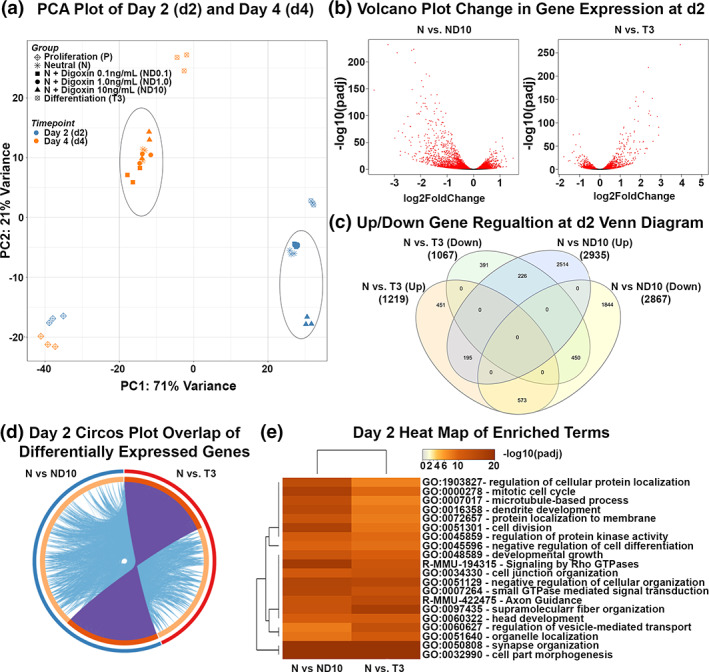
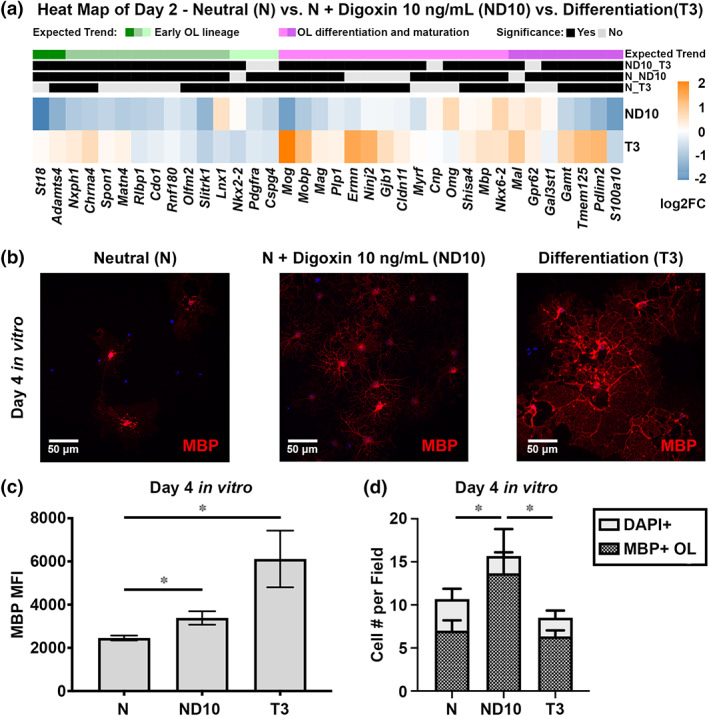
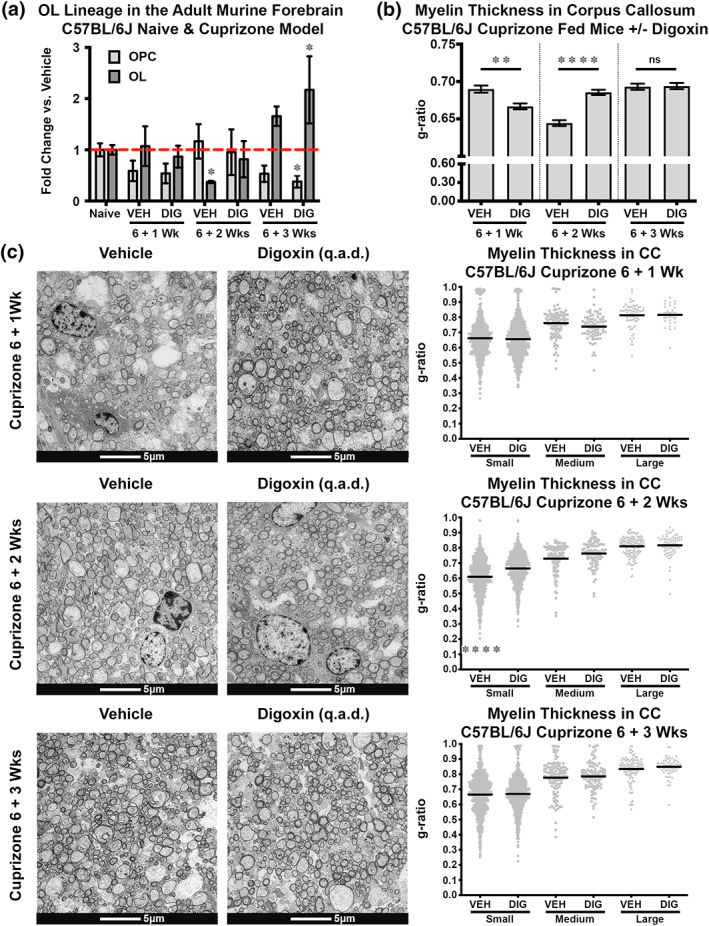
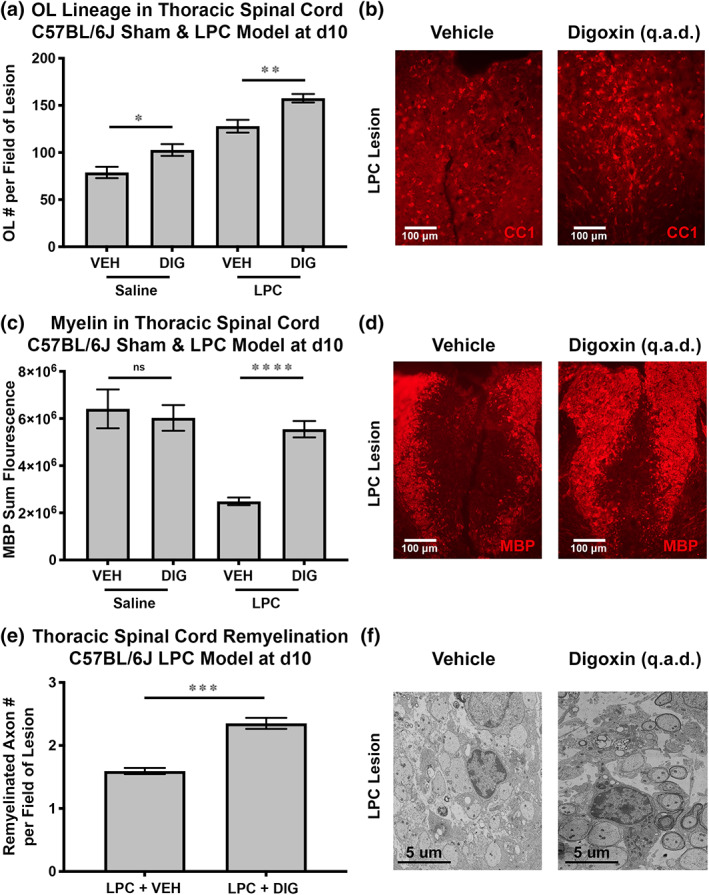
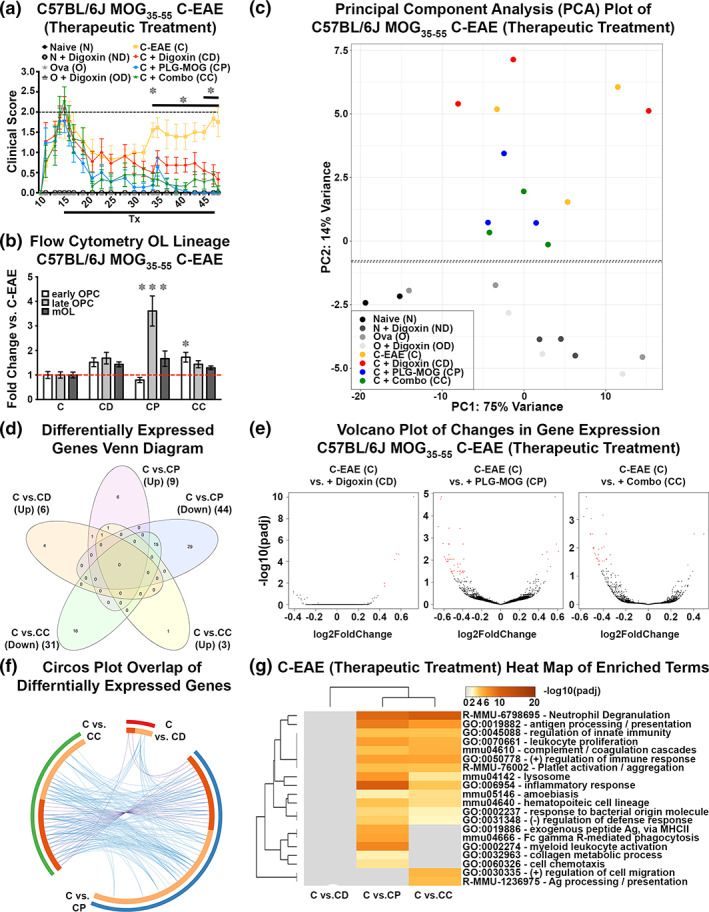
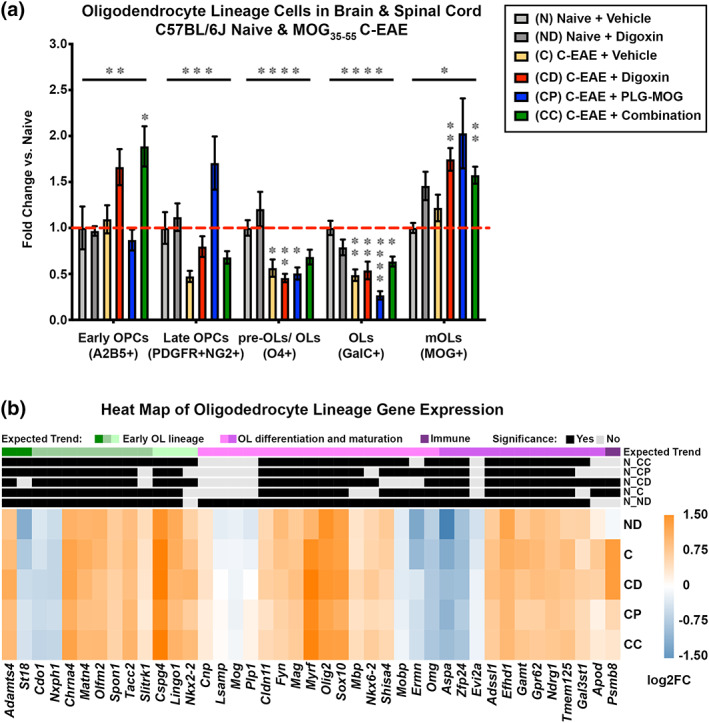
Multiple sclerosis (MS) is a central nervous system (CNS) autoimmune disease characterized by inflammation, demyelination, and neurodegeneration. The ideal MS therapy would both specifically inhibit the underlying autoimmune response and promote repair/regeneration of myelin as well as maintenance of axonal integrity. Currently approved MS therapies consist of non-specific immunosuppressive molecules/antibodies which block activation or CNS homing of autoreactive T cells, but there are no approved therapies for stimulation of remyelination nor maintenance of axonal integrity. In an effort to repurpose an FDA-approved medication for myelin repair, we chose to examine the effectiveness of digoxin, a cardiac glycoside (Na /K ATPase inhibitor), originally identified as pro-myelinating in an in vitro screen. We found that digoxin regulated multiple genes in oligodendrocyte progenitor cells (OPCs) essential for oligodendrocyte (OL) differentiation in vitro, promoted OL differentiation both in vitro and in vivo in female naïve C57BL/6J (B6) mice, and stimulated recovery of myelinated axons in B6 mice following demyelination in the corpus callosum induced by cuprizone and spinal cord demyelination induced by lysophosphatidylcholine (LPC), respectively. More relevant to treatment of MS, we show that digoxin treatment of mice with established MOG -induced Th1/Th17-mediated chronic EAE combined with tolerance induced by the i.v. infusion of biodegradable poly(lactide-co-glycolide) nanoparticles coupled with MOG (PLG-MOG ) completely ameliorated clinical disease symptoms and stimulated recovery of OL lineage cell numbers. These findings provide critical pre-clinical evidence supporting future clinical trials of myelin-specific tolerance with myelin repair/regeneration drugs, such as digoxin, in MS patients.
多发性硬化症(MS)是一种中枢神经系统(CNS)自身免疫性疾病,其特征为炎症、脱髓鞘和神经退行性变。理想的 MS 治疗方法既要特异性抑制潜在的自身免疫反应,又要促进髓鞘修复/再生以及轴突完整性的维持。目前批准的 MS 治疗方法包括非特异性免疫抑制分子/抗体,它们可阻断自身反应性 T 细胞的激活或向中枢神经系统归巢,但尚无批准的用于刺激髓鞘再生或维持轴突完整性的治疗方法。为了将一种已获 FDA 批准的用于髓鞘修复的药物重新用于其他用途,我们选择研究地高辛,一种最初在体外筛选中被鉴定为促髓鞘形成的心脏糖苷(Na / K ATPase 抑制剂),以评估其有效性。我们发现地高辛可调节体外少突胶质前体细胞(OPC)中分化为少突胶质细胞(OL)所必需的多个基因,在体外和体内均能促进 OL 分化,在雄性 C57BL/6J(B6)小鼠中分别通过杯状醇诱导的胼胝体脱髓鞘和溶血磷脂酰胆碱(LPC)诱导的脊髓脱髓鞘来刺激髓鞘化轴突的恢复。更与 MS 治疗相关的是,我们发现地高辛治疗已经建立的 MOG 诱导的 Th1/Th17 介导的慢性 EAE 小鼠,结合静脉输注可生物降解的聚(乳酸-共-乙醇酸)纳米颗粒与 MOG(PLG-MOG)诱导的耐受性,可完全改善临床疾病症状,并刺激 OL 谱系细胞数量的恢复。这些发现为未来在 MS 患者中进行髓鞘特异性耐受与髓鞘修复/再生药物(如地高辛)的临床试验提供了重要的临床前证据。