Monge Manuel, Araya Adriana, Wu Lihteh
Department of Ophthalmology, Hospital México, San José, Costa Rica.
Asociados de Macula, Vitreo y Retina de Costa Rica, San José, Costa Rica.
Taiwan J Ophthalmol. 2022 May 26;12(2):138-146. doi: 10.4103/tjo.tjo_18_22. eCollection 2022 Apr-Jun.
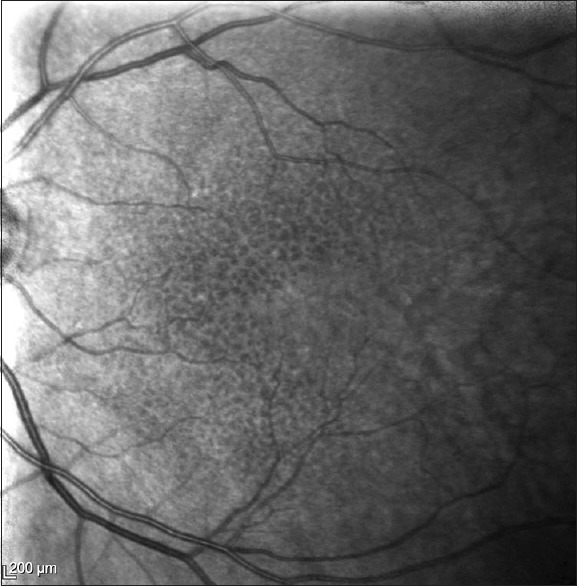
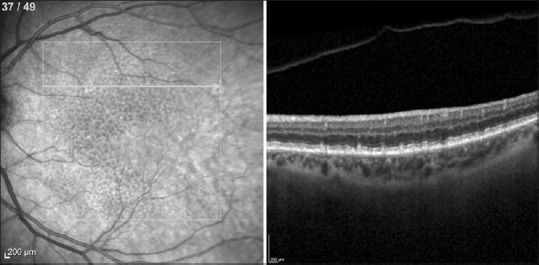
A wide spectrum of phenotypic manifestations characterizes age-related macular degeneration (AMD). Drusen is considered the hallmark of AMD and is located underneath the retinal pigment epithelium (RPE). In contrast, subretinal drusenoid deposits (SDDs), also known as reticular pseudodrusens, are located in the subretinal space, on top of the RPE. SDDs are poorly detected by clinical examination and color fundus photography. Multimodal imaging is required for their proper diagnosis. SDDs are topographically and functionally related to rods. SDDs cause a deep impairment in retinal sensitivity and dark adaptation. SDDs are dynamic structures that may grow, fuse with each other, or regress over time. An intermediate step in some eyes is the development of an acquired vitelliform lesion. The presence of SDD confers an eye a high risk for the development of late AMD. SDD leads to macular neovascularization, particularly type 3, geographic atrophy, and outer retinal atrophy.
年龄相关性黄斑变性(AMD)具有广泛的表型表现。玻璃膜疣被认为是AMD的标志,位于视网膜色素上皮(RPE)下方。相比之下,视网膜下玻璃膜疣样沉积物(SDD),也称为网状假性玻璃膜疣,位于视网膜下间隙,在RPE之上。临床检查和彩色眼底摄影很难检测到SDD。需要多模态成像才能对其进行准确诊断。SDD在地形和功能上与视杆细胞相关。SDD会导致视网膜敏感度和暗适应能力严重受损。SDD是动态结构,可能会随着时间的推移而生长、相互融合或消退。在一些眼睛中,中间阶段是获得性卵黄样病变的发展。SDD的存在使眼睛发生晚期AMD的风险很高。SDD会导致黄斑新生血管形成,尤其是3型、地图样萎缩和外层视网膜萎缩。