Phillips Georgina, Kendino Mangu, Brolan Claire E, Mitchell Rob, Herron Lisa-Maree, Kὃrver Sarah, Sharma Deepak, O'Reilly Gerard, Poloniati Penisimani, Kafoa Berlin, Cox Megan
School of Public Health and Preventive Medicine, Monash University, Melbourne, Australia.
Emergency Department, St Vincent's Hospital Melbourne, Melbourne, Australia.
Lancet Reg Health West Pac. 2022 Aug;25:100518. doi: 10.1016/j.lanwpc.2022.100518. Epub 2022 Jul 7.
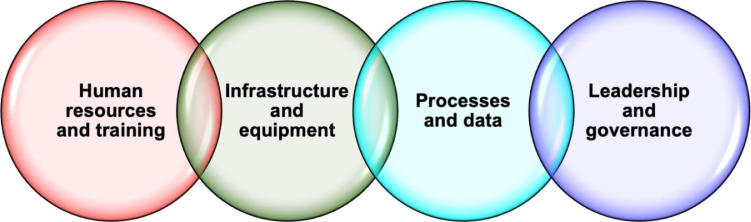
Universal access to safe, effective emergency care (EC) during the COVID-19 pandemic has illustrated its centrality to healthcare systems. The 'Leadership and Governance' building block provides policy, accountability and stewardship to health systems, and is essential to determining effectiveness of pandemic response. This study aimed to explore the experience of leadership and governance during the COVID-19 pandemic from frontline clinicians and stakeholders across the Pacific region.
Australian and Pacific researchers collaborated to conduct this large, qualitative research project in three phases between March 2020 and July 2021. Data was gathered from 116 Pacific regional participants through online support forums, in-depth interviews and focus groups. A phenomenological approach shaped inductive and deductive data analysis, within a previously identified Pacific EC systems building block framework.
Politics profoundly influenced pandemic response effectiveness, even at the clinical coalface. Experienced clinicians spoke authoritatively to decision-makers; focusing on safety, quality and service duty. Rapid adaptability, past surge event experience, team-focus and systems-thinking enabled EC leadership. Transparent communication, collaboration, mutual respect and trust created unity between frontline clinicians and 'top-level' administrators. Pacific cultural assets of relationship-building and community cohesion strengthened responses.
Effective governance occurs when political, administrative and clinical actors work collaboratively in relationships characterised by trust, transparency, altruism and evidence. Trained, supported EC leadership will enhance frontline service provision, health security preparedness and future Universal Health Coverage goals.
Epidemic Ethics/World Health Organization (WHO), Foreign, Commonwealth and Development Office/Wellcome Grant 214711/Z/18/Z. Co-funding: Australasian College for Emergency Medicine Foundation, International Development Fund Grant.
在新冠疫情期间,普遍获得安全、有效的紧急护理(EC)凸显了其在医疗系统中的核心地位。“领导力与治理”这一组成部分为卫生系统提供政策、问责制和管理,对于确定疫情应对的有效性至关重要。本研究旨在探讨太平洋地区一线临床医生和利益相关者在新冠疫情期间的领导力和治理经验。
澳大利亚和太平洋地区的研究人员合作,在2020年3月至2021年7月期间分三个阶段开展了这项大型定性研究项目。通过在线支持论坛、深入访谈和焦点小组收集了116名太平洋地区参与者的数据。在先前确定的太平洋紧急护理系统组成部分框架内,采用现象学方法进行归纳和演绎数据分析。
政治对疫情应对效果产生了深远影响,即使在临床一线也是如此。经验丰富的临床医生向决策者进行了权威性发言;重点关注安全、质量和服务职责。快速适应能力、过去应对激增事件的经验、团队协作和系统思维促成了紧急护理领导力。透明的沟通、协作、相互尊重和信任在一线临床医生和“高层”管理人员之间营造了团结。太平洋地区建立关系和社区凝聚力的文化资产增强了应对能力。
当政治、行政和临床行为者在以信任、透明、利他主义和证据为特征的关系中协同工作时,就会实现有效的治理。经过培训和支持的紧急护理领导力将加强一线服务提供、卫生安全准备以及未来全民健康覆盖目标。
疫情伦理/世界卫生组织(WHO)、外交、联邦和发展办公室/惠康基金214711/Z/18/Z。共同资助:澳大拉西亚急诊医学学院基金会、国际发展基金资助。