Montalbo Francis Jesmar P
College of Informatics and Computing Sciences, Batangas State University, Philippines.
Biomed Signal Process Control. 2021 Jul;68:102583. doi: 10.1016/j.bspc.2021.102583. Epub 2021 Apr 1.
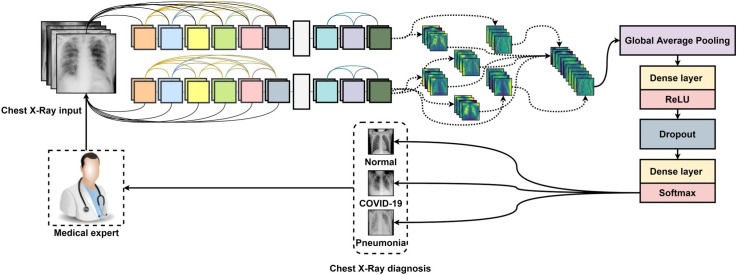
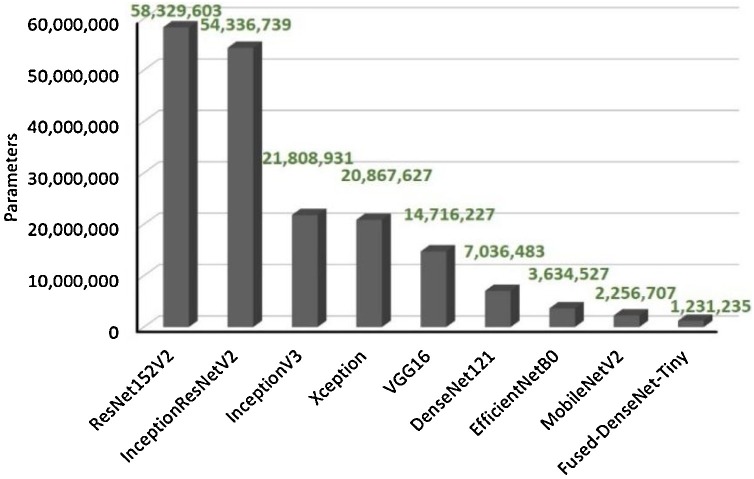
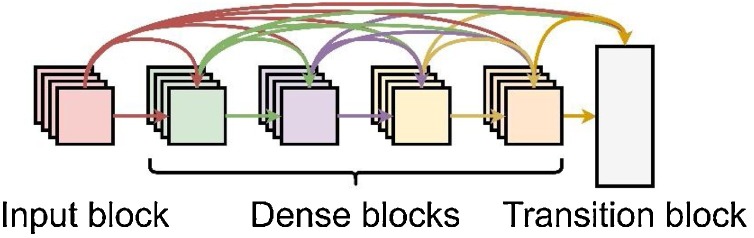
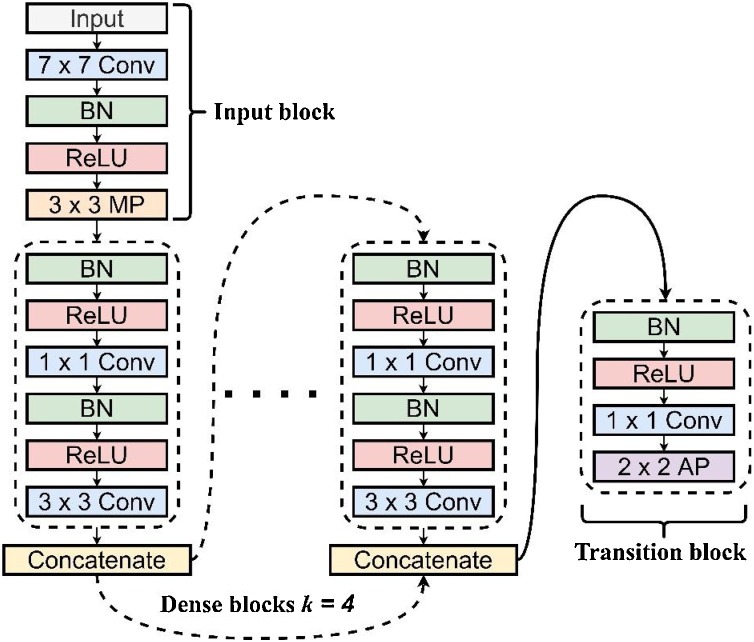
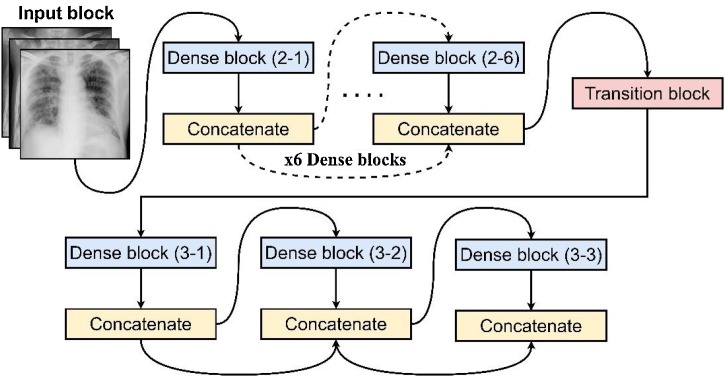
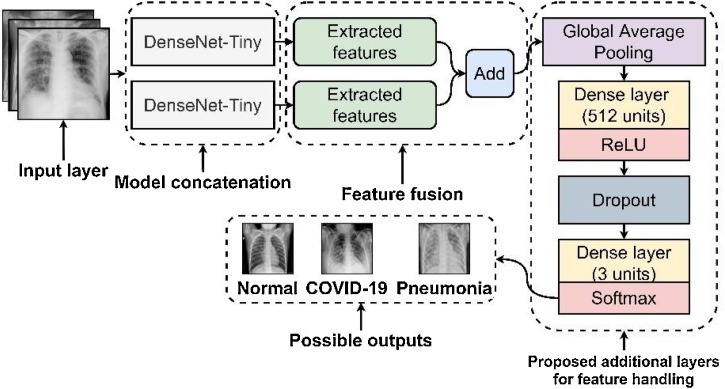
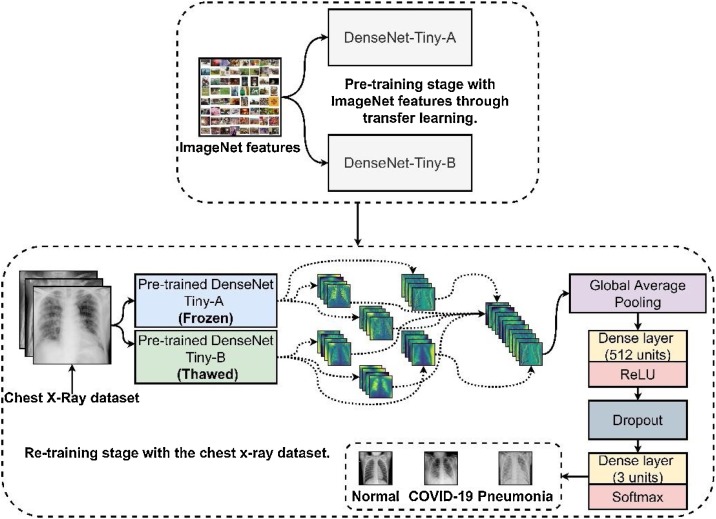
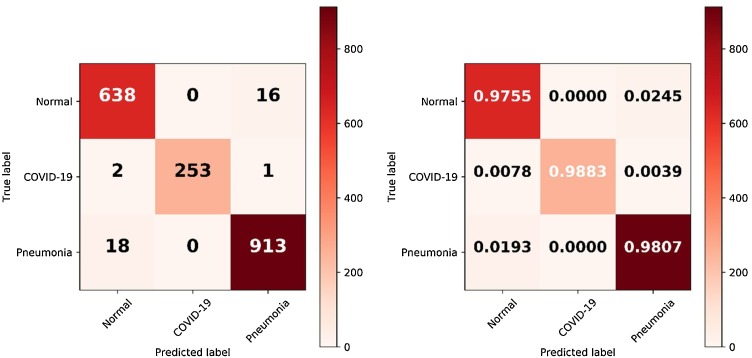
Due to the unforeseen turn of events, our world has undergone another global pandemic from a highly contagious novel coronavirus named COVID-19. The novel virus inflames the lungs similarly to Pneumonia, making it challenging to diagnose. Currently, the common standard to diagnose the virus's presence from an individual is using a molecular real-time Reverse-Transcription Polymerase Chain Reaction (rRT-PCR) test from fluids acquired through nasal swabs. Such a test is difficult to acquire in most underdeveloped countries with a few experts that can perform the test. As a substitute, the widely available Chest X-Ray (CXR) became an alternative to rule out the virus. However, such a method does not come easy as the virus still possesses unknown characteristics that even experienced radiologists and other medical experts find difficult to diagnose through CXRs. Several studies have recently used computer-aided methods to automate and improve such diagnosis of CXRs through Artificial Intelligence (AI) based on computer vision and Deep Convolutional Neural Networks (DCNN), which some require heavy processing costs and other tedious methods to produce. Therefore, this work proposed the Fused-DenseNet-Tiny, a lightweight DCNN model based on a densely connected neural network (DenseNet) truncated and concatenated. The model trained to learn CXR features based on transfer learning, partial layer freezing, and feature fusion. Upon evaluation, the proposed model achieved a remarkable 97.99 % accuracy, with only 1.2 million parameters and a shorter end-to-end structure. It has also shown better performance than some existing studies and other massive state-of-the-art models that diagnosed COVID-19 from CXRs.
由于突发事件的意外转变,我们的世界经历了另一场全球大流行,这次是由一种名为COVID-19的高传染性新型冠状病毒引发的。这种新型病毒与肺炎类似,会使肺部发炎,这使得诊断具有挑战性。目前,从个体中诊断病毒存在的通用标准是使用分子实时逆转录聚合酶链反应(rRT-PCR)检测,该检测通过鼻拭子采集的液体进行。在大多数不发达国家,这种检测很难获得,而且能够进行该检测的专家也很少。作为替代方案,广泛可用的胸部X光(CXR)成为排除病毒的一种选择。然而,这种方法并不容易,因为该病毒仍具有未知特征,即使是经验丰富的放射科医生和其他医学专家也很难通过胸部X光进行诊断。最近有几项研究使用了计算机辅助方法,通过基于计算机视觉和深度卷积神经网络(DCNN)的人工智能(AI)来自动化和改进胸部X光的这种诊断,其中一些方法需要高昂的处理成本和其他繁琐的方法来实现。因此,这项工作提出了Fused-DenseNet-Tiny,这是一种基于截断和拼接的密集连接神经网络(DenseNet)的轻量级DCNN模型。该模型通过迁移学习、部分层冻结和特征融合进行训练,以学习胸部X光特征。经评估,所提出的模型取得了显著的97.99%的准确率,仅有120万个参数,并且端到端结构更短。它还表现出比一些现有研究以及其他从胸部X光诊断COVID-19的大规模先进模型更好的性能。