Graduate School of Pharmaceutical Sciences, Chiba University, 1-8-1, Inohana, Chuo-ku, Chiba, 260-8675, Japan.
Nat Commun. 2022 Jul 13;13(1):4052. doi: 10.1038/s41467-022-31613-9.
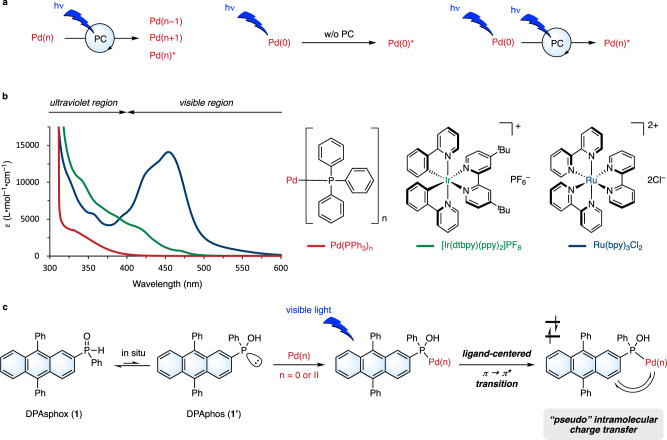
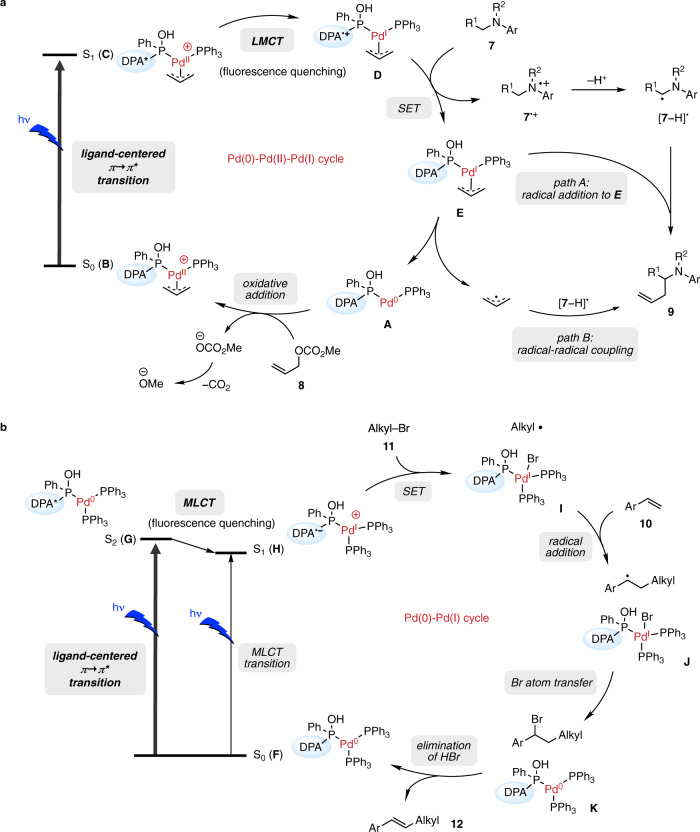
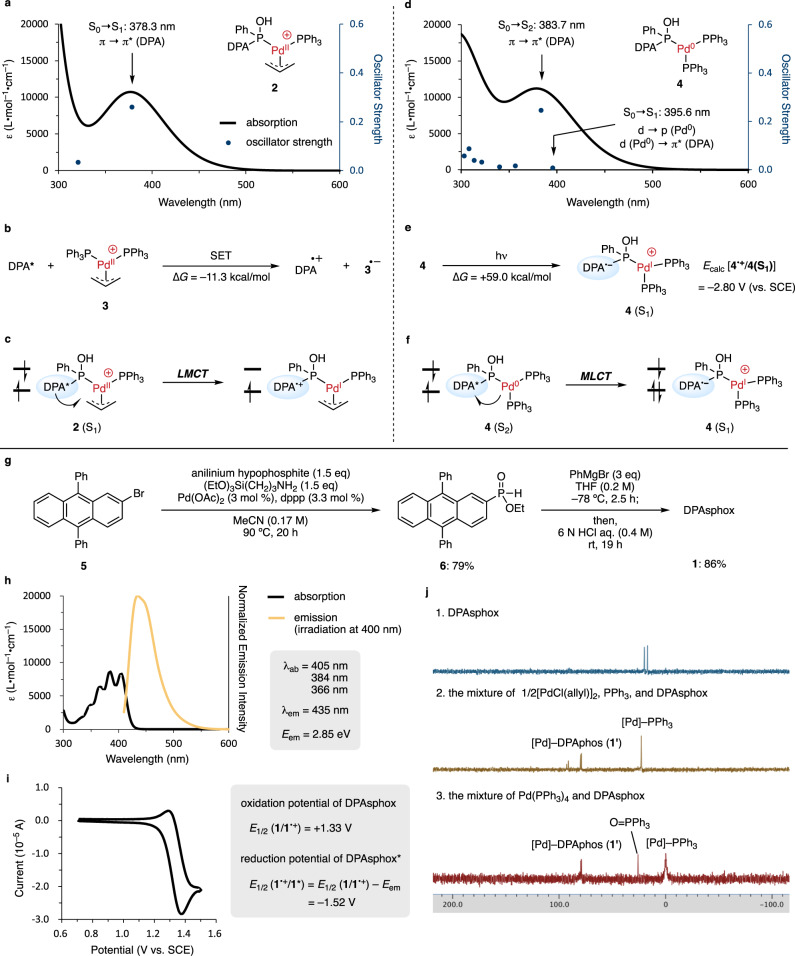
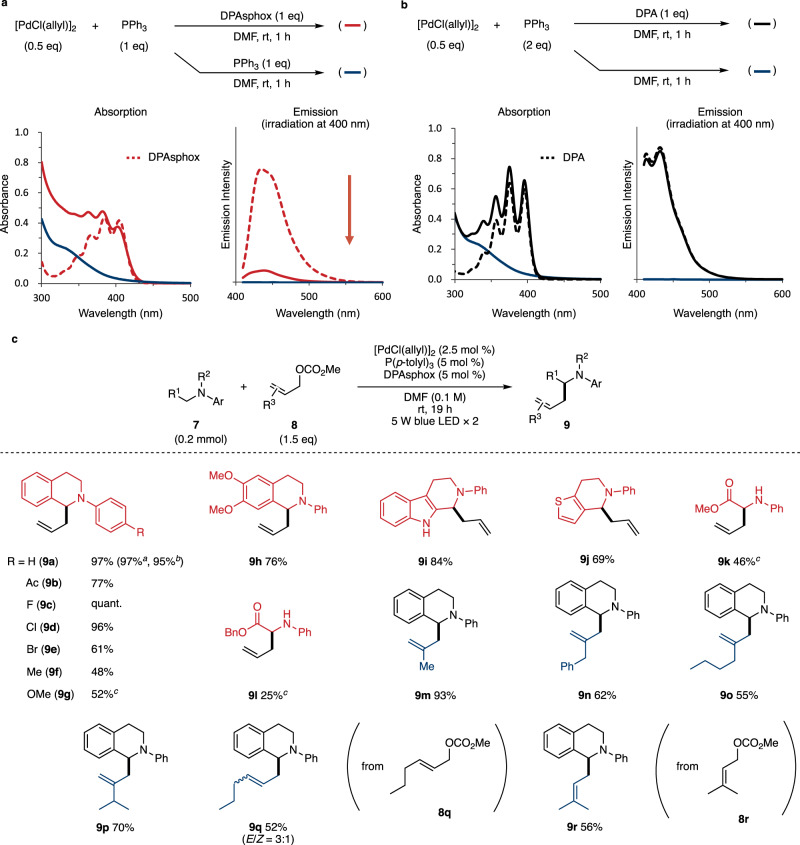
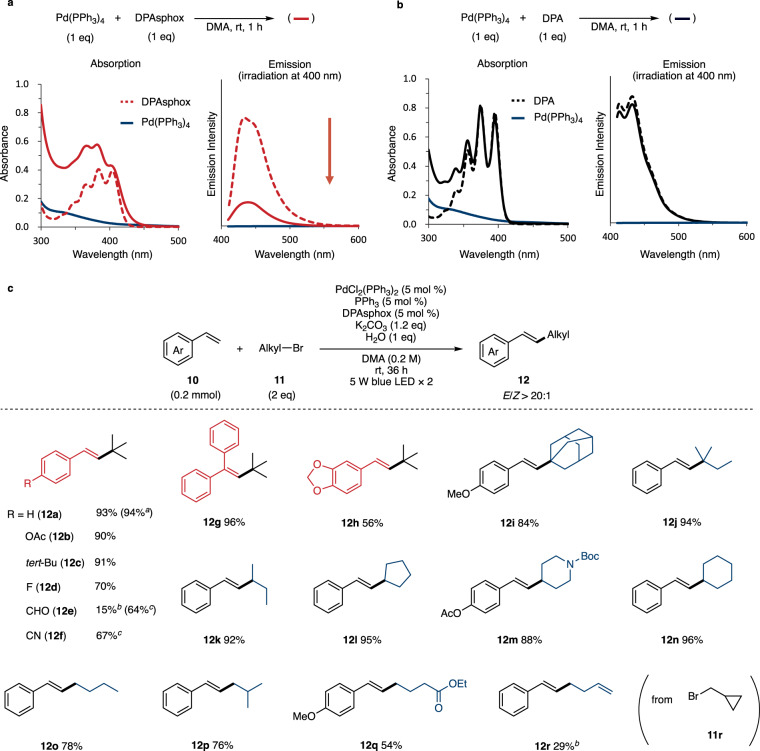
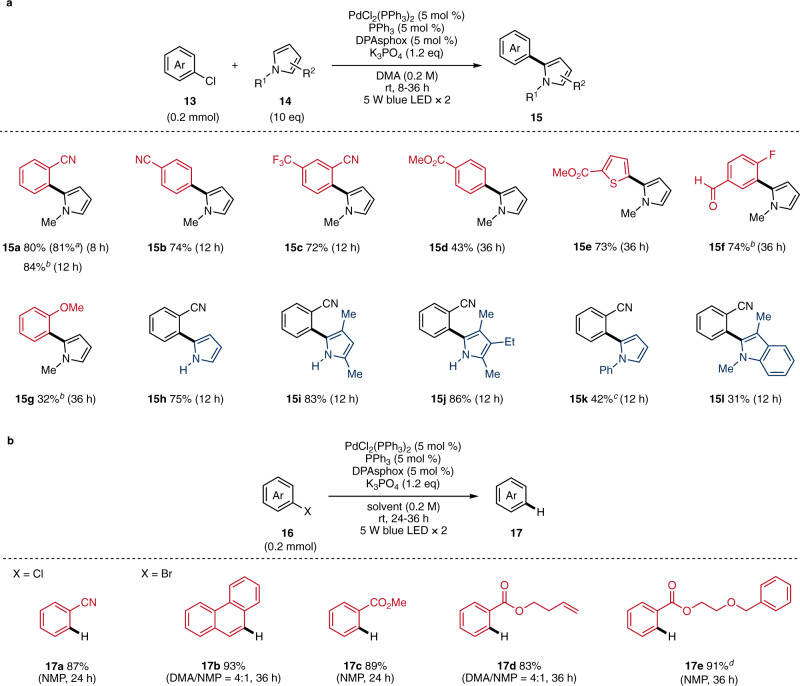
Although transition metal-catalyzed reactions have evolved with ligand development, ligand design for palladium-catalyzed photoreactions remains less explored. Here, we report a secondary phosphine oxide ligand bearing a visible-light sensitization moiety and apply it to Pd-catalyzed radical cross-coupling reactions. The tautomeric phosphinous acid coordinates to palladium in situ, allowing for pseudo-intramolecular single-electron transfer between the ligand and palladium. Molecular design of the metal complexes aided by time-dependent density functional theory calculations enables the involvement of allyl radicals from π-allyl palladium(II) complexes, and alkyl and aryl radicals from the corresponding halides and palladium(0) complex. This complex enables radical cross-couplings by ligand-to-Pd(II) and Pd(0)-to-ligand single-electron transfer under visible-light irradiation.
尽管过渡金属催化反应随着配体的发展而不断发展,但钯催化光反应的配体设计仍探索较少。在这里,我们报告了一种带有可见光敏化部分的二级膦氧化物配体,并将其应用于钯催化的自由基交叉偶联反应。互变异构的次膦酸在钯原位配位,允许配体和钯之间发生假分子内单电子转移。通过时间依赖的密度泛函理论计算辅助的金属配合物的分子设计,使π-烯丙基钯(II)配合物中的烯丙基自由基、相应卤化物和钯(0)配合物中的烷基和芳基自由基参与反应。这种配合物可以通过可见光照射下的配体到 Pd(II) 和 Pd(0)到配体的单电子转移来实现自由基交叉偶联。