• 文献检索
  • 文档翻译
  • 深度研究
  • 学术资讯
  • Suppr Zotero 插件Zotero 插件
  • 邀请有礼
  • 套餐&价格
  • 历史记录
应用&插件
Suppr Zotero 插件Zotero 插件浏览器插件Mac 客户端Windows 客户端微信小程序
定价
高级版会员购买积分包购买API积分包
服务
文献检索文档翻译深度研究API 文档MCP 服务
关于我们
关于 Suppr公司介绍联系我们用户协议隐私条款
关注我们

Suppr 超能文献

核心技术专利:CN118964589B侵权必究
粤ICP备2023148730 号-1Suppr @ 2026

文献检索

告别复杂PubMed语法,用中文像聊天一样搜索,搜遍4000万医学文献。AI智能推荐,让科研检索更轻松。

立即免费搜索

文件翻译

保留排版,准确专业,支持PDF/Word/PPT等文件格式,支持 12+语言互译。

免费翻译文档

深度研究

AI帮你快速写综述,25分钟生成高质量综述,智能提取关键信息,辅助科研写作。

立即免费体验

基于心电图信号的医学影像心律失常疾病分析的深度学习框架改进

A Modified Deep Learning Framework for Arrhythmia Disease Analysis in Medical Imaging Using Electrocardiogram Signal.

机构信息

Department of Electronics and Communication Engineering, Sathyabama Institute of Science and Technology, Chennai, 600119 Tamil Nadu, India.

Department of Computer Science and Engineering, KIoT-College of Informatics, Kombolcha, Wollo University, Ethiopia.

出版信息

Biomed Res Int. 2022 Jul 4;2022:5203401. doi: 10.1155/2022/5203401. eCollection 2022.

DOI:10.1155/2022/5203401
PMID:35832849
原文链接:https://pmc.ncbi.nlm.nih.gov/articles/PMC9273451/
Abstract

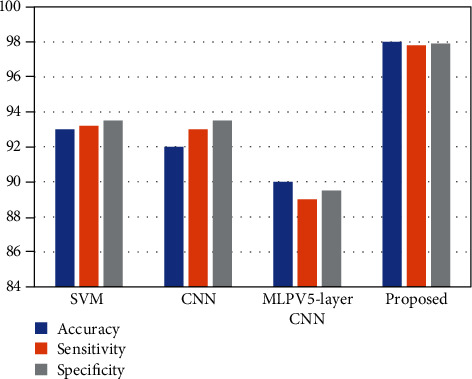
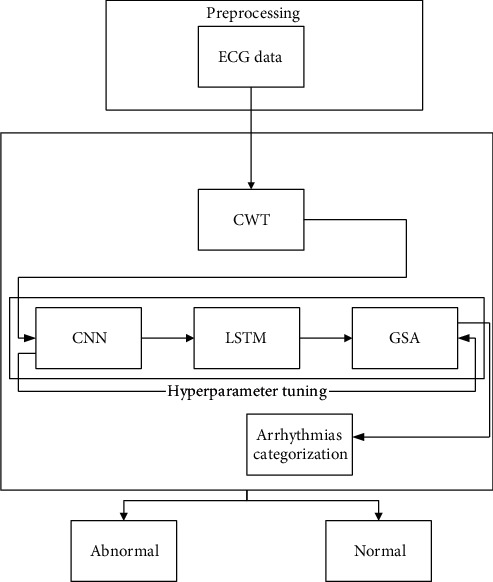
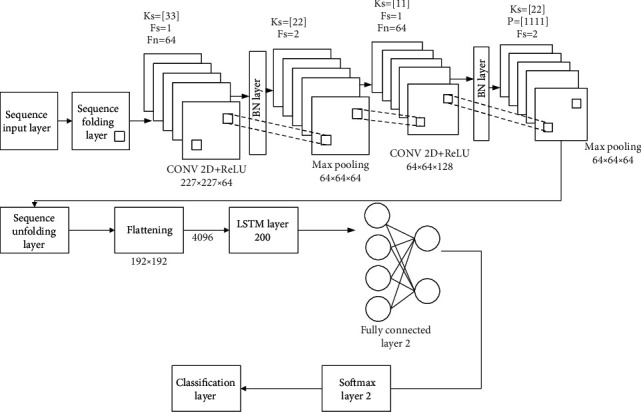
Arrhythmias are anomalies in the heartbeat rhythm that occur occasionally in people's lives. These arrhythmias can lead to potentially deadly consequences, putting your life in jeopardy. As a result, arrhythmia identification and classification are an important aspect of cardiac diagnostics. An electrocardiogram (ECG), a recording collecting the heart's pumping activity, is regarded the guideline for catching these abnormal episodes. Nevertheless, because the ECG contains so much data, extracting the crucial data from imagery evaluation becomes extremely difficult. As a result, it is vital to create an effective system for analyzing ECG's massive amount of data. The ECG image from ECG signal is processed by some image processing techniques. To optimize the identification and categorization process, this research presents a hybrid deep learning-based technique. This paper contributes in two ways. Automating noise reduction and extraction of features, 1D ECG data are first converted into 2D pictures. Then, based on experimental evidence, a hybrid model called CNNLSTM is presented, which combines CNN and LSTM models. We conducted a comprehensive research using the broadly used MIT_BIH arrhythmia dataset to assess the efficacy of the proposed CNN-LSTM technique. The results reveal that the proposed method has a 99.10 percent accuracy rate. Furthermore, the proposed model has an average sensitivity of 98.35 percent and a specificity of 98.38 percent. These outcomes are superior to those produced using other procedures, and they will significantly reduce the amount of involvement necessary by physicians.

摘要

心律失常是人们生活中偶尔出现的心跳节律异常。这些心律失常可能会导致潜在的致命后果,使你的生命处于危险之中。因此,心律失常的识别和分类是心脏诊断的一个重要方面。心电图(ECG)是一种收集心脏跳动活动的记录,被认为是捕捉这些异常事件的指南。然而,由于心电图包含大量的数据,从图像评估中提取关键数据变得非常困难。因此,创建一个有效的系统来分析 ECG 的大量数据至关重要。从 ECG 信号处理 ECG 图像。为了优化识别和分类过程,本研究提出了一种基于混合深度学习的技术。本文在两个方面做出了贡献。首先,通过一些图像处理技术,将一维 ECG 数据转换为二维图像,从而实现噪声的自动降低和特征的提取。然后,根据实验证据,提出了一种称为 CNNLSTM 的混合模型,它结合了 CNN 和 LSTM 模型。我们使用广泛使用的 MIT_BIH 心律失常数据集进行了全面的研究,以评估所提出的 CNN-LSTM 技术的效果。结果表明,所提出的方法具有 99.10%的准确率。此外,所提出的模型的平均灵敏度为 98.35%,特异性为 98.38%。这些结果优于其他方法,并且将大大减少医生的参与量。
https://cdn.ncbi.nlm.nih.gov/pmc/blobs/a171/9273451/6b4e6d52dcdd/BMRI2022-5203401.009.jpg
https://cdn.ncbi.nlm.nih.gov/pmc/blobs/a171/9273451/d8558261de47/BMRI2022-5203401.001.jpg
https://cdn.ncbi.nlm.nih.gov/pmc/blobs/a171/9273451/f4667c12e5f1/BMRI2022-5203401.002.jpg
https://cdn.ncbi.nlm.nih.gov/pmc/blobs/a171/9273451/b7014c6bd51c/BMRI2022-5203401.003.jpg
https://cdn.ncbi.nlm.nih.gov/pmc/blobs/a171/9273451/442bff576acb/BMRI2022-5203401.004.jpg
https://cdn.ncbi.nlm.nih.gov/pmc/blobs/a171/9273451/8935b4a16932/BMRI2022-5203401.005.jpg
https://cdn.ncbi.nlm.nih.gov/pmc/blobs/a171/9273451/0c0923fb0354/BMRI2022-5203401.006.jpg
https://cdn.ncbi.nlm.nih.gov/pmc/blobs/a171/9273451/9f268eb85d5b/BMRI2022-5203401.007.jpg
https://cdn.ncbi.nlm.nih.gov/pmc/blobs/a171/9273451/a32314c84d4a/BMRI2022-5203401.008.jpg
https://cdn.ncbi.nlm.nih.gov/pmc/blobs/a171/9273451/6b4e6d52dcdd/BMRI2022-5203401.009.jpg
https://cdn.ncbi.nlm.nih.gov/pmc/blobs/a171/9273451/d8558261de47/BMRI2022-5203401.001.jpg
https://cdn.ncbi.nlm.nih.gov/pmc/blobs/a171/9273451/f4667c12e5f1/BMRI2022-5203401.002.jpg
https://cdn.ncbi.nlm.nih.gov/pmc/blobs/a171/9273451/b7014c6bd51c/BMRI2022-5203401.003.jpg
https://cdn.ncbi.nlm.nih.gov/pmc/blobs/a171/9273451/442bff576acb/BMRI2022-5203401.004.jpg
https://cdn.ncbi.nlm.nih.gov/pmc/blobs/a171/9273451/8935b4a16932/BMRI2022-5203401.005.jpg
https://cdn.ncbi.nlm.nih.gov/pmc/blobs/a171/9273451/0c0923fb0354/BMRI2022-5203401.006.jpg
https://cdn.ncbi.nlm.nih.gov/pmc/blobs/a171/9273451/9f268eb85d5b/BMRI2022-5203401.007.jpg
https://cdn.ncbi.nlm.nih.gov/pmc/blobs/a171/9273451/a32314c84d4a/BMRI2022-5203401.008.jpg
https://cdn.ncbi.nlm.nih.gov/pmc/blobs/a171/9273451/6b4e6d52dcdd/BMRI2022-5203401.009.jpg

相似文献

1
A Modified Deep Learning Framework for Arrhythmia Disease Analysis in Medical Imaging Using Electrocardiogram Signal.基于心电图信号的医学影像心律失常疾病分析的深度学习框架改进
Biomed Res Int. 2022 Jul 4;2022:5203401. doi: 10.1155/2022/5203401. eCollection 2022.
2
A Hybrid Deep Learning Approach for ECG-Based Arrhythmia Classification.一种基于心电图的心律失常分类的混合深度学习方法。
Bioengineering (Basel). 2022 Apr 2;9(4):152. doi: 10.3390/bioengineering9040152.
3
Ensemble classifier fostered detection of arrhythmia using ECG data.基于 ECG 数据的集成分类器对心律失常进行检测。
Med Biol Eng Comput. 2023 Sep;61(9):2453-2466. doi: 10.1007/s11517-023-02839-6. Epub 2023 May 5.
4
Classification of Arrhythmia in Heartbeat Detection Using Deep Learning.基于深度学习的心跳检测中的心律失常分类。
Comput Intell Neurosci. 2021 Oct 19;2021:2195922. doi: 10.1155/2021/2195922. eCollection 2021.
5
A hybrid deep learning network for automatic diagnosis of cardiac arrhythmia based on 12-lead ECG.基于 12 导联心电图的心律失常自动诊断的混合深度学习网络。
Sci Rep. 2024 Oct 18;14(1):24441. doi: 10.1038/s41598-024-75531-w.
6
ECG-based cardiac arrhythmias detection through ensemble learning and fusion of deep spatial-temporal and long-range dependency features.基于 ECG 的心脏心律失常检测,通过深度时空和长距离依赖特征的集成学习和融合。
Artif Intell Med. 2024 Apr;150:102818. doi: 10.1016/j.artmed.2024.102818. Epub 2024 Feb 24.
7
LDCNN: A new arrhythmia detection technique with ECG signals using a linear deep convolutional neural network.LDCNN:一种使用 ECG 信号的新心律失常检测技术,采用线性深度卷积神经网络。
Physiol Rep. 2024 Sep;12(17):e16182. doi: 10.14814/phy2.16182.
8
Interpretation of Electrocardiogram Heartbeat by CNN and GRU.卷积神经网络和门控循环单元对心电图心跳的解读。
Comput Math Methods Med. 2021 Aug 29;2021:6534942. doi: 10.1155/2021/6534942. eCollection 2021.
9
An End-to-End Cardiac Arrhythmia Recognition Method with an Effective DenseNet Model on Imbalanced Datasets Using ECG Signal.基于 ECG 信号的不平衡数据集上有效 DenseNet 模型的端到端心律失常识别方法。
Comput Intell Neurosci. 2022 Sep 29;2022:9475162. doi: 10.1155/2022/9475162. eCollection 2022.
10
HARDC : A novel ECG-based heartbeat classification method to detect arrhythmia using hierarchical attention based dual structured RNN with dilated CNN.HARDC:一种新颖的基于 ECG 的心跳分类方法,使用基于分层注意力的双结构 RNN 与扩张 CNN 检测心律失常。
Neural Netw. 2023 May;162:271-287. doi: 10.1016/j.neunet.2023.03.004. Epub 2023 Mar 5.

引用本文的文献

1
Antibiotics for the Secondary Prevention of Coronary Heart Disease.用于冠心病二级预防的抗生素
Br J Card Nurs. 2022 Oct 2;17(10):1-7. doi: 10.12968/bjca.2022.0082.
2
Retracted: A Modified Deep Learning Framework for Arrhythmia Disease Analysis in Medical Imaging Using Electrocardiogram Signal.撤回:一种使用心电图信号在医学成像中进行心律失常疾病分析的改进深度学习框架。
Biomed Res Int. 2023 Dec 29;2023:9863625. doi: 10.1155/2023/9863625. eCollection 2023.
3
Utilization of Bioinorganic Nanodrugs and Nanomaterials for the Control of Infectious Diseases Using Deep Learning.

本文引用的文献

1
Classification of Arrhythmia in Heartbeat Detection Using Deep Learning.基于深度学习的心跳检测中的心律失常分类。
Comput Intell Neurosci. 2021 Oct 19;2021:2195922. doi: 10.1155/2021/2195922. eCollection 2021.
2
Optimization of End-to-End Convolutional Neural Networks for Analysis of Out-of-Hospital Cardiac Arrest Rhythms during Cardiopulmonary Resuscitation.优化端到端卷积神经网络以分析心肺复苏期间院外心脏骤停节律。
Sensors (Basel). 2021 Jun 15;21(12):4105. doi: 10.3390/s21124105.
3
Classification of Mental Stress Using CNN-LSTM Algorithms with Electrocardiogram Signals.
利用生物无机纳米药物和纳米材料利用深度学习控制传染病。
Biomed Res Int. 2023 Apr 21;2023:7464159. doi: 10.1155/2023/7464159. eCollection 2023.
4
A Literature Review: ECG-Based Models for Arrhythmia Diagnosis Using Artificial Intelligence Techniques.文献综述:使用人工智能技术的基于心电图的心律失常诊断模型
Bioinform Biol Insights. 2023 Feb 10;17:11779322221149600. doi: 10.1177/11779322221149600. eCollection 2023.
基于心电图信号利用卷积神经网络-长短期记忆网络算法对精神压力进行分类
J Healthc Eng. 2021 Jun 4;2021:9951905. doi: 10.1155/2021/9951905. eCollection 2021.
4
Deep Neural Networks for ECG-Based Pulse Detection during Out-of-Hospital Cardiac Arrest.用于院外心脏骤停期间基于心电图的脉搏检测的深度神经网络
Entropy (Basel). 2019 Mar 21;21(3):305. doi: 10.3390/e21030305.
5
Automatic Detection of Atrial Fibrillation Based on CNN-LSTM and Shortcut Connection.基于卷积神经网络-长短期记忆网络和捷径连接的心房颤动自动检测
Healthcare (Basel). 2020 May 20;8(2):139. doi: 10.3390/healthcare8020139.
6
Fully Convolutional Deep Neural Networks with Optimized Hyperparameters for Detection of Shockable and Non-Shockable Rhythms.全卷积深度神经网络优化超参数用于检测可电击与不可电击节律
Sensors (Basel). 2020 May 19;20(10):2875. doi: 10.3390/s20102875.
7
Inflammation and Cardiovascular Diseases: The Most Recent Findings.炎症与心血管疾病:最新研究发现。
Int J Mol Sci. 2019 Aug 9;20(16):3879. doi: 10.3390/ijms20163879.
8
Cardiologist-level arrhythmia detection and classification in ambulatory electrocardiograms using a deep neural network.使用深度神经网络在动态心电图中进行心脏病学家级别的心律失常检测和分类。
Nat Med. 2019 Jan;25(1):65-69. doi: 10.1038/s41591-018-0268-3. Epub 2019 Jan 7.
9
Arrhythmia Classification Based on Multi-Domain Feature Extraction for an ECG Recognition System.基于多域特征提取的心律失常分类用于心电图识别系统
Sensors (Basel). 2016 Oct 20;16(10):1744. doi: 10.3390/s16101744.
10
A generic and robust system for automated patient-specific classification of ECG signals.一种用于对心电图信号进行自动化患者特异性分类的通用且强大的系统。
IEEE Trans Biomed Eng. 2009 May;56(5):1415-26. doi: 10.1109/TBME.2009.2013934. Epub 2009 Feb 6.