Department of General Medicine, Affiliated Hospital of Zunyi Medical University, Zunyi, China.
Department of Oncology, Huanggang Central Hospital, Huanggang, China.
Front Immunol. 2022 Jun 27;13:918140. doi: 10.3389/fimmu.2022.918140. eCollection 2022.
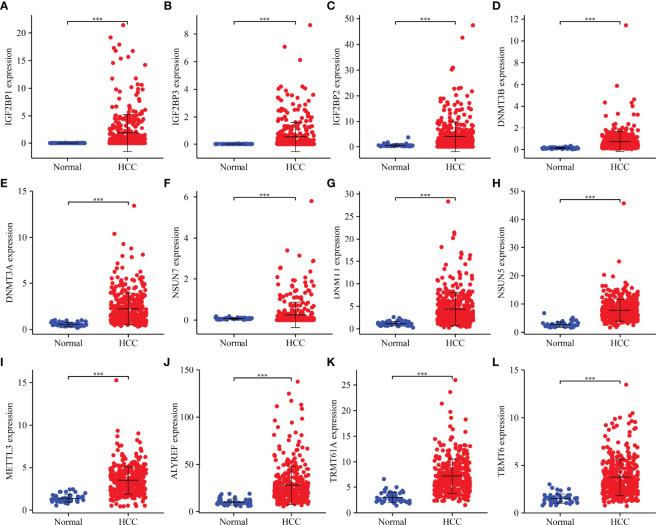
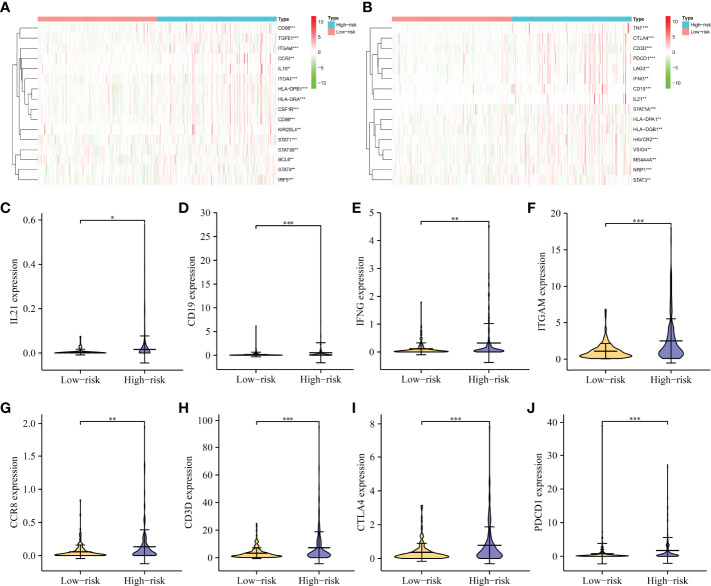
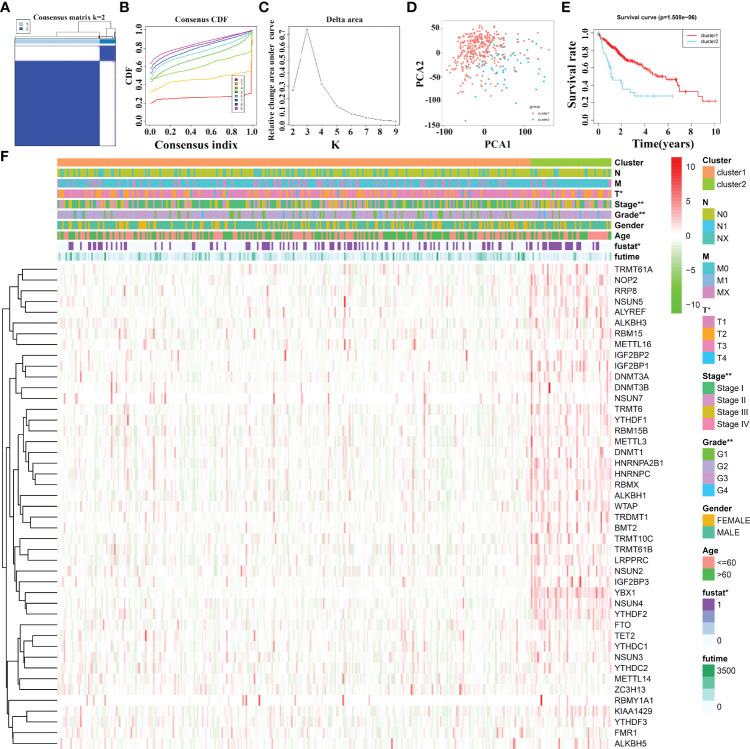
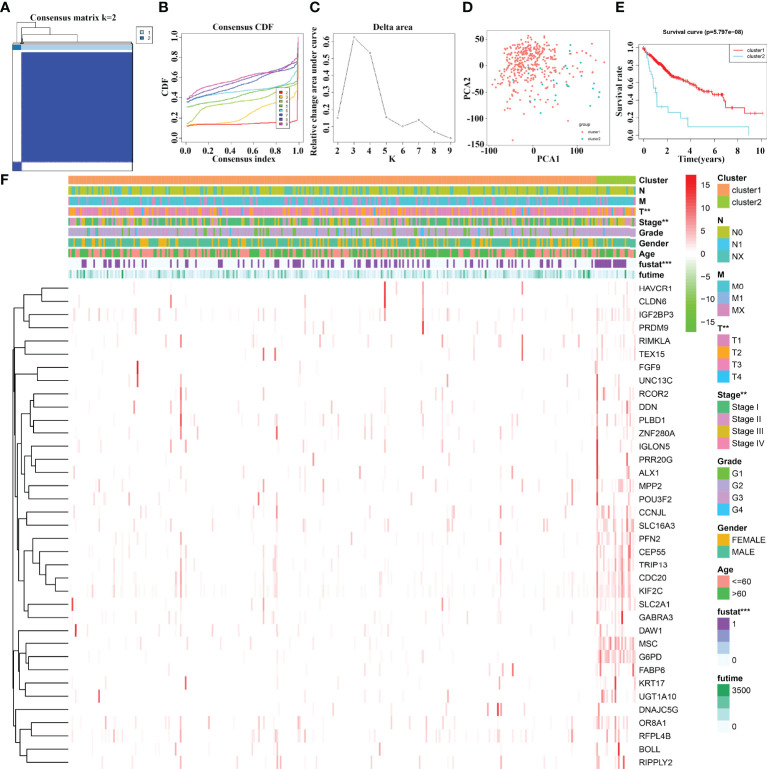
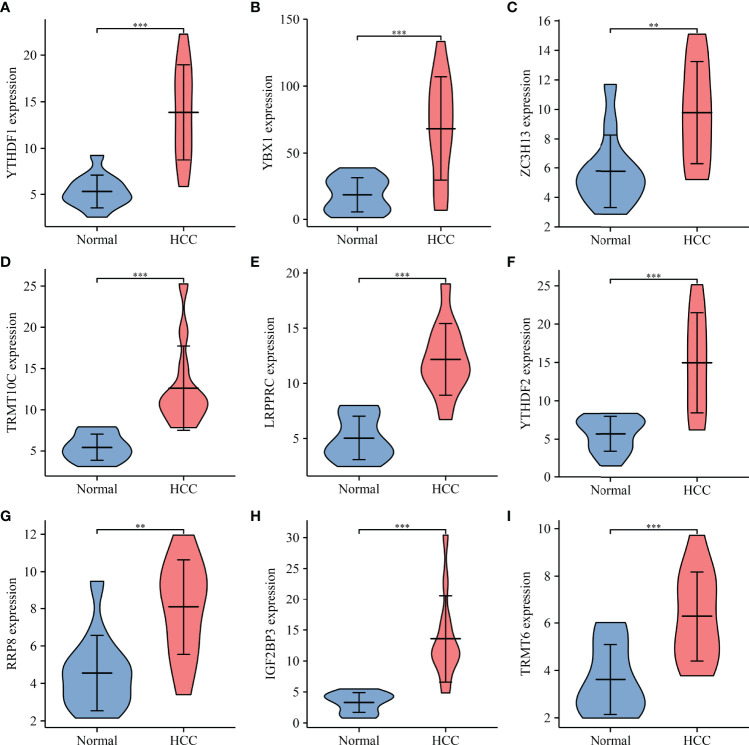
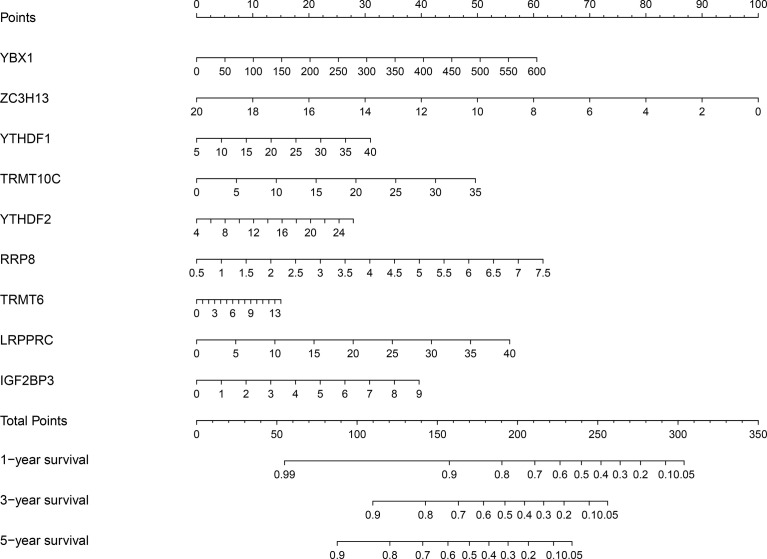
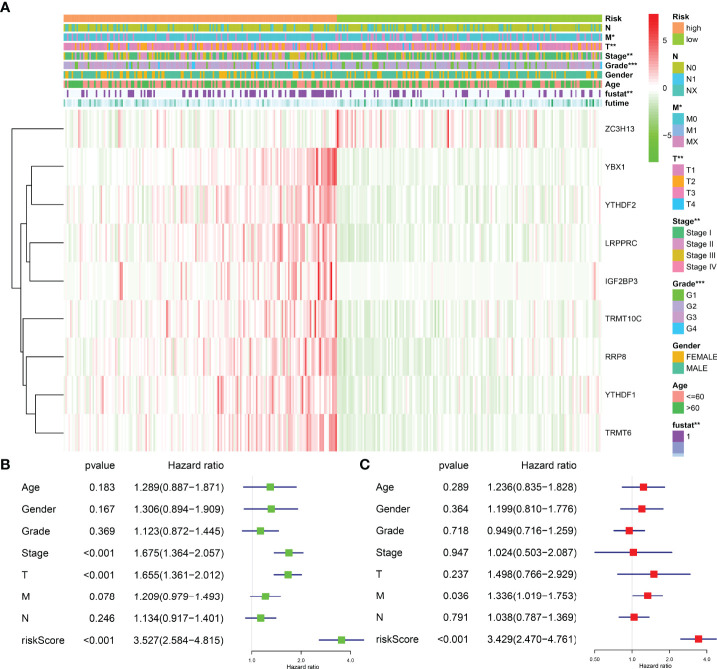
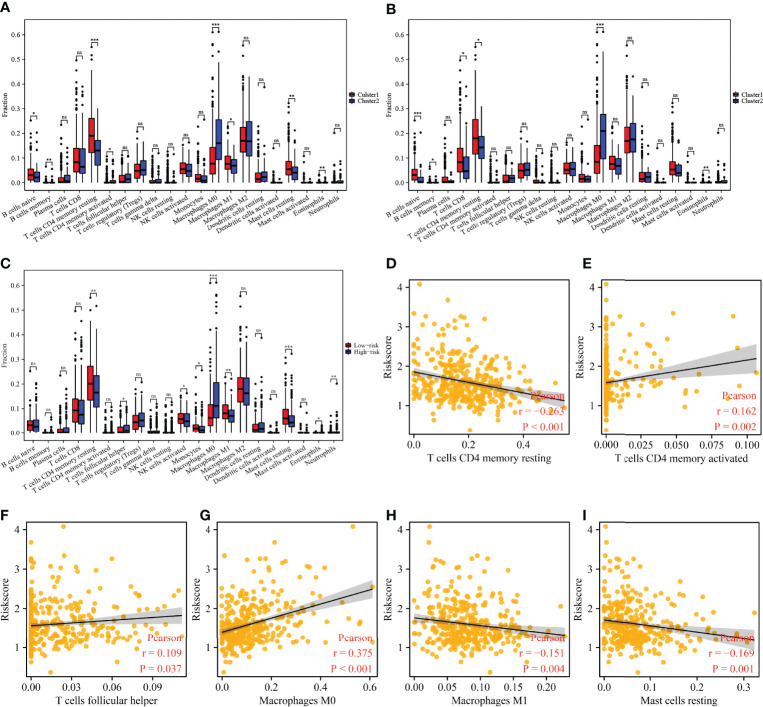
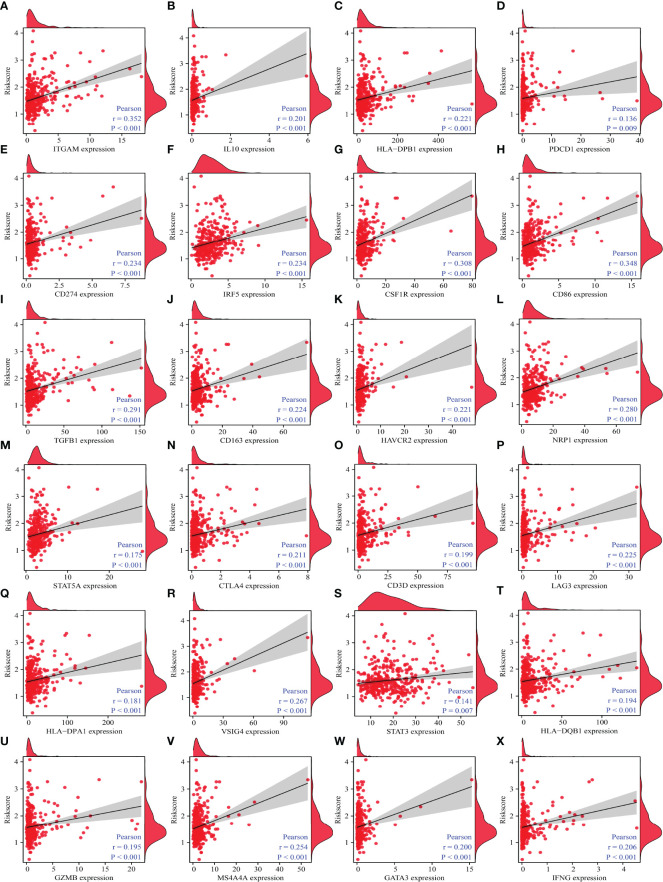
RNA modification of m6A/m5C/m1A contributes to the occurrence and development of cancer. Consequently, this study aimed to investigate the functions of m6A/m5C/m1A regulated genes in the prognosis and immune microenvironment of hepatocellular carcinoma (HCC). The expression levels of 45 m6A/m5C/m1A regulated genes in HCC tissues were determined. The functional mechanisms and protein-protein interaction network of m6A/m5C/m1A regulated genes were investigated. The Cancer Genome Atlas (TCGA) HCC gene set was categorized based on 45 m6A/m5C/m1A regulated genes, and survival analysis was used to determine the relationship between the overall survival of HCC patients in subgroups. Cox and least absolute shrinkage and selection operator (LASSO) regression analyses were used to construct the risk model and nomogram for m6A/m5C/m1A regulated genes. The relationships between m6A/m5C/m1A regulated gene subsets and risk model and immune cell infiltration were analyzed using CIBERSORT. m6A/m5C/m1A regulated genes were involved in mRNA and RNA modifications, mRNA and RNA methylation, mRNA and RNA stability, and other processes. There was a statistically significant difference between cluster1 and cluster2 groups of genes regulated by m6A/m5C/m1A. The prognosis of cluster1 patients was significantly better than that of cluster2 patients. There were statistically significant differences between the two cluster groups in terms of fustat status, grade, clinical stage, and T stage of HCC patients. The risk model comprised the overexpression of YBX1, ZC3H13, YTHDF1, TRMT10C, YTHDF2, RRP8, TRMT6, LRPPRC, and IGF2BP3, which contributed to the poor prognosis of HCC patients. The high-risk score was associated with prognosis, fustat status, grade, clinical stage, T stage, and M stage and was an independent risk factor for poor prognosis in HCC patients. High-risk score mechanisms included spliceosome, RNA degradation, and DNA replication, among others, and high-risk was closely related to stromal score, CD4 memory resting T cells, M0 macrophages, M1 macrophages, resting mast cells, CD4 memory activated T cells, and follicular helper T cells. In conclusion, the cluster subgroup and risk model of m6A/m5C/m1A regulated genes were associated with the poor prognosis and immune microenvironment in HCC and are expected to be the new tools for assessing the prognosis of HCC patients.
m6A/m5C/m1A 的 RNA 修饰有助于癌症的发生和发展。因此,本研究旨在探讨 m6A/m5C/m1A 调控基因在肝细胞癌 (HCC) 预后和免疫微环境中的功能。测定了 HCC 组织中 45 个 m6A/m5C/m1A 调控基因的表达水平。研究了 m6A/m5C/m1A 调控基因的功能机制和蛋白质-蛋白质相互作用网络。根据 45 个 m6A/m5C/m1A 调控基因对癌症基因组图谱 (TCGA) HCC 基因集进行分类,并进行生存分析以确定亚组 HCC 患者的总体生存率之间的关系。使用 Cox 和最小绝对收缩和选择算子 (LASSO) 回归分析构建 m6A/m5C/m1A 调控基因的风险模型和列线图。使用 CIBERSORT 分析 m6A/m5C/m1A 调控基因亚组与风险模型和免疫细胞浸润之间的关系。m6A/m5C/m1A 调控基因参与 mRNA 和 RNA 修饰、mRNA 和 RNA 甲基化、mRNA 和 RNA 稳定性以及其他过程。m6A/m5C/m1A 调控基因的簇 1 和簇 2 之间存在统计学上的显著差异。簇 1 患者的预后明显优于簇 2 患者。在 HCC 患者的 fustat 状态、分级、临床分期和 T 分期方面,两组之间存在统计学差异。风险模型由 YBX1、ZC3H13、YTHDF1、TRMT10C、YTHDF2、RRP8、TRMT6、LRPPRC 和 IGF2BP3 的过表达组成,这有助于 HCC 患者的预后不良。高风险评分与预后、fustat 状态、分级、临床分期、T 分期和 M 分期有关,是 HCC 患者预后不良的独立危险因素。高风险评分机制包括剪接体、RNA 降解和 DNA 复制等,高风险与基质评分、CD4 记忆静息 T 细胞、M0 巨噬细胞、M1 巨噬细胞、静止肥大细胞、CD4 记忆激活 T 细胞和滤泡辅助 T 细胞密切相关。总之,m6A/m5C/m1A 调控基因的簇亚群和风险模型与 HCC 的不良预后和免疫微环境有关,有望成为评估 HCC 患者预后的新工具。