From the Danish Multiple Sclerosis Center (R.H.H.H., J.T., H.H.C., M.B.H., S.B., F.S., M.R.E.), Department of Neurology, Copenhagen University Hospital-Rigshospitalet, Glostrup, Denmark; Department of Neurology with Institute of Translational Neurology (S.H., N.S.), University Hospital Münster, Albert-Schweitzer-Campus 1, Germany; Department of Clinical Medicine (F.S.), Faculty of Health and Medical Sciences, University of Copenhagen, Denmark; and Neurogenetics Clinic (M.N.N.H., J.E.N.), Danish Dementia Research Center, Rigshospitalet, Copenhagen, Denmark.
Neurol Neuroimmunol Neuroinflamm. 2022 Jul 14;9(5). doi: 10.1212/NXI.0000000000200009. Print 2022 Sep.
Follicular helper T (Tfh) cells play a critical role in protective immunity helping B cells produce antibodies against foreign pathogens and are likely implicated in the pathogenesis of various autoimmune diseases. The purpose of this study was to investigate the role of Tfh cells in the pathogenesis of multiple sclerosis (MS).
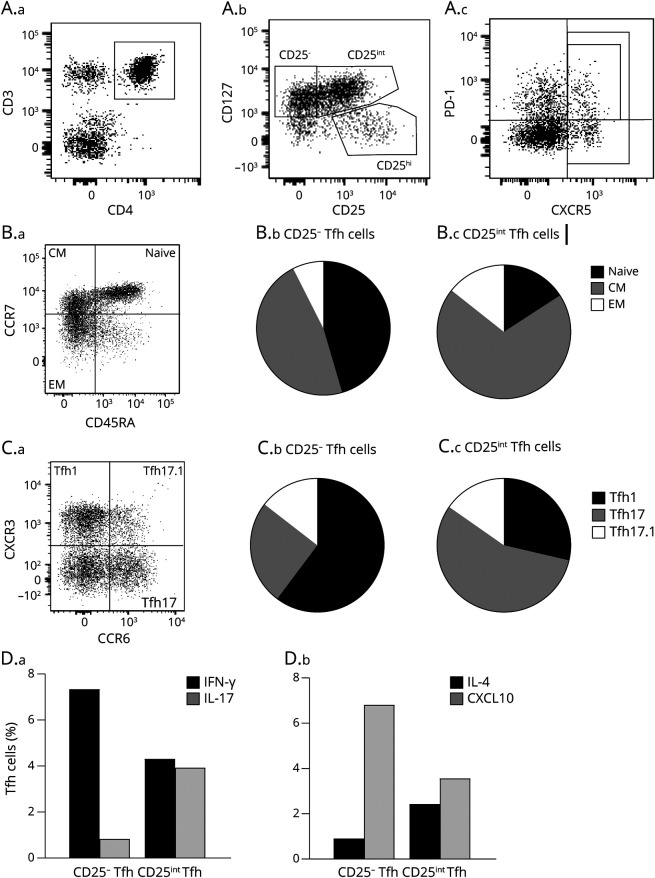
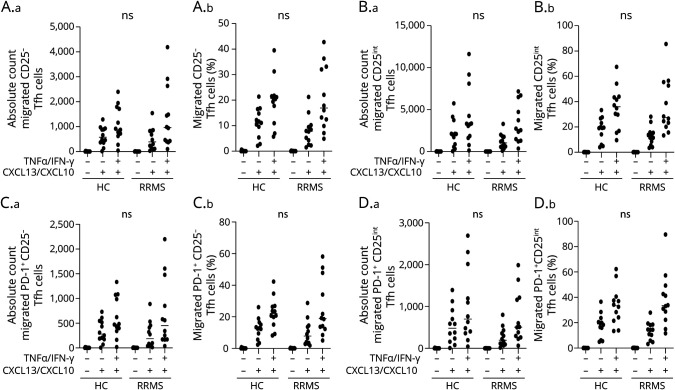
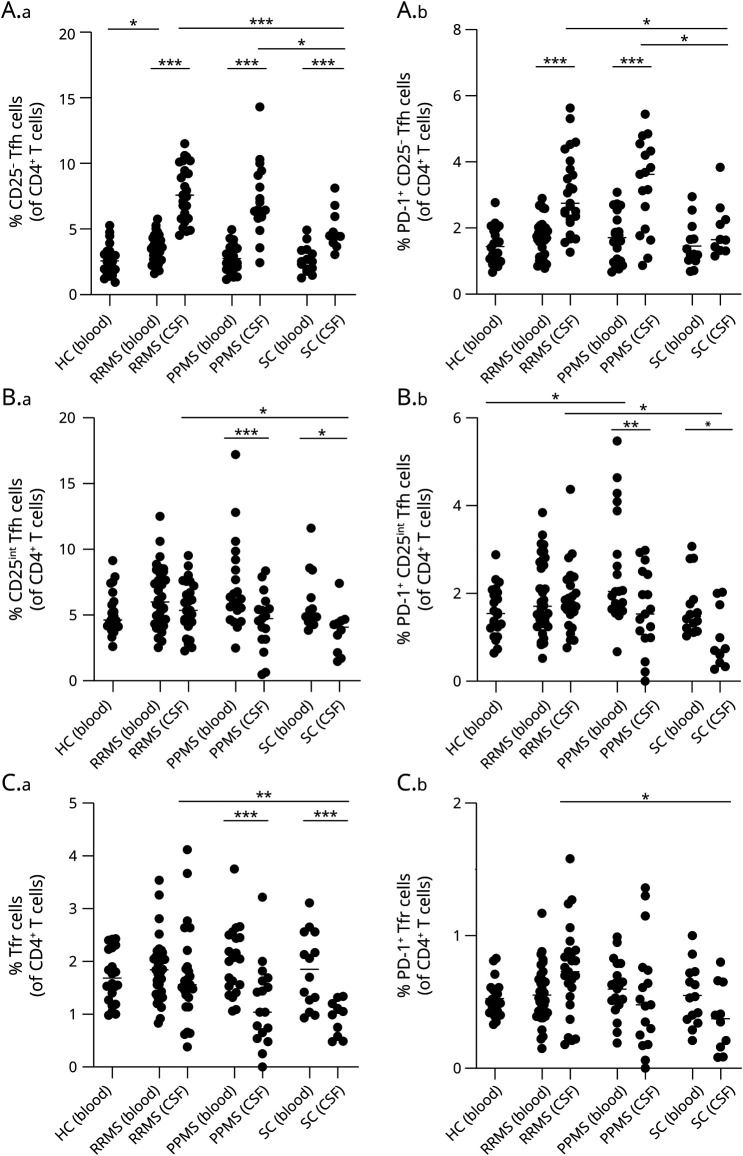
Using flow cytometry, we investigated phenotype, prevalence, and function of Tfh cells in blood and CSF from controls and patients with relapsing-remitting MS (RRMS) and primary progressive MS (PPMS). In addition, an in vitro blood-brain barrier coculture assay of primary human astrocytes and brain microvascular endothelial cells grown in a Boyden chamber was used to assess the migratory capacity of peripheral Tfh cells.
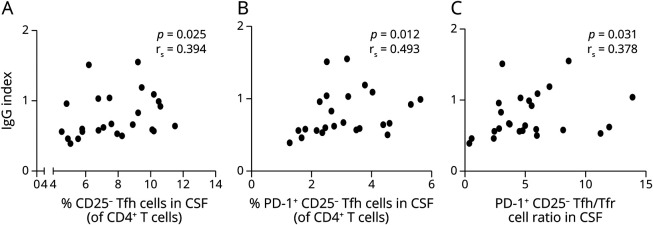
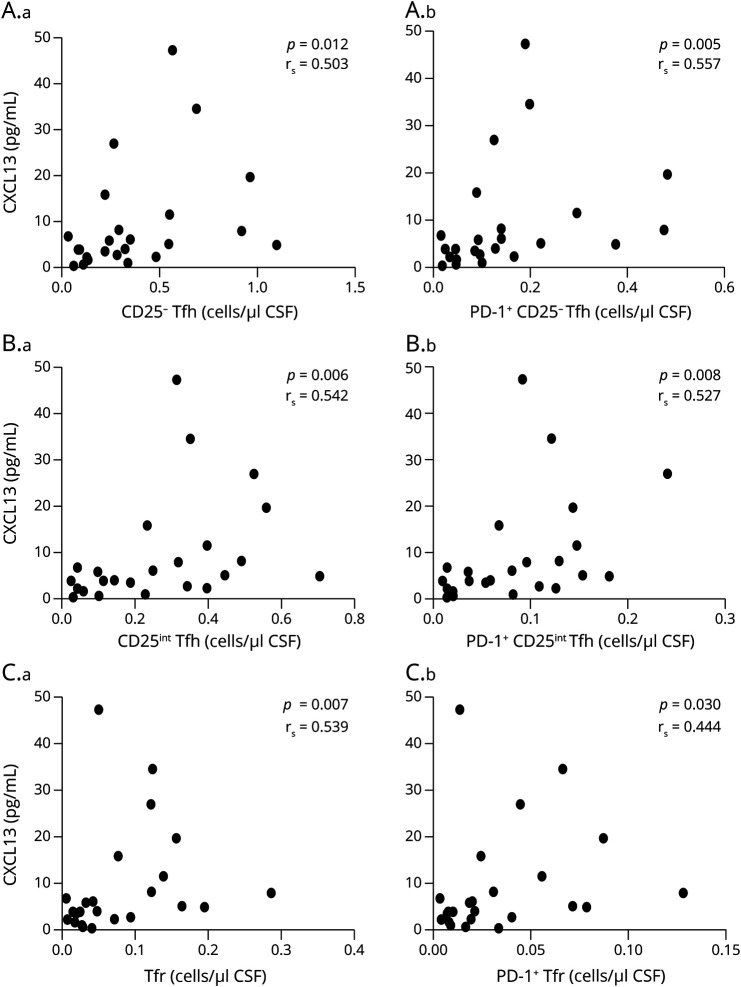
This study identified 2 phenotypically and functionally distinct Tfh cell populations: CD25 Tfh cells (Tfh1-like) and CD25 Tfh cells (Tfh17-like). Whereas minor differences in Tfh cell populations were found in blood between patients with MS and controls, we observed an increased frequency of CD25 Tfh cells in CSF of patients with RRMS and PPMS and CD25 Tfh cells in patients with RRMS, compared with controls. Increasing frequencies of CSF CD25 Tfh cells and the CD25 Tfh/Tfr ratio scaled with increasing IgG index in patients with RRMS. Despite an increased prevalence of intrathecal Tfh cells in patients with MS, no difference in the migratory capacity of circulating Tfh cells was observed between controls and patients with MS. Instead, CSF concentrations of CXCL13 scaled with total counts of Tfh and Tfr cell subsets in the CSF.
Our study indicates substantial changes in intrathecal Tfh dynamics, particularly in patients with RRMS, and suggests that the intrathecal inflammatory environment in patients with RRMS promotes recruitment of peripheral Tfh cells rather than the Tfh cells having an increased capacity to migrate to CNS.
滤泡辅助 T(Tfh)细胞在保护性免疫中发挥关键作用,帮助 B 细胞产生针对外来病原体的抗体,并且可能与各种自身免疫性疾病的发病机制有关。本研究旨在探讨 Tfh 细胞在多发性硬化症(MS)发病机制中的作用。
使用流式细胞术,我们研究了对照者和复发缓解型 MS(RRMS)和原发性进展型 MS(PPMS)患者的血液和 CSF 中 Tfh 细胞的表型、流行率和功能。此外,使用在 Boyden 室中生长的原代人星形胶质细胞和脑微血管内皮细胞的体外血脑屏障共培养测定法,评估外周 Tfh 细胞的迁移能力。
本研究鉴定出 2 种表型和功能上不同的 Tfh 细胞群:CD25 Tfh 细胞(Tfh1 样)和 CD25 Tfh 细胞(Tfh17 样)。虽然 MS 患者和对照者血液中的 Tfh 细胞群存在微小差异,但我们观察到 RRMS 和 PPMS 患者的 CSF 中 CD25 Tfh 细胞和 RRMS 患者的 CSF 中 CD25 Tfh 细胞的频率增加,与对照者相比。RRMS 患者 CSF 中 CD25 Tfh 细胞和 CD25 Tfh/Tfr 比值的增加频率与 IgG 指数的增加成正比。尽管 MS 患者鞘内 Tfh 细胞的患病率增加,但对照者和 MS 患者之间循环 Tfh 细胞的迁移能力没有差异。相反,CSF 中 CXCL13 的浓度与 CSF 中 Tfh 和 Tfr 细胞亚群的总计数成正比。
我们的研究表明,鞘内 Tfh 动力学发生了重大变化,特别是在 RRMS 患者中,并表明 RRMS 患者鞘内炎症环境促进了外周 Tfh 细胞的募集,而不是 Tfh 细胞向 CNS 的迁移能力增加。