Da Cunha Teresa, Vaziri Haleh, Wu George Y
Department of Medicine, Division of Gastroenterology-Hepatology, University of Connecticut Health Center, Farmington, CT, USA.
J Clin Transl Hepatol. 2022 Jun 28;10(3):531-542. doi: 10.14218/JCTH.2021.00344. Epub 2022 Jan 20.
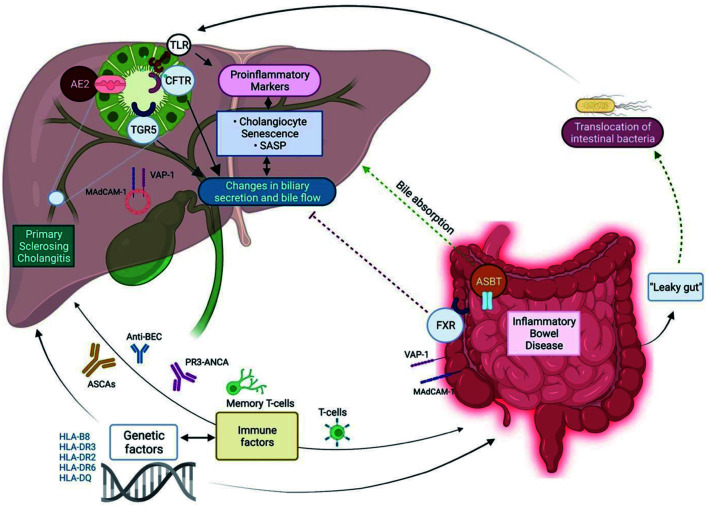
Primary sclerosing cholangitis is a disease affecting around 0.006-0.016% of the population. Of these, around 75% have concomitant inflammatory bowel disease (IBD) according to the most recent epidemiological studies. Several theories have been proposed regarding the pathogenesis of primary sclerosing cholangitis (PSC). These include changes in the function of cholangiocytes, effects of the gut microbiome, association with specific human leukocyte antigen haplotypes and dysregulation of the immune system. However, these do not explain the observed association with IBD. Moreover, there are considerable differences in the frequency and outcomes between patients with PSC and ulcerative colitis compared with PSC and Crohn's disease. The aim of this review is to appraise the most recent studies that have contributed to the epidemiology, advances in the pathophysiology, and characterization of important clinical aspects of the association of PSC and IBD.
原发性硬化性胆管炎是一种影响约0.006 - 0.016%人口的疾病。根据最新的流行病学研究,其中约75%的患者伴有炎症性肠病(IBD)。关于原发性硬化性胆管炎(PSC)的发病机制,已经提出了几种理论。这些理论包括胆管细胞功能的改变、肠道微生物群的影响、与特定人类白细胞抗原单倍型的关联以及免疫系统的失调。然而,这些都无法解释观察到的与IBD的关联。此外,与PSC合并克罗恩病相比,PSC合并溃疡性结肠炎患者在发病率和预后方面存在相当大的差异。本综述的目的是评估最近的研究,这些研究有助于了解PSC与IBD关联的流行病学、病理生理学进展以及重要临床方面的特征。