Department of Neuroscience & Regenerative Medicine, Medical College of Georgia at Augusta University, Augusta, GA, 30912, USA.
Mol Psychiatry. 2022 Oct;27(10):4035-4049. doi: 10.1038/s41380-022-01682-9. Epub 2022 Jul 15.
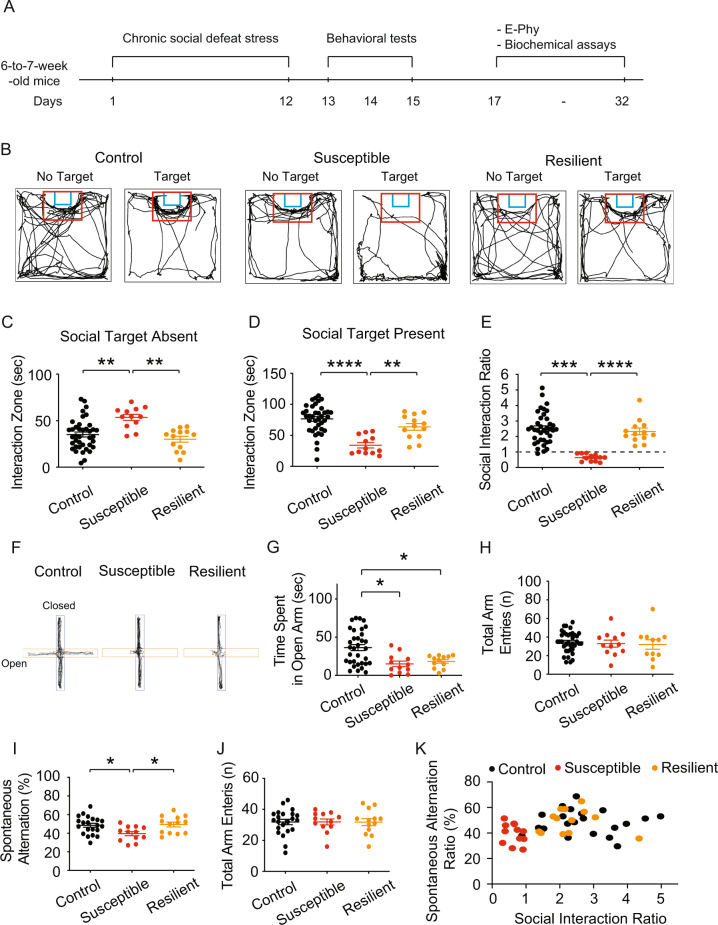
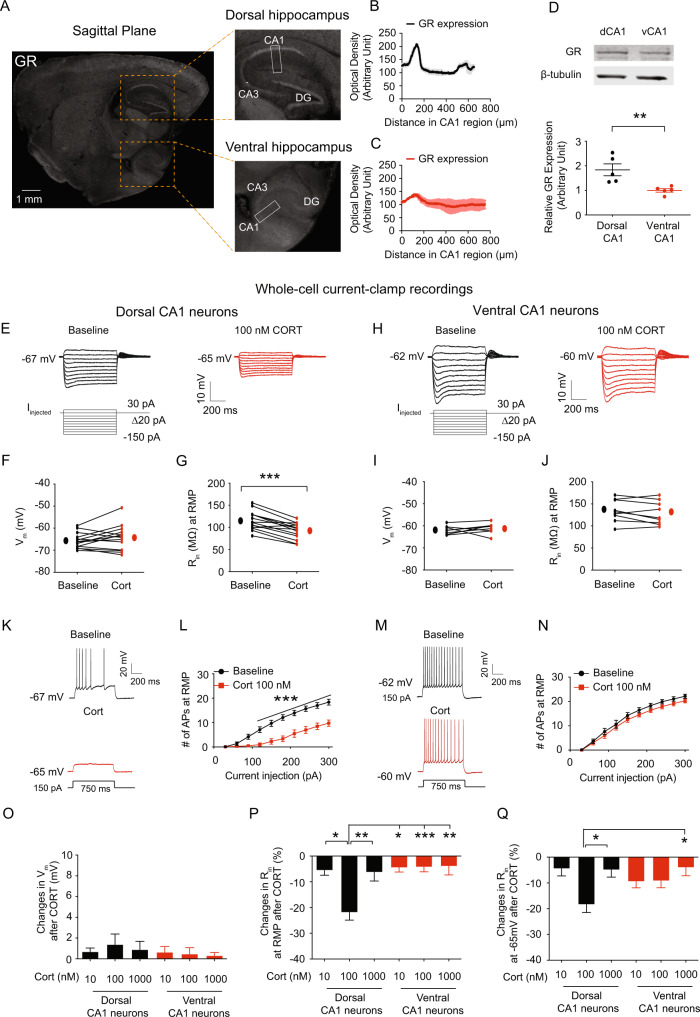
While chronic stress increases hyperpolarization-activated current (I) in dorsal hippocampal CA1 neurons, the underlying molecular mechanisms are entirely unknown. Following chronic social defeat stress (CSDS), susceptible mice displayed social avoidance and impaired spatial working memory, which were linked to decreased neuronal excitability, increased perisomatic hyperpolarization-activated cyclic nucleotide-gated (HCN) 1 protein expression, and elevated I in dorsal but not ventral CA1 neurons. In control mice, bath application of corticosterone reduced neuronal excitability, increased tetratricopeptide repeat-containing Rab8b-interacting protein (TRIP8b) and HCN1 protein expression, and elevated I in dorsal but not ventral CA1 region/neurons. Corticosterone-induced upregulation of functional I was mediated by the glucocorticoid receptor (GR), HCN channels, and the protein kinase A (PKA) but not the calcium/calmodulin-dependent protein kinase II (CaMKII) pathway. Three months after the end of CSDS, susceptible mice displayed persistent social avoidance when exposed to a novel aggressor. The sustained behavioral deficit was associated with lower neuronal excitability and higher functional I in dorsal CA1 neurons, both of which were unaffected by corticosterone treatment. Our findings show that corticosterone treatment mimics the pathophysiological effects of dorsal CA1 neurons/region found in susceptible mice. The aberrant expression of HCN1 protein along the somatodendritic axis of the dorsal hippocampal CA1 region might be the molecular mechanism driving susceptibility to social avoidance.
虽然慢性应激会增加背侧海马 CA1 神经元中的超极化激活电流 (I),但其潜在的分子机制尚不清楚。在慢性社交挫败应激 (CSDS) 后,易感性小鼠表现出社交回避和空间工作记忆受损,这与神经元兴奋性降低、胞体周围超极化激活环核苷酸门控 (HCN) 1 蛋白表达增加以及背侧 CA1 神经元而非腹侧 CA1 神经元中 I 的增加有关。在对照小鼠中,皮质酮的浴液应用降低了神经元兴奋性,增加了四肽重复富含 Rab8b 相互作用蛋白 (TRIP8b) 和 HCN1 蛋白表达,并增加了背侧但不是腹侧 CA1 区/神经元中的 I。皮质酮诱导的功能性 I 的上调是由糖皮质激素受体 (GR)、HCN 通道和蛋白激酶 A (PKA) 介导的,而不是钙/钙调蛋白依赖性蛋白激酶 II (CaMKII) 途径。CSDS 结束三个月后,易感性小鼠在暴露于新的攻击者时表现出持续的社交回避。持续的行为缺陷与背侧 CA1 神经元的神经元兴奋性降低和功能性 I 升高有关,皮质酮处理对这两者均无影响。我们的研究结果表明,皮质酮处理模拟了易感性小鼠中背侧 CA1 神经元/区域的病理生理效应。HCN1 蛋白在背侧海马 CA1 区树突-胞体轴上的异常表达可能是驱动社交回避易感性的分子机制。