Placenta Lab, Department of Obstetrics, Jena University Hospital, Jena, Germany.
Front Immunol. 2022 Jul 1;13:837281. doi: 10.3389/fimmu.2022.837281. eCollection 2022.
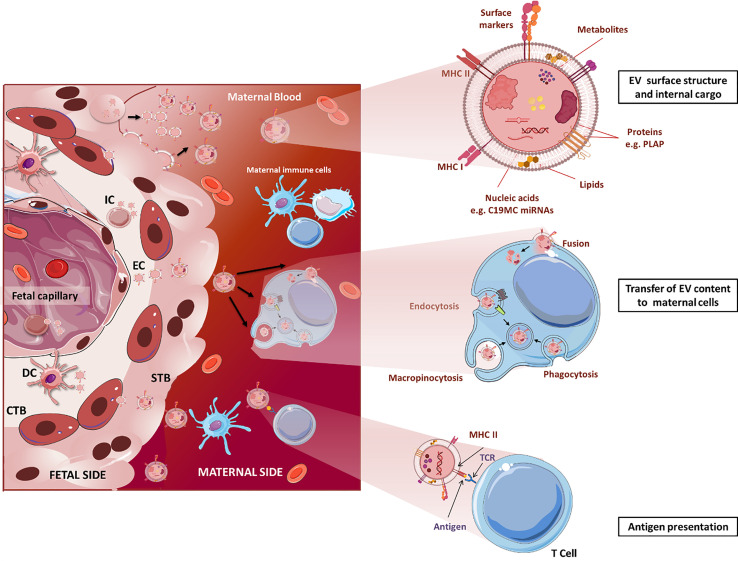
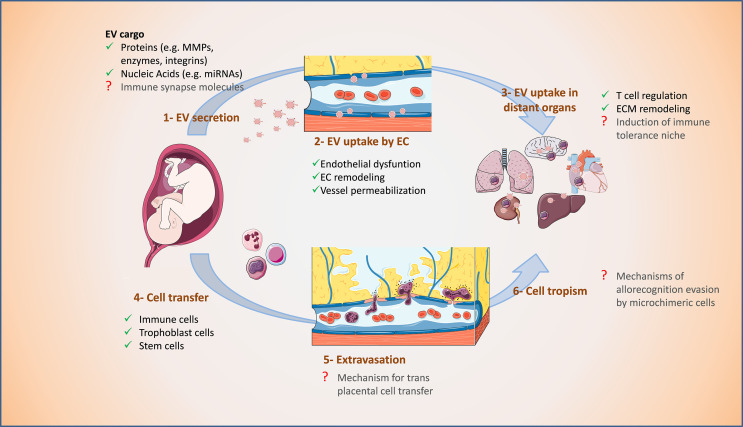
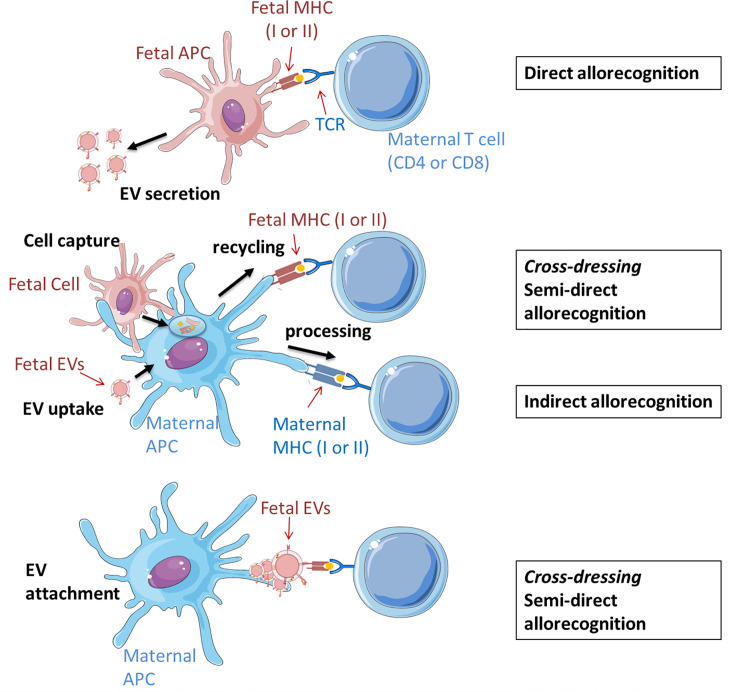
The concept of biological identity has been traditionally a central issue in immunology. The assumption that entities foreign to a specific organism should be rejected by its immune system, while self-entities do not trigger an immune response is challenged by the expanded immunotolerance observed in pregnancy. To explain this "immunological paradox", as it was first called by Sir Peter Medawar, several mechanisms have been described in the last decades. Among them, the intentional transfer and retention of small amounts of cells between a mother and her child have gained back attention. These microchimeric cells contribute to expanding allotolerance in both organisms and enhancing genetic fitness, but they could also provoke aberrant alloimmune activation. Understanding the mechanisms used by microchimeric cells to exert their function in pregnancy has proven to be challenging as per definition they are extremely rare. Profiting from studies in the field of transplantation and cancer research, a synergistic effect of microchimerism and cellular communication based on the secretion of extracellular vesicles (EVs) has begun to be unveiled. EVs are already known to play a pivotal role in feto-maternal tolerance by transferring cargo from fetal to maternal immune cells to reshape their function. A further aspect of EVs is their function in antigen presentation either directly or on the surface of recipient cells. Here, we review the current understanding of microchimerism in the feto-maternal tolerance during human pregnancy and the potential role of EVs in mediating the allorecognition and tropism of microchimeric cells.
生物同一性的概念一直是免疫学的核心问题。传统观点认为,特定生物体以外的实体应该被其免疫系统排斥,而自身实体则不会引发免疫反应,但这一观点受到了妊娠期间观察到的免疫耐受扩展的挑战。为了解释这种“免疫学悖论”,正如彼得·梅达沃爵士最初所称,过去几十年中已经描述了几种机制。其中,母亲和孩子之间有意转移和保留少量细胞的机制重新引起了关注。这些微嵌合细胞有助于扩大两个生物体的同种异体耐受性并增强遗传适应性,但也可能引发异常的同种异体免疫激活。由于微嵌合细胞的定义非常罕见,因此证明理解它们在妊娠中发挥作用的机制具有挑战性。得益于移植和癌症研究领域的研究,微嵌合和基于细胞外囊泡 (EVs) 分泌的细胞通讯的协同作用开始被揭示。EVs 已经通过将货物从胎儿转移到母体免疫细胞来重塑其功能,从而在胎母耐受中发挥关键作用。EVs 的另一个方面是它们在抗原呈递中的作用,无论是直接作用还是在受体细胞表面。在这里,我们综述了人类妊娠期间胎母耐受中微嵌合的当前理解,以及 EVs 在介导微嵌合细胞的同种异体识别和趋化性中的潜在作用。