Guo Shuai, Zhang Erli, Zhang Bin, Liu Qingrong, Meng Zhen, Li Ziang, Wang Can, Gong Zhaoting, Wu Yongjian
State Key Laboratory of Cardiovascular Disease, Fuwai Hospital, National Center for Cardiovascular Diseases, Chinese Academy of Medical Sciences and Peking Union Medical College, Beijing, China.
Front Cardiovasc Med. 2022 Jun 29;9:826744. doi: 10.3389/fcvm.2022.826744. eCollection 2022.
Calcific aortic valve disease (CAVD) is one of the most frequently occurring valvular heart diseases among the aging population. Currently, there is no known pharmacological treatment available to delay or reverse CAVD progression. The regulation of gene expression could contribute to the initiation, progression, and treatment of CAVD. Non-coding RNAs (ncRNAs) and transcription factors play essential regulatory roles in gene expression in CAVD; thus, further research is urgently needed.
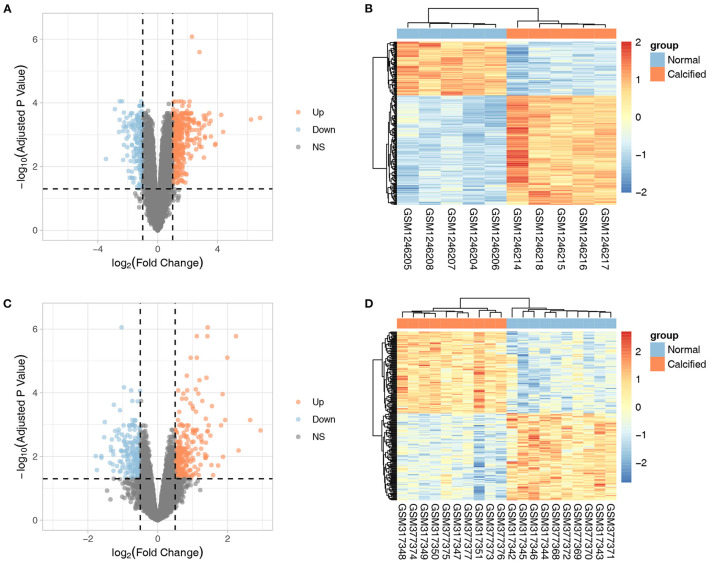
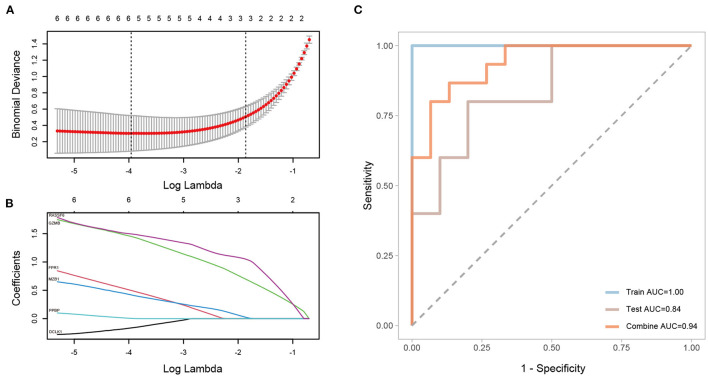
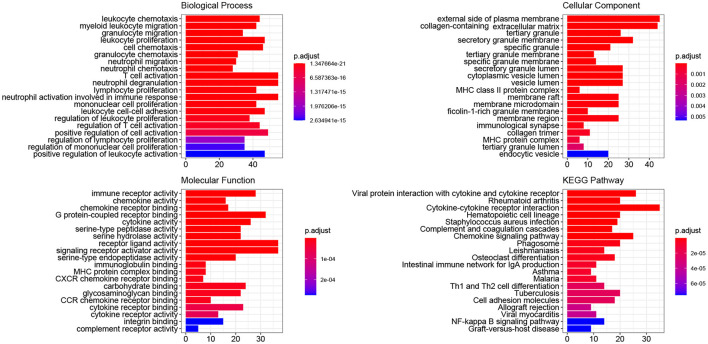
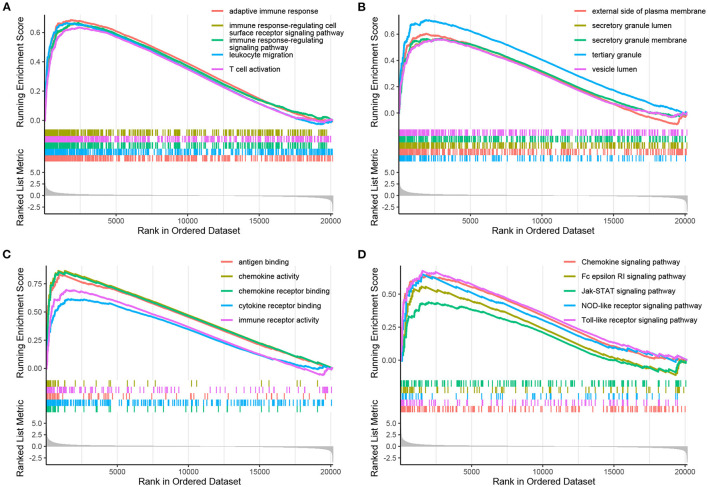
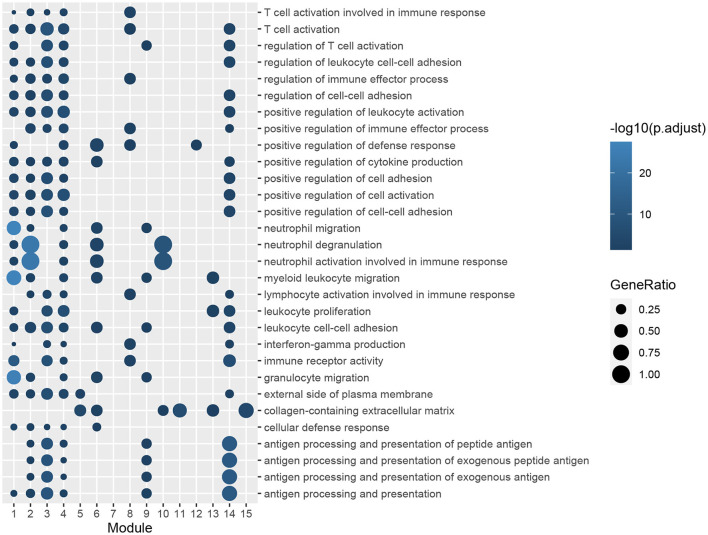
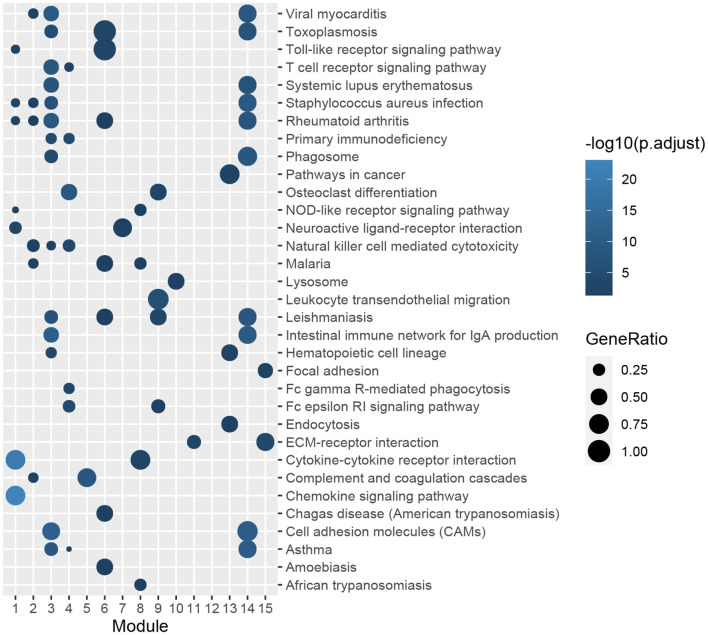
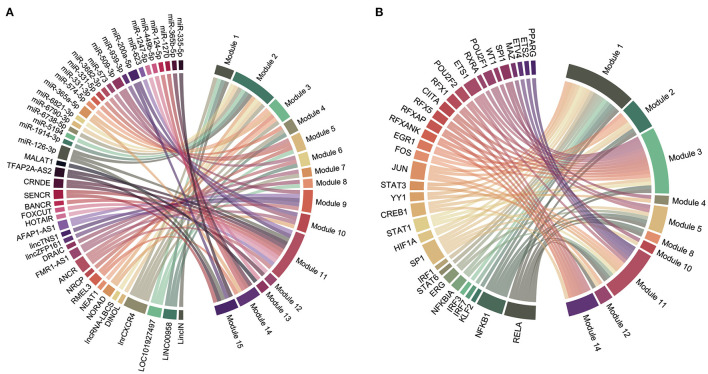
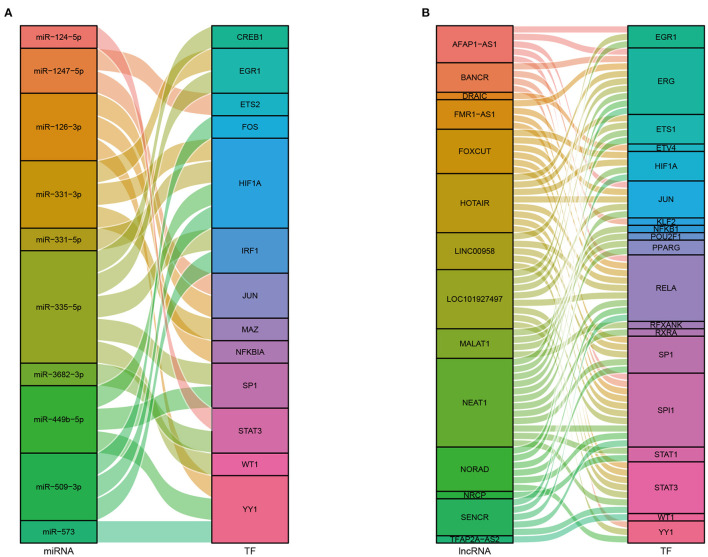
The gene-expression profiles of GSE51472 and GSE12644 were obtained from the Gene Expression Omnibus database, and differentially expressed genes (DEGs) were identified in each dataset. A protein-protein-interaction (PPI) network of DEGs was then constructed using the Search Tool for the Retrieval of Interacting Genes/Proteins database, and functional modules were analyzed with ClusterOne plugin in Cytoscape. Furthermore, Gene Ontology-functional annotation and Kyoto Encyclopedia of Genes and Genomes-pathway analysis were conducted for each functional module. Most crucially, ncRNAs and transcription factors acting on each functional module were separately identified using the RNAInter and TRRUST databases. The expression of predicted transcription factors and key genes was validated using GSE51472 and GSE12644. Furthermore, quantitative real-time PCR (qRT-PCR) experiments were performed to validate the differential expression of most promising candidates in human CAVD and control samples.
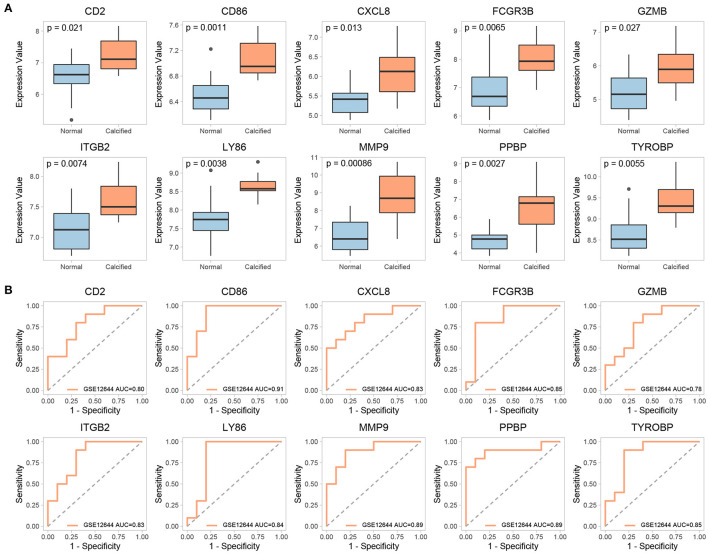
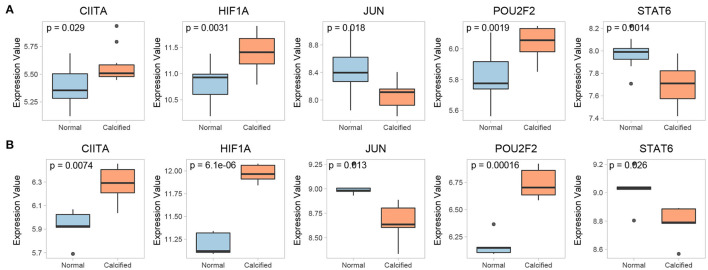
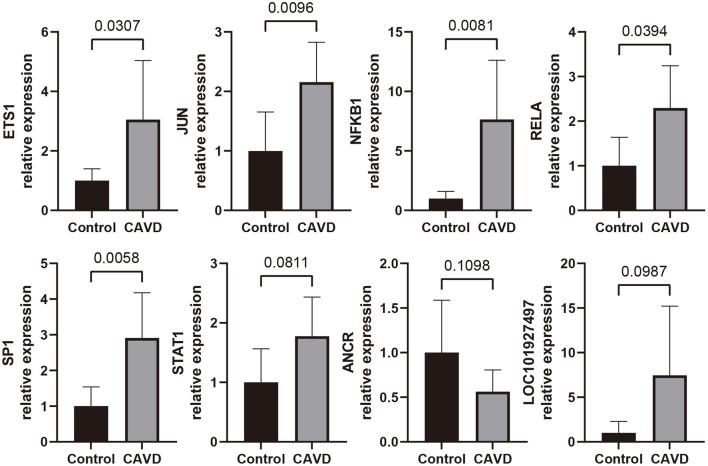
Among 552 DEGs, 383 were upregulated and 169 were downregulated. In the PPI network, 15 functional modules involving 182 genes and proteins were identified. After hypergeometric testing, 45 ncRNAs and 33 transcription factors were obtained. Among the predicted transcription factors, CIITA, HIF1A, JUN, POU2F2, and STAT6 were differentially expressed in both the training and validation sets. In addition, we found that key genes, namely, , and were also differentially expressed in both the training and validation sets. Among the most promising candidates, differential expressions of ETS1, JUN, NFKB1, RELA, SP1, STAT1, ANCR, and LOC101927497 were identified qRT-PCR experiments.
In this study, we identified functional modules with ncRNAs and transcription factors involved in CAVD pathogenesis. The current results suggest candidate molecules for further research on CAVD.
钙化性主动脉瓣疾病(CAVD)是老年人群中最常见的心脏瓣膜疾病之一。目前,尚无已知的药物治疗方法可延缓或逆转CAVD的进展。基因表达的调控可能有助于CAVD的发生、发展和治疗。非编码RNA(ncRNAs)和转录因子在CAVD的基因表达中起着重要的调控作用;因此,迫切需要进一步研究。
从基因表达综合数据库中获取GSE51472和GSE12644的基因表达谱,并在每个数据集中鉴定差异表达基因(DEGs)。然后使用检索相互作用基因/蛋白质的搜索工具数据库构建DEGs的蛋白质-蛋白质相互作用(PPI)网络,并使用Cytoscape中的ClusterOne插件分析功能模块。此外,对每个功能模块进行基因本体功能注释和京都基因与基因组百科全书通路分析。最关键的是,分别使用RNAInter和TRRUST数据库鉴定作用于每个功能模块的ncRNAs和转录因子。使用GSE51472和GSE12644验证预测的转录因子和关键基因的表达。此外,进行定量实时PCR(qRT-PCR)实验以验证最有前景的候选基因在人CAVD和对照样本中的差异表达。
在552个DEGs中,383个上调,169个下调。在PPI网络中,鉴定出15个涉及182个基因和蛋白质的功能模块。经过超几何检验,获得了45个ncRNAs和33个转录因子。在预测的转录因子中,CIITA、HIF1A、JUN、POU2F2和STAT6在训练集和验证集中均有差异表达。此外,我们发现关键基因,即 、 和 在训练集和验证集中也有差异表达。在最有前景的候选基因中,通过qRT-PCR实验鉴定了ETS1、JUN、NFKB1、RELA、SP1、STAT1、ANCR和LOC101927497的差异表达。
在本研究中,我们鉴定了参与CAVD发病机制的ncRNAs和转录因子的功能模块。目前的结果为CAVD的进一步研究提供了候选分子。