Laboratorio de Biología e Inmunología de las Infecciones por Tripanosomátidos, Instituto de Investigaciones en Ingeniería Genética y Biología Molecular "Dr. Héctor Torres"-CONICET, Buenos Aires, Argentina.
Instituto de Microbiología y Parasitología Médica, Departamento de Microbiología, Facultad de Medicina, Universidad de Buenos Aires, Buenos Aires, Argentina.
Front Cell Infect Microbiol. 2022 Jun 30;12:901880. doi: 10.3389/fcimb.2022.901880. eCollection 2022.
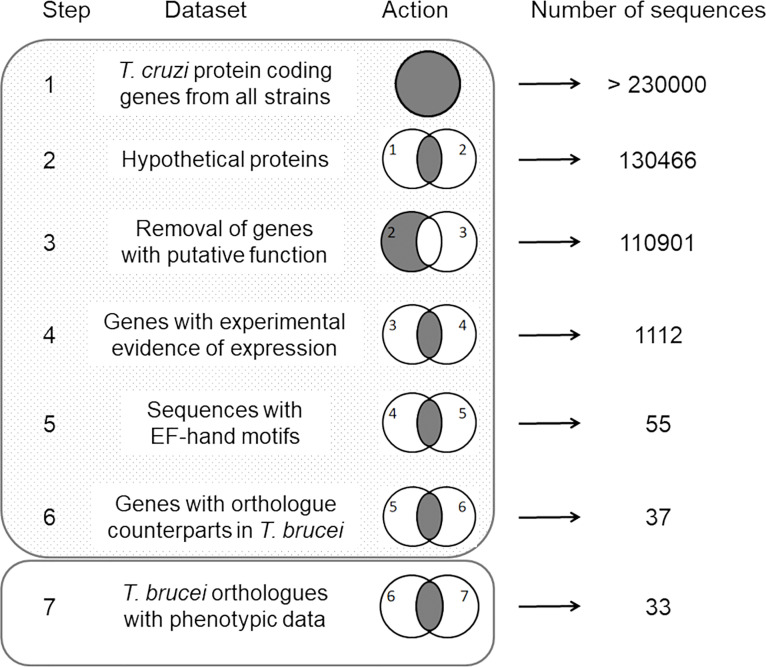
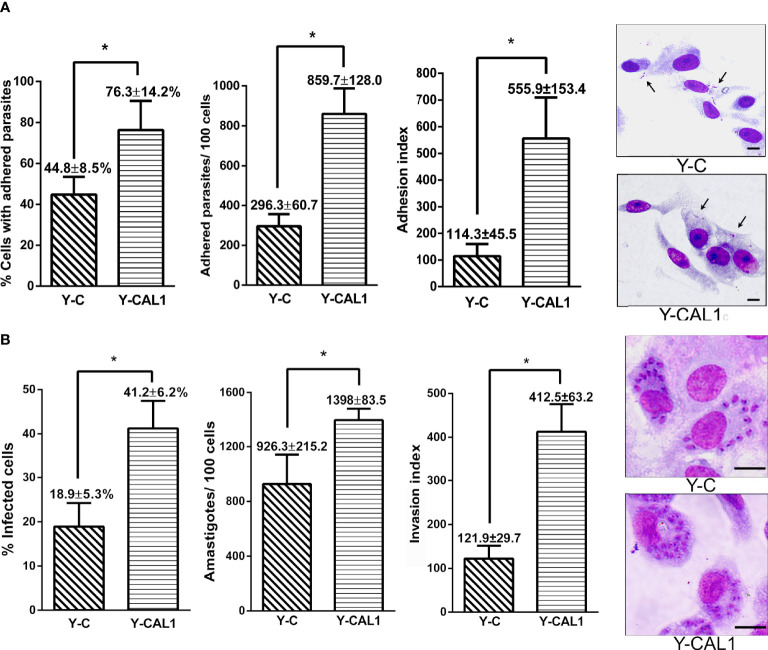
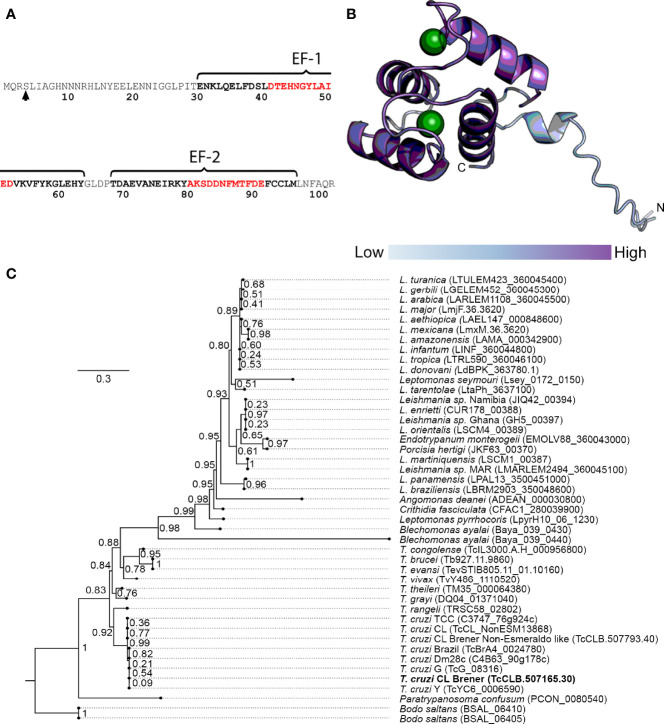
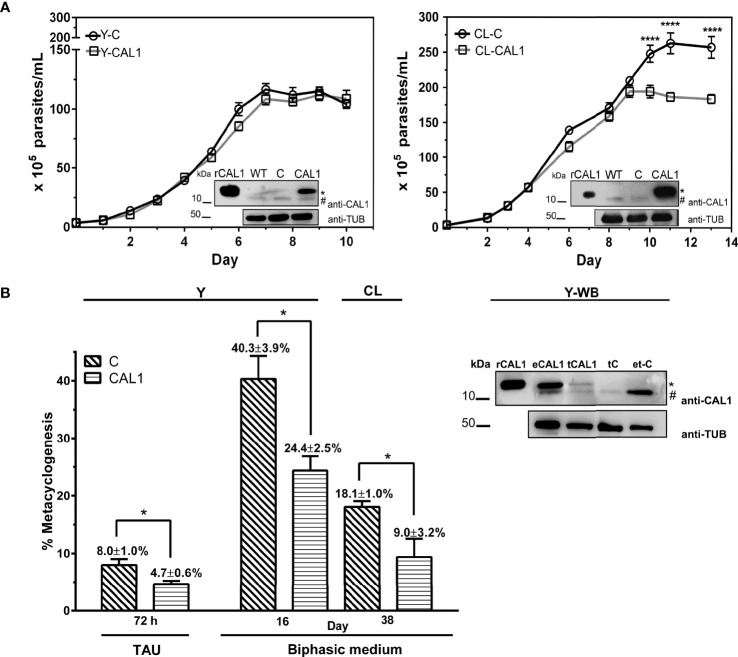
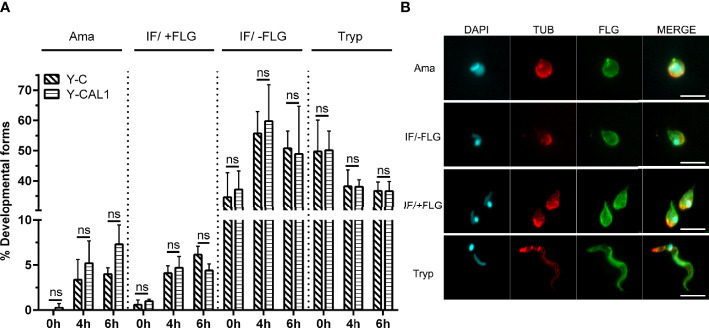
In the pathogen , the calcium ion (Ca) regulates key processes for parasite survival. However, the mechanisms decoding Ca signals are not fully identified or understood. Here, we investigate the role of a hypothetical Ca-binding protein named TcCAL1 in the life cycle of . Results showed that the overexpression of TcCAL1 fused to a 6X histidine tag (TcCAL1-6xHis) impaired the differentiation of epimastigotes into metacyclic trypomastigotes, significantly decreasing metacyclogenesis rates. When the virulence of transgenic metacyclic trypomastigotes was explored in mammalian cell invasion assays, we found that the percentage of infection was significantly higher in Vero cells incubated with TcCAL1-6xHis-overexpressing parasites than in controls, as well as the number of intracellular amastigotes. Additionally, the percentage of Vero cells with adhered metacyclic trypomastigotes significantly increased in samples incubated with TcCAL1-6xHis-overexpressing parasites compared with controls. In contrast, the differentiation rates from metacyclic trypomastigotes to axenic amastigotes or the epimastigote proliferation in the exponential phase of growth have not been affected by TcCAL1-6xHis overexpression. Based on our findings, we speculate that TcCAL1 exerts its function by sequestering intracellular Ca by its EF-hand motifs (impairing metacyclogenesis) and/or due to an unknown activity which could be amplified by the ion binding (promoting cell invasion). This work underpins the importance of studying the kinetoplastid-specific proteins with unknown functions in pathogen parasites.
在病原体中,钙离子(Ca)调节寄生虫生存的关键过程。然而,解码 Ca 信号的机制尚未完全确定或理解。在这里,我们研究了一种名为 TcCAL1 的假设 Ca 结合蛋白在 的生命周期中的作用。结果表明,过表达融合了 6X 组氨酸标签的 TcCAL1(TcCAL1-6xHis)会损害从滋养体分化为循环体的过程,使循环体生成率显著降低。当在哺乳动物细胞入侵实验中探索转基因循环体的毒力时,我们发现与对照相比,与 TcCAL1-6xHis 过表达寄生虫孵育的 Vero 细胞中感染的百分比显着更高,以及细胞内无鞭毛体的数量。此外,与对照相比,与 TcCAL1-6xHis 过表达寄生虫孵育的样品中粘附的循环体的 Vero 细胞的百分比显着增加。相比之下,TcCAL1-6xHis 过表达并未影响从循环体到无鞭毛体的分化率或指数期生长的滋养体增殖。基于我们的发现,我们推测 TcCAL1 通过其 EF 手模体(抑制循环体生成)和/或由于未知的活性(通过离子结合放大)来发挥其功能,该活性可能被放大。这项工作强调了研究寄生虫中具有未知功能的动基体蛋白的重要性。