Al-Ogaidi Israa, Aguilar Zoraida P, Lay Jackson O
Department of Biotechnology, College of Science, University of Baghdad, Baghdad 10071, Iraq.
Arkansas Statewide Mass Spectrometry, Department of Chemistry and Biochemistry, University of Arkansas, Fayetteville, Arkansas 72701, United States.
ACS Omega. 2022 Jun 27;7(27):23875-23889. doi: 10.1021/acsomega.2c02594. eCollection 2022 Jul 12.
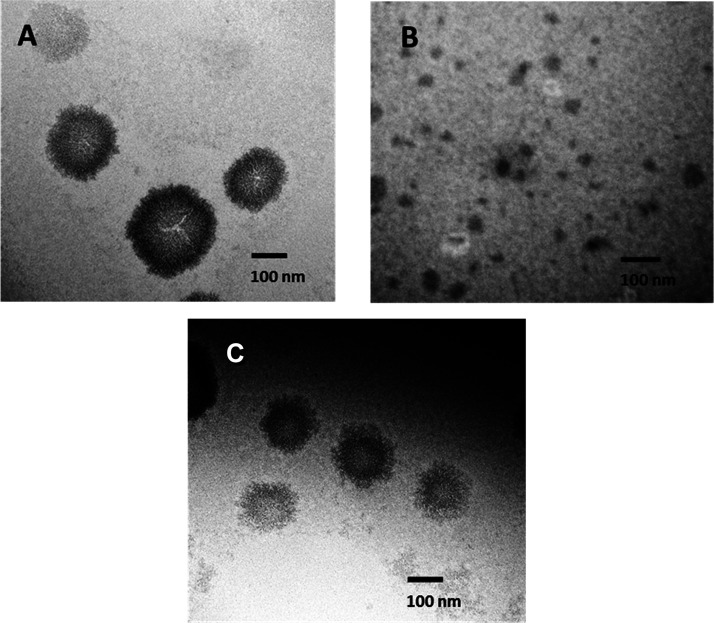
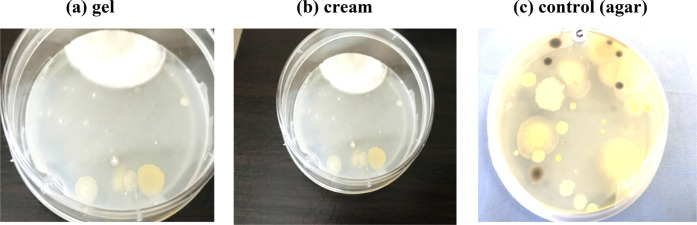
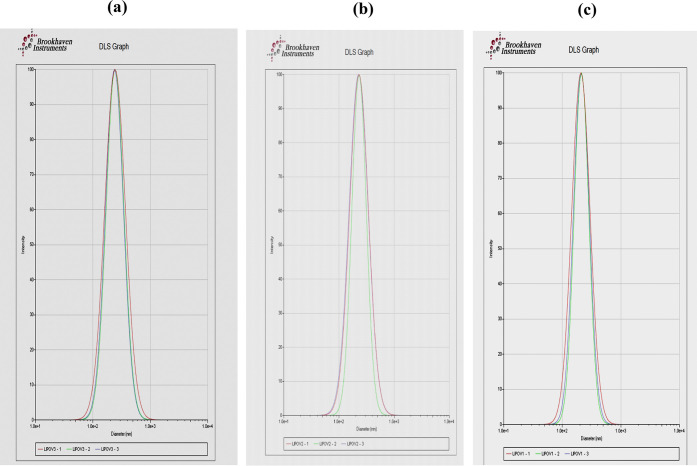
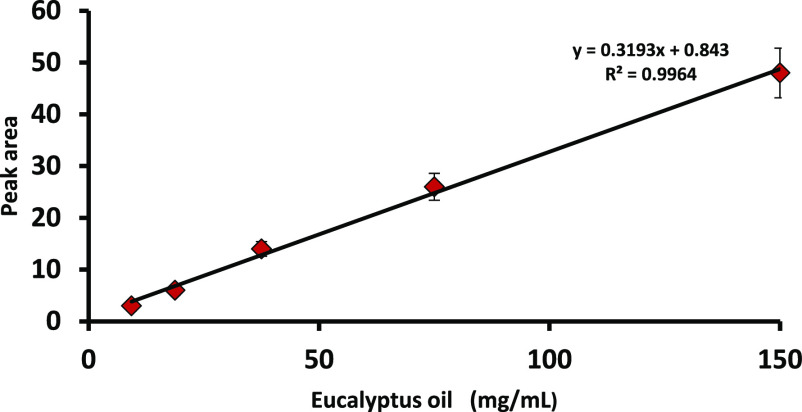
Nanoencapsulation with safe materials improves delivery, stability, and activity of bioactive components. We report a novel safe, and effective method for the development of encapsulated antimicrobial essential oils (EO) for topical creams and gels. The method developed features three aspects that, to our knowledge, had not been previously demonstrated: (1) use of novel liposomes (LPs) to encapsulate EOs, (2) use of the EOs to replace synthetic organic solvents that are potentially toxic and/or leave harmful residues, and (3) an encapsulation process at temperatures below the boiling point of water. The LPs were made from soy lecithin, phytosterol, and α-tocopherol (vitamin E) that were synthesized using the EOs as the solvent. The liposomes were converted to nanoliposomes (NLPs) through a series of sonication, homogenization, and extrusion steps. Transmission electron microscopy indicated that the NLPs alone and nanoliposome encapsulated EOs (NLP-EOs) were spherical in shape with sizes ranging between 50 and 115 nm diameter and with negative zeta potentials ranging from -34 to -43 mV. There was no significant heavy metal contamination [As, Pb, Cd, Hg] based on inductively coupled plasma (ICP) mass spectrometry MS analyses. Nearly complete EO encapsulation (95% encapsulation efficiency) was achieved and confirmed by GC/MS. Three of the NLP-EOs made of various essential oils were used to make topical formulations (cream and gel) which exhibited antimicrobial activities against (Gram negative) and (Gram positive) bacteria. The creams with NLP-EOs were as active against the two bacteria in the antimicrobial assays as the conventional antibiotic Kanamycin that was used as positive control.
使用安全材料进行纳米封装可提高生物活性成分的递送、稳定性和活性。我们报告了一种新颖、安全且有效的方法,用于开发用于外用乳膏和凝胶的封装抗菌精油(EO)。据我们所知,所开发的方法具有三个以前未被证明的方面:(1)使用新型脂质体(LP)封装EO,(2)使用EO替代可能有毒和/或会留下有害残留物的合成有机溶剂,以及(3)在低于水沸点的温度下进行封装过程。LP由大豆卵磷脂、植物甾醇和α-生育酚(维生素E)制成,它们以EO作为溶剂合成。通过一系列超声处理、均质化和挤压步骤,脂质体转化为纳米脂质体(NLP)。透射电子显微镜表明,单独的NLP和纳米脂质体封装的EO(NLP-EO)呈球形,直径在50至115nm之间,zeta电位为负,范围从-34至-43mV。基于电感耦合等离子体(ICP)质谱分析,没有明显的重金属污染[砷、铅、镉、汞]。通过GC/MS实现并确认了几乎完全的EO封装(95%的封装效率)。由各种精油制成的三种NLP-EO用于制备外用制剂(乳膏和凝胶),它们对(革兰氏阴性)和(革兰氏阳性)细菌表现出抗菌活性。含有NLP-EO的乳膏在抗菌试验中对这两种细菌的活性与用作阳性对照的传统抗生素卡那霉素一样高。