Pinilla Cristian Mauricio Barreto, Lopes Nathalie Almeida, Brandelli Adriano
Laboratory of Applied Microbiology and Biochemistry, Institute of Food Science and Technology (ICTA), Federal University of Rio Grande do Sul, Porto Alegre 91501-970, Brazil.
Center of Nanoscience and Nanotechnology (CNANO), Federal University of Rio Grande do Sul, Porto Alegre 91501-970, Brazil.
Molecules. 2021 Jun 11;26(12):3587. doi: 10.3390/molecules26123587.
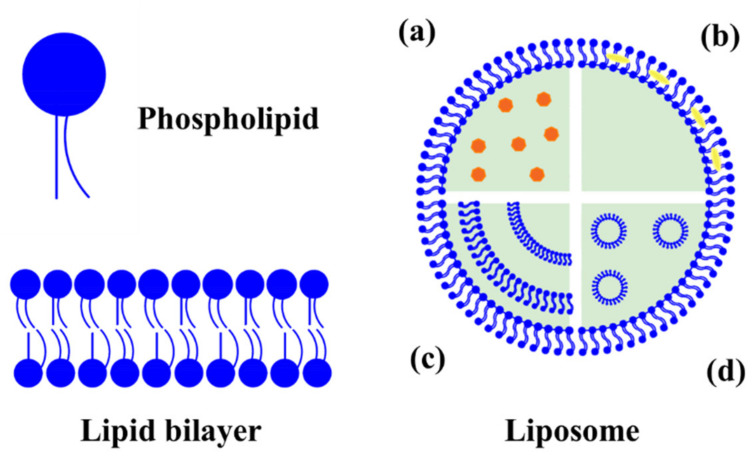
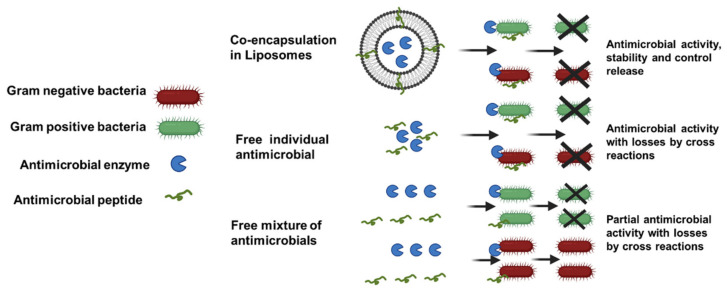
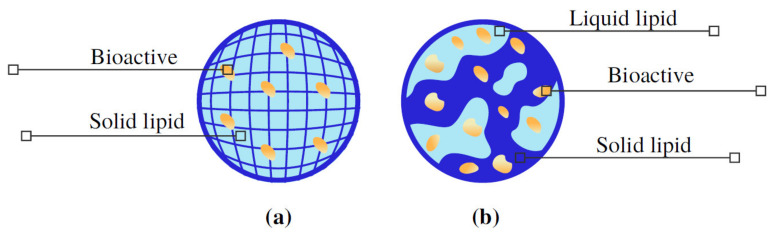
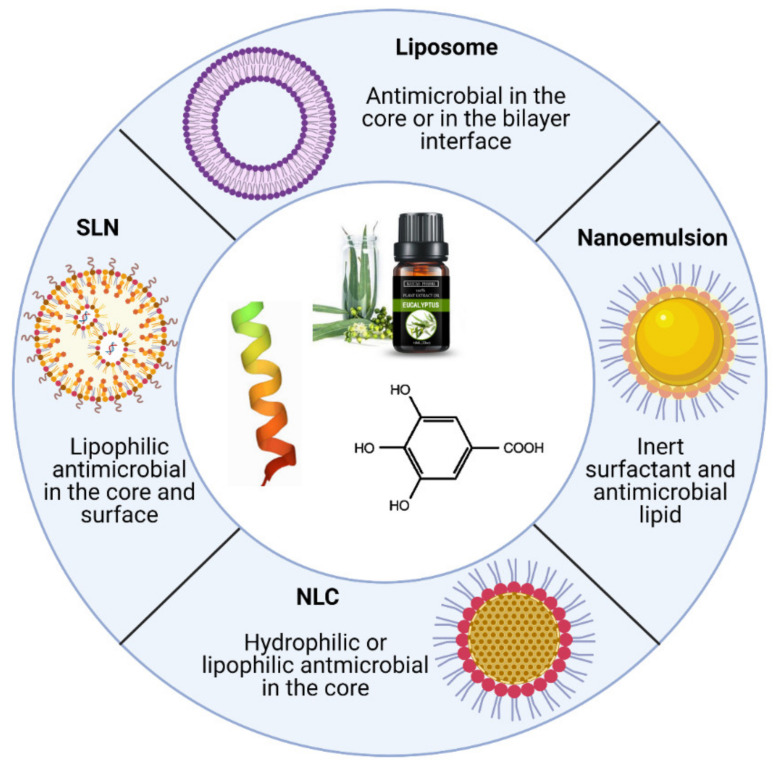
Encapsulation can be a suitable strategy to protect natural antimicrobial substances against some harsh conditions of processing and storage and to provide efficient formulations for antimicrobial delivery. Lipid-based nanostructures, including liposomes, solid lipid nanoparticles (SLNs), and nanostructured lipid nanocarriers (NLCs), are valuable systems for the delivery and controlled release of natural antimicrobial substances. These nanostructures have been used as carriers for bacteriocins and other antimicrobial peptides, antimicrobial enzymes, essential oils, and antimicrobial phytochemicals. Most studies are conducted with liposomes, although the potential of SLNs and NLCs as antimicrobial nanocarriers is not yet fully established. Some studies reveal that lipid-based formulations can be used for co-encapsulation of natural antimicrobials, improving their potential to control microbial pathogens.
包封可能是一种合适的策略,用于保护天然抗菌物质免受某些苛刻的加工和储存条件影响,并提供用于抗菌递送的高效制剂。基于脂质的纳米结构,包括脂质体、固体脂质纳米粒(SLN)和纳米结构脂质载体(NLC),是用于天然抗菌物质递送和控释的有价值体系。这些纳米结构已被用作细菌素和其他抗菌肽、抗菌酶、精油和抗菌植物化学物质的载体。大多数研究是针对脂质体进行的,尽管SLN和NLC作为抗菌纳米载体的潜力尚未完全确立。一些研究表明,基于脂质的制剂可用于天然抗菌剂的共包封,提高其控制微生物病原体的潜力。