Translational Medicine Program, The Hospital for Sick Children, Toronto, Ontario, USA.
Department of Laboratory Medicine and Pathology, University of Toronto, Toronto, Ontario, USA.
Physiol Rep. 2022 Jul;10(14):e15393. doi: 10.14814/phy2.15393.
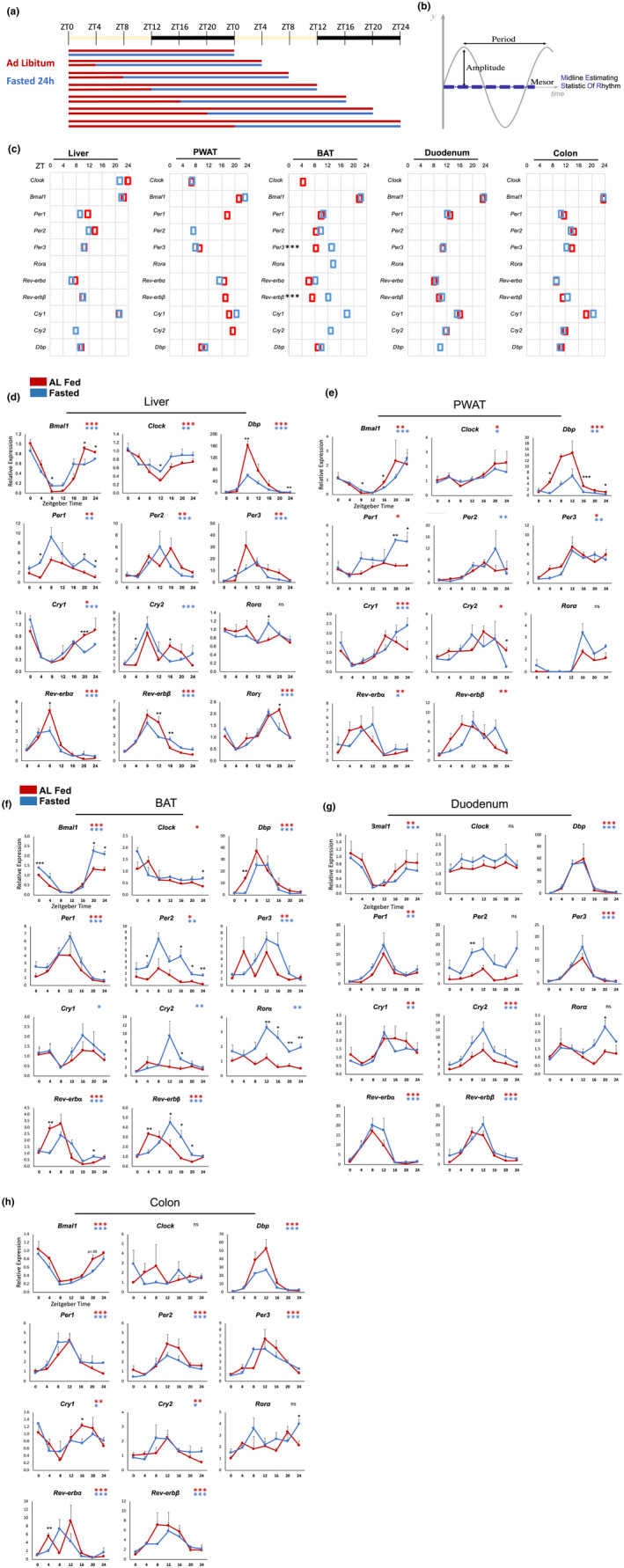
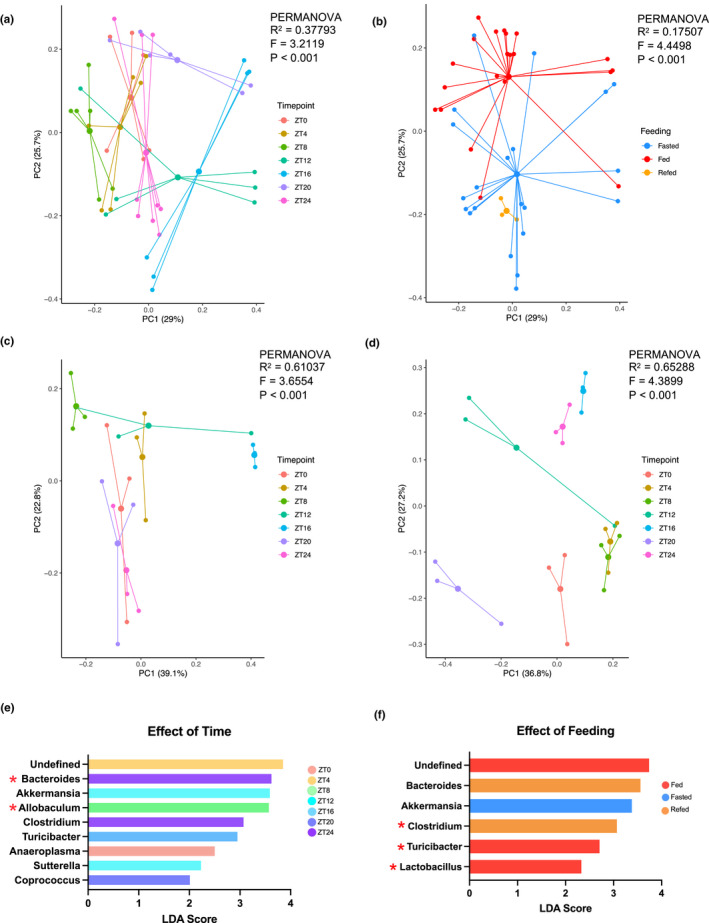
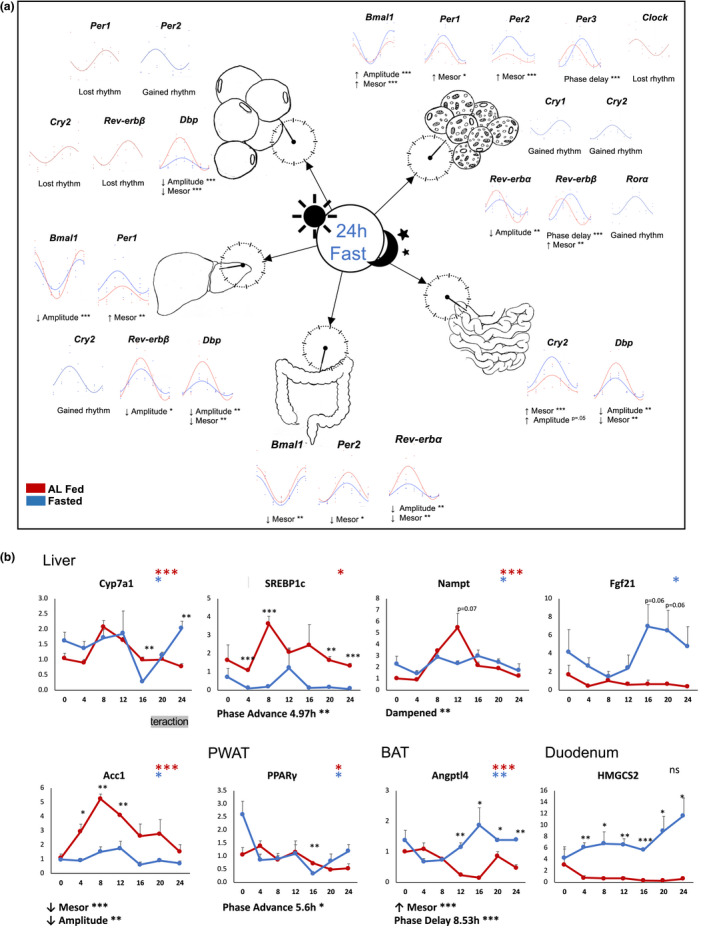
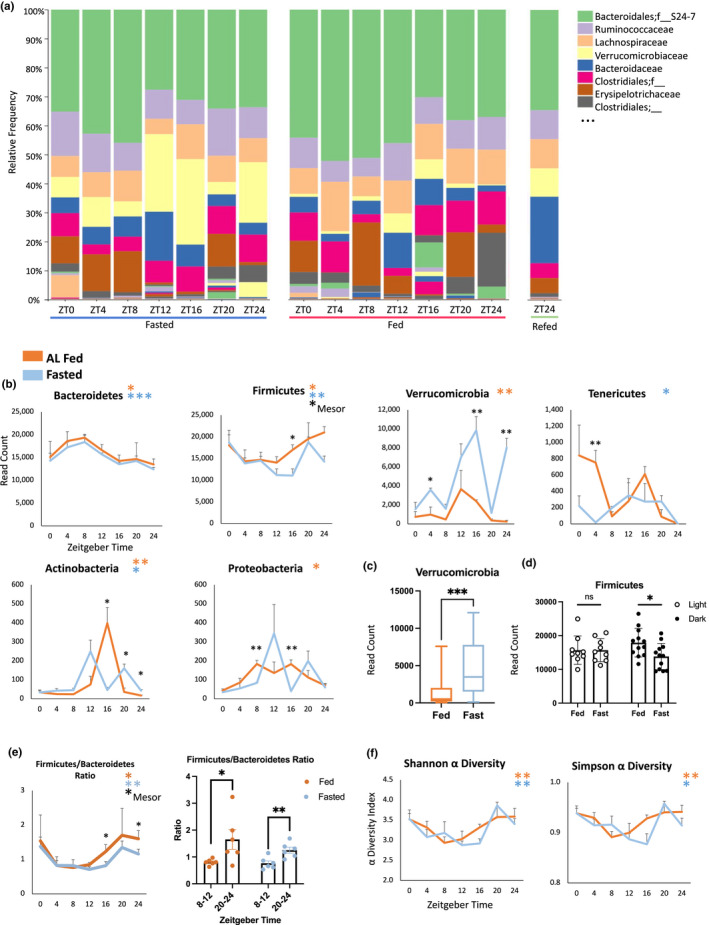
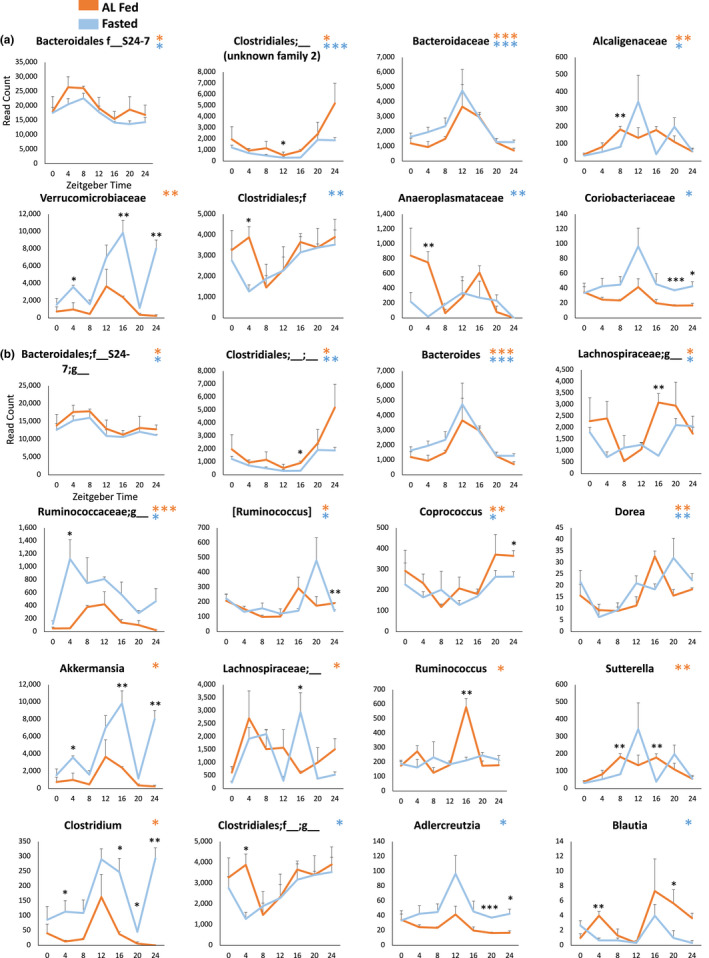
The circadian clock regulates metabolism in anticipation of regular changes in the environment. It is found throughout the body, including in key metabolic organs such as the liver, adipose tissues, and intestine, where the timing of the clock is set largely by nutrient signaling. However, the circadian clocks of these tissues during the fasted state have not been completely characterized. Moreover, the sufficiency of a functioning host clock to produce diurnal rhythms in the composition of the microbiome in fasted animals has not been explored. To this end, mice were fasted 24 h prior to collection of key metabolic tissues and fecal samples for the analysis of circadian clock gene expression and microbiome composition. Rhythm characteristics were determined using CircaCompare software. We identify tissue-specific changes to circadian clock rhythms upon fasting, particularly in the brown adipose tissue, and for the first time demonstrate the rhythmicity of the microbiome in fasted animals.
生物钟调节代谢以适应环境的规律变化。它存在于全身,包括肝脏、脂肪组织和肠道等关键代谢器官,其中生物钟的时间主要由营养信号设定。然而,空腹状态下这些组织的生物钟尚未被完全描述。此外,一个功能正常的宿主生物钟是否足以在禁食动物中产生微生物组组成的昼夜节律也尚未被探索。为此,在收集关键代谢组织和粪便样本以分析生物钟基因表达和微生物组组成之前,将小鼠禁食 24 小时。使用 CircaCompare 软件确定节律特征。我们发现禁食后生物钟节律出现组织特异性变化,特别是在棕色脂肪组织中,并且首次证明了禁食动物的微生物组的节律性。