Department of Psychology, Edge Hill University, Liverpool, UK.
Department of Design and Planning in Complex Environments, Università Iuav di Venezia, Venice, Italy.
Autism Res. 2022 Sep;15(9):1603-1608. doi: 10.1002/aur.2782. Epub 2022 Jul 20.
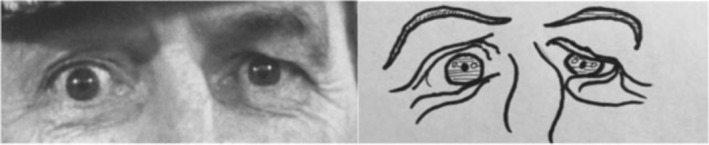
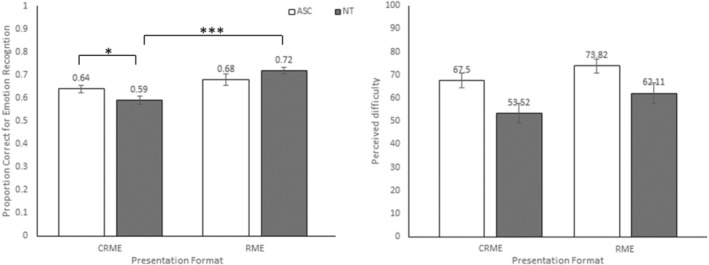
Prior research suggests that while autistic people may demonstrate poorer facial emotion recognition when stimuli are human, these differences lessen when stimuli are anthropomorphic. To investigate this further, this work explores emotion recognition in autistic and neurotypical adults (n = 196). Groups were compared on a standard and a cartoon version of the Reading the Mind in the Eyes test. Results indicated that autistic individuals were not significantly different from neurotypicals on the standard version. However, autistic people outperformed neurotypicals on the cartoon version. The implications for these findings regarding emotion recognition deficits and the social motivation account of autism are discussed and support the view of socio-cognitive differences rather than deficits in this population. LAY SUMMARY: The Reading the Mind in the Eyes test and a cartoon version were tested on autistic and neurotypical adults. Autistic adults were not significantly different on the original test compared to neurotypicals, but they outperformed neurotypical adults on the cartoon version.
先前的研究表明,虽然自闭症患者在面对人类面孔的情绪识别时可能表现较差,但当刺激物为拟人化的面孔时,这种差异会减小。为了进一步研究这一现象,本研究调查了自闭症和神经典型成年人(n=196)的情绪识别能力。两组参与者分别在标准版本和卡通版本的“读脸识心”测试中进行了比较。结果表明,在标准版本中,自闭症患者与神经典型者之间没有显著差异。然而,在卡通版本中,自闭症患者的表现优于神经典型者。这些发现对情绪识别缺陷和自闭症的社会动机解释具有启示意义,并支持了这一观点,即该人群存在社会认知差异而非缺陷。
先前的研究表明,自闭症患者在面对人类面孔的情绪识别时可能表现较差,但当刺激物为拟人化的面孔时,这种差异会减小。为了进一步研究这一现象,本研究调查了自闭症和神经典型成年人(n=196)的情绪识别能力。两组参与者分别在标准版本和卡通版本的“读脸识心”测试中进行了比较。结果表明,在标准版本中,自闭症患者与神经典型者之间没有显著差异。然而,在卡通版本中,自闭症患者的表现优于神经典型者。这些发现对情绪识别缺陷和自闭症的社会动机解释具有启示意义,并支持了这一观点,即该人群存在社会认知差异而非缺陷。