Department of Orthopedics, The Second Xiangya Hospital, Central South University, Changsha, China.
Hunan Key Laboratory of Tumor Models and Individualized Medicine, The Second Xiangya Hospital, Changsha, China.
Front Immunol. 2022 Jul 4;13:921223. doi: 10.3389/fimmu.2022.921223. eCollection 2022.
Soft-tissue sarcoma (STS) represents a rare and diverse cohort of solid tumors, and encompasses over 100 various histologic and molecular subtypes. In recent years, RNA modifications including mA, mC, mA, and mG have been demonstrated to regulate immune response and tumorigenesis. Nevertheless, the cross-talk among these RNA modification regulators and related effects upon the tumor microenvironment (TME), immune infiltrates, and immunotherapy in STS remain poorly understood.
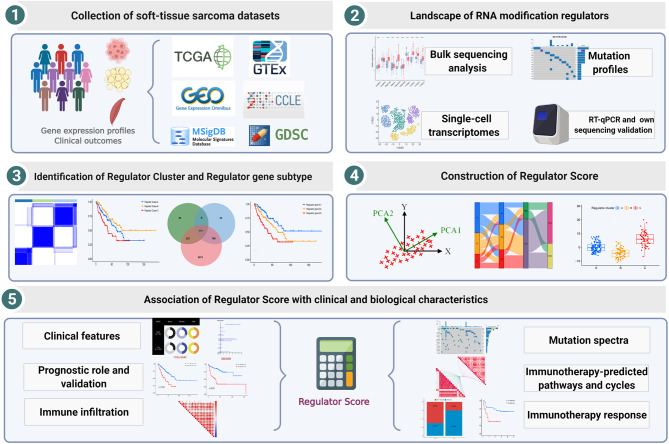
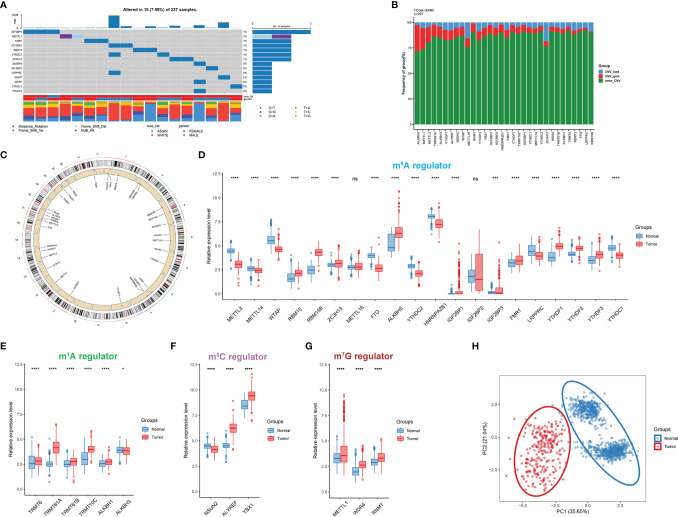
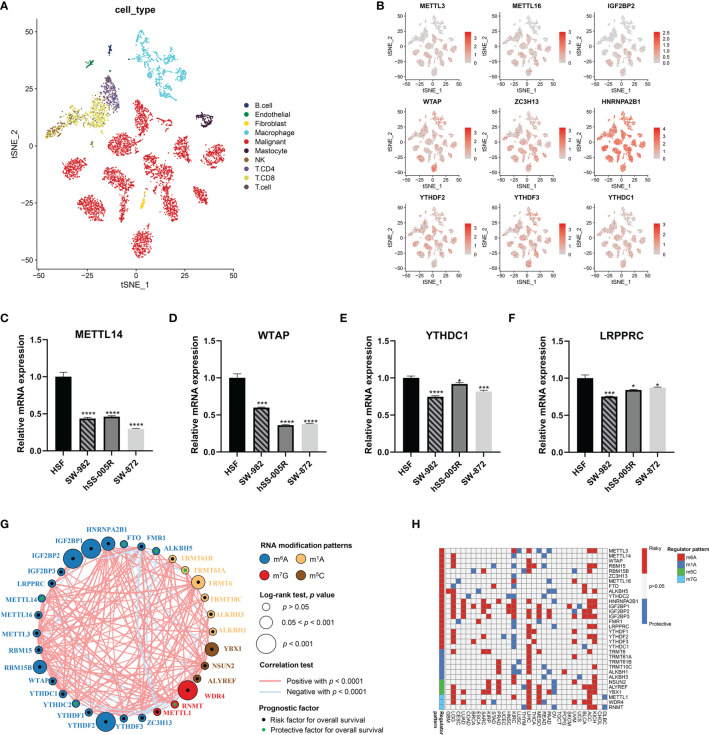
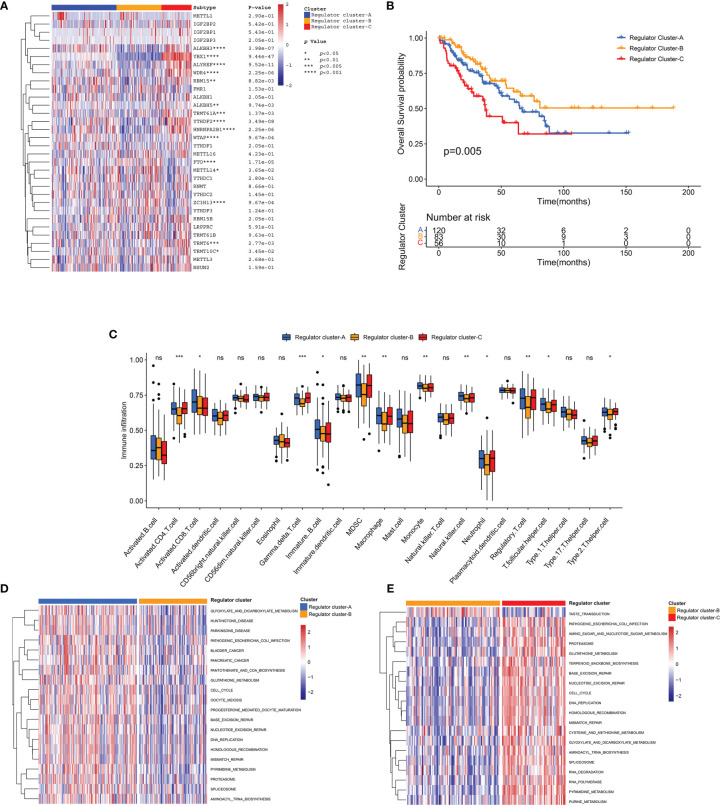
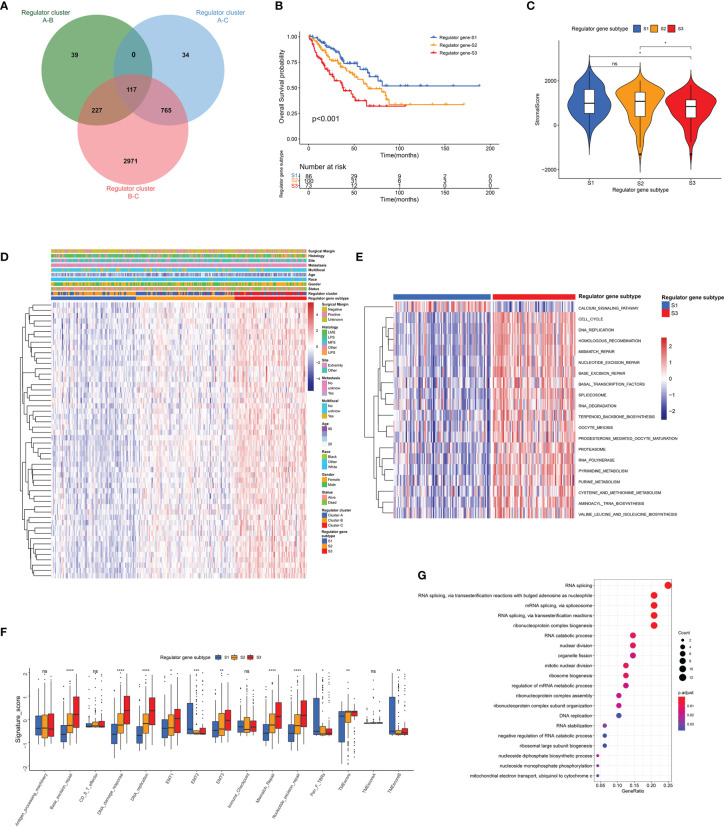
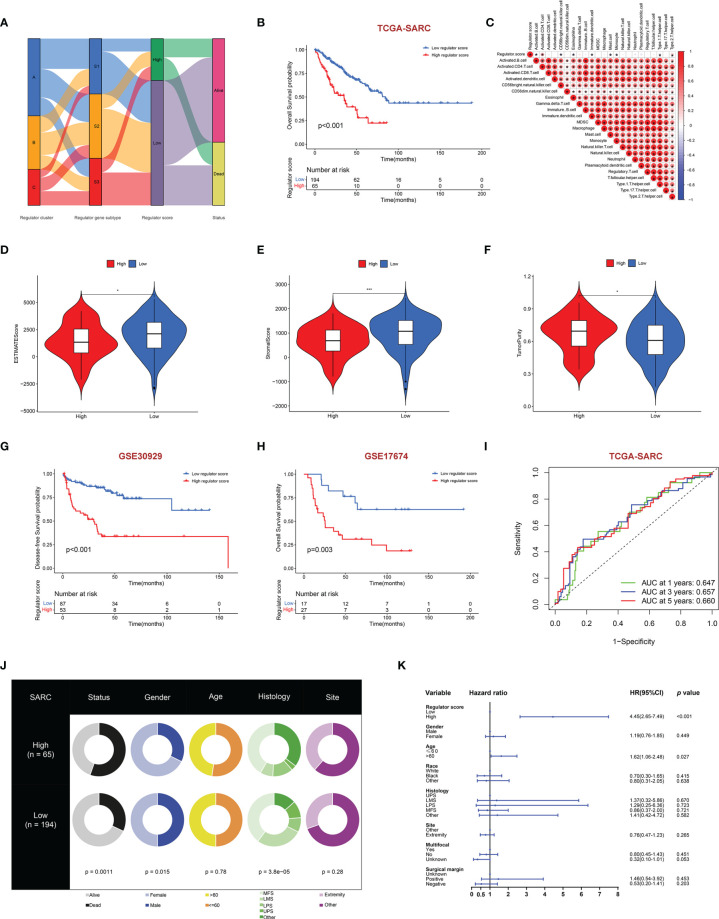
In this study, we comprehensively investigated transcriptional and genetic alterations of 32 RNA modification regulators in STS patients from The Cancer Genome Atlas (TCGA) cohort and validated them in the Gene Expression Omnibus (GEO) cohort. Single-cell transcriptomes were introduced to identify regulators within specific cell types, with own sequencing data and RT-qPCR conducted for biological validation. Distinct regulator clusters and regulator gene subtypes were identified by using unsupervised consensus clustering analysis. We further built the regulator score model based on the prognostic regulator-related differentially expressed genes (DEGs), which could be used to quantitatively assess the risk for individual STS patients. The clinical and biological characteristics of different regulator score groups were further examined.
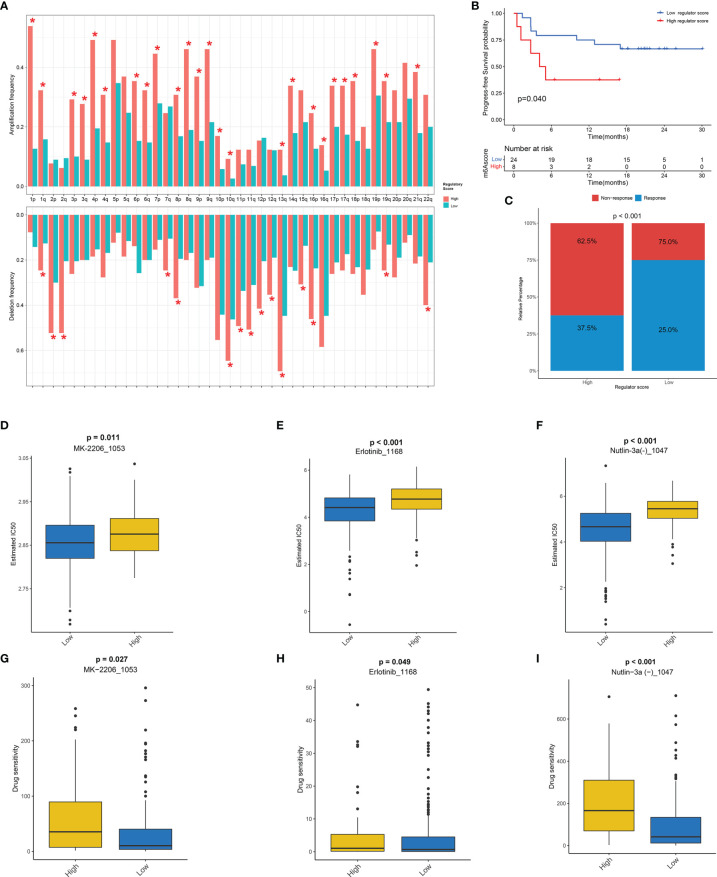
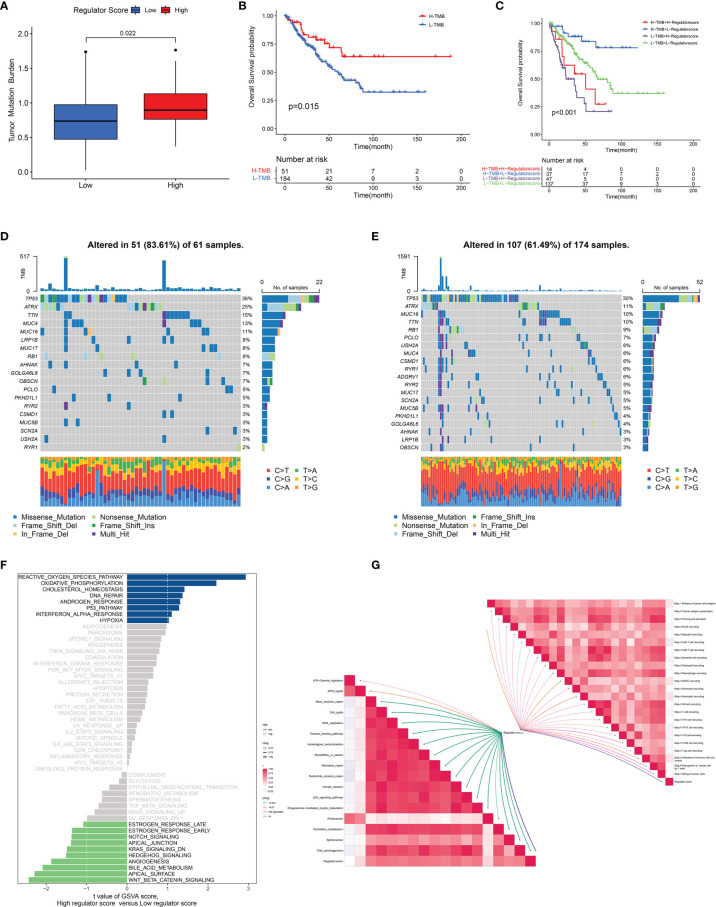
A total of 455 patients with STS were included in this analysis. The network of 32 RNA modification regulators demonstrated significant correlations within multiple different RNA modification types. Distinct regulator clusters and regulator gene subtypes were characterized by markedly different prognoses and TME landscapes. The low regulator score group in the TCGA-SARC cohort was characterized by poor prognosis. The robustness of the scoring model was further confirmed by the external validation in GSE30929 and GSE17674. The regulator score was negatively correlated with CD4+ T cell, Th2 cell, and Treg cell recruitment and most immunotherapy-predicted pathways, and was also associated with immunotherapy efficacy.
Overall, our study is the first to demonstrate the cross-talk of RNA modification regulators and the potential roles in TME and immune infiltrates in STS. The individualized assessment based on the regulator score model could facilitate and optimize personalized treatment.
软组织肉瘤(STS)是一组罕见且多样化的实体肿瘤,包含超过 100 种不同的组织学和分子亚型。近年来,已证实 RNA 修饰物(如 mA、mC、m^5^U 和 m^5^G)可调节免疫反应和肿瘤发生。然而,这些 RNA 修饰物调节剂之间的相互作用以及它们对 STS 肿瘤微环境(TME)、免疫浸润和免疫治疗的相关影响仍知之甚少。
本研究全面分析了来自癌症基因组图谱(TCGA)队列的 STS 患者的 32 种 RNA 修饰调节剂的转录和遗传改变,并在基因表达综合数据库(GEO)队列中进行了验证。引入单细胞转录组学来鉴定特定细胞类型中的调节剂,使用自身测序数据和 RT-qPCR 进行生物学验证。通过无监督共识聚类分析确定不同的调节剂簇和调节剂基因亚型。我们进一步构建了基于预后相关差异表达基因(DEGs)的调节剂评分模型,可用于定量评估个体 STS 患者的风险。进一步研究了不同调节剂评分组的临床和生物学特征。
本研究共纳入 455 例 STS 患者。32 种 RNA 修饰调节剂网络显示出多种不同 RNA 修饰类型之间的显著相关性。不同的调节剂簇和调节剂基因亚型具有明显不同的预后和 TME 特征。TCGA-SARC 队列中的低调节剂评分组具有较差的预后。在 GSE30929 和 GSE17674 中进行的外部验证进一步证实了评分模型的稳健性。调节剂评分与 CD4+T 细胞、Th2 细胞和 Treg 细胞的募集以及大多数免疫治疗预测途径呈负相关,并且与免疫治疗疗效相关。
总体而言,本研究首次证明了 RNA 修饰调节剂之间的相互作用及其在 STS 中的潜在作用。基于调节剂评分模型的个体化评估有助于优化个性化治疗。