Department of Epidemiology, University of North Carolina at Chapel Hillgrid.10698.36, Chapel Hill, North Carolina, USA.
Department of Medicine, Washington University School of Medicine, St. Louis, Missouri, USA.
mBio. 2022 Aug 30;13(4):e0145422. doi: 10.1128/mbio.01454-22. Epub 2022 Jul 12.
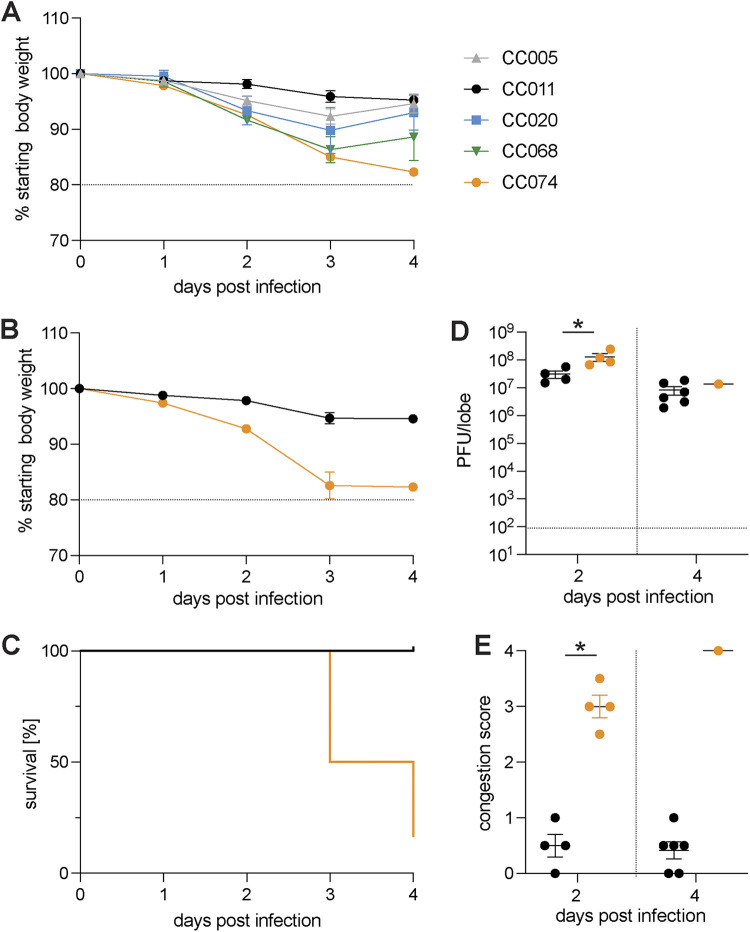
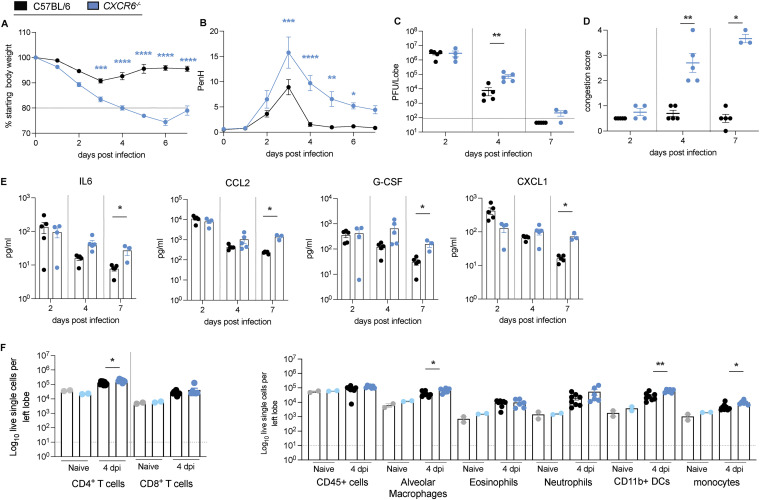
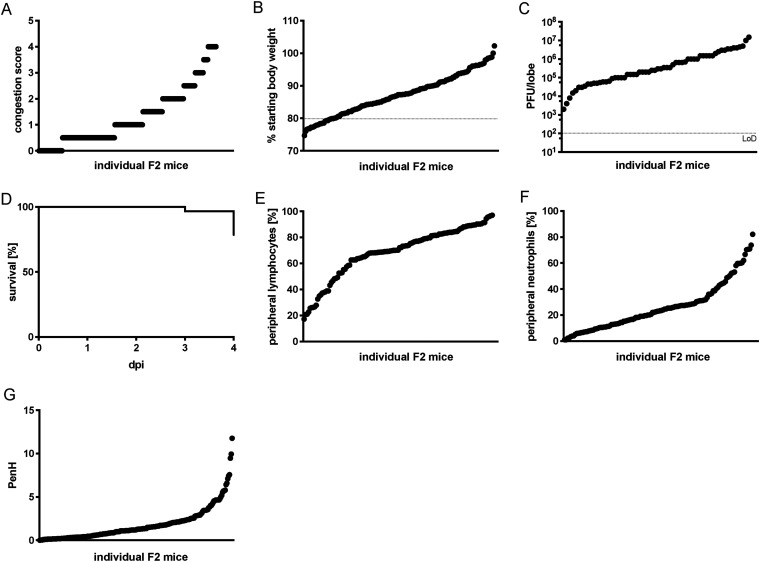
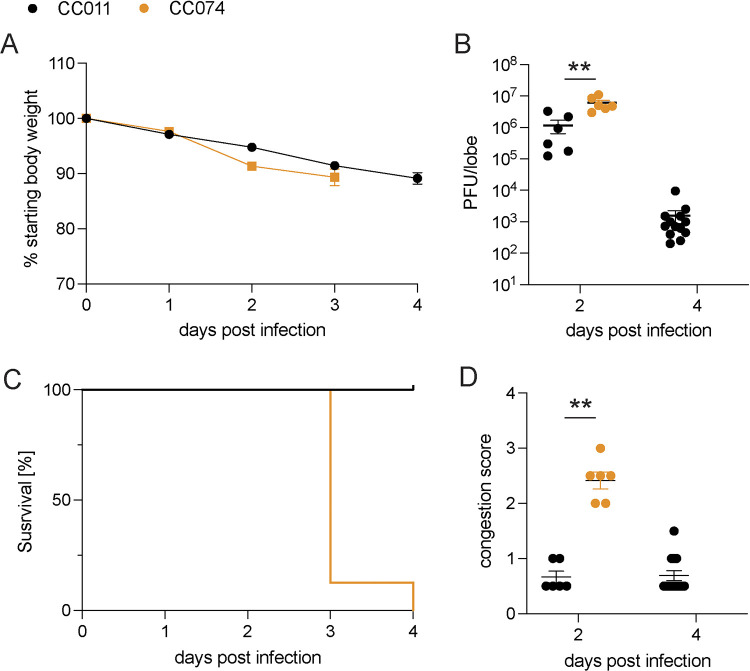
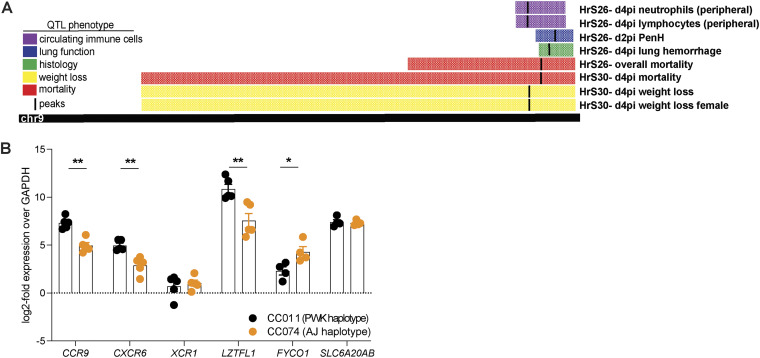
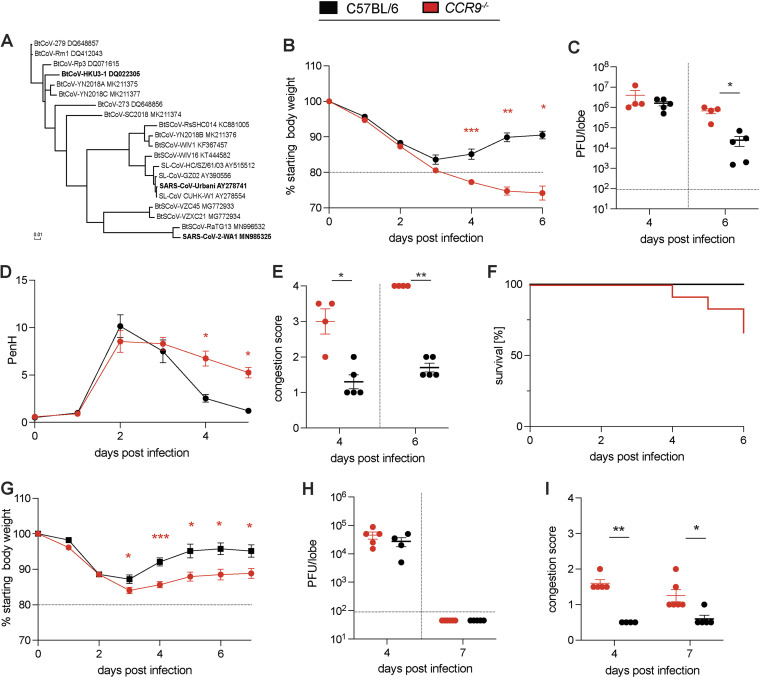
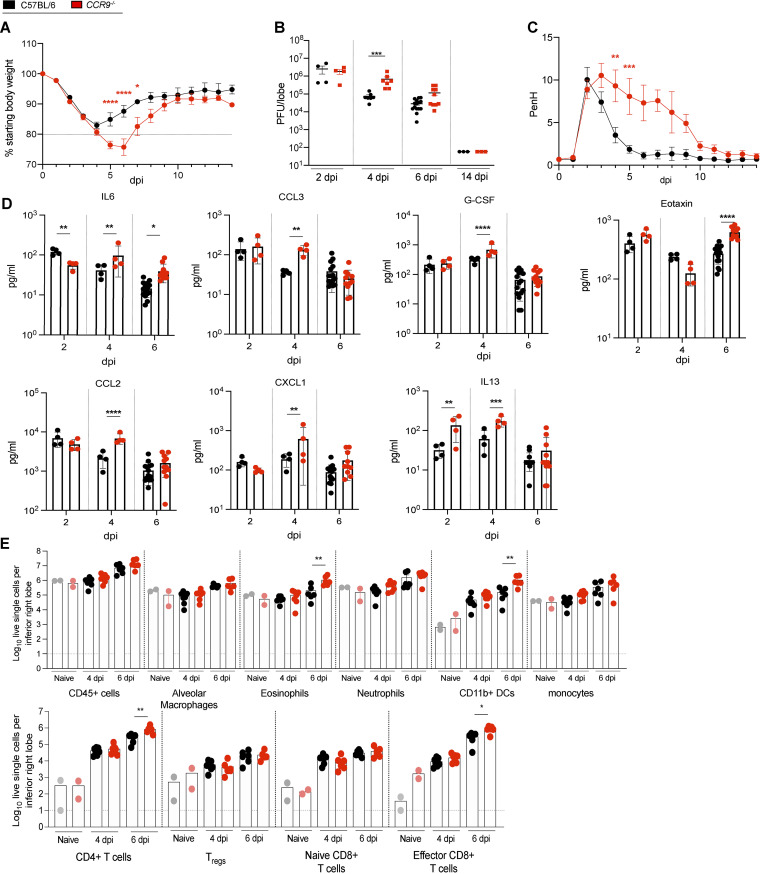
Infectious diseases have shaped the human population genetic structure, and genetic variation influences the susceptibility to many viral diseases. However, a variety of challenges have made the implementation of traditional human Genome-wide Association Studies (GWAS) approaches to study these infectious outcomes challenging. In contrast, mouse models of infectious diseases provide an experimental control and precision, which facilitates analyses and mechanistic studies of the role of genetic variation on infection. Here we use a genetic mapping cross between two distinct Collaborative Cross mouse strains with respect to severe acute respiratory syndrome coronavirus (SARS-CoV) disease outcomes. We find several loci control differential disease outcome for a variety of traits in the context of SARS-CoV infection. Importantly, we identify a locus on mouse chromosome 9 that shows conserved synteny with a human GWAS locus for SARS-CoV-2 severe disease. We follow-up and confirm a role for this locus, and identify two candidate genes, and , that both play a key role in regulating the severity of SARS-CoV, SARS-CoV-2, and a distantly related bat sarbecovirus disease outcomes. As such we provide a template for using experimental mouse crosses to identify and characterize multitrait loci that regulate pathogenic infectious outcomes across species. Host genetic variation is an important determinant that predicts disease outcomes following infection. In the setting of highly pathogenic coronavirus infections genetic determinants underlying host susceptibility and mortality remain unclear. To elucidate the role of host genetic variation on sarbecovirus pathogenesis and disease outcomes, we utilized the Collaborative Cross (CC) mouse genetic reference population as a model to identify susceptibility alleles to SARS-CoV and SARS-CoV-2 infections. Our findings reveal that a multitrait loci found in chromosome 9 is an important regulator of sarbecovirus pathogenesis in mice. Within this locus, we identified and validated CCR9 and CXCR6 as important regulators of host disease outcomes. Specifically, both CCR9 and CXCR6 are protective against severe SARS-CoV, SARS-CoV-2, and SARS-related HKU3 virus disease in mice. This chromosome 9 multitrait locus may be important to help identify genes that regulate coronavirus disease outcomes in humans.
传染病塑造了人类群体遗传结构,遗传变异影响许多病毒性疾病的易感性。然而,各种挑战使得实施传统的全基因组关联研究 (GWAS) 方法来研究这些传染病结果变得具有挑战性。相比之下,传染病的小鼠模型提供了实验对照和精度,这有利于分析和研究遗传变异对感染的作用的机制研究。在这里,我们使用两种不同的协作交叉小鼠品系之间的遗传图谱交叉来研究严重急性呼吸系统综合症冠状病毒 (SARS-CoV) 疾病结果。我们发现,在 SARS-CoV 感染的情况下,有几个基因座控制着各种性状的差异疾病结果。重要的是,我们确定了一个位于小鼠染色体 9 上的基因座,该基因座与人类 SARS-CoV-2 严重疾病的 GWAS 基因座具有保守的同线性。我们进行了后续研究并确认了该基因座的作用,并确定了两个候选基因, 和 ,它们都在调节 SARS-CoV、SARS-CoV-2 和一种远亲蝙蝠沙贝病毒疾病结果的严重程度方面发挥着关键作用。因此,我们提供了一个模板,用于使用实验小鼠杂交来识别和表征调节跨物种致病性传染病结果的多性状基因座。宿主遗传变异是预测感染后疾病结果的一个重要决定因素。在高致病性冠状病毒感染的情况下,宿主易感性和死亡率的遗传决定因素仍不清楚。为了阐明宿主遗传变异对沙贝病毒发病机制和疾病结果的作用,我们利用协作交叉 (CC) 小鼠遗传参考群体作为模型来鉴定 SARS-CoV 和 SARS-CoV-2 感染的易感性等位基因。我们的研究结果表明,在染色体 9 上发现的一个多基因座是沙贝病毒在小鼠中的发病机制的重要调节因子。在这个基因座内,我们鉴定并验证了 CCR9 和 CXCR6 是宿主疾病结果的重要调节因子。具体来说,CCR9 和 CXCR6 都能抵抗严重的 SARS-CoV、SARS-CoV-2 和 SARS 相关的 HKU3 病毒疾病。这个染色体 9 多基因座可能对帮助识别调节人类冠状病毒疾病结果的基因很重要。