Zhang Siyue, Xie Fangyuan, Li Kaichun, Zhang He, Yin You, Yu Yuan, Lu Guangzhao, Zhang Shihao, Wei Yan, Xu Ke, Wu Yan, Jin Hong, Xiao Lan, Bao Leilei, Xu Can, Li Yulin, Lu Ying, Gao Jie
Department of Pharmacy, Naval Medical University, Shanghai 200433, China.
Changhai Clinical Research Unit, Shanghai Changhai Hospital, Naval Medical University, Shanghai 200433, China.
Acta Pharm Sin B. 2022 Jul;12(7):3124-3138. doi: 10.1016/j.apsb.2022.02.008. Epub 2022 Feb 16.
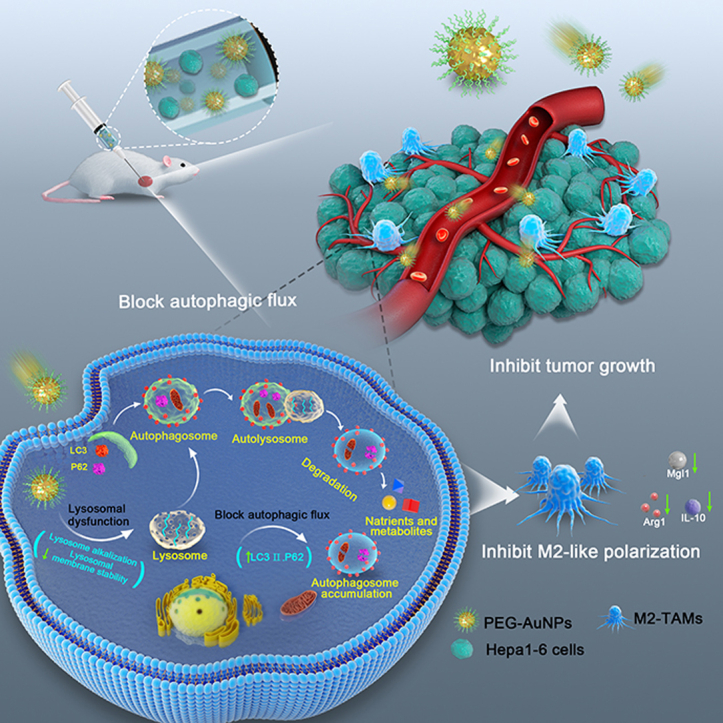
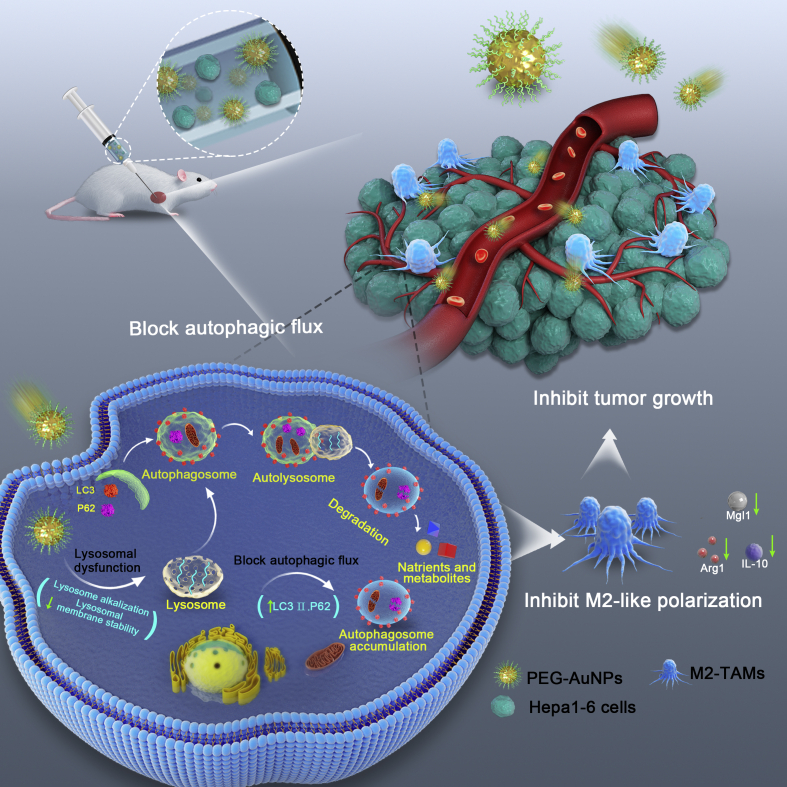
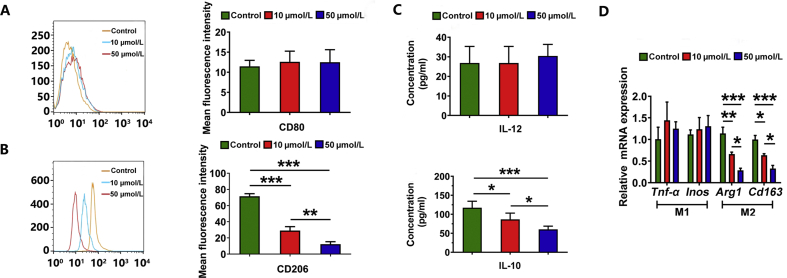
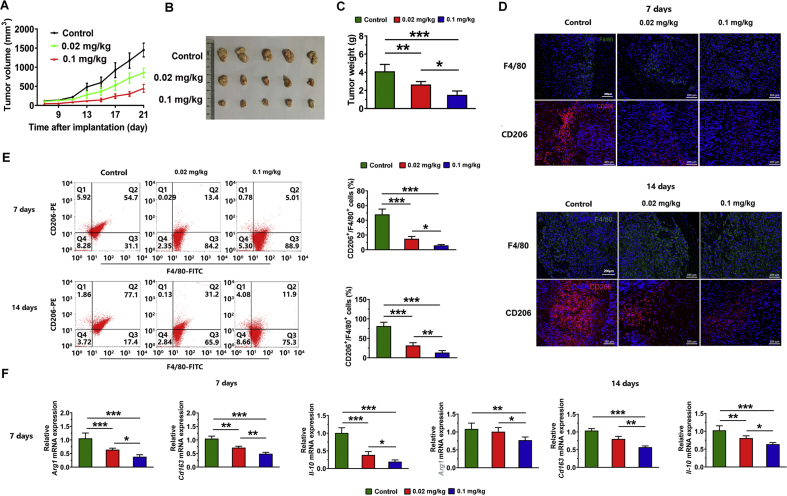
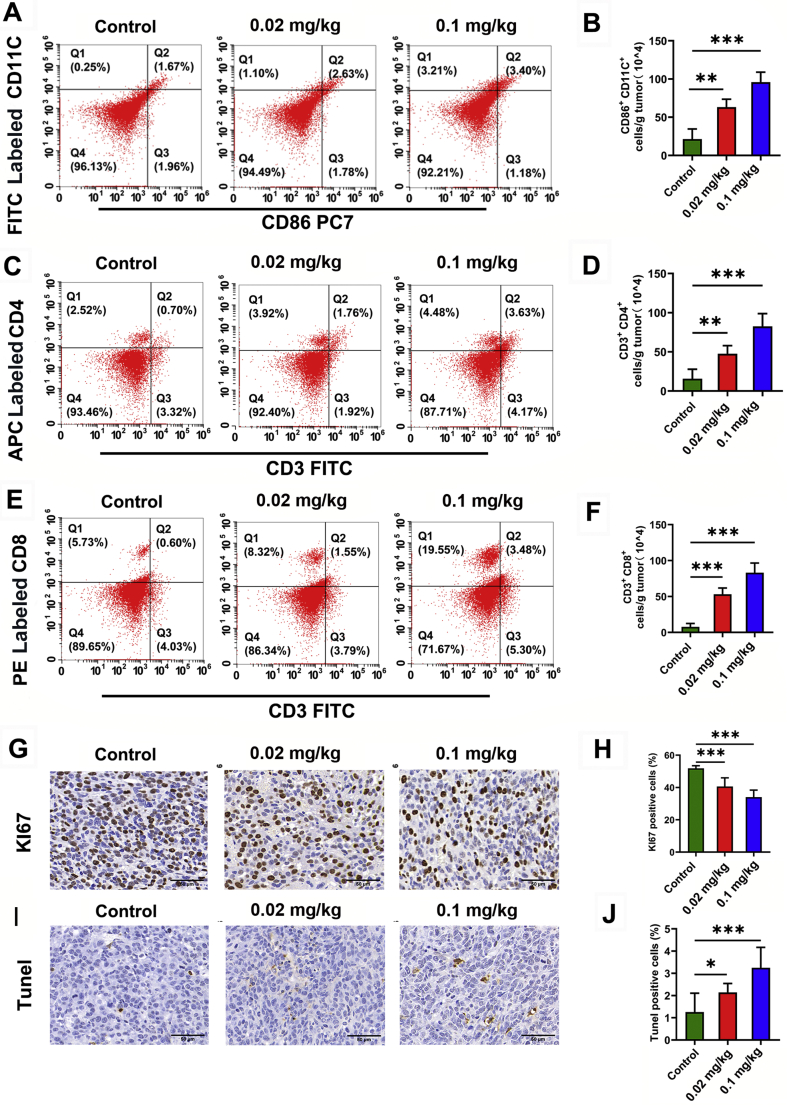
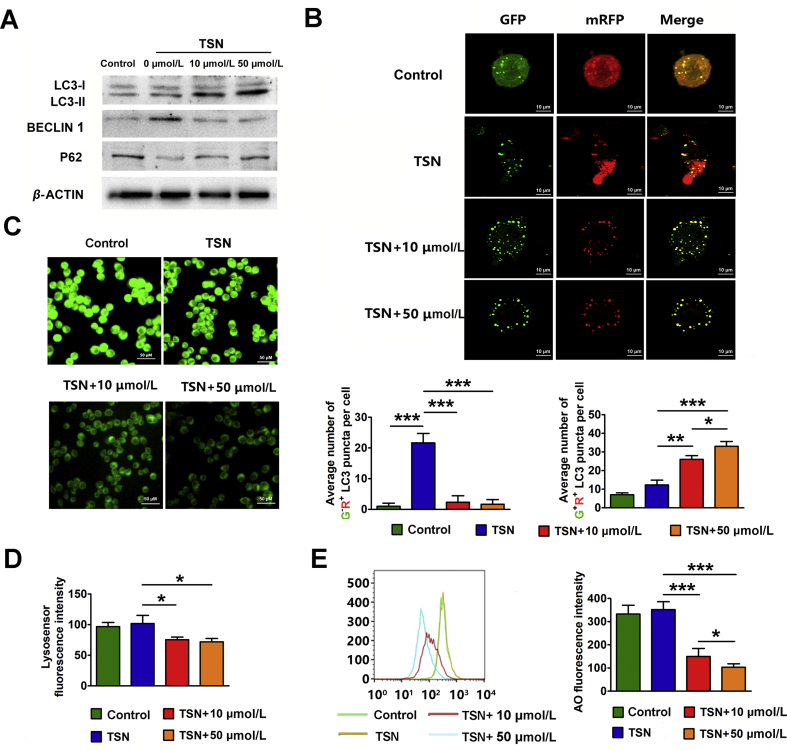
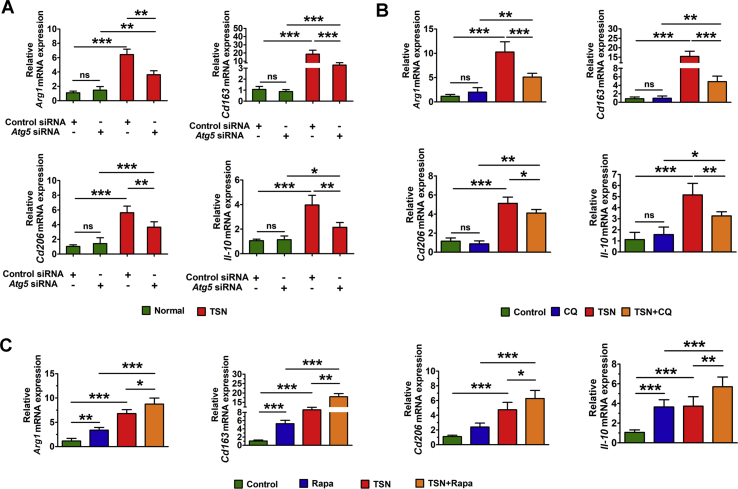
Tumor-associated macrophages (TAMs), one of the dominating constituents of tumor microenvironment, are important contributors to cancer progression and treatment resistance. Therefore, regulation of TAMs polarization from M2 phenotype towards M1 phenotype has emerged as a new strategy for tumor immunotherapy. Herein, we successfully initiated antitumor immunotherapy by inhibiting TAMs M2 polarization autophagy intervention with polyethylene glycol-conjugated gold nanoparticles (PEG-AuNPs). PEG-AuNPs suppressed TAMs M2 polarization in both and models, elicited antitumor immunotherapy and inhibited subcutaneous tumor growth in mice. As demonstrated by the mRFP-GFP-LC3 assay and analyzing the autophagy-related proteins (LC3, beclin1 and P62), PEG-AuNPs induced autophagic flux inhibition in TAMs, which is attributed to the PEG-AuNPs induced lysosome alkalization and membrane permeabilization. Besides, TAMs were prone to polarize towards M2 phenotype following autophagy activation, whereas inhibition of autophagic flux could reduce the M2 polarization of TAMs. Our results revealed a mechanism underlying PEG-AuNPs induced antitumor immunotherapy, where PEG-AuNPs reduce TAMs M2 polarization induction of lysosome dysfunction and autophagic flux inhibition. This study elucidated the biological effects of nanomaterials on TAMs polarization and provided insight into harnessing the intrinsic immunomodulation capacity of nanomaterials for effective cancer treatment.
肿瘤相关巨噬细胞(TAMs)是肿瘤微环境的主要组成部分之一,是癌症进展和治疗耐药性的重要促成因素。因此,将TAMs从M2表型向M1表型极化的调控已成为肿瘤免疫治疗的新策略。在此,我们通过聚乙二醇共轭金纳米颗粒(PEG-AuNPs)的自噬干预抑制TAMs的M2极化,成功启动了抗肿瘤免疫治疗。PEG-AuNPs在体外和体内模型中均抑制了TAMs的M2极化,引发了抗肿瘤免疫治疗,并抑制了小鼠皮下肿瘤的生长。通过mRFP-GFP-LC3检测和分析自噬相关蛋白(LC3、beclin1和P62)表明,PEG-AuNPs诱导了TAMs中的自噬流抑制,这归因于PEG-AuNPs诱导的溶酶体碱化和膜通透性增加。此外,自噬激活后TAMs易于向M2表型极化,而自噬流的抑制可降低TAMs的M2极化。我们的结果揭示了PEG-AuNPs诱导抗肿瘤免疫治疗的潜在机制,即PEG-AuNPs通过诱导溶酶体功能障碍和自噬流抑制来减少TAMs的M2极化。本研究阐明了纳米材料对TAMs极化的生物学效应,并为利用纳米材料的内在免疫调节能力进行有效的癌症治疗提供了见解。