Nogueira Miguel, Boussetta Souhail, Balsamo Gianpaolo, Albergel Clément, Trigo Isabel F, Johannsen Frederico, Miralles Diego G, Dutra Emanuel
Instituto Dom Luiz, IDL Faculty of Sciences University of Lisbon Lisbon Portugal.
ECMWF Reading UK.
J Geophys Res Atmos. 2021 Aug 16;126(15):e2020JD034163. doi: 10.1029/2020JD034163. Epub 2021 Aug 2.
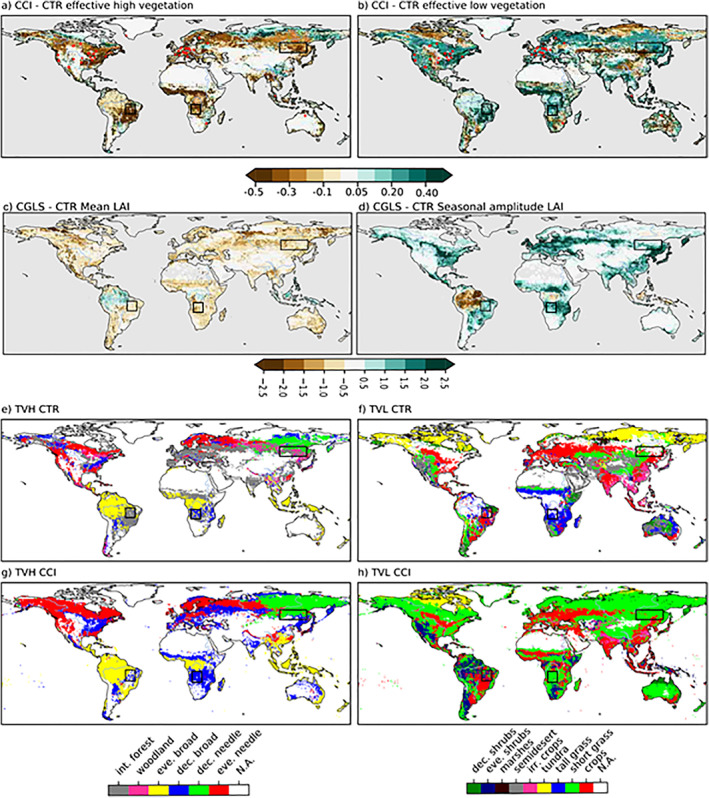
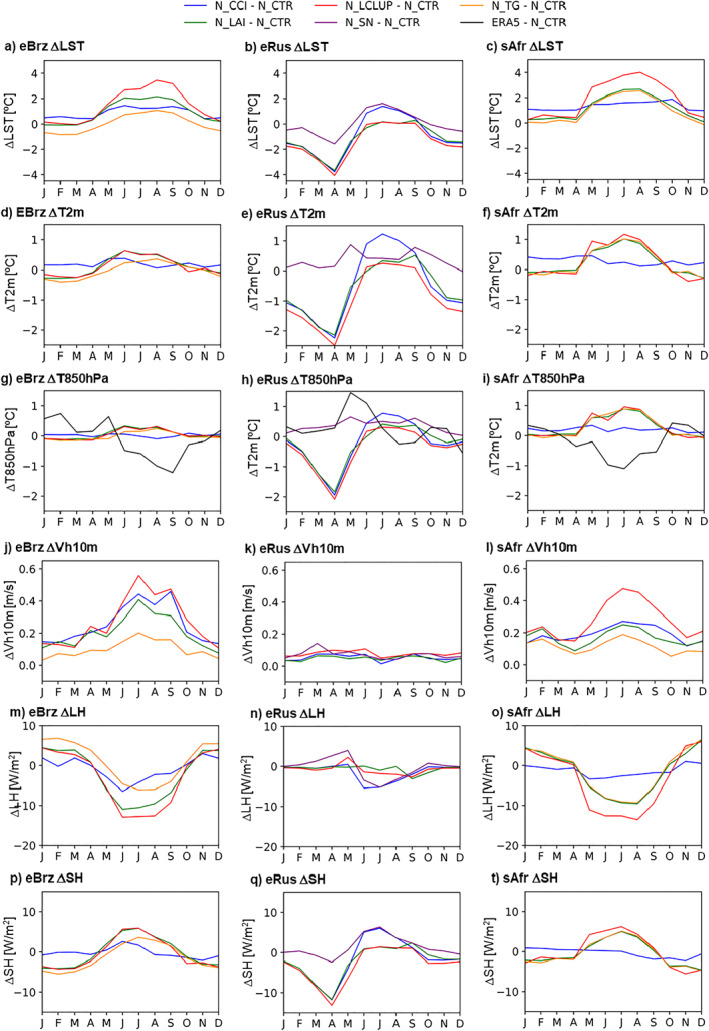
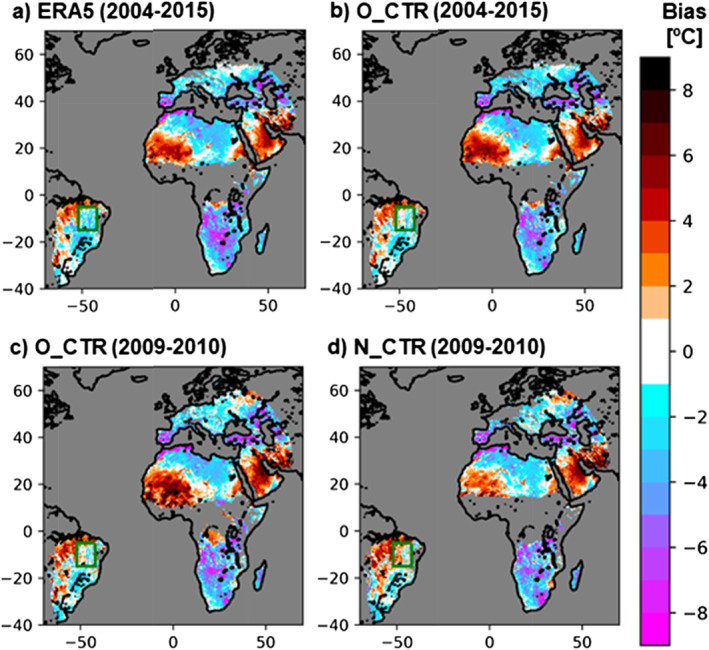
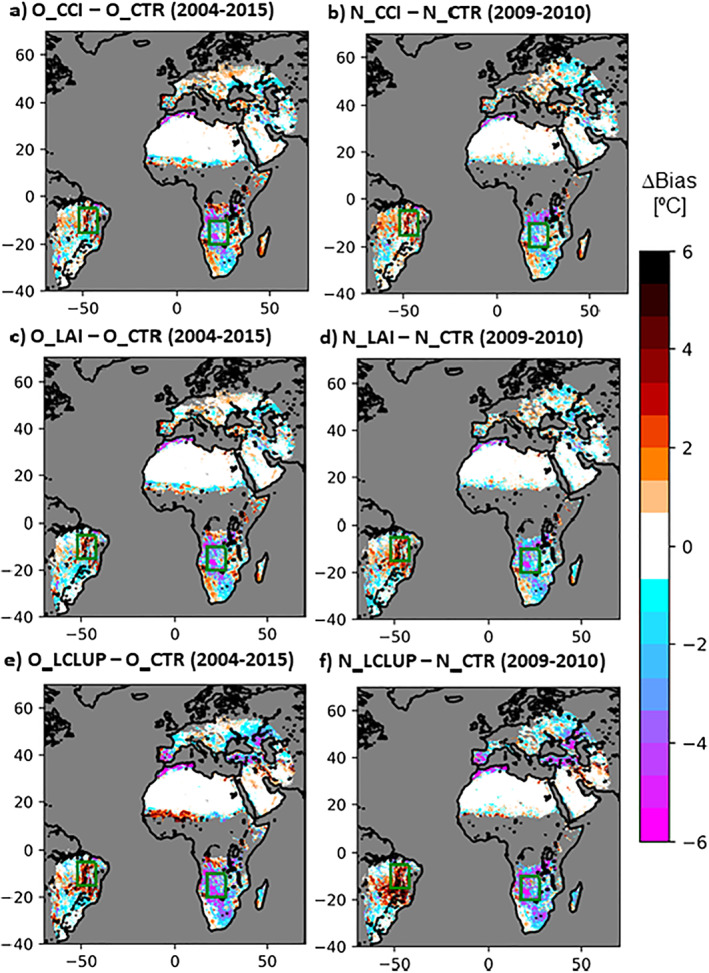
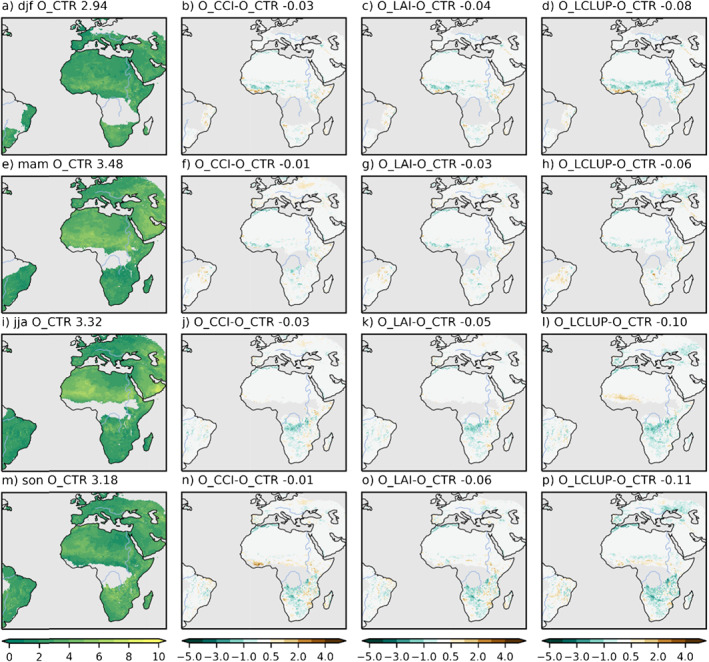
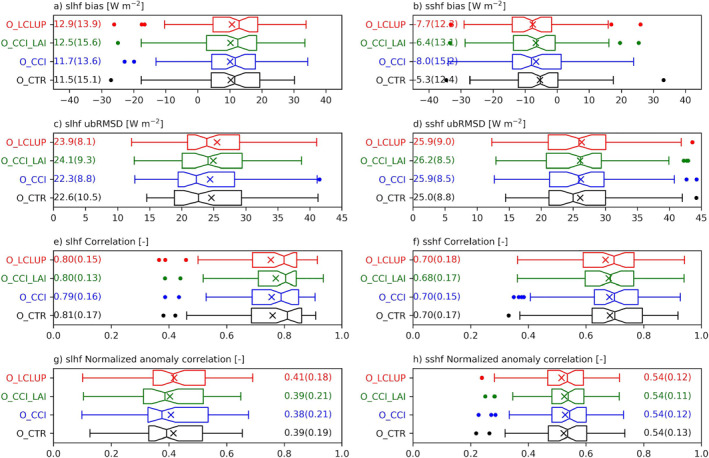
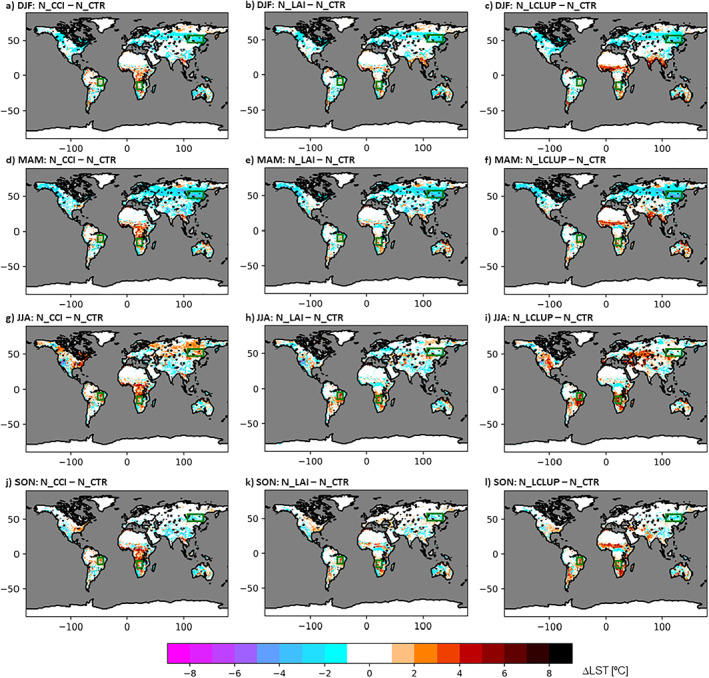
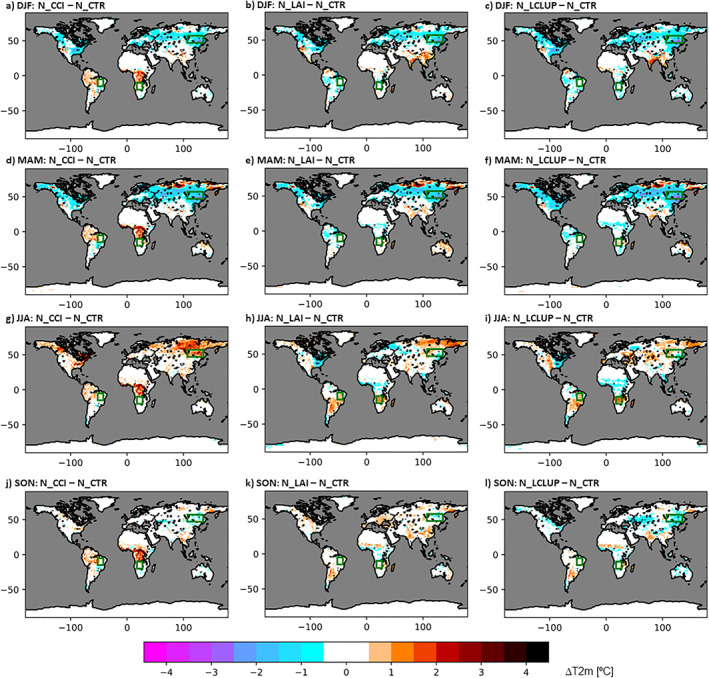
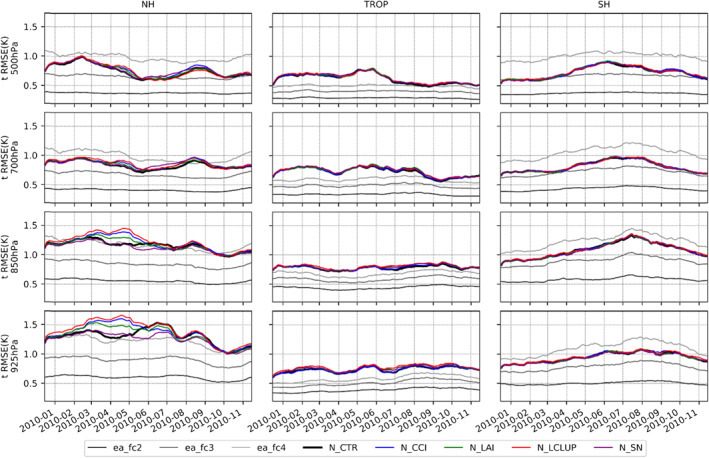
In this study, we show that limitations in the representation of land cover and vegetation seasonality in the European Centre for Medium-Range Weather Forecasting (ECMWF) model are partially responsible for large biases (up to ∼10°C, either positive or negative depending on the region) on the simulated daily maximum land surface temperature (LST) with respect to satellite Earth Observations (EOs) products from the Land Surface Analysis Satellite Application Facility. The error patterns were coherent in offline land-surface and coupled land-atmosphere simulations, and in ECMWF's latest generation reanalysis (ERA5). Subsequently, we updated the ECMWF model's land cover characterization leveraging on state-of-the-art EOs-the European Space Agency Climate Change Initiative land cover data set and the Copernicus Global Land Services leaf area index. Additionally, we tested a clumping parameterization, introducing seasonality to the effective low vegetation coverage. The updates reduced the overall daily maximum LST bias and unbiased root-mean-squared errors. In contrast, the implemented updates had a neutral impact on daily minimum LST. Our results also highlighted the complex regional heterogeneities in the atmospheric sensitivity to land cover and vegetation changes, particularly with issues emerging over eastern Brazil and northeastern Asia. These issues called for a re-calibration of model parameters (e.g., minimum stomatal resistance, roughness length, rooting depth), along with a revision of several model assumptions (e.g., snow shading by high vegetation).
在本研究中,我们表明,欧洲中期天气预报中心(ECMWF)模型中陆地覆盖和植被季节性表征的局限性,是造成模拟的每日陆地表面最高温度(LST)相对于陆地表面分析卫星应用设施的卫星地球观测(EO)产品存在较大偏差(高达约10°C,正负偏差取决于区域)的部分原因。在离线陆地表面和陆气耦合模拟以及ECMWF的最新一代再分析(ERA5)中,误差模式是一致的。随后,我们利用最先进的EO数据——欧洲航天局气候变化倡议陆地覆盖数据集和哥白尼全球陆地服务叶面积指数,更新了ECMWF模型的陆地覆盖特征描述。此外,我们测试了一种聚集参数化方法,将季节性引入到有效的低植被覆盖中。这些更新减少了每日陆地表面最高温度的总体偏差和无偏均方根误差。相比之下,实施的更新对每日陆地表面最低温度有中性影响。我们的结果还突出了大气对陆地覆盖和植被变化敏感性方面复杂的区域异质性,特别是在巴西东部和亚洲东北部出现的问题。这些问题需要重新校准模型参数(例如最小气孔阻力、粗糙度长度、根系深度),同时修订几个模型假设(例如高植被对雪的遮蔽)。