Australian Research Council Centre of Excellence for Coral Reef Studies, James Cook University, Townsville, Queensland, Australia.
WorldFish, Jalan Batu Maung, Bayan Lepas, Malaysia.
Conserv Biol. 2022 Dec;36(6):e13977. doi: 10.1111/cobi.13977. Epub 2022 Oct 19.
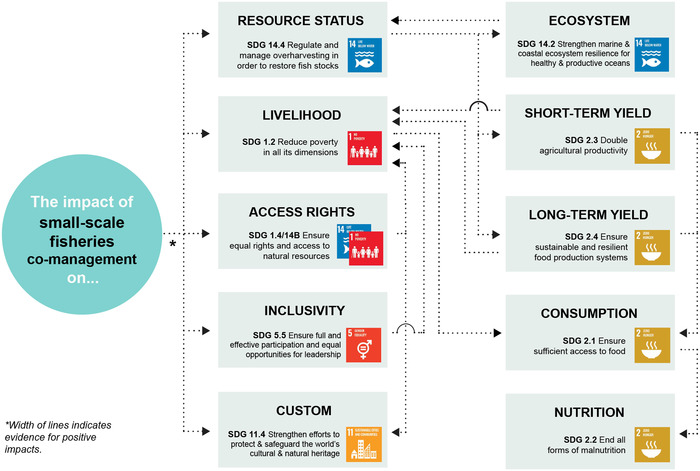
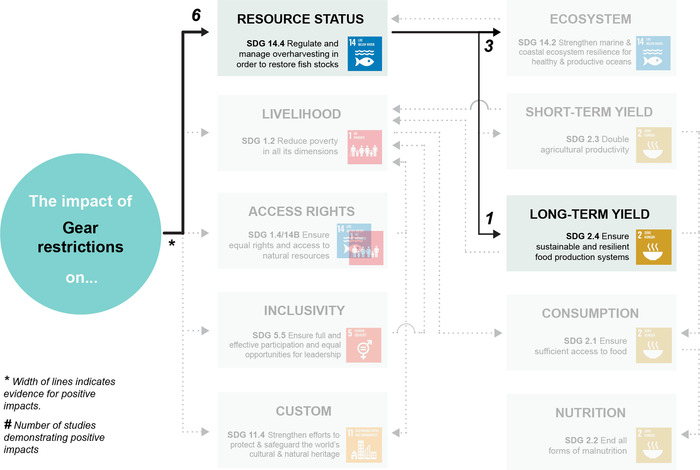
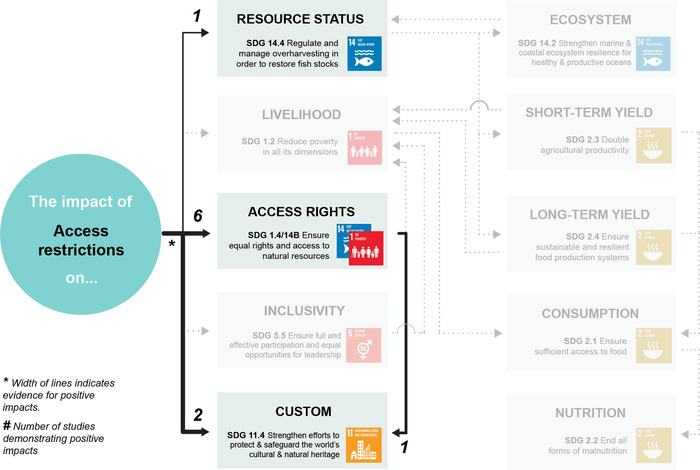
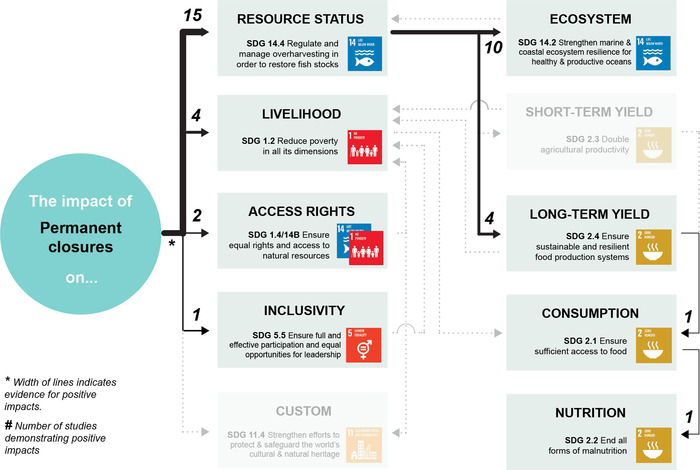
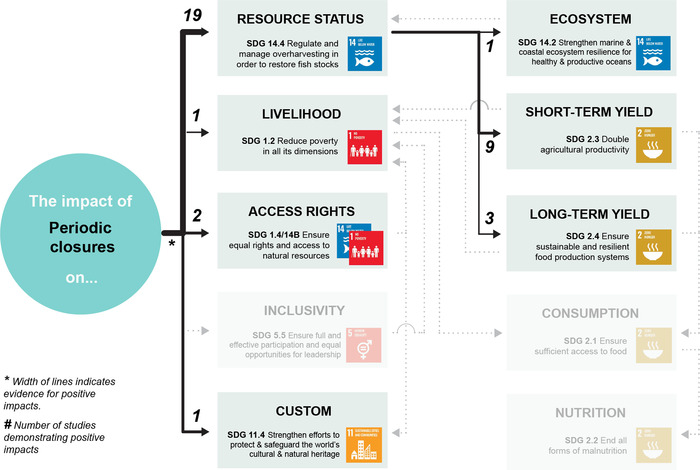
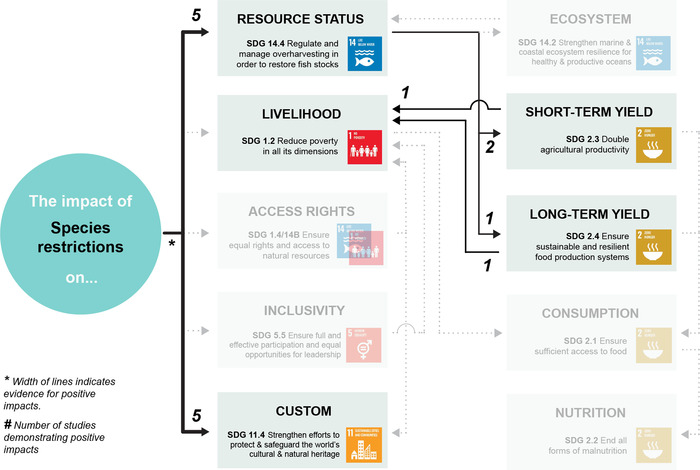
Small-scale fisheries account for 90% of global fishers and 40% of the global catch. Effectively managing small-scale fisheries is, therefore, crucial to progressing the United Nations Sustainable Development Goals (SDGs). Co-management and community-based fisheries management are widely considered the most appropriate forms of governance for many small-scale fisheries. We outlined relationships between small-scale fisheries co-management and attainment of the SDGs, including evidence for impacts and gaps in dominant logic. We identified 11 targets across five SDGs to which small-scale fisheries co-management (including community-based fisheries management) can contribute; the theory of change by which these contributions could be achieved; and the strength of evidence for progress toward SDG targets related to various co-management strategies. Our theory of change links the 11 SDG targets by qualifying that progress toward some targets is contingent on others being achieved first. We then reviewed 58 case studies of co-management impacts from the Pacific Islands--a region rich in local marine governance--to evaluate evidence of where, to what degree, and with how much certainty different co-management strategies conferred positive impacts to each SDG target. These strategies included access restrictions, permanent area closures, periodic closures, and gear and species restrictions. Although many studies provide evidence linking multiple co-management strategies to improvements in resource status (SDG 14.4), there was limited evidence of follow-on effects, such as improvements in catch (SDG 2.3, 2.4), livelihoods (SDG 1.2), consumption (SDG 2.1), and nutrition (SDG 2.2). Our findings suggest that leaps of logic and assumptions are prevalent in co-management planning and evaluation. Hence, when evaluating co-management impacts against the SDGs, consideration of ultimate goals is required, otherwise, there is a risk of shortfalls between aspirations and impact.
小规模渔业占全球渔业的 90%,占全球渔获量的 40%。因此,有效管理小规模渔业对于推进联合国可持续发展目标(SDGs)至关重要。共同管理和基于社区的渔业管理被广泛认为是许多小规模渔业最合适的治理形式。我们概述了小规模渔业共同管理与实现可持续发展目标之间的关系,包括主要逻辑中的影响和差距的证据。我们确定了 11 个可持续发展目标,其中包括社区为基础的渔业管理,可以为小规模渔业共同管理做出贡献;这些贡献可以实现的变革理论;以及与各种共同管理策略相关的可持续发展目标的进展的证据强度。我们的变革理论通过限定某些目标的进展取决于其他目标首先实现,将 11 个可持续发展目标联系起来。然后,我们审查了来自太平洋岛屿的 58 个共同管理影响案例研究,该地区拥有丰富的地方海洋治理经验,以评估不同共同管理策略对每个可持续发展目标的积极影响的程度、范围和确定性。这些策略包括限制准入、永久区域关闭、定期关闭以及渔具和物种限制。尽管许多研究提供了证据,证明多种共同管理策略与资源状况的改善有关(可持续发展目标 14.4),但对于后续影响,如捕获量的改善(可持续发展目标 2.3、2.4)、生计(可持续发展目标 1.2)、消费(可持续发展目标 2.1)和营养(可持续发展目标 2.2)的改善,证据有限。我们的研究结果表明,共同管理规划和评估中普遍存在逻辑跳跃和假设。因此,在根据可持续发展目标评估共同管理的影响时,需要考虑最终目标,否则,在愿望和影响之间存在差距的风险。