Dong Zhongyi, Zhang Yeqian, Geng Haigang, Ni Bo, Xia Xiang, Zhu Chunchao, Liu Jiahua, Zhang Zizhen
Department of Gastrointestinal Surgery, Renji Hospital, School of Medicine, Shanghai Jiao Tong University, No.1630 East Road, Pudong New Area, Shanghai 200127, China.
Department of Gastrointestinal Surgery, Renji Hospital, School of Medicine, Shanghai Jiao Tong University, No.1630 East Road, Pudong New Area, Shanghai 200127, China.
Transl Oncol. 2022 Oct;24:101480. doi: 10.1016/j.tranon.2022.101480. Epub 2022 Jul 19.
Gastric cancer is heterogeneous and aggressive, especially with liver metastasis. This study aims to develop two nomograms to predict the overall survival (OS) and cancer-specific survival (CSS) of gastric cancer with liver metastasis (GCLM) patients.
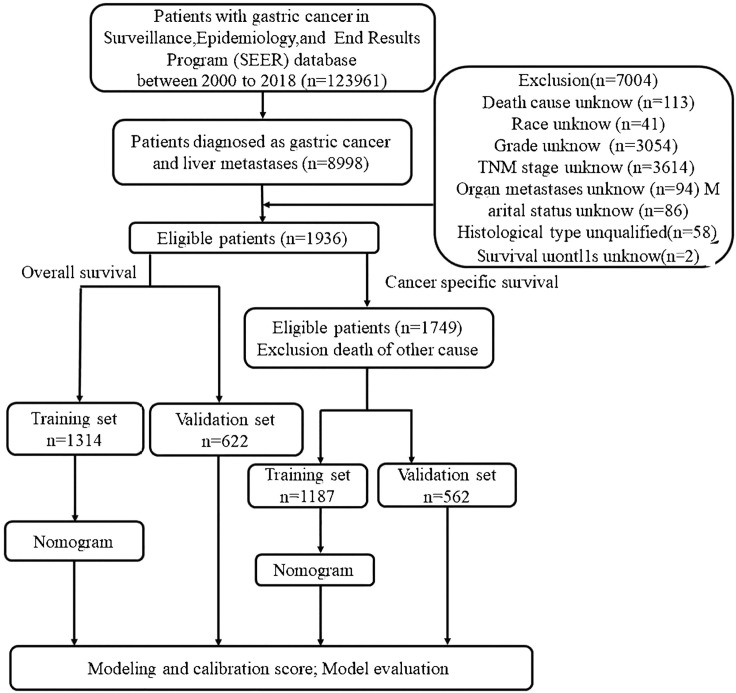
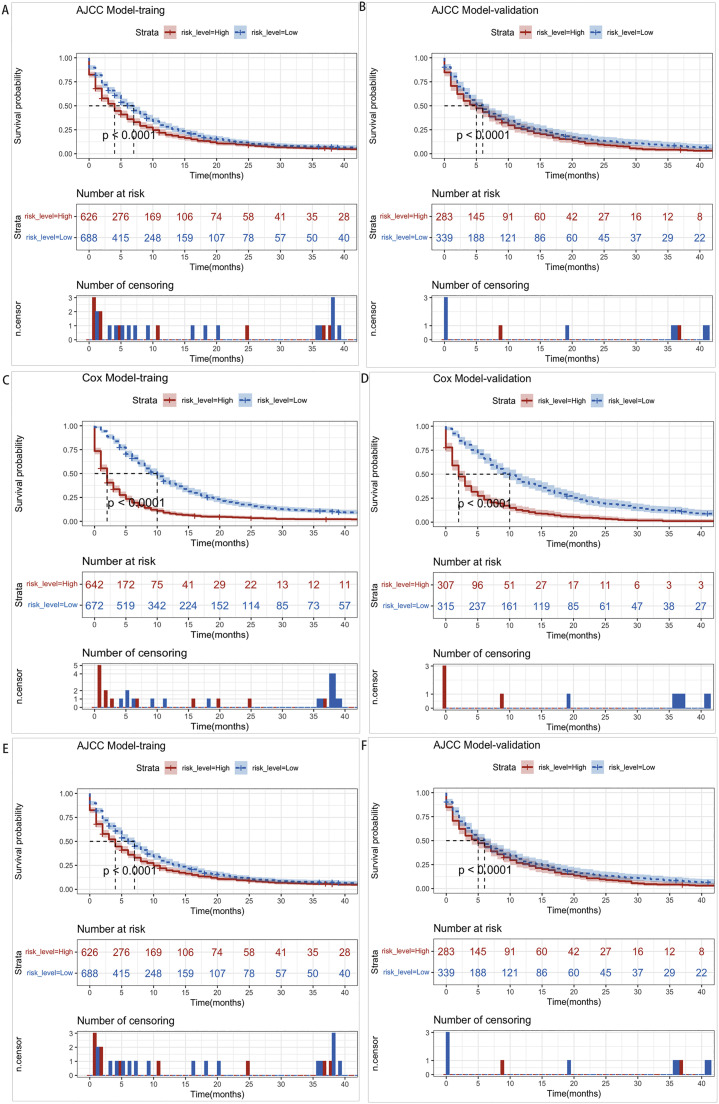
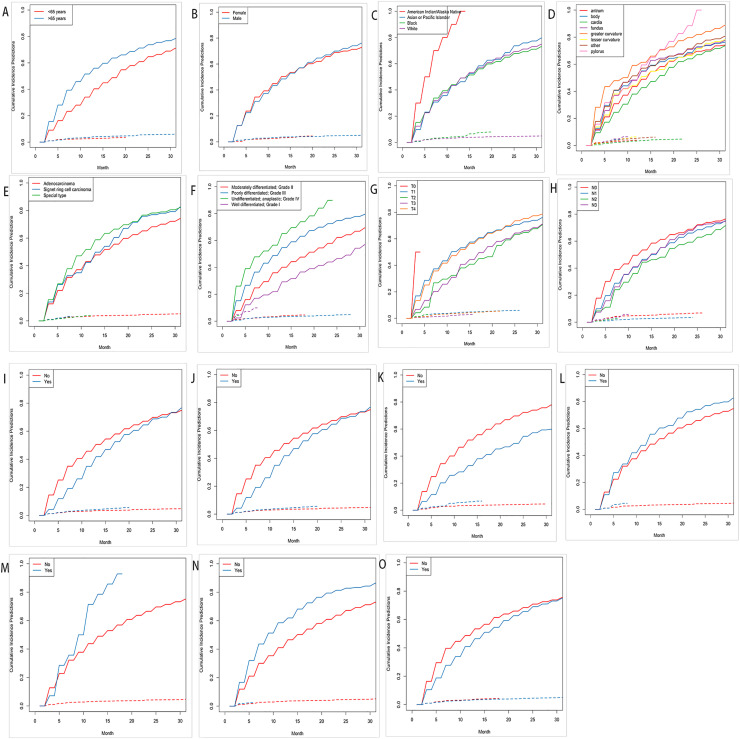
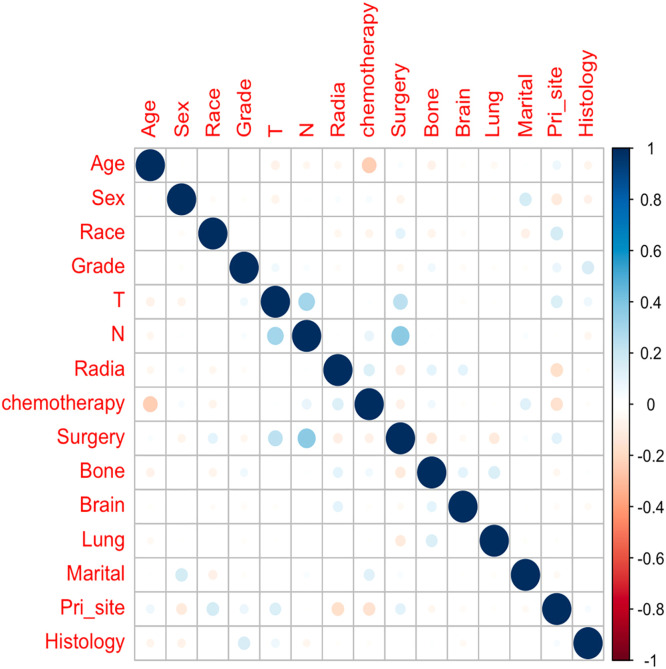
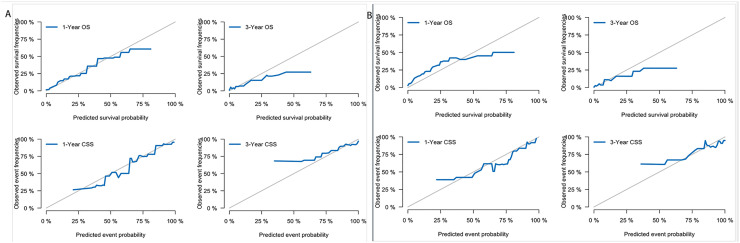
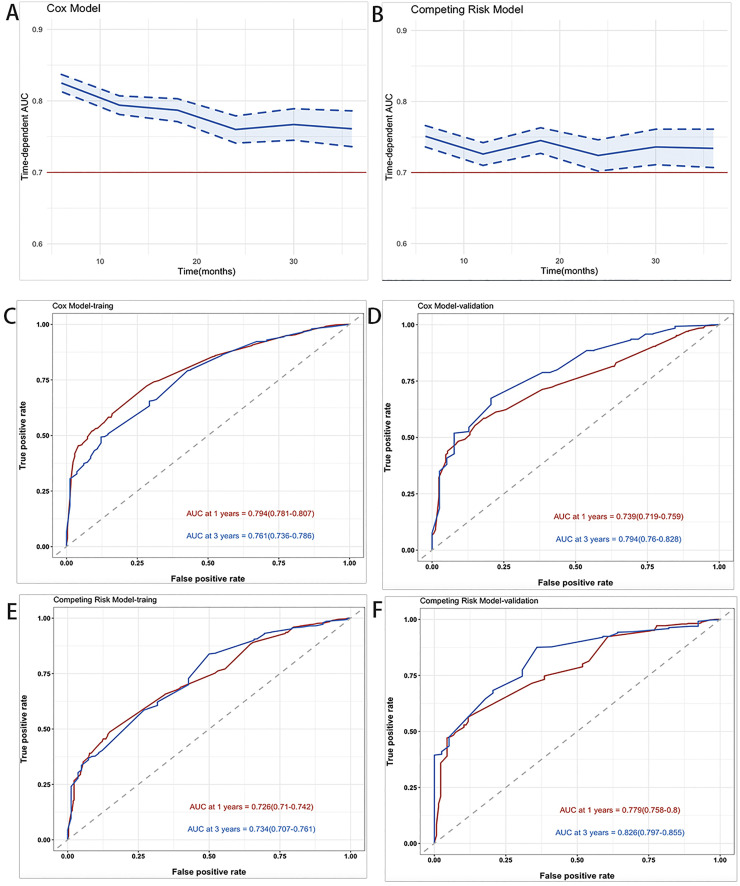
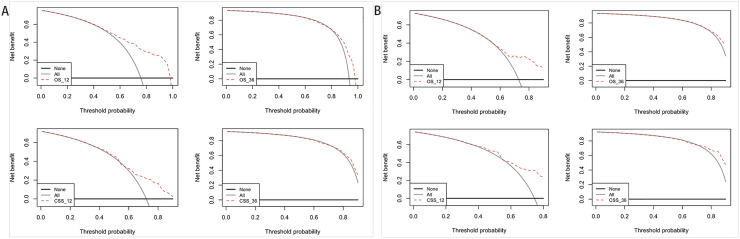
From January 2000 to December 2018, a total of 1936 GCLM patients were selected from the Surveillance, Epidemiology, and End Results Program (SEER) database. They were further divided into a training cohort and a validation cohort, with the OS and CSS serving as the study's endpoints. The correlation analyses were used to determine the relationship between the variables. The univariate and multivariate Cox analyses were used to confirm the independent prognostic factors. To discriminate and calibrate the nomogram, calibration curves and the area under the time-dependent receiver operating characteristic curve (time-dependent AUC) were used. DCA curves were used to examine the accuracy and clinical benefits. The clinical utility of the nomogram and the AJCC Stage System was compared using net reclassification improvement (NRI) and integrated differentiation improvement (IDI) (IDI). Finally, the nomogram and the AJCC Stage System risk stratifications were compared.
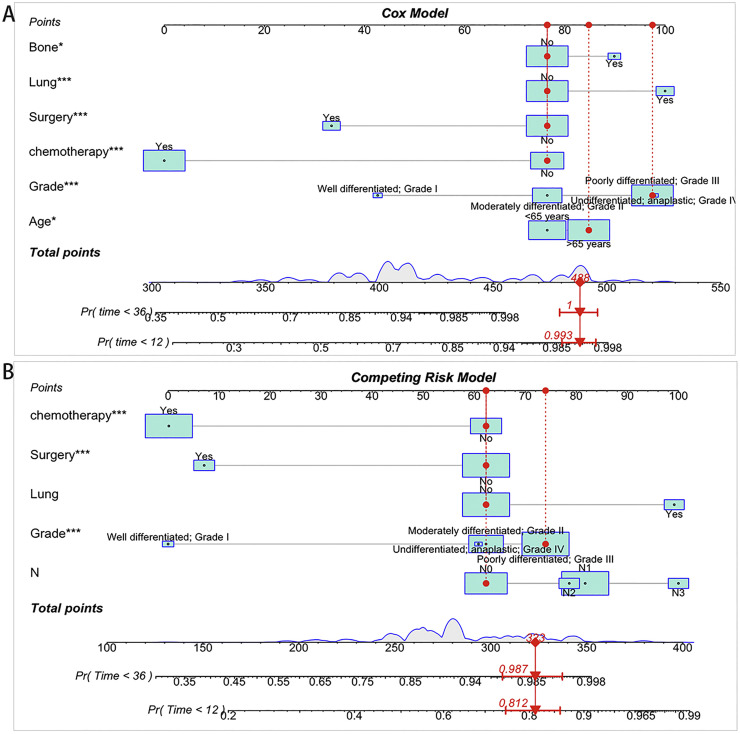
There was no collinearity among the variables that were screened. The results of multivariate Cox regression analysis showed that six variables (bone metastasis, lung metastasis, surgery, chemotherapy, grade, age) and five variables (lung metastasis, surgery, chemotherapy, grade, N stage) were identified to establish the nomogram for OS and CSS, respectively. The calibration curves, time-dependent AUC curves, and DCA revealed that both nomograms had pleasant predictive power. Furthermore, NRI and IDI confirmed that the nomogram outperformed the AJCC Stage System.
Both nomograms had satisfactory accuracy and were validated to assist clinicians in evaluating the prognosis of GCLM patients.
胃癌具有异质性且侵袭性强,尤其是发生肝转移时。本研究旨在构建两个列线图,以预测胃癌肝转移(GCLM)患者的总生存期(OS)和癌症特异性生存期(CSS)。
从2000年1月至2018年12月,共从监测、流行病学和最终结果计划(SEER)数据库中选取了1936例GCLM患者。他们被进一步分为训练队列和验证队列,以OS和CSS作为研究终点。采用相关性分析来确定变量之间的关系。采用单因素和多因素Cox分析来确认独立的预后因素。为了鉴别和校准列线图,使用了校准曲线和时间依赖性受试者工作特征曲线下面积(时间依赖性AUC)。使用决策曲线分析(DCA)曲线来检验准确性和临床益处。使用净重新分类改善(NRI)和综合鉴别改善(IDI)比较列线图和美国癌症联合委员会(AJCC)分期系统的临床效用。最后,比较列线图和AJCC分期系统的风险分层。
筛选出的变量之间不存在共线性。多因素Cox回归分析结果显示,分别确定了六个变量(骨转移、肺转移、手术、化疗、分级、年龄)和五个变量(肺转移、手术、化疗、分级、N分期)来建立OS和CSS的列线图。校准曲线、时间依赖性AUC曲线和DCA显示,两个列线图均具有良好的预测能力。此外,NRI和IDI证实列线图优于AJCC分期系统。
两个列线图均具有令人满意的准确性,并经过验证可协助临床医生评估GCLM患者的预后。