Corteva Agriscience, Woodland, CA, USA.
International Maize and Wheat Improvement Centre (CIMMYT), Harare, Zimbabwe.
Commun Biol. 2022 Jul 22;5(1):729. doi: 10.1038/s42003-022-03680-7.
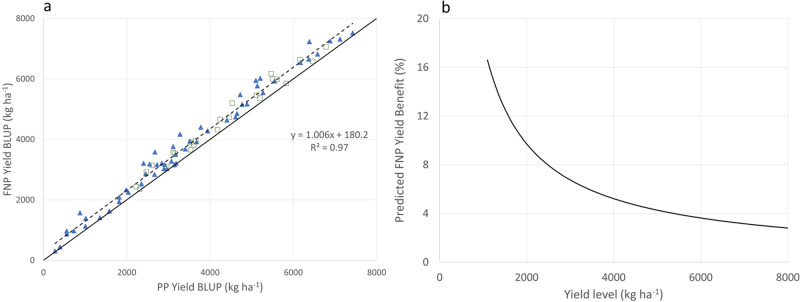
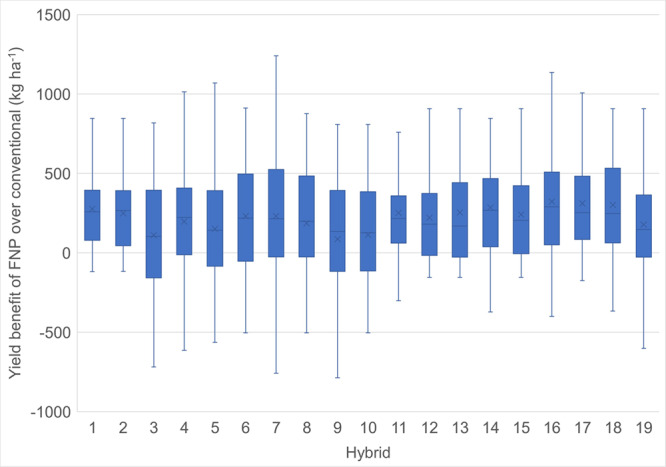
Maize is a staple crop in sub-Saharan Africa, but yields remain sub-optimal. Improved breeding and seed systems are vital to increase productivity. We describe a hybrid seed production technology that will benefit seed companies and farmers. This technology improves efficiency and integrity of seed production by removing the need for detasseling. The resulting hybrids segregate 1:1 for pollen production, conserving resources for grain production and conferring a 200 kg ha benefit across a range of yield levels. This represents a 10% increase for farmers operating at national average yield levels in sub-Saharan Africa. The yield benefit provided by fifty-percent non-pollen producing hybrids is the first example of a single gene technology in maize conferring a yield increase of this magnitude under low-input smallholder farmer conditions and across an array of hybrid backgrounds. Benefits to seed companies will provide incentives to improve smallholder farmer access to higher quality seed. Demonstrated farmer preference for these hybrids will help drive their adoption.
玉米是撒哈拉以南非洲地区的主要作物,但产量仍然不理想。改良的育种和种子系统对于提高生产力至关重要。我们描述了一种杂交种子生产技术,这将使种子公司和农民受益。这项技术通过去除去雄操作,提高了种子生产的效率和完整性。由此产生的杂种在花粉生产方面按 1:1 分离,为谷物生产节约资源,并在一系列产量水平上带来 200 公斤/公顷的效益。这代表了在撒哈拉以南非洲国家平均产量水平下,农民运营效率提高了 10%。在低投入小农户条件下,由 50%非花粉产生杂种提供的产量效益是玉米中单基因技术首次带来如此大幅度的产量增加,并且适用于多种杂交背景。对种子公司的好处将为改善小农户获得更高质量种子提供激励。农民对这些杂种的偏好将有助于推动它们的采用。