Jin Jiaqi, Qiao Shan, Liu Jie, Li Wenqiang, Wang Fang, Gao Xin, Tian Jiawei, Wang Nan, Zhang Jiheng, Dong Jiawei, Li Haiyun, Wang Jianjun, Hu Shaoshan, Zhou Peng
Department of Neurosurgery, The Second Affiliated Hospital of Harbin Medical University, Harbin, China.
Department of Neurosurgery, Emergency Medicine Center, Zhejiang Provincial People's Hospital, Hangzhou Medical College, Hangzhou, Zhejiang, China.
Cell Biosci. 2022 Jul 22;12(1):114. doi: 10.1186/s13578-022-00845-z.
Neutrophil extracellular traps (NETs) contribute to the creation of a coagulation state in various diseases. Currently, it is not clear whether NETs are present in the thrombi and plasma of patients with cerebral venous sinus thrombosis (CVST). This study aimed to investigate the presence of NETs in thrombi and blood samples from CVST patients and the procoagulant activity (PCA) of NETs during the progression of CVST.
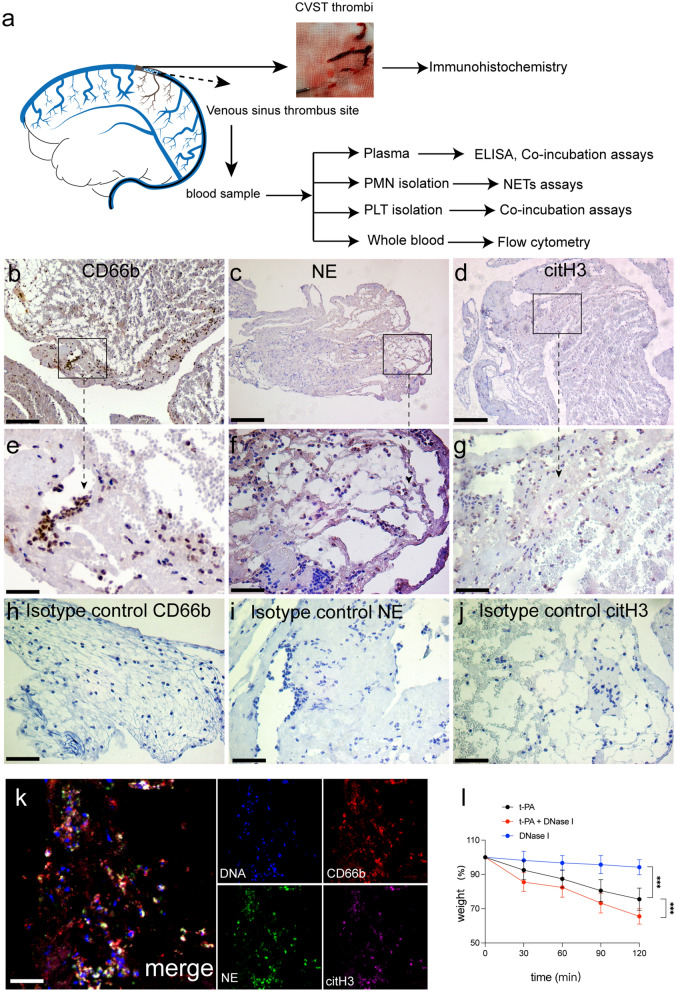
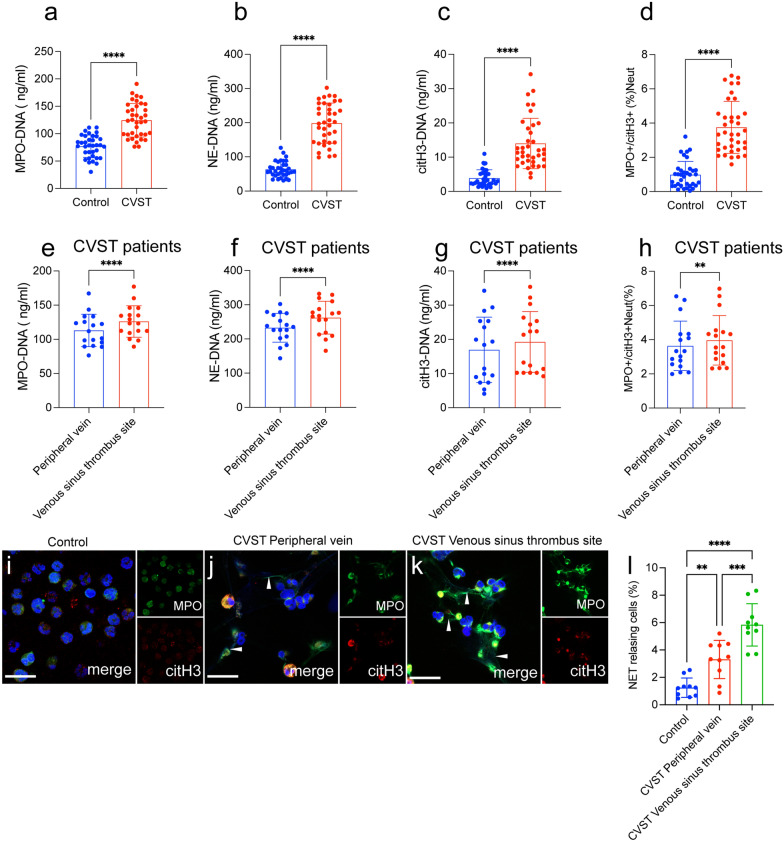
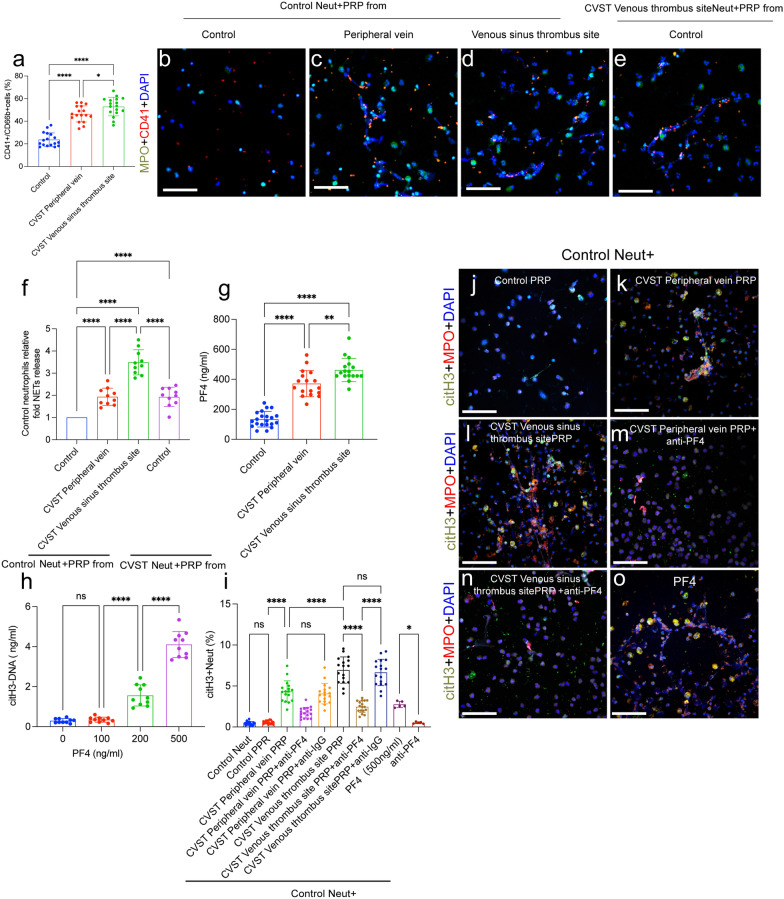
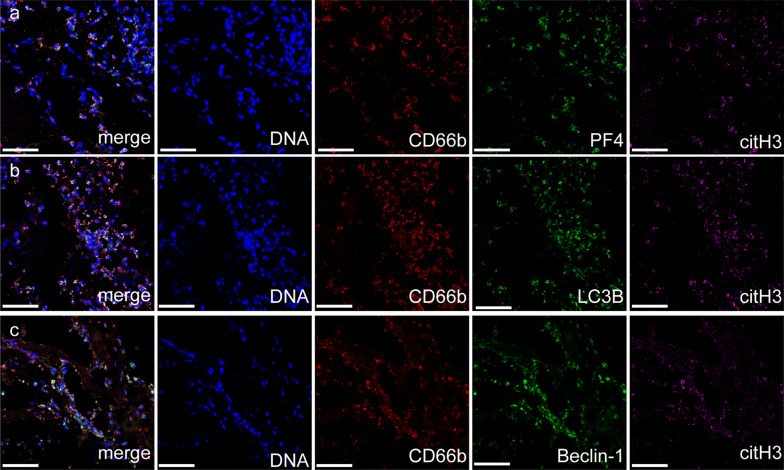
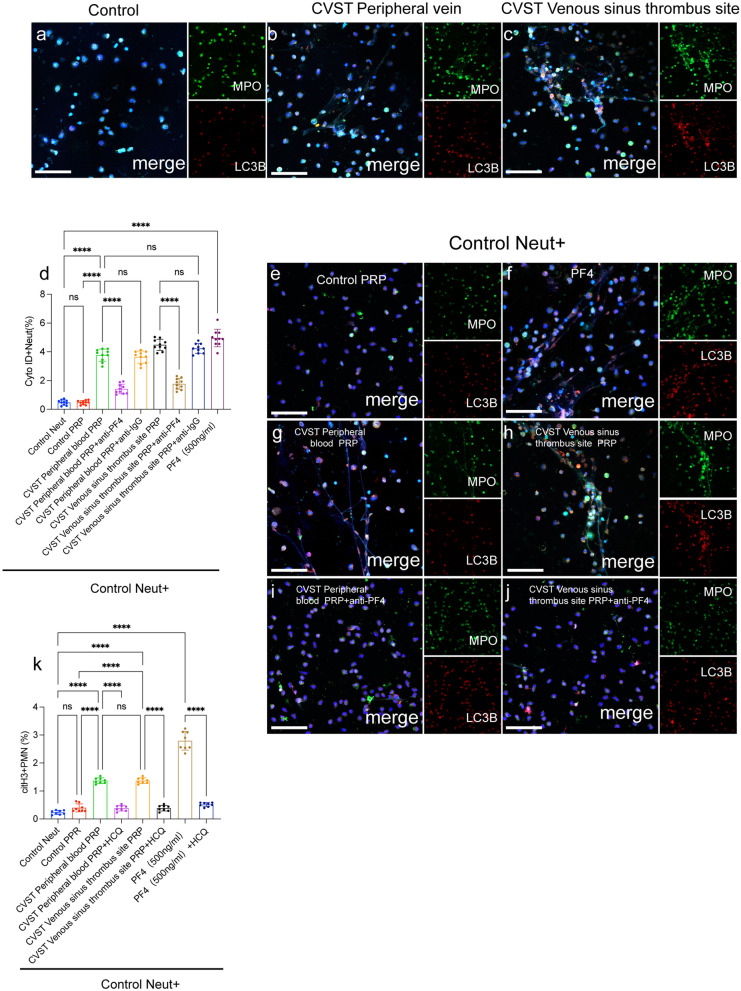
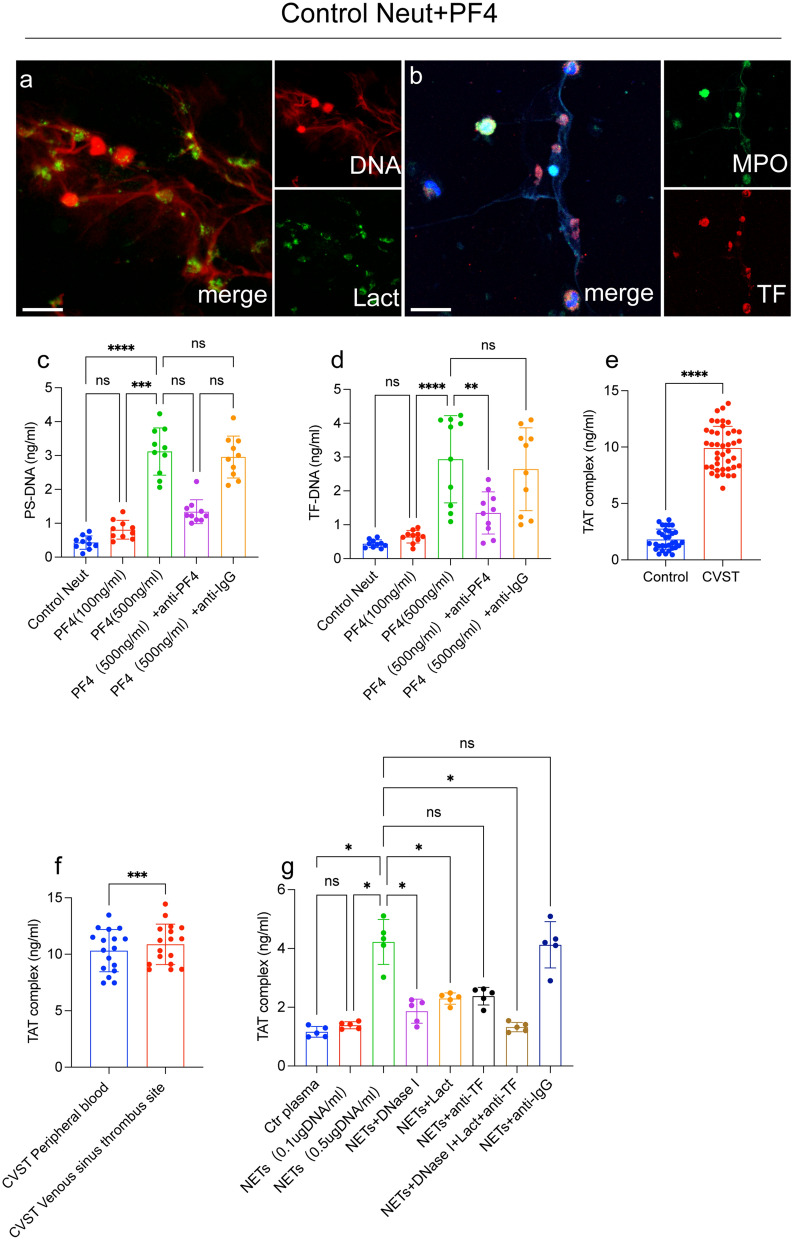
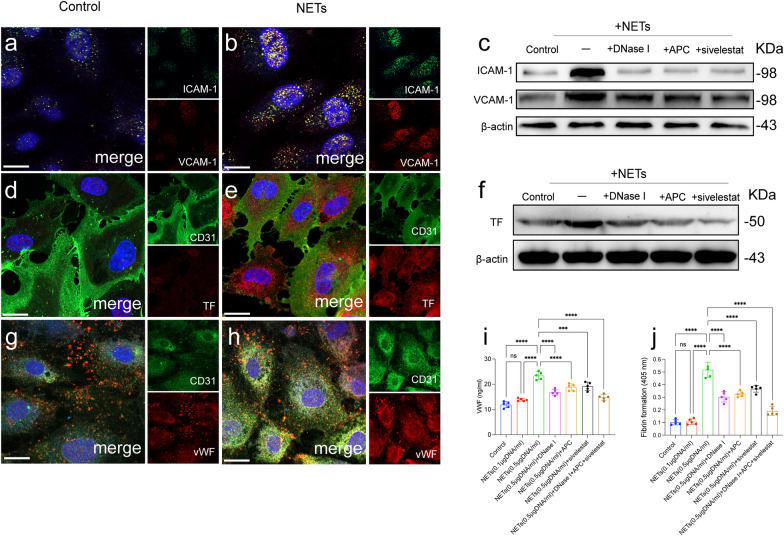
Thrombi obtained from CVST patients undergoing thrombectomy were examined by immunochemistry using neutrophil elastase (NE), CD66b and citrullinated histone H3(citH3). The presence of NET markers in samples from 37 CVST patients and 32 healthy people was evaluated by ELISA. NET-producing neutrophils and neutrophil-platelet (PLT) aggregates were examined in samples obtained from CVST patients and healthy people by flow cytometry. The TAT complex in plasma sample from each group was detected by ELISA to evaluate the procoagulant activity of NETs in CVST patients. Neutrophils from healthy subjects were treated with PLT-rich plasma in the presence of anti-PF4 antibodies or an autophagy inhibitor and analyzed by flow cytometry and confocal microscopy. After treatment with NETs, the expression of von Willebrand factor (VWF), tissue factor (TF) and CD31 in human brain microvascular endothelial cells (HBMECs) was measured by confocal microscopy and western blotting. Our results showed that NETs were abundant in the plasma and thrombi from CVST patients. Platelet factor 4 (PF4) from CVST PLTs induced NET generation through autophagy. NETs could induce PCA by modulating TF and phosphatidylserine (PS) in CVST. NETs also disrupted the endothelial barrier and transformed ECs into a procoagulant phenotype to exacerbate thrombogenicity.
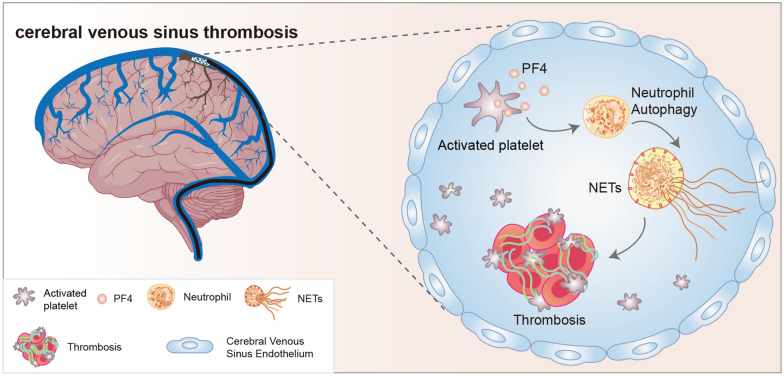
NET generation was mediated by PF4 from PLTs through autophagy and contribute to thrombosis in CVST patients.
中性粒细胞胞外陷阱(NETs)在多种疾病中促成凝血状态的形成。目前,尚不清楚NETs是否存在于脑静脉窦血栓形成(CVST)患者的血栓和血浆中。本研究旨在调查CVST患者血栓和血液样本中NETs的存在情况以及NETs在CVST进展过程中的促凝活性(PCA)。
采用中性粒细胞弹性蛋白酶(NE)、CD66b和瓜氨酸化组蛋白H3(citH3),通过免疫化学方法对接受血栓切除术的CVST患者所获得的血栓进行检查。通过酶联免疫吸附测定(ELISA)评估37例CVST患者和32例健康人的样本中NET标志物的存在情况。通过流式细胞术对CVST患者和健康人所获得的样本中的NET生成中性粒细胞和中性粒细胞 - 血小板(PLT)聚集体进行检查。通过ELISA检测每组血浆样本中的凝血酶 - 抗凝血酶复合物(TAT复合物),以评估CVST患者中NETs的促凝活性。在存在抗PF4抗体或自噬抑制剂的情况下,用富含血小板的血浆处理健康受试者的中性粒细胞,并通过流式细胞术和共聚焦显微镜进行分析。用NETs处理后,通过共聚焦显微镜和蛋白质印迹法测量人脑血管内皮细胞(HBMECs)中血管性血友病因子(VWF)、组织因子(TF)和CD31的表达。我们的结果表明NETs在CVST患者的血浆和血栓中大量存在。CVST血小板中的血小板因子4(PF4)通过自噬诱导NET生成。NETs可通过调节CVST中的TF和磷脂酰丝氨酸(PS)诱导PCA。NETs还破坏内皮屏障并将内皮细胞转化为促凝表型以加剧血栓形成。
NET生成由血小板中的PF4通过自噬介导,并促成CVST患者的血栓形成。