Kumar Rakesh, Singh Anand, Mishra Rahul, Saraswati Ushasi, Bhalla Jaideep, Pagali Sandeep
Mayo Clinic, Rochester, MN, United States.
Institute of Human Behaviour and Allied Sciences, University of Delhi, New Delhi, India.
Front Psychiatry. 2022 Jul 7;13:920581. doi: 10.3389/fpsyt.2022.920581. eCollection 2022.
The COVID-19 pandemic resulted in significant mortality and morbidity in the United States. The mental health impact during the pandemic was huge and affected all age groups and population types. We reviewed the existing literature to understand the present trends of psychological challenges and different coping strategies documented across different vulnerable sections of the United States population. This rapid review was carried out to investigate the trends in psychological impacts, coping ways, and public support during the COVID-19 pandemic crisis in the United States.
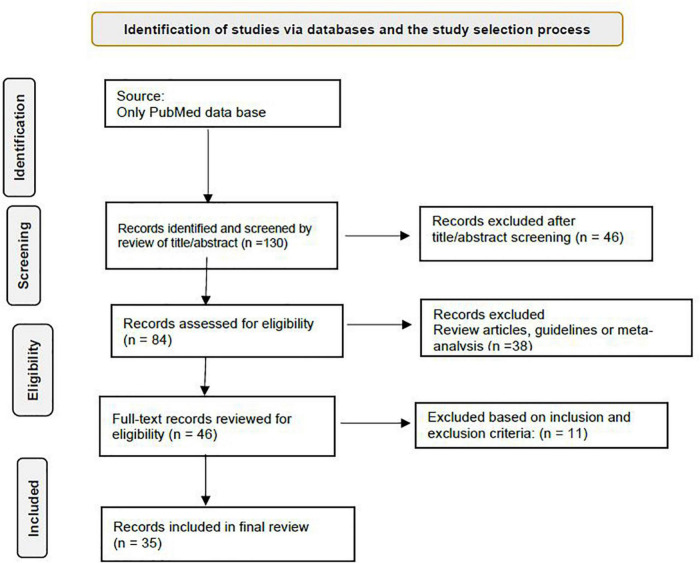
We undertook a rapid review of the literature following the COVID-19 pandemic in the United States. We searched PubMed as it is a widely available database for observational and experimental studies that reported the psychological effects, coping ways, and public support on different age groups and healthcare workers (HCWs) during the COVID-19 pandemic.
We included thirty-five studies in our review and reported data predominantly from the vulnerable United States population. Our review findings indicate that COVID-19 has a considerable impact on the psychological wellbeing of various age groups differently, especially in the elderly population and HCWs. Review findings suggest that factors like children, elderly population, female gender, overconcern about family, fear of getting an infection, personality, low spirituality, and lower resilience levels were at a higher risk of adverse mental health outcomes during this pandemic. Systemic support, higher resilience levels, and adequate knowledge were identified as protecting and preventing factors. There is a paucity of similar studies among the general population, and we restricted our review specifically to vulnerable subgroups of the population. All the included studies in our review investigated and surveyed the psychological impacts, coping skills, and public support system during the COVID-19 pandemic.
The evidence to date suggests that female gender, child and elderly population, and racial factors have been affected by a lack of support for psychological wellbeing. Further, research using our hypothesized framework might help any population group to deal with a pandemic-associated mental health crisis, and in that regard, analysis of wider societal structural factors is recommended.
新冠疫情在美国导致了严重的死亡率和发病率。疫情期间对心理健康的影响巨大,波及所有年龄组和人群类型。我们回顾了现有文献,以了解美国不同弱势群体中记录的心理挑战现状及不同应对策略。开展此次快速综述是为了调查新冠疫情危机期间美国心理影响、应对方式及公众支持的趋势。
在美国新冠疫情之后,我们对文献进行了快速综述。我们检索了PubMed,因为它是一个广泛可用的数据库,用于收录报告新冠疫情期间不同年龄组和医护人员心理影响、应对方式及公众支持情况的观察性和实验性研究。
我们的综述纳入了35项研究,报告的数据主要来自美国弱势群体。我们的综述结果表明,新冠疫情对不同年龄组的心理健康有不同程度的重大影响,尤其是老年人群体和医护人员。综述结果表明,在此次疫情期间,诸如儿童、老年人群体、女性、过度担心家人、害怕感染、性格、低精神性及较低恢复力水平等因素出现心理健康不良后果的风险较高。系统性支持、较高的恢复力水平及充分的知识被确定为保护和预防因素。普通人群中类似研究较少,我们的综述专门针对人群中的弱势群体。我们综述中纳入的所有研究均调查了新冠疫情期间的心理影响、应对技能及公众支持系统。
迄今为止的证据表明,女性、儿童和老年人群体以及种族因素受到了心理健康支持不足的影响。此外,使用我们假设框架的研究可能有助于任何人群应对与疫情相关的心理健康危机,在这方面,建议分析更广泛的社会结构因素。