Brewer LaPrincess C, Cyriac Jissy, Kumbamu Ashok, Burke Lora E, Jenkins Sarah, Hayes Sharonne N, Jones Clarence, Cooper Lisa A, Patten Christi A
Department of Cardiovascular Medicine, Mayo Clinic College of Medicine, Rochester, MN, USA.
Center for Health Equity and Community Engagement Research, Mayo Clinic, Rochester, MN, USA.
Digit Health. 2022 Jul 18;8:20552076221110537. doi: 10.1177/20552076221110537. eCollection 2022 Jan-Dec.
African-Americans are underrepresented in mobile health intervention research studies which can perpetuate health inequities and the digital divide. A community-based, user-centered approach to designing mobile health interventions may increase their sociocultural relevance and effectiveness, especially with increased smartphone use during the coronavirus disease 2019 pandemic. We aimed to refine an existing mobile health intervention via a virtual focus group series.
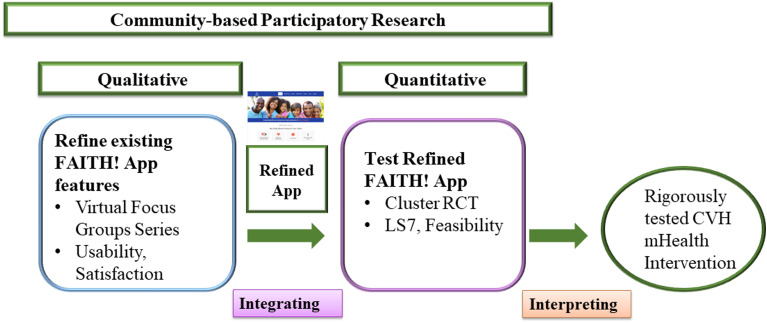
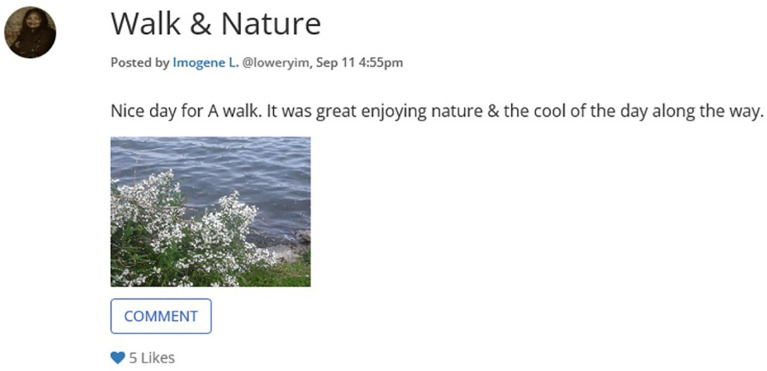
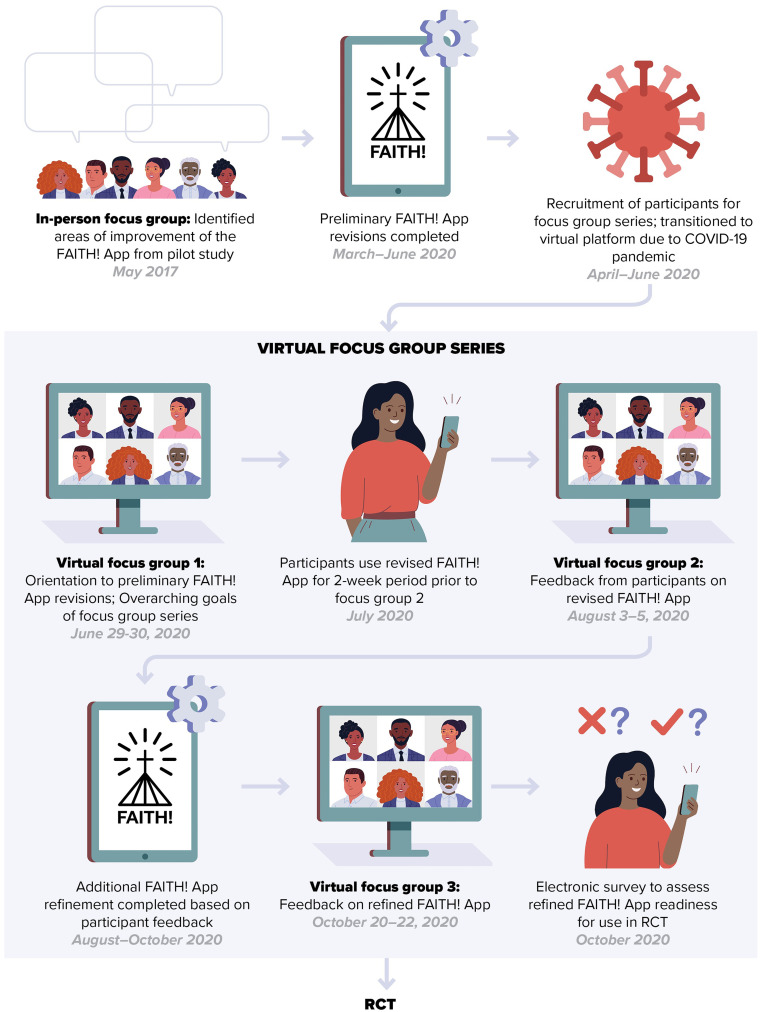
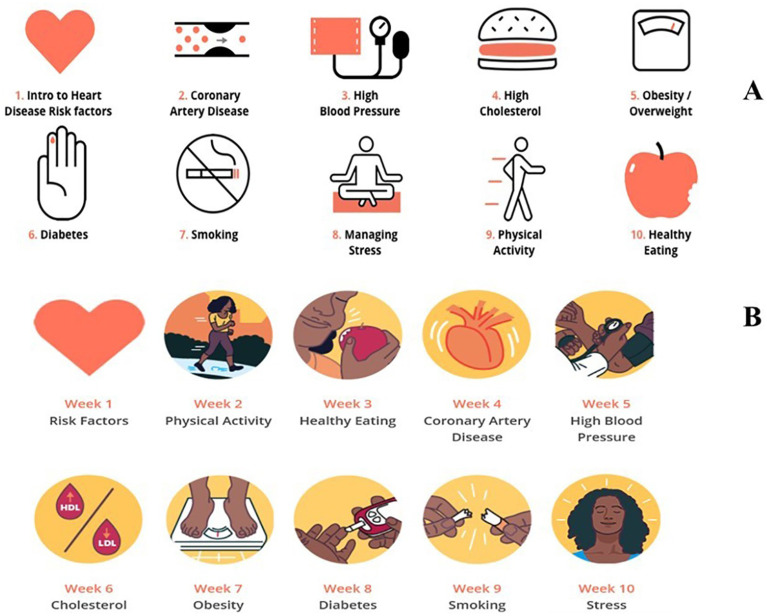
African-American community members (n = 15) from churches in Minneapolis-St. Paul and Rochester, Minnesota were enrolled in a virtual (via videoconferencing), three-session focus group series over five months to refine a cardiovascular health-focused mobile health application (FAITH! [Fostering African-American Improvement in Total Health!] App). Participants accessed the app via their smartphones and received a Fitbit synced to the app. Participants engaged with multimedia cardiovascular health-focused education modules, a sharing board for social networking, and diet/physical activity self-monitoring. Participant feedback on app features prompted iterative revisions to the FAITH! App. Primary outcomes were app usability (assessed via Health Information Technology Usability Evaluation Scale range: 0-5) and user satisfaction.
Participants (mean age [SD]: 56.9 [12.3] years, 86.7% female) attended a mean 2.8 focus groups (80% attended all sessions). The revised FAITH! App exceeded the goal Health Information Technology Usability Evaluation Scale score threshold of ≥4 (mean: 4.39, range: 3.20-4.95). Participants positively rated updated app content, visual appeal, and use of social incentives to maintain engagement. Increasing user control and refinement of the moderated sharing board were identified as areas for future improvement.
Community-partnered, virtual focus groups can optimize usability and increase participant satisfaction of mobile health lifestyle interventions that aim to promote cardiovascular health in African-Americans.
非裔美国人在移动健康干预研究中的代表性不足,这可能会使健康不平等和数字鸿沟长期存在。采用基于社区、以用户为中心的方法来设计移动健康干预措施,可能会提高其社会文化相关性和有效性,尤其是在2019年冠状病毒病大流行期间智能手机使用增加的情况下。我们旨在通过一系列虚拟焦点小组来完善现有的移动健康干预措施。
来自明尼阿波利斯 - 圣保罗和明尼苏达州罗切斯特市教会的非裔美国社区成员(n = 15)参加了为期五个月的虚拟(通过视频会议)、为期三阶段的焦点小组系列,以完善一款以心血管健康为重点的移动健康应用程序(FAITH![促进非裔美国人全面健康改善!]应用程序)。参与者通过智能手机访问该应用程序,并获得与该应用程序同步的Fitbit。参与者参与了以心血管健康为重点的多媒体教育模块、社交网络分享板以及饮食/身体活动自我监测。参与者对应用程序功能的反馈促使对FAITH!应用程序进行迭代修订。主要结果是应用程序的可用性(通过健康信息技术可用性评估量表评估,范围:0 - 5)和用户满意度。
参与者(平均年龄[标准差]:56.9[12.3]岁,86.7%为女性)平均参加了2.8个焦点小组(80%参加了所有会议)。修订后的FAITH!应用程序超过了健康信息技术可用性评估量表得分阈值≥4的目标(平均:4.39,范围:3.20 - 4.95)。参与者对更新后的应用程序内容、视觉吸引力以及使用社交激励措施来保持参与度给予了积极评价。增加用户控制权和完善适度分享板被确定为未来改进的领域。
社区合作的虚拟焦点小组可以优化旨在促进非裔美国人心血管健康的移动健康生活方式干预措施的可用性,并提高参与者的满意度。